
Different cameras will use different lenses, depending on the type of camera, the desired effect, and the budget. For example, a point-and-shoot camera will typically use a less expensive lens than a DSLR camera.
What are the different types of camera lenses?
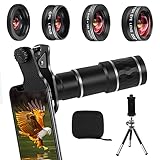
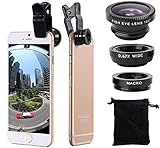

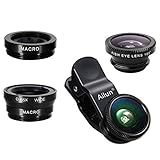

Altura Photo Professional Cleaning Kit for DSLR Cameras and Sensitive Electronics Bundle with 2oz Altura Photo Spray Lens and LCD Cleaner – Camera Accessories & Photography Accessories
- Kit includes: Altura Photo Lens Cleaner 2 oz. Bottle + Altura Photo Lens Cleaning Pen + Altura Photo Lens Brush + Altura Photo Air Blower Cleaner + Altura Photo 50 Sheets Lens Cleaning Tissue Paper + 3 Pack Extra-large Oversize and Original Premium MagicFiber Microfibers Cleaning Cloths
- Altura Photo Premium Lens Cleaner is Alcohol FREE, Ammonia FREE, and Odor FREE.
- This Altura Photo Camera Cleaning kit is compatible with all camera brands and models.
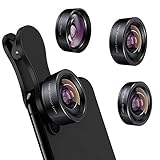
KEYWING Phone Camera Lens 3 in 1 Phone Lens Kit, 198 Fisheye Lens + 120 Super Wide-Angle Lens + 20x Macro Lens for iPhone Samsung Android Smartphone Black 3in1
- 3 in 1 Phone Camera Lens Set: Every lens can be used separately. The 20X Macro lens has a best focusing distance of 1.18-3.54 inch, help you to explore the microworld. 120° Wide lens can expand the shooting area of 10%, make a bigger view to the world. 198° Fisheye lens can produce a strong visual effect to make thing cuter
- High Quality: Professional HD Lens with advanced lanthanide optical glass can reduce the reflection and ghosting, bringing you amazing vision with details and clarify. High quality grade aluminum shell can protect the glass offering a long durability
- Clip-on Phone Lens: Easy Use Design. Just attach the lens to the clip and clip it on the phone camera, then you can enjoy the amazing effect of the lens. The clip has soft rubber to avoid scratch on your phone. Strong spring can hold on tightly
- Compatible with Most Smartphones: Universal design of 3.6 cm clip make the lenses compatible with most iPhone, Samsung google phone etc. Note: For different model you might have to use different way to clip the clamp. NOTE: Do Not use with phone case for a better effect.
- Package Content: 1x 120° Wide Angle Lens, 1×198° Fisheye Lens, 1x 20X Macro Lens, 1x Universal Clip, 1x Storage Bag, 1x User’s Manual

Phone Camera Lens,Upgraded 3 in 1 Phone Lens kit-198° Fisheye Lens + Macro Lens + 120° Wide Angle Lens,Clip on Cell Phone Lens Kit Compatible with Samsung Android Smartphones
- 【Premium Quality】 Unlike cheaper phone lens, the phone Lens kit is designed with industrial grade aluminum along with premium optic lenses, so you can capture shots with amazing clarity and detail.
- 【3-in-1 Versatile Photography】 Capture every moment with 120° wide-angle for group shots/landscapes, 198° fisheye for playful circular effects, and a macro lens with 1.18-3.54″ (3-9cm) focus to reveal microscopic textures like flower dew or insect wings.
- 【Independent Lens Flexibility】 Wide-angle and macro lenses operate separately without stacking – instantly switch from vast scenery to ultra-close details, saving time and enhancing creative freedom.
- 【Clip-on Phone Lens】 Attach in 3 steps: 1. Remove phone case 2.Clip firmly 3. Screw lens . Extended rubber grip prevents slippage while protecting your device from scratches. Compatible with 95% smartphones.Not fit for 14 and 14 above iphones,For other phones,please find out your main camera and use it on main camera,just email us before you place the order.VIP Note:You need to pull off your phone case when you use these lens.
- 【Zero-Risk Satisfaction】 Enjoy 30-day refund guarantee (even after use) and 24/7 support via emails. Tutorial videos on the product page guide you from basic setup to advanced techniques like fisheye vlogging.Notes:How to use the lens,Please watch the videos from the product detail page.
Different types of camera lenses are used for different purposes. For example, a telephoto lens is used for long-distance photography, while a wide-angle lens is used for capturing large scenes.
There are also special lenses used for specific purposes, such as macro lenses for close-up photography and fisheye lenses for ultra-wide angle shots.
What are the different uses for camera lenses?
Different cameras use different lenses, and each lens has a different purpose. For example, some lenses are designed for close-up photography, while others are better suited for long-distance shots.
There are also speciality lenses for things like night photography or action shots.
How do camera lenses work?
How do camera lenses work?
A camera lens is an optical device that captures light and projects it onto a film or sensor. The design of a lens is governed by many factors, including the type of camera, the desired field of view, and the amount of light that the lens can gather.
Lenses are made from a variety of materials, including glass, plastic, and metal.
The most important element of a camera lens is the glass.
The quality of the glass affects the sharpness and clarity of the image. The shape of the glass also affects the way the light is gathered and projected. Lenses are usually made from a single piece of glass, but more complex lenses may be made from several pieces of glass glued together.
The glass in a lens is usually ground and polished into a curved shape. The curve helps to focus the light onto the film or sensor. The amount of curvature varies depending on the type of lens. Lenses can be classified according to their focal length, which is the distance from the lens to the film or sensor when the lens is in focus.
Lenses with a short focal length are called wide-angle lenses, because they have a wide field of view. Wide-angle lenses are often used for landscape photography, because they can capture a large area in a single image. Lenses with a long focal length are called telephoto lenses, because they have a narrow field of view. Telephoto lenses are often used for sports and wildlife photography, because they can zoom in on a subject and make it appear closer.
The aperture is another important element of a camera lens. The aperture is the opening in the lens through which light passes. The size of the aperture affects the amount of light that the lens can gather. Lenses with a large aperture can gather more light, but they also have a narrower field of view. Lenses with a small aperture can gather less light, but they have a wider field of view.
The aperture also affects the depth of field, which is the distance between the nearest and farthest objects in a scene that appear in focus. Lenses with a large aperture have a shallow depth of field, which means that only a small area of the scene appears in focus. Lenses with a small aperture have a deep depth of field, which means that a large area of the scene appears in focus.
Camera lenses are complex optical devices, and the design of a lens is a delicate balance between many factors. The type of camera, the desired field of view, the amount of light, and the depth of field are all important considerations in the design of a lens.
What are the benefits of using a camera lens?
There are many benefits to using a camera lens. A lens can help you capture better photos, videos, and images.
It can also improve the quality of your photos and videos. In addition, a lens can help you take better photos in low light conditions.
What are the different types of lenses for different types of photography?
There are a few different types of lenses that are available for different types of photography. The most common type of lens is the standard lens, which is typically used for taking pictures of landscapes or groups of people.
These lenses have a wide field of view and can be used for a variety of different purposes.
Another type of lens is the telephoto lens, which is often used for taking pictures of distant objects or for taking close-up shots of subjects.
These lenses have a narrow field of view and are often used for specific purposes.
A third type of lens is the macro lens, which is used for taking close-up shots of small objects. These lenses have a very narrow field of view and are often used for specific purposes.
Finally, there are specialty lenses, which are designed for specific types of photography. These lenses can be used for a variety of different purposes, but they often have a specific use in mind.
What are the best camera lenses on the market?
There is no one-size-fits-all answer to this question, as the best camera lens for you will depend on your specific needs and preferences. However, there are a few factors to keep in mind when choosing a camera lens, such as focal length, aperture, and image stabilization.
When it comes to focal length, longer lenses are better for capturing distant subjects, while shorter lenses are better for close-up shots. As for aperture, wider apertures (smaller f-numbers) let in more light and create a shallow depth of field, while narrower apertures (larger f-numbers) create a deeper depth of field.
Lastly, image stabilization is a feature that helps reduce camera shake, making it ideal for low-light situations or when shooting video.
With all that in mind, here are a few of the best camera lenses on the market:
-The Canon EF 50mm f/1.8 STM is a great option for those looking for a budget-friendly lens with a wide aperture.
-The Nikon AF-S Nikkor 50mm f/1.8G is another great option for those on a budget, and its wide aperture makes it ideal for low-light photography.
-The Canon EF 24-70mm f/2.8L II USM is a great all-purpose lens that offers a wide range of focal lengths and a fast aperture.
-The Sigma 35mm f/1.4 Art DG HSM is a great choice for those looking for a fast, wide-angle lens, and its image stabilization makes it ideal for video.
-The Canon EF 70-200mm f/2.8L IS II USM is a great choice for those needing a long-range lens with a fast aperture, and its image stabilization is ideal for low-light photography and video.
How do you care for your camera lens?
Assuming you’re talking about DSLR camera lenses-
Caring for your camera lens is important if you want to maintain clear, sharp images. Here are a few tips:
-Avoid touching the lens with your fingers.
Oils from your skin can transfer to the lens and cause smudges.
-Use a lens cloth to remove fingerprints or smudges from the lens.
-Be careful when cleaning the lens. Use a gentle, circular motion and avoid using harsh chemicals.
-Store your lens in a safe, dry place when not in use.
What are some tips for using a camera lens?
There are a few things to keep in mind when using a camera lens. First, make sure you know what lens do cameras use.
Each camera is different, and you’ll need the right lens for your particular model. Second, be aware of the aperture setting on your camera.
This will determine how much light is let in, and will affect the overall exposure of your photos. Finally, take some time to experiment with different shutter speeds to see how it affects the look of your photos.
Conclusion
There are many different types of camera lenses available on the market, each with their own unique set of features and benefits. When choosing a camera lens, it is important to consider the type of photography you will be doing. For example, if you plan on doing a lot of close-up photography, you will need a lens with a lower f-stop number. On the other hand, if you plan on doing a lot of landscape photography, you will need a lens with a higher f-stop number. There are also different types of lenses for different types of cameras, so be sure to check compatibility before making your purchase. Finally, be sure to take good care of your camera lens to keep it in good condition.