
Want to understand a powerful non-destructive testing method used across various industries? This guide explains what is ultrasonic testing, detailing its principles, applications, and advantages. You’ll learn about different techniques, equipment, and its role in ensuring safety and quality.
Ultrasonic testing, or UT, is a non-destructive
testing (NDT) method that uses high-frequency sound waves (ultrasound) to detect internal flaws or irregularities in materials. Think of it like a sophisticated echolocation system. A transducer, which is a device that converts electrical energy into ultrasonic waves and vice-versa, emits these waves into the material being tested. These waves travel through the material, and when they encounter a discontinuity such as a crack, void, or inclusion, they are reflected back to the transducer. The transducer then converts these reflected waves back into electrical signals, which are processed and displayed on a screen. The time it takes for the sound waves to travel and return (the “echo time”) helps determine the location and size of the flaw. The strength of the reflected signal indicates the size and nature of the flaw.
The frequencies used in ultrasonic testing typically range from 0.1 to 15 MHz (megahertz), meaning the waves vibrate millions of times per second. Higher frequencies provide better resolution for detecting smaller flaws, but they penetrate less deeply into the material. Lower frequencies penetrate deeper but have lower resolution. The choice of frequency depends on the material thickness, type of flaw being sought, and the desired penetration depth. For example, inspecting thin sheet metal might require a higher frequency transducer than inspecting a thick weld.
Imagine throwing a pebble into a pond. The ripples spreading outwards are similar to the ultrasonic waves. If the pebble hits a submerged rock, some of the ripples will bounce back. The time it takes for the ripples to return and their intensity tell you something about the size and location of the rock. Ultrasonic testing works on a similar principle, but with sound waves instead of water ripples, and sophisticated electronics to analyze the echoes.
Types of Ultrasonic Testing Techniques
There are several different techniques used in ultrasonic testing, each suited to different applications and material types. The most common techniques include:
- Pulse-echo method: This is the most widely used technique. A single pulse of ultrasonic energy is transmitted into the material, and the reflected echoes are analyzed. This is excellent for detecting surface and subsurface flaws.
- Through-transmission method: Two transducers are used—one to transmit and the other to receive the ultrasonic waves. The presence of a flaw will reduce the amplitude of the received signal. This method is less sensitive than pulse-echo, but it’s useful for detecting larger flaws or for inspecting materials that are very thin.
- Resonance testing: This technique measures the resonant frequency of the material, which can be affected by the presence of flaws. It’s typically used for measuring the thickness of thin materials or coatings.
The selection of the appropriate technique depends on various factors, including the material’s properties, the type of flaw being sought, and the access to the material’s surface. Experienced technicians need to understand the nuances of each technique to apply them effectively and accurately interpret the results. For instance, a complex weld inspection might necessitate a combination of pulse-echo and through-transmission methods for thorough evaluation.
Advantages of Ultrasonic Testing over Other NDT Methods
Ultrasonic testing offers several advantages over other non-destructive testing methods, such as visual inspection, radiography, or magnetic particle testing. These advantages include:
- High sensitivity: UT can detect very small flaws, even those that are subsurface.
- Deep penetration: UT can inspect thick materials with reasonable accuracy, making it a versatile technique for numerous industries.
- Portability: Many ultrasonic testing instruments are portable, allowing for on-site inspections in various locations.
- Versatility: UT can be used on a wide range of materials, including metals, plastics, ceramics, and composites.
- Real-time results: UT provides immediate feedback, allowing for quick assessments and timely decisions.
Compared to radiography, which uses ionizing radiation, ultrasonic testing is safer for personnel. While radiography can provide excellent images of internal flaws, it requires specialized safety precautions and is not always suitable for all materials. Ultrasonic testing stands out as a safer and equally effective option in many scenarios.
Ultrasonic Testing Equipment and Instrumentation


MR CARTOOL V309 Fuel Injector Cleaner Tester Machine Diesel & Gasoline110V/220V 4-Cylinder Injector Cleaning Machine, Ultrasonic Test Clean Kit for Car Motorcycle GDI/EFI/FSI Injectors
- WHAT IS V309: MR CARTOOL V309 fuel injector diagnostic and cleaning machine is a mechatronics product that combines ultrasonic cleaning technology and microcomputer oil pressure closed-loop control cleaning and detection technology. Support to simulate various operating conditions of the engine, clean and inspect high-pressure EFI/FSI/GDI injectors as well as standard injectors, compatible with 99% of vehicles.
- 【4 Large Cylinders & 1600ml Tank Capacity】V309 fuel injector cleaner kit equipped with 110ml-capacity cylinders, directly check GDI/standard injectors’ bad or good situation. Powerful ultrasonic cleaning capacity, support to clean or test 4 injectors simultaneously at most.
- 【9 Testing Functions】The injector cleaner machine support 9 Test Functions: ldle Speed Test; Medium Speed Test; High Speed Test; Accelerating Test; Variable Speed Test; Leakage Test; ldle Spray Volume; Medium Spray Volume; High Spray Volume. In addition, the ultrasonic cleaning function is devoted to fast injector cleaning without any damage.
- 【Smart Operation Panel】Digital control panel to one button start/stop, Within the allowable adjustment range, the test time, working frequency, fuel injection times, shortest switching period, etc. of the fuel injector can be adjusted arbitrarily. 12V/70V/120V voltages to meet your different needs. All can be done by one person, saving time and energy.
- 【Power Supply AC 110V/220V】Our V309 comes with two power cords, both European and US specification. The European specification one supports 220V and the US specification one supports 110V, you can choose the right power cord to use according to your needs.

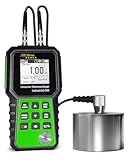
Ultrasonic Thickness Tester Industrial-886 / Digital Metals Thickness Gauge with Range 0.04-15.75in(1-400mm) / Industrial Measuring Instrument
- HIGH PRECISION INDUSTRIAL ULTRASONIC THICKNESS GAUGE – The principle of Ultrasonic measurement allows you to measure the thickness of Metal (such as Steel, Aluminum, Copper, etc.), Plastic, Ceramics, Glass and other homogeneous materials through the passage of Ultrasonic wave.
- BEST TECHNICAL PARAMETERS – Ultrasonic thickness tester has a wide Range of 0.04~15.75in / 1~400mm with Resolution: 0.01in / 0.01mm. This allows this measuring instrument to be used in Industry
- CONVENIENT SETTINGS AND MEASUREMENT STATISTICS – Calibration is carried out both using a reference plate and by independently setting the Velocity sound (Sound speed range: 0.039~ 0.393 in/μs / 1000~9999m/s)
- EASE OF USE. Ultrasonic Thickness Gauge Industrial-886 has a very simple and convenient menu. This will allow the user to make settings, select the desired sound frequency or calibrate the thickness gauge using a convenient interface.

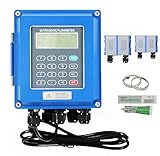
2-in-1 Ultrasonic Thickness Gauge Tester Meter, Thickness Range 1~300mm / Sound Velocity Range 1000~9999m/s with Probe for Metal and Nonmetal Materials, Steel, Silver, Plastic, Glass, PVC, Pipes
- 【WIDE APPLICATION】— The device is equipped with a fast microprocessor; has a small and comfortable size and work with an ultrasonic technology. The ultrasonic thickness gauge is widely used for measuring Metal and Nonmetal materials, Steel, Aluminum, Copper, Brass, Zinc, Plastic, PVC, Glass, Ceramics, Pipes and any other good ultrasonic wave conductor as long as it has parallel top and bottom surfaces.
- 【HIGH ACCURACY】— The ultrasonic thickness tester has a wide Range of 0.04 to 11.8 inch /1mm to 300mm with a minimum Resolution: 0.1mm. The device is equipped with a fast microprocessor, has a small and comfortable size and work with an ultrasonic technology.
- 【SOUND SPEED ADJUSTMENT】User can select the preset sound velocity values among various materials, sound speed adjustment range is 1000~9999m/s, sound speed also is defined customizable for the digital ultrasonic thickness better based on your different application. With a given thickness by a sample hardware to measure the sound velocity.
- 【MULTI-FUNCTIONAL】— 2.4″HD screen display with backlit display ultrasonic thickness tester, statistic view, calibration, auto-off, low battery indicator, store/recall function.
- 【WHAT YOU GET】— 1x digital ultrasonic thickness gauge, 1x probe 5MHz, built-in metal calibration block, 3x AAA Battery, 1x operation manual, and a friendly 24/7 professional customer service team.
Key Components of an Ultrasonic Testing System
A typical ultrasonic testing system consists of several key components:
- Transducer: The transducer is the heart of the system, converting electrical energy into ultrasonic waves and vice versa. Different transducers are available with varying frequencies and beam angles to suit different applications. The selection of the appropriate transducer is critical for optimal results. A smaller diameter transducer is used for high precision and high resolution images on thinner materials. For thicker materials, a larger diameter is used for greater penetration depth and wider area of coverage, however less resolution.
- Pulse generator/receiver: This component generates the electrical pulses that drive the transducer and receives the reflected signals. It is crucial for generating and receiving ultrasonic signals for effective evaluation of materials and structures.
- Display unit: The display unit shows the ultrasonic signals as waveforms or images, allowing the technician to interpret the results and identify flaws. These displays can vary in complexity, from simple A-scans (amplitude versus time) to sophisticated B-scans (amplitude versus time and depth) and C-scans (plan view images). Advanced systems might even provide three-dimensional representations of flaws.
- Coupling medium: A coupling medium, such as oil, gel, or water, is necessary to provide good acoustic contact between the transducer and the test material. Air gaps can severely attenuate the ultrasonic waves, leading to inaccurate results. The choice of coupling medium depends on the material being tested and the type of transducer being used.
The quality and calibration of each component are critical for accurate and reliable results. Regular maintenance and calibration are essential to ensure the accuracy and reliability of the testing system, minimizing the risk of errors.
Calibration and Standardization in Ultrasonic Testing
Accurate and reliable ultrasonic testing results rely heavily on proper calibration and adherence to established standards. Calibration ensures that the equipment is functioning correctly and provides consistent and accurate measurements. This typically involves using standardized test blocks with known flaws to verify the equipment’s performance. These blocks have precisely defined characteristics, facilitating accurate comparisons and adjustments.
Standardization in ultrasonic testing is crucial for ensuring consistency and comparability of results across different laboratories and testing facilities. Various standards organizations, such as ASTM International (American Society for Testing and Materials) and ISO (International Organization for Standardization), develop and publish standards for ultrasonic testing procedures and techniques. Following these standards helps ensure that the testing process is consistent and reliable, resulting in improved data interpretation and decision making.
For example, ASTM E114-17 is a frequently used standard covering the measurement and determination of ultrasonic material properties. Adherence to such standards is vital in maintaining consistent quality across the field of non-destructive examination. Ignoring these procedures can lead to misleading data, impacting reliability and overall confidence in the inspection process.
Different Transducer Types and Their Applications
Ultrasonic transducers are available in a wide variety of types, each designed for specific applications. The choice of transducer depends on several factors, including the frequency needed, the type of material being tested, and the access to the test surface. Common types include:
| Transducer Type | Description | Typical Applications |
|---|---|---|
| Normal Incidence (Straight Beam) | The ultrasonic beam is perpendicular to the test surface. | Measuring thickness, detecting planar flaws parallel to the surface. |
| Angle Beam | The ultrasonic beam is directed at an angle to the test surface, enabling the detection of flaws not aligned with the surface. | Detecting cracks and flaws in welds, castings, and forgings. |
| Surface Wave | The ultrasonic waves travel along the surface of the material. | Detecting surface cracks and flaws. |
| Dual-Element Transducers | A combination of a separate transmit and receive crystal in the same transducer housing. | Precise location of discontinuities. |
The selection of the correct transducer is crucial for obtaining accurate and reliable results. Using an inappropriate transducer can lead to missed flaws or false indications. For instance, a straight beam transducer would not be suitable for detecting flaws at an angle to the surface of the material.
Applications of Ultrasonic Testing
Ultrasonic Testing in Various Industries
Ultrasonic testing finds widespread application across diverse industries due to its effectiveness and versatility. Its non-destructive nature allows for material examination without causing damage, making it an invaluable tool for quality control and safety assurance.
- Aerospace: UT is crucial for inspecting aircraft components, such as turbine blades, fuselage structures, and engine parts, for cracks, corrosion, and other flaws. The safety-critical nature of aerospace demands rigorous inspection methods, and UT effectively meets this need. This ensures structural integrity and prevents potential catastrophic failures.
- Automotive: In the automotive industry, UT is used to inspect components such as engine blocks, axles, and transmission parts for internal defects during production. This helps ensure the reliability and safety of vehicles. Detection of microscopic flaws ensures that vehicle parts meet quality standards, promoting durability and performance.
- Power Generation: The power generation industry heavily relies on UT for inspecting pressure vessels, piping, and turbine components in power plants. This is vital for preventing leaks and explosions, ensuring plant reliability and operator safety. Routine inspections utilizing UT safeguard against equipment failures, enhancing efficiency and minimizing operational downtime.
- Manufacturing: Across manufacturing, UT plays a vital role in quality control, assessing the integrity of various materials and components during production and post-processing stages. From welds and castings to intricate machinery parts, UT aids in identifying defects that could affect product performance and longevity.
- Construction: In construction, UT is increasingly used to assess the integrity of concrete structures, rebar, and other building materials. It can detect voids, cracks, and corrosion, improving safety and the longevity of structures. This ensures structural integrity and minimizes the risk of unforeseen failures.
The applications are constantly expanding as new techniques and instruments are developed, broadening the range of materials and inspection scenarios where ultrasonic testing can be effectively applied.
Case Studies: Real-World Examples of Ultrasonic Testing
Let’s look at a couple of real-world examples illustrating the power of ultrasonic testing:
Example 1: A power plant discovered a significant reduction in the thickness of a critical pressure vessel wall during a routine UT inspection. This early detection prevented a potential catastrophic failure that could have resulted in a plant shutdown and potentially caused significant environmental damage. Early detection, made possible by UT, prevented costly repairs and protected the environment.
Example 2: An aerospace manufacturer utilized UT to detect a small crack in a turbine blade during the production phase. If undetected, this crack could have resulted in blade failure during flight, leading to significant consequences. The timely detection by UT allowed for the blade to be replaced, preventing costly repairs and ensuring the safety of the aircraft.
These real-world scenarios underscore UT’s importance in preventing potential failures and ensuring safety across diverse industries. Early identification of defects via UT translates to reduced costs and enhanced safety.
Limitations of Ultrasonic Testing
While ultrasonic testing is a powerful NDT method, it does have certain limitations. Understanding these limitations is crucial for interpreting results accurately and choosing appropriate testing methods.
- Surface finish: Rough or uneven surfaces can interfere with the transmission of ultrasonic waves, making it difficult to obtain accurate results. Proper surface preparation is often essential for reliable results. Surface roughness can cause scattering of ultrasonic energy, leading to inaccurate indications.
- Material properties: Certain materials, such as coarse-grained metals or highly porous materials, may be difficult to inspect using ultrasonic testing due to signal attenuation and scattering. Material characteristics significantly influence how ultrasonic waves propagate, impacting detection capabilities.
- Operator skill: The interpretation of ultrasonic test results requires significant expertise and experience. The ability to distinguish between real flaws and artifacts requires considerable training and practical experience. Incorrect interpretation can lead to costly errors or safety risks.
- Complex geometries: Inspecting parts with complex geometries or curved surfaces can be challenging, requiring specialized techniques and transducers. Complex geometries can lead to wave reflections and refractions that complicate interpretation.
- Accessibility: Sometimes, access to the test surface may be limited, hindering the effectiveness of ultrasonic testing. Obstructions or difficult-to-reach areas can make it difficult to conduct a complete and reliable inspection.
Awareness of these limitations helps choose the appropriate NDT method or combine UT with other techniques for a comprehensive evaluation. A skilled technician understands these limitations and can adjust techniques accordingly to maximize results.
Advanced Ultrasonic Testing Techniques
Phased Array Ultrasonic Testing (PAUT)
Phased array ultrasonic testing (PAUT) is an advanced technique that uses an array of transducers to create and steer multiple ultrasonic beams electronically. This enables the creation of electronic scanning, allowing for the inspection of larger areas and complex geometries more efficiently than with conventional ultrasonic testing. The beams can be electronically steered and focused, providing greater flexibility and control over the inspection process. This also allows for the creation of electronic scans, where the transducer remains stationary and beams are electronically swept across the part.
The advantages of PAUT include faster inspection speeds, improved image quality, and the ability to inspect complex geometries. This technique is particularly useful in applications where access is limited or where high-speed inspection is required, such as in pipeline inspections or aerospace applications. PAUT generates more data than conventional methods, providing detailed images of internal flaws and their characteristics. This enhanced detail and speed improves efficiency and potentially reduces inspection times significantly.
Time-of-Flight Diffraction (TOFD)
Time-of-flight diffraction (TOFD) is a technique that uses the diffraction of ultrasonic waves at the tips of cracks to determine the size and location of the flaw. Unlike conventional methods that rely on reflected echoes, TOFD detects the diffracted waves, providing more reliable sizing of flaws, especially when they are small or oriented at an angle to the surface. The diffracted waves provide a more precise signal, improving accuracy and confidence in results.
TOFD is particularly well-suited for detecting and sizing cracks in welds and other critical components. The accuracy of TOFD in crack sizing makes it a valuable technique in safety-critical applications where precise flaw characterization is essential. Because it utilizes diffracted waves, it is less sensitive to surface conditions and material variations than conventional techniques.
Automated Ultrasonic Testing (AUT)
Automated ultrasonic testing (AUT) incorporates robotic systems and advanced software to automate the ultrasonic inspection process. AUT significantly improves inspection speed and consistency, reducing the reliance on human operators and minimizing the risk of human error. The automation also allows for the inspection of larger and more complex parts more efficiently.
AUT systems use automated scanning mechanisms to move the transducer across the material, collecting and analyzing ultrasonic data. The data are then processed using sophisticated algorithms to identify and characterize flaws. This results in faster, more repeatable, and more objective inspections. The use of robots reduces risk to human operators in hazardous environments, improving overall worker safety.
Ultrasonic Testing Standards and Regulations
Key International and National Standards
Numerous international and national standards govern the procedures and practices of ultrasonic testing. These standards help to ensure consistency and quality of results across different testing facilities and laboratories. Adherence to these standards is critical for maintaining the reliability and validity of the inspection process.
Some of the key organizations involved in developing these standards include ASTM International, ISO, and the American Welding Society (AWS). These standards cover various aspects of ultrasonic testing, including equipment calibration, testing procedures, and interpretation of results. For example, the ASTM E114 standard provides guidelines for determining the velocity of ultrasound in various materials, crucial for accurate flaw detection and sizing. This provides a framework for consistent results and ensures comparability between different tests.
Regulatory Compliance and Certification
In many industries, ultrasonic testing is a mandatory requirement for ensuring product safety and quality. This often necessitates compliance with specific regulations and industry standards. For instance, in the aerospace industry, strict regulations govern the inspection and certification of aircraft components. Similarly, the nuclear power industry has stringent requirements for the inspection and maintenance of critical components. These regulations often specify the types of testing methods to be used, the qualifications of the personnel conducting the tests, and the documentation requirements.
Certification of personnel conducting ultrasonic testing is also critical, ensuring that they possess the necessary skills and knowledge to perform the tests accurately and safely. Various certification bodies offer training programs and examinations leading to professional certifications in ultrasonic testing. These certifications validate the competence of technicians, enhancing confidence in inspection results and maintaining consistent quality control.
Data Management and Reporting in Ultrasonic Testing
Data management and reporting are essential aspects of ultrasonic testing. Careful documentation of test procedures, results, and interpretations is crucial for ensuring traceability and accountability. The data generated during ultrasonic testing, often including waveforms, images, and reports, need to be systematically stored and managed to allow for future reference and analysis. This is especially critical in safety-critical applications where a detailed audit trail of the inspection process is required.
Sophisticated software packages are used for data management and report generation. These packages allow for the integration of ultrasonic data with other inspection data, providing a comprehensive view of the material’s condition. The software also assists in generating compliant reports and documents, making data handling and communication with clients more efficient and effective.
Frequently Asked Questions
What is ultrasonic testing best for?
Ultrasonic testing is best for detecting internal flaws and discontinuities in a wide range of materials, including metals, plastics, ceramics, and composites. It’s particularly effective for identifying cracks, voids, inclusions, and other subsurface defects. Its high sensitivity and ability to penetrate deeply into materials make it ideal for inspecting components with complex geometries or thick sections. Applications range from aerospace and automotive to power generation and construction.
How accurate is ultrasonic testing?
The accuracy of ultrasonic testing depends on various factors, including the equipment used, the skill of the operator, the material being tested, and the type of flaw being sought. While it’s highly sensitive, factors such as surface roughness or complex geometries can affect accuracy. Proper calibration and adherence to standardized procedures are crucial for maximizing accuracy. The use of advanced techniques such as PAUT and TOFD can significantly improve the accuracy of flaw detection and sizing.
What are the limitations of ultrasonic testing?
Ultrasonic testing has limitations. It struggles with highly porous materials, materials with coarse grain structures that scatter sound, and parts with complex geometries or limited access. The accuracy depends on operator skill and proper surface preparation. Results can be affected by the coupling between the transducer and the material. For these reasons, it’s sometimes used in conjunction with other NDT methods for a more complete picture.
How much does ultrasonic testing cost?
The cost of ultrasonic testing varies depending on the complexity of the inspection, the size of the part, the required level of detail, and the qualifications of the personnel conducting the test. Simple inspections might be relatively inexpensive, while complex inspections requiring specialized equipment or skilled technicians can be more costly. It’s best to get quotes from multiple providers to compare pricing and services. Consider factors like equipment rental, technician fees, and report generation costs.
What are the safety precautions when performing ultrasonic testing?
Safety precautions primarily relate to the use of the equipment. Ultrasonic testing itself is generally safe, however, it’s essential to ensure that the equipment is properly calibrated and maintained. Operators should wear appropriate personal protective equipment (PPE), particularly eye protection, to prevent any potential hazards associated with the equipment. Always adhere to manufacturer guidelines for safe operation. Never operate equipment that shows signs of damage or malfunction.
What training is required to perform ultrasonic testing?
Training requirements vary depending on the complexity of the inspections and industry standards. Basic training covers the fundamental principles of ultrasonic testing, equipment operation, and interpretation of results. Advanced training focuses on specific techniques such as PAUT or TOFD. Many countries have certification programs for personnel conducting ultrasonic testing. Certification demonstrates competency and adherence to industry best practices.
What are the future trends in ultrasonic testing?
The future of ultrasonic testing includes increased automation, the use of more sophisticated data analysis techniques, and integration with other NDT methods. Advanced techniques like PAUT and TOFD are becoming more prevalent. Artificial intelligence (AI) and machine learning (ML) are also being explored to automate data analysis and improve flaw detection accuracy. These advancements aim to enhance efficiency, accuracy, and speed in non-destructive testing.
Final Thoughts
Ultrasonic testing is a powerful and versatile non-destructive testing method with significant applications across numerous industries. Its ability to detect internal flaws, combined with its high sensitivity and deep penetration capabilities, makes it a crucial tool for ensuring product quality and safety. Understanding the fundamentals of ultrasonic testing, its various techniques, and its limitations is crucial for effectively utilizing this technology for material evaluation. Whether you’re working in aerospace, automotive, or construction, mastering ultrasonic testing can significantly enhance your quality control and safety procedures. By staying up-to-date on the latest advancements and adhering to established standards and regulations, you can leverage the full potential of this vital non-destructive testing technology. Now, it’s time to put this knowledge into practice and explore the potential benefits for your own projects or organization.