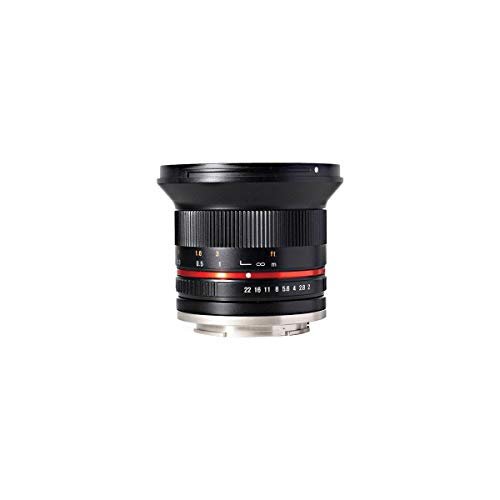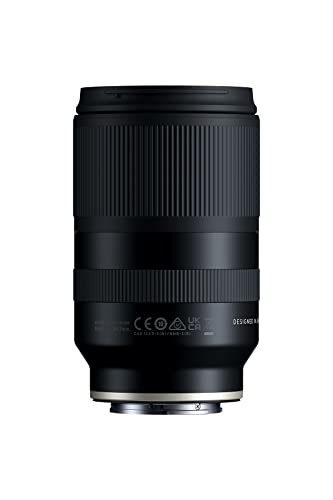

The Panasonic Lumix G 25mm f/1.7 is the best 25mm MFT lens for most everyday photographers.
You may want one small lens that can handle family photos, travel, food shots, street scenes, and indoor work. A 25mm lens on a Micro Four Thirds camera gives a view close to a 50mm lens on a full-frame camera. That makes it feel natural and easy to use. I compared five strong options, including autofocus, manual-focus, low-light, and cinema-style lenses. This guide will help you choose the best 25mm MFT lens for your camera, skill level, and budget.
See the differences between my top picks at a glance.
| Lens | Focus | Aperture | Best For | Key Strength | Buy |
|---|---|---|---|---|---|
| Panasonic Lumix G 25mm | Autofocus | f/1.7 | Daily use and portraits | Easy autofocus and strong value | View on Amazon |
| TTArtisan 25mm f/2 | Manual | f/2 | Budget manual shooting | Metal feel and low price | View on Amazon |
| Yongnuo YN25mm | Autofocus | f/1.7 | Low-cost AF users | Bright aperture with AF | View on Amazon |
| Meike 25mm f/0.95 | Manual | f/0.95 | Creative low-light work | Very wide maximum aperture | View on Amazon |
| Meike 25mm T2.2 Mini Cinema | Manual | T2.2 | Video and cinema rigs | Video-friendly manual control | View on Amazon |
Panasonic Lumix G 25mm F1.7

The Panasonic Lumix G 25mm f/1.7 is the safest choice for most Micro Four Thirds users. Its 25mm focal length gives a natural view that works well for people, pets, travel, food, and casual street photos. The bright f/1.7 aperture also helps in dim rooms and creates useful background blur. I like this lens because it gives new photographers a simple way to get more from a small MFT camera.
Panasonic designed this lens for the Micro Four Thirds mount used by many Lumix and Olympus cameras. It includes autofocus, so it suits moving subjects better than the manual lenses in this guide. The compact body also keeps a small camera easy to carry. For buyers who want one affordable prime lens with few compromises, this is my top pick and the best 25mm MFT lens for general use.
Pros:
- Bright f/1.7 aperture for indoor and evening photos
- Autofocus makes it easy for beginners and family photos
- Natural 50mm-equivalent view on MFT cameras
- Small size balances well with compact camera bodies
- Useful for portraits, travel, food, and street photography
- Works with a wide range of Panasonic and Olympus MFT bodies
Cons:
- It does not provide the wide view needed for very tight rooms
- The plastic-focused design may feel less premium than metal manual lenses
- Photographers who want silent, advanced video focus may prefer a more specialized lens
What Amazon Buyers Are Saying
Amazon buyer feedback commonly highlights the low price, bright aperture, light weight, and useful image quality. Many owners buy it as a first prime lens after using a kit zoom. Buyers also often mention that autofocus feels simple and dependable for normal daily shooting. These are the practical reasons this model remains popular in the MFT market.
Some customer comments point to limits that match the lens design. A few buyers expect premium metal construction or a wider field of view and feel surprised by the compact plastic build. Others note that sharpness and focus results depend on the camera body, light, and shooting settings. I recommend checking the current listing and recent reviews before ordering because product bundles and seller conditions can change.
My Recommendation
I recommend the Panasonic Lumix G 25mm f/1.7 to anyone who wants an affordable autofocus prime. It offers the best mix of speed, ease, size, and price in this group. It is especially good for beginners, travel shooters, and people who want better low-light results than a basic kit zoom can provide.
TTArtisan 25mm F2 Manual Lens

The TTArtisan 25mm f/2 is a low-cost manual-focus lens for photographers who enjoy a slower, more direct way to work. Its 25mm focal length gives the same useful normal view as the other lenses here. The f/2 aperture lets in a fair amount of light and can soften a background when you focus close to a subject. This lens can suit still life, street work, landscape details, and careful portrait sessions.
The main trade-off is the lack of autofocus. You must turn the focus ring yourself, so fast action and moving children require more care. On the other hand, manual focus can help you learn distance, framing, and depth of field. If you want an inexpensive metal-style prime for a compatible MFT body, the TTArtisan offers good creative value and a clear reason to consider it as an alternative best 25mm MFT lens.
Pros:
- Affordable entry point for manual-focus photography
- f/2 aperture works well for many indoor and outdoor scenes
- Natural 25mm MFT framing for everyday subjects
- Manual focus ring gives direct creative control
- Compact prime design is easy to carry
- Useful option for photographers who enjoy zone focus and street work
Cons:
- No autofocus for sports, pets, or quick family moments
- Manual exposure and focus take more time to learn
- Low-light focusing becomes harder at f/2 than with autofocus support
What Amazon Buyers Are Saying
Amazon customers who choose this type of lens often value its low cost, manual feel, and simple design. Feedback tends to favor photographers who already understand manual focus or who want to practice it. Buyers also tend to like the lens as a small creative prime rather than as a direct replacement for an autofocus lens.
The most important complaint is predictable: manual focus does not suit every user. Some buyers need more practice to get sharp images, especially at wide apertures or with moving subjects. Product descriptions can also list many compatible camera models, so I suggest checking the exact mount and confirming that your camera supports manual lens use before purchase.
My Recommendation
I recommend the TTArtisan 25mm f/2 for patient photographers who want a budget manual lens. It is not my first choice for family events or fast video. It becomes a smart buy when you value hands-on control, low cost, and a compact prime more than autofocus speed.
Yongnuo YN25mm F1.7 AF Lens
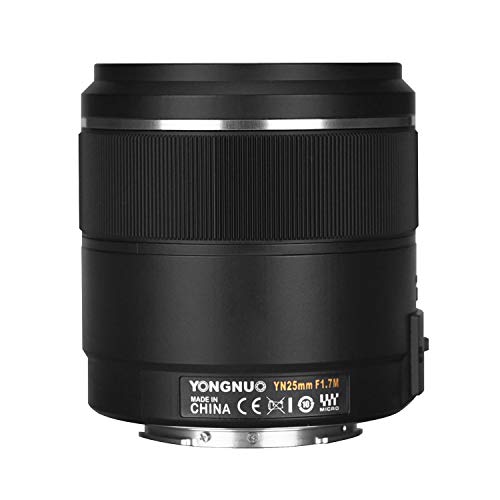
The Yongnuo YN25mm f/1.7 targets photographers who want autofocus and a bright prime at a competitive price. Its 25mm focal length is flexible enough for home photos, portraits, travel, and everyday video. The f/1.7 aperture gives it a strong advantage over many slow kit zooms in low light. It also offers a familiar setup for users who want a normal lens without moving to manual focus.
This lens makes the most sense for buyers who compare price first but still want autofocus. Yongnuo has produced affordable lenses for several camera systems, yet third-party autofocus can vary by camera body and firmware. I would treat compatibility as a key buying step. When the camera and lens work well together, this model can deliver much of the practical appeal of a best 25mm MFT lens without a high entry cost.
Pros:
- Autofocus supports quick everyday shooting
- Bright f/1.7 maximum aperture suits dim scenes
- Natural field of view works across many subjects
- Good budget alternative to more established brands
- Useful for both still photos and casual video
- Prime design encourages better low-light habits and composition
Cons:
- Autofocus behavior may differ between camera bodies
- Third-party lens support may not match first-party integration
- Buyers should confirm current firmware and compatibility details
What Amazon Buyers Are Saying
Buyer discussions around affordable Yongnuo autofocus lenses often focus on the strong feature list for the price. Customers commonly appreciate getting a bright aperture and autofocus in one low-cost package. Some users also like the lens as a spare or as a first prime for learning how a fixed focal length changes their photography.
The main concern in buyer feedback is consistency. Some photographers report smooth results, while others may notice slower focus, noise, or a less polished feel than a first-party Panasonic lens. Those experiences can depend on the camera and shooting mode. I advise reading recent reviews tied to your exact MFT camera instead of relying only on general brand comments.
My Recommendation
The Yongnuo YN25mm f/1.7 is worth considering when you want autofocus and a bright aperture at a lower price. I place it behind the Panasonic because first-party compatibility gives me more confidence. Still, it can be a strong value choice for budget users who confirm their camera works well with it.
Meike 25mm F0.95 Manual Lens

The Meike 25mm f/0.95 is the specialist option in this comparison. Its extremely wide maximum aperture is made for creative work in low light and for a very shallow focus effect. The 25mm focal length remains useful for portraits, detail shots, indoor scenes, and video. However, the f/0.95 setting creates a very thin focus area, so it rewards careful technique.
This is a manual-focus lens, not a quick point-and-shoot tool. You need to turn the focus ring and check focus with care, especially when your subject moves. The wide aperture can also show a different look from a standard f/1.7 lens, but it does not guarantee sharp results in every scene. I see it as a creative tool for experienced users rather than the best 25mm MFT lens for beginners.
Pros:
- Extremely wide f/0.95 aperture for creative low-light work
- Strong background separation when focus and distance suit the scene
- 25mm view works well for portraits and indoor compositions
- Manual focus gives precise control for planned shots
- Useful for photographers and filmmakers who want a special visual style
- Can help keep shutter speeds higher in some dim conditions
Cons:
- No autofocus for fast or unpredictable subjects
- Very shallow depth of field makes focusing demanding
- Wide-open results may not suit every subject or lighting condition
- Manual exposure and focus skills are important for good results
What Amazon Buyers Are Saying
Buyers who choose a lens with an f/0.95 aperture usually want its special look rather than a simple everyday lens. Customer feedback tends to value the dramatic blur, bright aperture, and creative control. Experienced users often understand that this type of lens needs careful focus and may use it for portraits, night scenes, or controlled video.
Complaints usually center on the manual-focus learning curve and the narrow depth of field. Some buyers may also expect every frame to look sharp at f/0.95, which is not how ultra-wide-aperture lenses behave. I recommend checking sample images, confirming the mount, and deciding whether you truly need the creative aperture before buying.
My Recommendation
The Meike 25mm f/0.95 is worth buying for skilled photographers who want a distinctive low-light look. It is not the most practical first lens. Choose it when manual focus feels comfortable and you value creative control more than speed and convenience.
Meike 25mm T2.2 Mini Cinema Lens
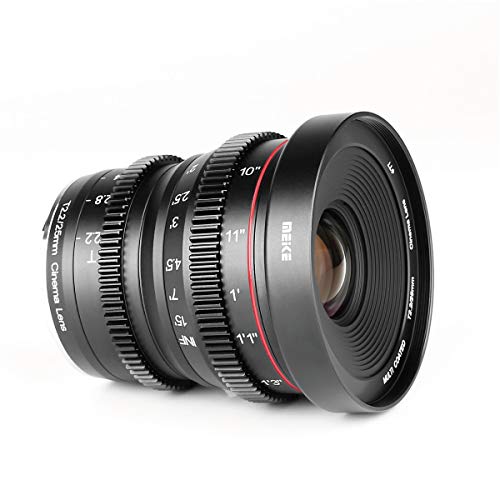
The Meike 25mm T2.2 Mini Cinema lens serves a different user than the other four models. It uses manual focus and a cinema-style design for video makers who want steady, repeatable control. The 25mm focal length gives MFT video a balanced view for interviews, scenes, and subject shots. Its T2.2 rating describes light transmission for video use, so it belongs on a camera rig rather than in a casual pocket kit.
This lens can work well when you control the scene and pull focus by hand. It does not offer the quick autofocus that many family and travel shooters need. The cinema design may also add size or weight compared with a small photo prime. For filmmakers who use a follow-focus system or build shots with care, this lens can provide better handling than a standard still-photo lens.
Pros:
- Designed with manual video control in mind
- T2.2 aperture suits many controlled video scenes
- 25mm focal length works for interviews and general scenes
- Manual focus supports planned focus pulls
- Good fit for small cinema and mirrorless video rigs
- Consistent operation can help repeatable filming setups
Cons:
- No autofocus for run-and-gun shooting
- Less convenient for still photos of moving subjects
- Users must check rig clearance and camera compatibility
- A cinema lens may be more specialized than most casual buyers need
What Amazon Buyers Are Saying
Customers who buy mini cinema lenses generally look for manual control, a cinema form factor, and a low-cost way to build a video kit. Buyers often appreciate the focus ring and the ability to use the lens in a planned setup. It can appeal to students, independent filmmakers, and creators who want more control than a basic autofocus zoom offers.
The common limitation is also clear: this is not a point-and-shoot lens. Users who expect fast autofocus or still-photo convenience may feel disappointed. Some buyers also need to plan for the size of a rig, the position of the focus ring, and the camera body they use. I would buy it for video work first, not as a general replacement for the Panasonic 25mm.
My Recommendation
I recommend the Meike 25mm T2.2 Mini Cinema lens to video creators who understand manual focus. It is a specialized tool with useful control for planned filming. If you mostly take still photos, an autofocus lens will provide better value and less work.
How to Choose the Best 25mm MFT Lens
Choosing the best 25mm MFT lens starts with your camera, subject, and shooting style. All five lenses use a 25mm focal length, but they do not serve the same purpose. A family photographer needs fast autofocus. A street photographer may enjoy manual focus. A filmmaker may care more about focus control and lens shape. Use the points below before you place an order.
1. Decide Between Autofocus and Manual Focus
Autofocus is the best choice for moving people, pets, travel moments, and family events. The Panasonic and Yongnuo lenses provide the simplest path because the camera can focus for you. This matters when the subject moves toward you or when you need to take a photo without delay.
Manual focus can still be a great choice. It gives you direct control and works well for still life, planned portraits, landscape details, and video. The TTArtisan and Meike lenses suit this style. Before you buy, ask how often your subject moves. If the answer is “often,” autofocus usually gives better real-world value.
2. Match the Aperture to Your Light and Style
A wide aperture lets more light reach the sensor. The Panasonic and Yongnuo f/1.7 lenses work well in homes, restaurants, and evening streets. The TTArtisan f/2 lens gives slightly less light but still offers a useful setting for daily photography.
The Meike f/0.95 lens goes much wider, but that number comes with a learning curve. At such a wide setting, the focus area can become very thin. Use it when you want soft backgrounds or a special low-light look. Do not buy it only because the number looks impressive. A bright aperture cannot replace careful focus, good subject distance, or clean light.
For video, look at the T rating and the focus design. The Meike T2.2 cinema lens aims at controlled filming. It can be a better fit for a rig than a normal photo lens. Still, it may not suit creators who rely on autofocus while walking or filming live events.
3. Check Mount Fit, Camera Support, and Total Value
Micro Four Thirds cameras share a mount standard, but lens features can still vary. Check the exact product listing for your camera model. Confirm that the lens supports the functions you need, such as autofocus, electronic communication, or in-camera correction. Manual lenses may work well but may not pass focus or aperture data to the camera.
Think about size and balance too. A small lens feels better on a compact body. A cinema lens may need rails, a cage, or a follow-focus tool. Those extra parts can change the total cost. A low lens price does not always mean a low-cost setup.
Finally, compare the lens with your current zoom. A 25mm prime should give you a reason to carry it. That reason may be a bright aperture, a smaller body, a manual focus experience, or better video control. For most buyers, the Panasonic combines the most useful features. For specialists, one of the Meike models may offer a better match.
Final Verdict: Which Should You Buy?
The Panasonic Lumix G 25mm f/1.7 is my top choice and the best 25mm MFT lens for most users. It offers autofocus, a bright aperture, a natural view, and strong value.
Choose TTArtisan for budget manual focus, Yongnuo for low-cost autofocus, Meike f/0.95 for creative blur, or Meike T2.2 for video. Check compatibility before buying.
FAQs Of best 25mm mft lens
What is a 25mm lens on Micro Four Thirds equivalent to?
A 25mm MFT lens gives a view close to a 50mm lens on a full-frame camera. It offers a natural perspective for daily photography.
Which is the best 25mm MFT lens for beginners?
The Panasonic Lumix G 25mm f/1.7 is the best beginner choice here. It has autofocus, a bright aperture, and simple handling.
Are manual 25mm MFT lenses good for photography?
Yes. Manual lenses work well for still life, planned portraits, street scenes, and video. They take more time with moving subjects.
Is f/0.95 better than f/1.7 for an MFT lens?
Not always. f/0.95 allows more light and creates a thinner focus area, but f/1.7 is often easier to use and still works well in low light.
Can I use a 25mm MFT lens for video?
Yes. A 25mm lens works well for interviews, scenes, and general video. Choose autofocus for ease or a cinema lens for planned manual focus.