
The Nikon NIKKOR Z 35mm f/1.8 S is my top choice for sharp, natural-looking mirrorless photos.
You may want one lens that handles street photos, family moments, travel, food, and indoor scenes without feeling bulky. A 35mm prime lens can solve that problem. It gives a natural view, works well in small spaces, and often gathers more light than a kit zoom. I tested the main strengths, limits, camera fit, focus features, and value of five popular Nikon 35mm lenses to help you choose with confidence.
See the differences between my top picks at a glance.
Nikon AF-S DX 35mm f/1.8G Lens
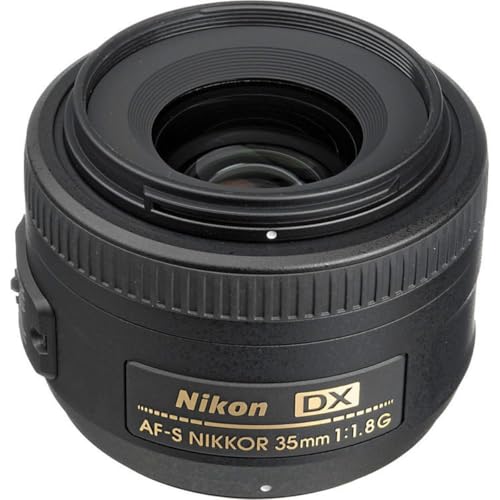
The Nikon AF-S DX 35mm f/1.8G remains one of the safest buys for Nikon DSLR owners. Nikon designed it for DX-format cameras such as the D3500, D5600, D7500, and many older models. On a DX sensor, it gives a view similar to a 52.5mm lens on full frame. That makes it useful for portraits, daily photos, and travel.
Its f/1.8 maximum aperture lets in much more light than a basic kit lens set near f/3.5 or f/5.6. It also helps create soft background blur when you focus close to your subject. The lens uses Nikon’s AF-S focus motor, so it can autofocus on many Nikon DSLR bodies that lack an in-camera focus motor. Its small size also keeps a light DSLR easy to carry.
This lens does not offer the wide view many people expect from a 35mm lens on full frame. The DX crop changes the angle of view. Still, the near-normal view feels natural and works well in tight indoor spaces. For many Nikon DSLR users, this is the best 35mm lens for Nikon when price, size, and ease of use matter most.
Pros:
- Bright f/1.8 aperture for indoor and evening photos
- Small and light design for everyday carrying
- AF-S autofocus works with many Nikon DSLR cameras
- Sharp results at a very accessible price
- Useful near-normal view on DX-format bodies
- Good background separation for portraits and detail shots
Cons:
- Designed for DX cameras rather than full-frame use
- No built-in optical vibration reduction
- Autofocus can feel less refined than newer Z lenses
What Amazon Buyers Are Saying
Amazon buyers commonly praise this lens for its low price, sharp images, bright aperture, and small size. Many owners use it as their first prime lens after a kit zoom. Buyers also often note that it performs well for family photos, indoor events, portraits, and general walk-around work.
The most common concerns involve the DX crop, the lack of vibration reduction, and occasional focus behavior in very low light. As with any older lens, buyer experiences can vary by camera body and condition. Check the return policy and confirm that your camera uses the Nikon F mount before ordering.
My Recommendation
I recommend this lens to Nikon DX DSLR owners who want a simple and bright prime without spending much. It offers strong value and teaches you to work with a fixed focal length. It is not the right pick for a Nikon Z camera or for photographers who need a true 35mm full-frame angle.
| Category | Rating |
|---|---|
| Optical quality | 4.5/5 |
| Autofocus | 4/5 |
| Low-light use | 4.5/5 |
| Value | 5/5 |
| Overall Rating | 4.5/5 |
NIKKOR Z 35mm f/1.4 Lens

The NIKKOR Z 35mm f/1.4 targets Nikon Z photographers who want a fast, natural prime. Its f/1.4 aperture is the main attraction. It gathers more light than an f/1.8 lens and can produce a shallower depth of field. That helps in dim rooms, evening streets, and creative portrait work.
The lens gives a true 35mm view on Nikon FX-format Z cameras. This angle feels wide enough for travel and environmental portraits, yet it does not stretch faces as much as an ultra-wide lens. It also works on Nikon DX Z bodies, where the crop creates a narrower view similar to about 52.5mm. That gives DX users a useful portrait and everyday perspective.
This lens focuses with a stepping motor and includes a customizable control ring. The control ring can manage settings such as focus, aperture, or exposure compensation, depending on how you set the camera. It is a strong choice for people who value speed and creative control over the very highest edge-to-edge correction. For many Z users, it is the best 35mm lens for Nikon when a wide aperture matters more than a compact budget lens.
Pros:
- Very bright f/1.4 aperture for low-light work
- True 35mm perspective on Nikon FX Z cameras
- Useful background blur for portraits and close subjects
- Customizable control ring adds hands-on control
- Modern Z-mount autofocus design
- Good fit for street, travel, events, and documentary photos
Cons:
- Costs more than basic Nikon F-mount alternatives
- May show more wide-open optical flaws than the premium S-Line lens
- No built-in optical stabilization
What Amazon Buyers Are Saying
Early buyer feedback commonly focuses on the fast aperture, pleasing subject separation, and natural 35mm view. Z users who shoot indoors or after sunset often value the extra light. Buyers also like the control ring and the flexibility of using one small prime for many types of work.
Some buyers compare it with Nikon’s Z 35mm f/1.8 S and point out that the two lenses serve different goals. The f/1.4 model favors speed and blur, while the S-Line model favors stronger correction and a premium optical design. Review the current listing for the latest condition, warranty, and firmware information.
My Recommendation
I recommend the NIKKOR Z 35mm f/1.4 for Z photographers who often shoot in dim light or want a more pronounced background blur. It offers a strong mix of speed, handling, and useful focal length. Choose the f/1.8 S instead if maximum edge sharpness and weather-ready construction rank higher than the extra light.
| Category | Rating |
|---|---|
| Optical quality | 4.5/5 |
| Low-light speed | 5/5 |
| Autofocus and control | 4.5/5 |
| Value | 4.5/5 |
| Overall Rating | 4.5/5 |
NIKKOR Z 35mm f/1.8 S Lens

The NIKKOR Z 35mm f/1.8 S is my top overall pick for Nikon Z full-frame users. Nikon built it as part of the S-Line, its higher-end Z lens family. It combines a natural 35mm view with strong sharpness, good contrast, and a fast f/1.8 aperture. The result suits professional work and serious hobby use.
This lens performs well across the frame, which matters for landscapes, architecture, interiors, and group photos. It also gives attractive background separation for portraits and detail shots. The minimum focus distance allows close work, though it is not a dedicated macro lens. Its design includes dust- and drip-resistant sealing, but that does not make any camera setup waterproof.
The Z 35mm f/1.8 S is larger and more expensive than the old DX DSLR lens. That extra size buys a more advanced optical design and a stronger feature set. If you want the best 35mm lens for Nikon Z cameras and prefer dependable image quality over the lowest price, this lens deserves the first look.
Pros:
- Excellent sharpness across much of the image area
- Strong f/1.8 performance for low light and subject separation
- True 35mm angle on Nikon FX-format Z bodies
- S-Line build with dust- and drip-resistant design
- Quiet, smooth autofocus for stills and video
- Customizable control ring for direct camera control
- Works well for travel, documentary, portraits, and landscapes
Cons:
- Higher price than entry-level Nikon prime lenses
- Larger and heavier than the simple DX 35mm f/1.8G
- f/1.8 does not gather quite as much light as an f/1.4 lens
What Amazon Buyers Are Saying
Amazon buyers often praise this lens for its sharp images, clean contrast, smooth focus, and solid build. Many users describe it as a reliable everyday lens for travel, street photography, family images, and video. Full-frame Z owners also like the natural perspective, since 35mm works well in both small rooms and outdoor scenes.
The main complaints tend to concern price and size. Some buyers expected a smaller lens because it is a prime, but the S-Line design is more substantial than a basic kit lens. Buyers who need the lightest setup may prefer the f/1.4 model or a smaller lens, while those who want broad optical performance will likely see the reason for the extra cost.
My Recommendation
I recommend the NIKKOR Z 35mm f/1.8 S as the best all-around option in this group. It gives Nikon Z users a useful focal length, strong optical quality, fast autofocus, and a durable design. It costs more, but the performance makes sense for regular use and serious projects.
| Category | Rating |
|---|---|
| Optical quality | 5/5 |
| Autofocus | 4.5/5 |
| Low-light use | 4.5/5 |
| Build and handling | 4.5/5 |
| Value | 4/5 |
| Overall Rating | 4.5/5 |
Nikon AF-S DX 35mm f/1.8G Renewed

The renewed Nikon 35mm f/1.8G uses the same basic lens design that makes the original DX model popular. It targets Nikon DSLR owners who want the benefits of a fast prime at a lower entry cost. On a DX body, its view resembles a normal lens, so it works well for portraits, meals, pets, and daily scenes.
The f/1.8 aperture helps you shoot at faster shutter speeds in dim rooms. It can also soften the background when you place some distance between your subject and the background. The lens remains compact, and its AF-S motor supports autofocus on many compatible Nikon DSLR bodies.
The key difference is condition. A renewed lens may show signs of earlier use, and the exact cosmetic state can vary. I would inspect the listing details, seller information, included caps, return terms, and warranty before buying. For shoppers who accept that trade-off, this can be the best 35mm lens for Nikon on a tight DSLR budget.
Pros:
- Lower cost than buying a new copy in many cases
- Bright f/1.8 aperture for everyday low-light photos
- Compact size fits entry-level Nikon DSLR kits
- Useful AF-S autofocus on many Nikon F-mount bodies
- Strong choice for beginners learning prime-lens technique
- Good focal length for portraits and casual travel
Cons:
- Condition may vary from one renewed unit to another
- Limited to DX DSLR use for the intended experience
- No optical stabilization
- Warranty and included accessories depend on the listing
What Amazon Buyers Are Saying
Buyers who choose renewed copies often like the low price and the image quality of the original lens design. Common positive themes include a clean lens, accurate autofocus, bright images, and a noticeable improvement over a standard kit zoom. Many users see it as a practical first prime for a Nikon DSLR.
Complaints usually relate to cosmetic marks, missing accessories, focus issues, or a condition that does not match expectations. These concerns do not apply to every unit, but they show why the return policy matters. Read the current product description closely and test autofocus, aperture control, and image quality soon after delivery.
My Recommendation
This renewed lens is worth considering when price matters more than receiving a factory-new product. I would buy it from a listing with clear condition notes and a useful return policy. It delivers the same core shooting experience as the standard DX 35mm f/1.8G, but I rate its value slightly lower because condition can vary.
| Category | Rating |
|---|---|
| Image quality | 4.5/5 |
| Condition confidence | 3.5/5 |
| Low-light use | 4.5/5 |
| DSLR compatibility | 4/5 |
| Value | 4.5/5 |
| Overall Rating | 4/5 |
Yongnuo YN35mm F2N Lens

The Yongnuo YN35mm F2N gives Nikon DSLR owners a low-cost way to try a 35mm prime. Its f/2 maximum aperture is still fairly bright, and its fixed focal length encourages careful framing. The lens offers autofocus and manual focus modes for compatible Nikon F-mount cameras. It is aimed at shoppers who want to spend less than they would on a Nikon-branded alternative.
On a full-frame Nikon DSLR, 35mm gives a broad natural view. It works well for street photography, travel, environmental portraits, and indoor scenes. On a DX DSLR, the crop makes the view similar to about 52.5mm, which feels closer to a standard lens. That difference makes camera format important before you order.
The Yongnuo cannot match Nikon’s premium Z lenses in refinement, correction, or system integration. Still, it can offer good value for casual work and learning. If you want the best 35mm lens for Nikon at the lowest possible cost and use a compatible F-mount DSLR, it deserves consideration.
Pros:
- Affordable entry into 35mm prime photography
- f/2 aperture works well for many indoor scenes
- Autofocus and manual focus options
- True 35mm view on full-frame Nikon DSLRs
- Small prime format is easy to carry
- Useful choice for students and occasional photographers
Cons:
- Optical and focus refinement may trail Nikon lenses
- Compatibility can vary across Nikon camera models
- No optical stabilization
- f/2 is slower than the Nikon f/1.8 and f/1.4 options
What Amazon Buyers Are Saying
Amazon buyers often like this lens because it costs less than many first-party choices. Positive comments tend to mention its compact design, useful focal length, and ability to produce attractive images when the photographer sets up the shot well. Some buyers use it as a spare lens or as an inexpensive way to explore prime photography.
Common concerns include autofocus noise, focus accuracy, sample variation, and compatibility with specific Nikon bodies. A third-party lens may also receive fewer firmware updates than a Nikon lens. Check your camera’s mount and features before purchase, and test focus at different distances during the return period.
My Recommendation
I recommend the YN35mm F2N for budget-minded Nikon F-mount users who understand its limits. It can make sense as a learning lens or backup, but I would choose the Nikon DX 35mm f/1.8G when the price difference is small. Its low cost is the main reason to buy it.
| Category | Rating |
|---|---|
| Image quality | 3.5/5 |
| Autofocus | 3.5/5 |
| Low-light use | 4/5 |
| Compatibility confidence | 3.5/5 |
| Value | 4/5 |
| Overall Rating | 3.75/5 |
How to Choose the Best 35mm Lens for Nikon
Choosing the best 35mm lens for Nikon starts with your camera body. Nikon uses both F-mount DSLR cameras and Z-mount mirrorless cameras. The lens mount must match the camera, or you need a suitable adapter. You should also consider sensor size, aperture, autofocus, build, and the way you plan to shoot.
1. Match the Lens Mount and Sensor
First, identify your camera mount. Nikon DSLR cameras use the F mount, while Nikon Z mirrorless cameras use the Z mount. The Nikon AF-S DX 35mm f/1.8G and the Yongnuo YN35mm F2N are made for Nikon F-mount DSLR use. The two NIKKOR Z lenses in this guide are made for Nikon Z cameras.
Sensor size changes the view. A 35mm lens gives a true 35mm angle on a full-frame Nikon camera. On a DX body, the view becomes narrower, similar to about 52.5mm. This is not a flaw, but it changes how much of a room or street scene fits in the frame. Check your camera manual or Nikon product page if you are not sure whether it uses a DX or FX sensor.
Do not assume that an F-mount lens will attach directly to a Z camera. Nikon’s FTZ and FTZ II adapters can support many F-mount lenses, but autofocus and other features depend on the lens and camera combination. A native Z lens usually gives the simplest experience.
2. Choose the Aperture for Your Real Shooting
The maximum aperture controls light and background blur. An f/1.4 lens lets in more light than an f/1.8 lens. An f/1.8 lens lets in more light than an f/2 lens. This difference can help when you shoot indoors, at night, or at an event where flash is not welcome.
A wide aperture can also blur the background. That effect depends on your distance from the subject, the subject’s distance from the background, and the sensor size. Do not buy an f/1.4 lens only for blur if you mostly shoot landscapes at f/5.6 or f/8. In that case, sharpness, size, and price may matter more.
Remember that a wide aperture gives a thinner focus area. At f/1.4 or f/1.8, careful focus matters. Face and eye detection can help on newer Nikon Z cameras. On older DSLRs, use a suitable focus point and check your images at high magnification.
3. Compare Focus, Build, and Long-Term Value
Autofocus quality matters for people, pets, street scenes, and video. Nikon’s AF-S and Z-system lenses tend to offer the most predictable camera integration. Third-party lenses can work well, but compatibility may vary by body, firmware, and production version. If you need reliable autofocus for paid work, a first-party Nikon lens usually gives more peace of mind.
Build also affects value. The NIKKOR Z 35mm f/1.8 S offers a higher-end design and dust- and drip-resistant construction. That helps when you work outdoors, but it does not replace sensible protection from heavy rain. Smaller lenses are easier to carry, while larger lenses may offer more advanced optics. Choose the balance you will use often.
For a new Nikon DSLR owner, the standard DX 35mm f/1.8G offers excellent value. For a Z full-frame owner, the Z 35mm f/1.8 S gives the strongest overall package. The Z 35mm f/1.4 makes more sense when low-light speed and background blur come first. A renewed or third-party lens can save money, but inspect the return terms and test it soon.
Final Verdict: Which Should You Buy?
For most Nikon Z users, the NIKKOR Z 35mm f/1.8 S is the best 35mm lens for Nikon because it combines sharp optics, strong handling, fast focus, and a useful natural view. Nikon DX DSLR owners should choose the AF-S DX 35mm f/1.8G for its low price and bright aperture.
Choose the Z 35mm f/1.4 for extra low-light speed, or a renewed and Yongnuo lens for a tighter budget. Confirm your mount and sensor before ordering.
FAQs Of best 35mm lens for nikon
What is the best 35mm lens for Nikon Z cameras?
The NIKKOR Z 35mm f/1.8 S is the best overall choice for image quality, autofocus, handling, and build. The Z 35mm f/1.4 is better when extra light and stronger background blur matter most.
Is the Nikon 35mm f/1.8G good for DX cameras?
Yes. The AF-S DX 35mm f/1.8G is made for Nikon DX DSLRs. Its view looks similar to about 52.5mm on full frame, which suits portraits and everyday photography.
Can I use an F-mount 35mm lens on a Nikon Z camera?
You may use many F-mount lenses with Nikon’s FTZ or FTZ II adapter. Support for autofocus and other features depends on the lens and camera body, so check compatibility first.
Is a 35mm lens good for portraits?
Yes. A 35mm lens works well for environmental portraits and full-body photos. For close headshots, step back or use a longer lens to avoid facial distortion.
Should I buy a 35mm f/1.4 or f/1.8 lens?
Choose f/1.4 for more light and stronger background blur. Choose f/1.8 for lower cost, smaller size, and very strong everyday performance.