Introduction
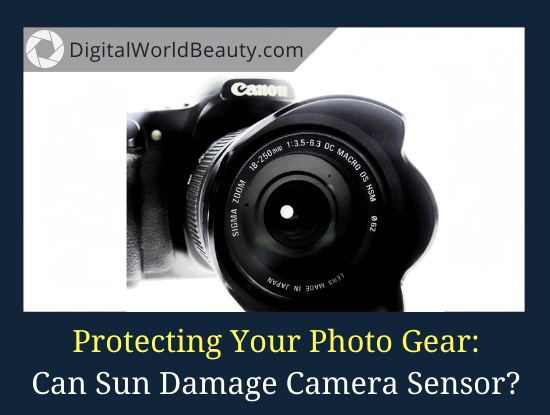
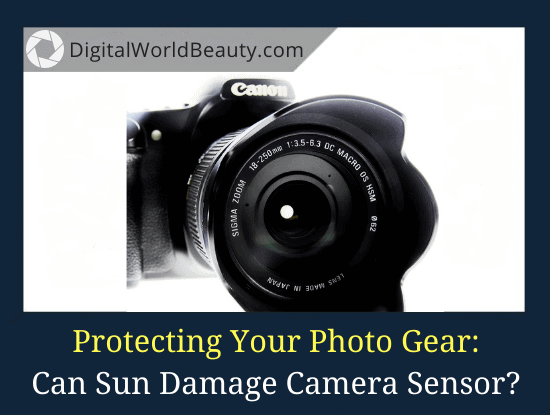
Yes, direct sunlight can damage a camera lens, but normal outdoor photography usually does not. In the United States, the main risk comes from pointing a camera at the sun for a long time, using a powerful telephoto lens, or leaving the camera in a hot car. Short shots that include the sun may cause glare or temporary flare, yet they do not usually harm the lens.
The greater danger is often to the camera sensor, shutter, electronic parts, or your eyes. A lens can focus strong sunlight into a small area inside the camera. That concentrated heat may damage coatings, adhesives, plastic parts, or sensor pixels.

Can direct sunlight damage a camera lens?
Direct sunlight can harm a lens under the right conditions. The risk depends on exposure time, lens design, sun angle, focal length, camera type, and heat.
A modern lens has several glass elements, coatings, seals, and mechanical parts. These parts are built to handle bright outdoor light. They are not designed to collect and focus the full strength of the sun for minutes at a time.
A quick photo of a sunset is usually safe. Leaving a camera pointed at the midday sun while composing, recording video, or using a long telephoto lens is not.
What sunlight can damage
Strong sunlight may affect:
- Lens coatings: Extreme heat or long exposure may cause coating discoloration, separation, or uneven surfaces.
- Optical cement: Some lenses use adhesive between glass elements. Excess heat can weaken or separate that bond.
- Plastic components: Barrel parts, filter mounts, and internal supports can warp when overheated.
- Lubricants: Heat may change the behavior of grease used in focus and zoom mechanisms.
- Electronic contacts: Heat and repeated expansion can stress internal electrical parts.
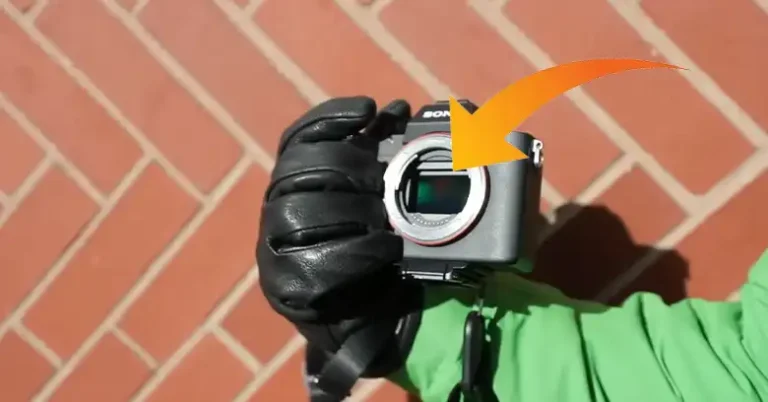
- The image sensor: Sunlight focused through the lens can permanently damage sensor pixels.
- The shutter: Concentrated light and heat may harm shutter curtains in some camera designs.
A lens does not need to look burned to have damage. Loss of contrast, hazy areas, new flare, and focus problems may appear later.
Lens damage versus sensor damage
These problems are often confused:
| Part | Common sunlight risk | Typical sign |
|---|---|---|
| Front lens element | Glare, heat stress, coating damage | New flare or reduced contrast |
| Internal lens elements | Heat or adhesive damage | Haze, separation lines, poor sharpness |
| Image sensor | Focused sunlight damage | Fixed bright, dark, or colored spots |
| Shutter | Heat or concentrated light damage | Exposure errors or shutter faults |
| Camera body | Heat damage | Shutdowns, battery problems, warped parts |
In many cases, the sensor is more vulnerable than the front glass. This is why camera makers warn users not to point a camera directly at the sun, even when the lens itself appears undamaged.
How does the sun damage a camera?
The main mechanism is concentrated solar energy. A camera lens gathers light across its front element and focuses it toward the sensor. A telephoto lens can gather a large amount of light and direct it into a very small area.
This is similar to using a magnifying glass to focus sunlight onto paper. The lens does not create extra sunlight. It concentrates the available energy into a smaller space.
Why telephoto lenses carry more risk
Long lenses can increase the risk because they often have:
- Large front elements
- High magnification
- Narrow fields of view
- More concentrated light near the focal plane
- Longer periods of direct aiming while framing a subject
A 600mm lens aimed at the sun is a much greater concern than a wide-angle lens used for a quick landscape shot. The exact danger still depends on the lens aperture, camera design, exposure settings, and exposure time.
Why live view can increase exposure
When you use an optical viewfinder, the mirror and shutter may block the sensor until you take the photo. In live view, the sensor remains active while you frame the image.
This does not mean live view always causes damage. It means that prolonged direct exposure can place the sensor at greater risk. Video recording may also keep the sensor exposed for a longer period.
Heat is a separate risk
The sun can damage a camera without shining directly through the lens. A black camera body or lens can become very hot when left:
- On a dashboard
- In a closed vehicle
- On a dark surface in full sun
- Inside a beach bag or case with poor airflow
- In direct summer sun for a long period
High heat can shorten battery life, trigger overheating warnings, soften adhesives, and increase condensation when the camera moves into air conditioning.

How much sun exposure is safe?
There is no universal safe time for pointing every camera and lens at the sun. Manufacturers use different sensor designs, shutter systems, lens constructions, and warnings.
As a practical guide:
- Sunrise or sunset: Usually low risk for brief photographs.
- Bright sun near the edge of the frame: Usually low risk for quick shots.
- Sun partially blocked by clouds: Still requires care; clouds do not make direct viewing automatically safe.
- Midday sun in the center of the frame: Higher risk.
- Long telephoto lens aimed at the sun: High risk.
- Long live-view or video exposure: High risk.
- Camera left in direct heat: High risk even when not taking photos.
These categories are practical guidance, not a guaranteed exposure limit.
Situations that need extra caution
Avoid direct sun exposure when:
- The sun fills much of the frame.
- You are using a long telephoto lens.
- The camera is in live view for more than a brief moment.
- You are recording video toward the sun.
- The camera is hot to the touch.
- You are photographing an eclipse without a certified solar filter.
- You are using a magnifying accessory or optical adapter.
- The camera is unattended on a tripod.
An eclipse can be especially dangerous because the sun may look less bright while still producing harmful focused light. A normal neutral-density filter is not automatically a safe solar filter.
Can photographing a sunset damage a camera lens?
Photographing a sunset usually does not damage a camera lens. The sun is lower, the light is less intense at the camera, and photographers commonly take short exposures.
Even so, avoid staring at the sun through an optical viewfinder. The concentrated light can harm your eyes, especially with a telephoto lens. Use the camera’s screen, keep the sun near the edge of the frame, and stop if the camera becomes hot.
Sunset images may show:
- Lens flare
- Ghost images
- Bright streaks
- Lower contrast
- Purple, green, or red spots
- Temporary sensor afterimages in some cases
These effects are usually optical artifacts, not permanent damage.
Flare is not the same as damage
Lens flare changes when you move the camera, shade the lens, or change the composition. Permanent damage remains in the same place or appears across many images.
| Symptom | More likely cause |
|---|---|
| Bright circles that move with the sun | Lens flare |
| A fixed dark or bright spot in every image | Sensor dust or sensor damage |
| Haze visible inside the lens | Moisture, fungus, or element separation |
| New loss of sharpness across the frame | Optical misalignment or lens damage |
| Camera shuts down in heat | Thermal protection |
| A distorted barrel or filter thread | Heat damage |
Take several test photos of an evenly lit wall at a small aperture. Keep the camera still and check whether the mark stays in the same position. Do not clean the sensor aggressively just to test a suspected mark.

Can the sun damage a phone camera lens?
The small cover glass on a smartphone camera is unlikely to suffer immediate damage from a quick outdoor photo. However, the phone’s camera sensor and internal parts may still be affected by prolonged direct sunlight.
The risk increases when:
- The phone is mounted toward the sun for a long time.
- You record extended video.
- The phone becomes hot.
- You use an external telephoto lens.
- You photograph an eclipse without proper solar equipment.
- The sun is focused through an accessory lens.
Most smartphones show a temperature warning before heat causes major damage. Move the phone into shade and let it cool naturally. Do not place a hot phone in a freezer or against ice, because rapid cooling can create condensation and stress the device.

How to protect a camera from sun damage
You can reduce the risk with simple handling habits.
1. Use a lens hood
A lens hood blocks stray light from the sides. It helps reduce flare and contrast loss, but it is not a solar filter. A hood does not make it safe to aim directly at the sun for a long time.
2. Keep the camera pointed away when not shooting
If you are waiting for a subject, point the lens down or cover the front element. Do not leave the camera aimed at the sun on a tripod.
3. Use shade
A camera bag, umbrella, vehicle shade, or building shadow can reduce heat. Make sure the camera still has airflow. Do not wrap a hot camera tightly in an insulating cover.
4. Turn off live view when practical
Use the optical viewfinder only when it is safe for your eyes, or compose quickly with the rear screen. The goal is to avoid leaving the sensor exposed to direct sunlight.
5. Use a certified solar filter for solar photography
For photographing the sun or an eclipse, use a solar filter made for the front of the complete lens. Do not place a small filter behind the lens unless the camera and filter maker specifically approves that setup.
A safe solar filter should be designed for solar viewing and imaging. Ordinary sunglasses, polarizing filters, ND filters, exposed film, smoked glass, and stacked filters are not reliable substitutes.
6. Protect the camera from parked-car heat
In the United States, vehicle interiors can become dangerously hot even when the outdoor temperature feels moderate. Carry the camera with you or store it in a shaded, climate-controlled place. Never rely on a closed trunk or glove box to keep equipment cool.

What are the signs of sun-damaged camera equipment?
Sun damage may affect the lens, sensor, or camera body. Look for changes that remain after the equipment has cooled.
Possible signs include:
- New haze inside the lens
- Peeling or cloudy coatings
- Circular marks or separation lines between lens elements
- Permanent bright, dark, or colored spots in photos
- New softness across part or all of the frame
- Focus that hunts or stops working
- Zoom or focus rings that feel stiff
- Warped plastic or a loose filter thread
- Repeated overheating warnings
- Battery swelling or rapid battery failure
- Shutter errors or exposure faults
A safe troubleshooting sequence
- Stop using the camera in direct sun.
- Let it cool at room temperature.
- Remove the lens and inspect the outside under soft light.
- Test with another lens, if available.
- Take a photo of an evenly lit wall or clear sky.
- Check whether marks stay fixed in the same image position.
- Clean only the outside surfaces with proper camera-cleaning tools.
- Contact the manufacturer or a qualified repair shop if the problem remains.
Do not open the lens or camera body at home. Internal optics require alignment, and opening a sealed camera can introduce dust or moisture.
Can a damaged camera lens be repaired?
Some sunlight-related lens problems can be repaired, but the cost depends on the part affected. A damaged filter, loose mount, or exterior component may be simple to replace. Internal coating damage, element separation, sensor damage, or barrel warping can require major repair or replacement.
Before paying for service:
- Test the camera with a different lens.
- Check whether the problem appears in every image.
- Review the manufacturer’s warranty terms.
- Ask for a diagnostic estimate.
- Compare repair cost with the current replacement value.
- Back up images before sending the camera away.
Physical damage from heat or direct sunlight may not be covered by a standard warranty. The exact decision depends on the manufacturer, camera model, warranty terms, and inspection results.
If a battery is swollen, stop using and charging the camera. Keep the device away from heat and follow the manufacturer’s battery-disposal guidance.
Key takeaways
- Yes, strong direct sunlight can damage a camera lens and camera body.
- Brief sunset or outdoor photos are usually safe.
- The image sensor may be at greater risk than the front lens element.
- Long telephoto lenses and prolonged live view increase concern.
- A lens hood reduces flare but does not protect against direct solar exposure.
- Use a certified front-mounted solar filter for eclipse or sun photography.
- Never look at the sun through a telephoto viewfinder.
- Keep cameras out of hot cars and allow overheated equipment to cool slowly.
Frequently asked questions
Can UV light damage a camera lens?
UV exposure alone is not usually the main threat to a modern camera lens during normal photography. Many lenses use UV-resistant glass and durable coatings. Long-term sunlight can still contribute to heat, coating wear, adhesive aging, and plastic deterioration.
Can a UV filter protect a lens from the sun?
No. A standard UV filter may protect the front element from dust or scratches, but it is not a solar filter. It does not safely block the intense visible and infrared energy produced by direct sunlight.
Is it safe to photograph a solar eclipse with a camera?
Only with a proper solar filter designed for the lens and camera setup. The filter should cover the front of the lens before the camera is pointed at the sun. Do not rely on sunglasses, ordinary ND filters, or a camera’s automatic exposure system.
Can pointing a camera at the sun damage the sensor?
Yes. Focused sunlight can permanently damage sensor pixels, especially during extended live view, video recording, or use of a powerful telephoto lens. Brief exposure does not guarantee damage, but avoiding prolonged direct aiming is the safest approach.
Does a lens hood stop sun damage?
No. A lens hood helps block off-axis light and reduce flare. It does not block the sun when the sun is inside the frame or close to the optical axis.
Conclusion
A camera lens can survive normal outdoor use, including many sunrise and sunset photos. The real danger is prolonged, direct exposure that lets the lens concentrate sunlight onto the sensor or internal parts. Heat from a vehicle or direct summer sun can also damage equipment without producing an obvious burn mark.
Use a lens hood for flare, keep the camera shaded when possible, avoid leaving it aimed at the sun, and use a certified solar filter for eclipse photography. If a camera develops fixed spots, haze, focus problems, or heat-related faults, stop using it in direct sun and have it inspected by the manufacturer or a qualified repair technician.