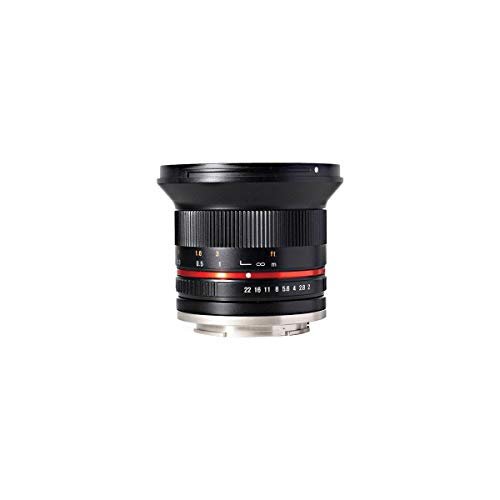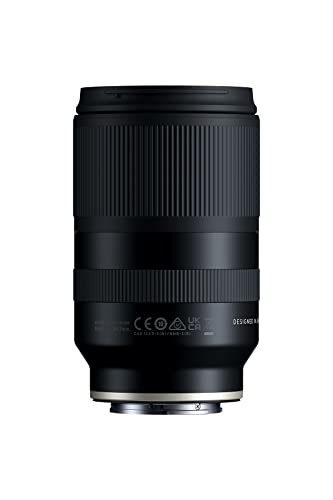
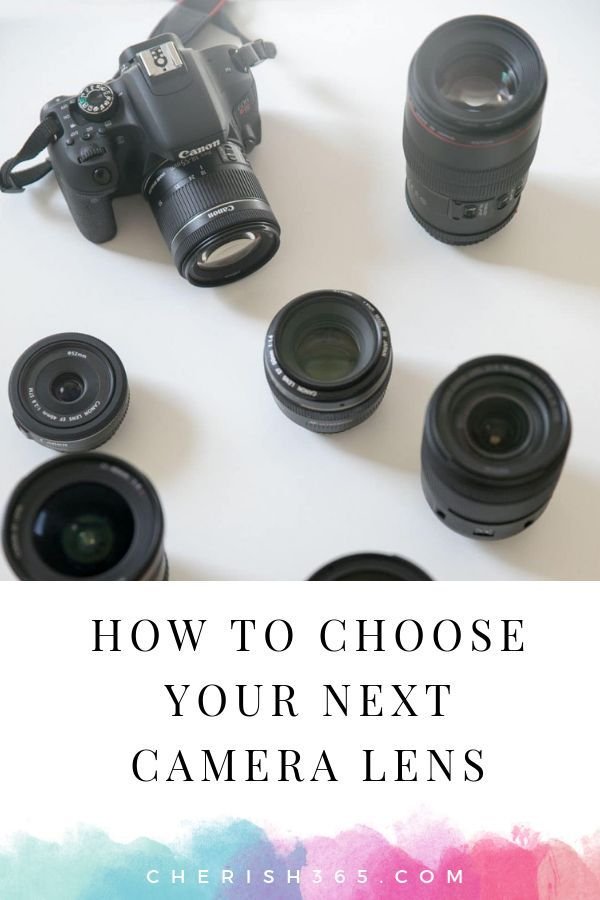
For photographers in the United States, the best camera lens depends on what you shoot, how much space you have, and what your camera sensor can use. A 24–70mm zoom is a strong first lens for many full-frame cameras. An 18–55mm lens is often the best starting point for an APS-C camera. For portraits, look at a 50mm or 85mm lens. For wildlife, you usually need a telephoto lens from 100mm to 600mm.
The right lens is not the most costly lens. It is the lens that gives you the right view, reach, light, and working distance.

Quick Answer: Which Camera Lens Should You Buy?
Choose your lens by matching its focal length and features to your main subject.
| Main use | Useful focal length | Best lens type |
|---|---|---|
| Travel and daily photos | 24–70mm full frame; 16–50mm APS-C | Standard zoom |
| Landscapes | 14–35mm full frame; 10–24mm APS-C | Wide-angle zoom or prime |
| Portraits | 50–135mm | Fast prime or short telephoto |
| Weddings and events | 24–70mm and 70–200mm | Fast zooms |
| Wildlife and birds | 100–600mm | Telephoto zoom or prime |
| Sports | 70–200mm or longer | Fast telephoto |
| Street photography | 28mm, 35mm, or 50mm | Compact prime |
| Macro subjects | 90–105mm macro | True macro lens |
| Astrophotography | 14–24mm with a wide aperture | Wide fast prime or zoom |
| Video and vlogging | 16–35mm or 18–50mm | Wide zoom or stabilized lens |
If you are unsure, start with a standard zoom. It lets you test several focal lengths before you spend money on a set of prime lenses.
What Camera Lens Specifications Mean
A camera lens has several key traits. Each one changes what you can capture and how the image looks.
Focal length
Focal length is measured in millimeters, or mm. It controls the angle of view.
- A lower number shows more of the scene.
- A higher number shows less of the scene but makes distant subjects look larger.
- A zoom lens covers a range, such as 24–70mm.
- A prime lens has one fixed focal length, such as 35mm.
Focal length does not directly tell you how close a lens can focus. That depends on the lens design and its stated minimum focus distance.
Maximum aperture
The maximum aperture is the widest opening in the lens. It is written as an f-number, such as f/1.8 or f/4.
A lower f-number can provide:
- More light in a dim room
- Faster shutter speeds
- A softer background
- More control over depth of field
An f/1.8 lens has a wider maximum opening than an f/4 lens. The trade-off is that fast lenses often cost more and may weigh more.
Image stabilization
Image stabilization helps reduce blur from camera movement. It can be built into the lens, the camera body, or both.
Stabilization does not stop a moving child, bird, or athlete from blurring. It mainly helps when the camera moves during a shot. You still need a fast shutter speed for moving subjects.
Autofocus motor
Modern lenses use different focus motor designs. Names vary by brand. Canon uses terms such as USM and STM. Nikon uses terms such as AF-S and AF-P. Sony uses terms such as XD and linear motors.
The name alone does not tell you how well a lens will focus in every case. Check the lens manual and camera support page for compatibility, focus limits, and video behavior.
Lens mount
A lens must match your camera’s mount. Common mounts include:
- Canon RF for many Canon mirrorless cameras
- Canon EF for Canon DSLR cameras
- Nikon Z for Nikon mirrorless cameras
- Nikon F for Nikon DSLR cameras
- Sony E for Sony mirrorless cameras
- Fujifilm X for Fujifilm APS-C cameras
- Micro Four Thirds for compatible Olympus, OM System, and Panasonic cameras
A lens made for one mount may not fit another. An adapter can help in some cases, but it may affect autofocus, stabilization, or electronic control.
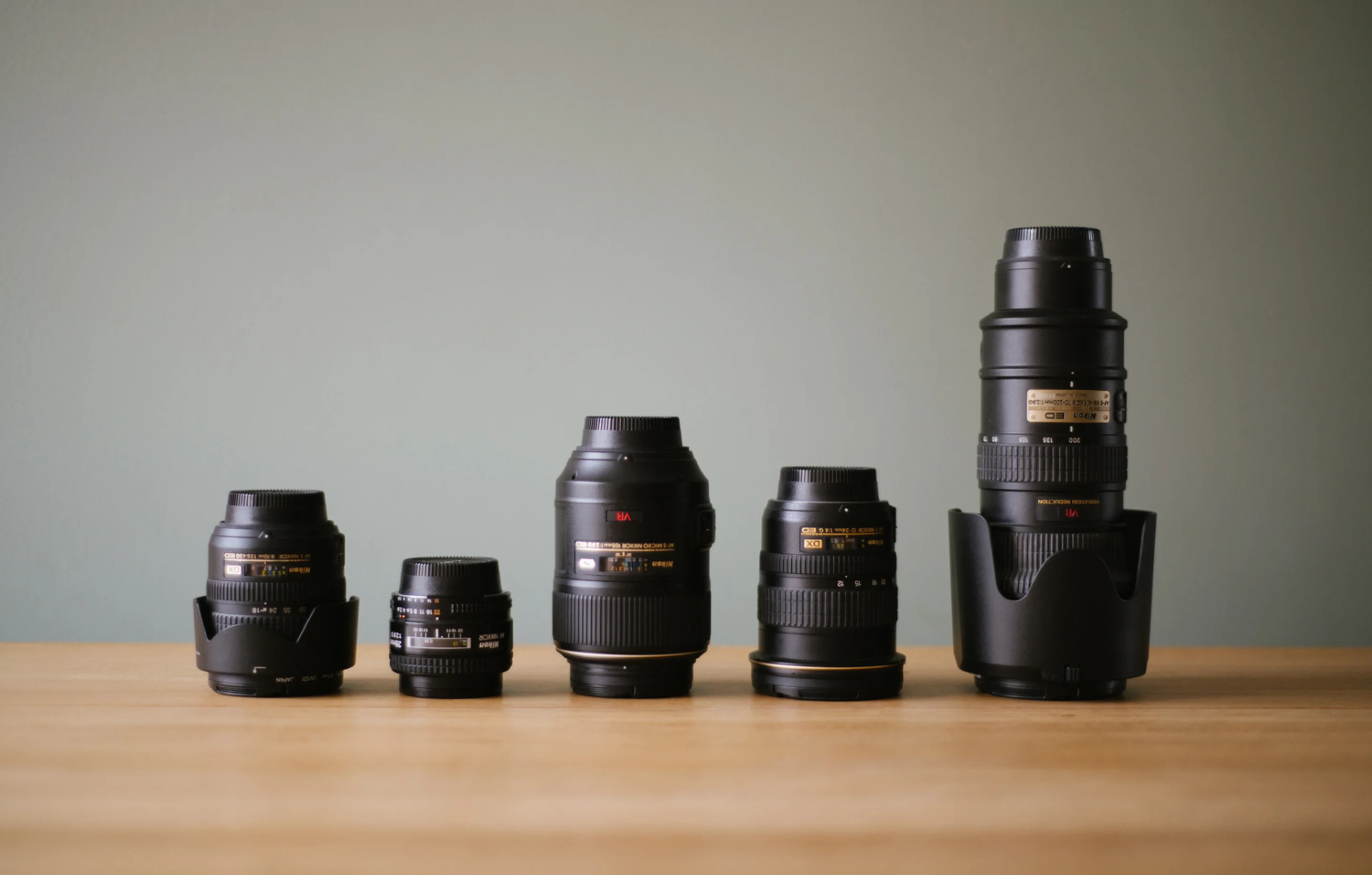
Pick a Lens by Your Type of Photography
Your main subject should guide your first lens choice. Think about the distance between you and the subject, not just the subject itself.
Travel and daily photography
A standard zoom is often the most useful travel lens. It covers wide views, people, food, buildings, and casual portraits.
For a full-frame camera, consider:
- 24–70mm
- 24–105mm
- 28–75mm
For an APS-C camera, consider:
- 16–50mm
- 17–70mm
- 18–135mm
For a Micro Four Thirds camera, consider:
- 12–35mm
- 12–60mm
- 14–42mm
A wider range gives you more reach. A smaller range may offer a wider aperture, lower weight, or better image quality.
Portraits
A portrait lens should give you a natural working distance and help separate the subject from the background.
Good full-frame choices include:
- 50mm for indoor portraits and environmental scenes
- 85mm for classic head-and-shoulder portraits
- 105mm or 135mm for more distance and stronger background blur
On an APS-C camera, a 50mm lens often gives a view similar to about 75mm to 80mm on full frame. On Micro Four Thirds, a 42.5mm or 45mm lens gives a similar view to about 85mm full frame.
A very wide lens can make a face look stretched when used too close. Step back when you can. Distance often changes facial perspective more than the lens itself.
Landscapes
Landscape photographers often use wide lenses, but the widest lens is not always the best choice.
Useful ranges include:
- 14–24mm for very wide scenes
- 16–35mm for landscapes and travel
- 24–70mm for a more natural view and distant details
A wide lens works well when the foreground is strong. It can make distant mountains look small. A longer lens can compress layers and make a distant subject appear more prominent.
A tripod, polarizing filter, or neutral density filter may matter more than buying an even wider lens.
Street photography
Street photographers often prefer small prime lenses. A compact lens draws less attention and makes the camera easier to carry.
Common choices are:
- 28mm for scenes with context
- 35mm for a balanced view
- 50mm for a tighter and more focused frame
There is no single correct street lens. Choose a focal length that lets you work at a comfortable distance. In crowded U.S. cities, a 35mm-equivalent lens is often practical because it shows the person and some of the setting.
Weddings and events
Events need lenses that work in changing light and changing spaces.
A common full-frame setup is:
- 24–70mm f/2.8 for groups, rooms, and general coverage
- 70–200mm f/2.8 for ceremonies, speeches, and candid moments
- 35mm or 50mm f/1.8 for low-light scenes and detail shots
A 24–105mm lens can be useful when reach matters more than a wide aperture. A fast prime can help in dark venues, but it requires more movement and careful framing.
For paid work, carry a backup plan. That may include a second body, an extra battery, and a second lens. The exact kit depends on the event and your camera system.
Wildlife and birds
Wildlife usually needs a long telephoto lens. The best focal length depends on the animal’s size, your distance, and whether you can approach safely.
Common choices include:
- 100–400mm for travel and larger animals
- 150–500mm or 200–600mm for birds and distant wildlife
- 300mm or 400mm prime lenses for high light-gathering power and long-term professional use
Long lenses are heavy and expensive. They also magnify camera shake. A monopod, tripod, or good hand-holding technique can help.
Never move close to wildlife just to fill the frame. Use a longer lens and follow local rules from agencies such as the National Park Service or U.S. Fish and Wildlife Service.
Sports
Sports photography needs reach, fast autofocus, and a fast shutter speed.
Useful lenses include:
- 70–200mm for indoor courts and nearby fields
- 100–400mm for outdoor sports
- 400mm or longer for field sports and motorsports
A wide aperture, such as f/2.8, helps in low light and may produce a softer background. It also increases price, weight, and size. In bright sunlight, an f/4 or f/5.6 lens may work well.
Macro photography
A true macro lens can focus close and reproduce small subjects at high magnification. Many macro lenses offer 1:1 reproduction, but check the exact specification.
Common macro focal lengths include:
- 50–60mm for products and subjects close to the camera
- 90–105mm for insects, flowers, and working distance
- 150–200mm for more distance from shy subjects
A longer macro lens gives you more space between the front of the lens and the subject. That can help with insects and lighting.
Astrophotography
Night sky photos need a wide view, a wide aperture, and good control of coma and corner sharpness.
Useful lenses include:
- 14mm
- 20mm
- 24mm
A lens around f/1.4 to f/2.8 can collect more light than a slower lens. However, a wider aperture does not guarantee sharp stars at the corners. Review tests made with the exact lens version before buying.
Use a sturdy tripod. Turn off image stabilization when the camera and lens instructions call for it during tripod use.

How Sensor Size Changes Your Lens Choice
Sensor size changes the angle of view you get from a lens. It does not change the lens’s real focal length.
A 50mm lens remains a 50mm lens. On a smaller sensor, it shows a narrower part of the image.
Approximate field-of-view comparisons
| Camera format | Approximate crop factor | Lens with a view near 50mm full frame |
|---|---|---|
| Full frame | 1.0× | 50mm |
| Canon APS-C | 1.6× | 31mm |
| Most other APS-C | 1.5× | 33mm |
| Micro Four Thirds | 2.0× | 25mm |
To estimate the full-frame-equivalent view, multiply the lens focal length by the crop factor.
For example:
- 35mm on a 1.5× APS-C camera gives about a 52.5mm-equivalent view.
- 25mm on a Micro Four Thirds camera gives about a 50mm-equivalent view.
- 200mm on a 1.6× APS-C camera gives about a 320mm-equivalent view.
This comparison helps you understand framing. It does not mean the smaller sensor creates the same depth of field, noise performance, or background blur as a larger sensor.
What to check before buying
Find these details in your camera manual or the lens maker’s support page:
- The camera mount
- The sensor format
- Whether the lens is made for that format
- Whether autofocus works with your camera
- Whether stabilization works
- Whether the lens covers the full sensor area
A lens made only for APS-C may create dark corners on a full-frame camera. Some cameras crop the image automatically, which reduces the final image area.

Prime Lens or Zoom Lens: Which Is Better?
A prime lens has one focal length. A zoom lens covers a range.
Choose a prime lens when you want:
- A wide aperture
- A small and light kit
- A simple way to learn composition
- Strong low-light ability
- A specific look at one focal length
A 35mm or 50mm prime is often a useful second lens after a kit zoom.
Choose a zoom lens when you want:
- Faster framing
- Fewer lens changes
- Better coverage for travel or events
- One lens for several subjects
- Less need to move in tight spaces
A zoom does not always replace a prime. A 24–70mm f/2.8 zoom can cover many views, while a 50mm f/1.8 prime may be smaller and let in more light.
The best choice depends on your trade-off. Primes often favor size, aperture, or cost. Zooms often favor speed and flexibility.

How to Choose Between Similar Lenses
When two lenses cover the same focal length, compare the features that change your actual work.
1. Compare the maximum aperture
An f/2.8 lens lets in more light than an f/4 lens. It may also produce a shallower depth of field.
But aperture is not the only measure of image quality. A slower lens may be lighter, cheaper, or easier to carry.
2. Check the minimum focus distance
A lens that focuses close can be useful for food, products, flowers, and travel details. Minimum focus distance is measured from the camera’s sensor plane, not from the front of the lens.
A short minimum focus distance does not always mean true macro performance. Check the maximum magnification as well.
3. Consider size and weight
A lens that stays in your bag is often more useful than a larger lens with better lab results. This matters for hiking, air travel, street work, and long events.
Check the full weight of the lens and any required adapter.
4. Review autofocus features
Look for:
- Focus motor type
- Focus speed claims for your camera
- Tracking support
- Manual focus override
- Focus breathing behavior for video
- Minimum focus limits
Autofocus results depend on the camera body, firmware, light, subject movement, and settings. A lens specification cannot predict every real-world result.
5. Check stabilization needs
Lens stabilization can help with hand-held still photos. It does not freeze subject movement.
For video, stabilization behavior can vary by camera and lens. Read the camera and lens manuals before assuming that both systems will work together.
6. Check filters and accessories
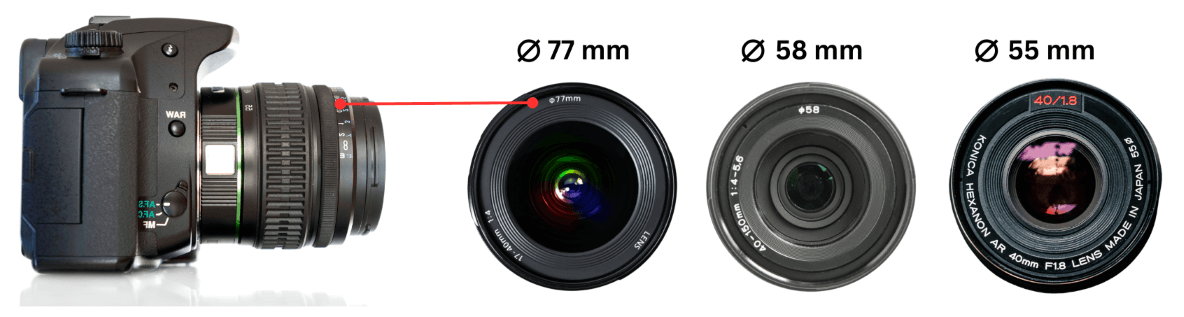
If you plan to use a polarizer or neutral density filter, check the filter thread size. Larger filters may cost more. Some wide lenses use a built-in hood or a special filter holder instead of a standard screw-in filter.
A Simple Lens-Buying Method
Use this process before you buy.
Step 1: Write down your three most common subjects
Do not list every subject you may photograph one day. Write down what you shoot now.
For example:
- Family photos indoors
- Local youth sports
- Weekend travel
Step 2: Record the distance
Ask how far you are from the subject.
- Close subjects need a wider view or a macro lens.
- Subjects at a medium distance suit standard lenses.
- Far subjects need a telephoto lens.
Step 3: Check the light
If you work indoors, at night, or in dark venues, a wider aperture may help. If you work in bright daylight, a slower lens may be enough.
Step 4: Choose a useful focal-length range
Pick the smallest range that covers your work. A 24–70mm lens may be enough for a general kit. A 24–105mm lens gives more reach but may be slower or larger.
Step 5: Set a weight limit
Choose the heaviest lens you will carry often. A lens that stays home cannot make photos.
Step 6: Confirm compatibility
Check the exact camera model and lens version. Do not rely only on a store category or a product title.
Step 7: Rent before buying when possible
Renting can reveal whether the focal length, weight, and aperture suit your work. Test the lens in the same type of place where you plan to use it.
Look for these signs of a good match:
- You can frame your main subjects without constant cropping.
- The lens focuses at the distances you use.
- The camera and lens balance well.
- You can carry the lens for a full session.
- The aperture works in your usual light.
- You do not need to change lenses at every shot.
Common Camera Lens Mistakes
Many lens problems come from choosing by label alone.
Buying the widest lens for every landscape
A wider lens shows more, but it can make key subjects look small. Learn to choose the focal length that supports the scene.
Buying a long lens without planning for weight
A 600mm lens may be useful for birds, but it can be difficult to carry and hold. Consider a 100–400mm or 200–600mm zoom if you need flexibility.
Confusing crop factor with extra detail
A crop sensor gives a narrower view. It does not create new detail that the lens did not capture. Cropping can also reduce resolution.
Using a wide lens too close to a face
This can make the nose and other features look larger. Step back and use a longer focal length when the space allows.
Ignoring lens support
A lens may fit the camera but lack full autofocus, stabilization, or electronic control. Confirm support for the exact body and firmware.
Choosing by sharpness charts alone
Lab tests can show useful differences. They do not show how the lens feels in your hand, how fast it focuses for your camera, or whether you will carry it.
Buying too many lenses too soon
Start with one lens that covers your main work. Add a second lens only after you can name the limit of the first one.
Do I Need a Full-Frame Lens?
You need a full-frame lens if your camera has a full-frame sensor and the lens is not designed to cover that sensor. An APS-C lens may work in a camera’s crop mode, but the image area will be smaller.
If your camera has an APS-C sensor, you can use:
- A lens made for APS-C
- Some full-frame lenses made for the same mount
- An approved adapter in systems that support one
Full-frame lenses may be larger and more costly. They can still be useful on APS-C cameras if you plan to move to a full-frame body or need a certain focal length.
Can I Use a DSLR Lens on a Mirrorless Camera?
Sometimes. The answer depends on the brands and mounts.
A compatible adapter may preserve some electronic functions, such as:
- Autofocus
- Aperture control
- Lens data
- Image stabilization
Performance varies by lens, camera, adapter, and firmware. A passive adapter may only provide a physical connection. Always check the adapter maker’s compatibility list and the camera maker’s support information.
Is a 50mm Lens Good for Beginners?
Yes. A 50mm prime is a useful learning lens on a full-frame camera. It can work for portraits, food, details, and everyday scenes.
On an APS-C camera, a 50mm lens gives a tighter view. That can be good for portraits but may feel narrow indoors. A 35mm lens often gives a more flexible view on APS-C.
On Micro Four Thirds, a 25mm lens gives a view close to 50mm on full frame.
Is a Kit Lens Good Enough?
Yes, for many photographers. A kit lens can cover travel, family photos, basic portraits, and learning.
Replace it only when you can identify a clear limit, such as:
- You need more light indoors.
- You need a longer reach.
- You need closer focus.
- You need a wider view.
- You need faster autofocus.
- You need better weather sealing for your work.
A kit lens is not a failure. It is often a practical way to learn which lens you need next.
What Lens Is Best for Low Light?
A lens with a wider maximum aperture, such as f/1.4, f/1.8, or f/2.8, can help in low light. Image stabilization can also help with camera movement.
The best choice depends on the subject:
- Use a fast prime for people who stay fairly still.
- Use a fast zoom for events and changing subjects.
- Use a stabilized lens for static scenes.
- Use a faster shutter speed for moving subjects.
A wide aperture gives less depth of field. Focus accuracy becomes more important.
What Is the Best First Lens?
For a full-frame mirrorless camera, a 24–70mm or 24–105mm zoom is a flexible first choice.
For an APS-C camera, an 18–55mm, 16–50mm, or similar standard zoom is a sensible start.
For a Micro Four Thirds camera, a 12–35mm or 12–60mm zoom can cover many daily needs.
If you already own a kit zoom, the best next lens is often a fast prime or a telephoto lens. Choose the lens that solves your most common problem, not the lens with the most impressive specifications.
Final Recommendation
Start with your subject, distance, and light. Then check focal length, aperture, mount, sensor coverage, autofocus, stabilization, size, and cost.
For most new photographers, a standard zoom is the safest first purchase. Add a fast prime for low light and portraits, a wide lens for large scenes, or a telephoto lens for distant subjects. The right camera lens is the one that fits your camera and helps you make the photos you actually want to make.