Introduction
The best camera lens to buy depends on your camera body, subject, shooting space, and budget. For most people in the United States, a standard zoom is the safest first lens because it covers travel, family photos, events, and daily use without forcing you to change lenses.
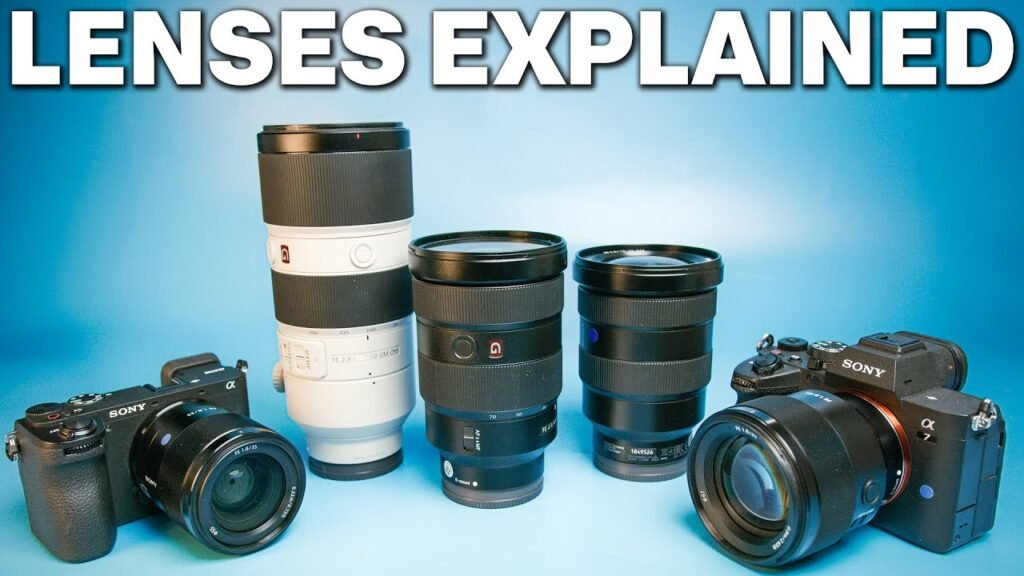
A prime lens is often better when you want a soft background, low-light performance, or a small and light kit. A telephoto lens suits sports, wildlife, and distant subjects. A wide-angle lens works best for landscapes, real estate, architecture, and large indoor spaces.
The right choice is not the lens with the biggest price tag. It is the lens that matches how and where you take pictures.

Quick Answer: Which Camera Lens Should You Buy?
Buy a standard zoom lens if you want one lens for general photography. On a full-frame camera, look at a lens around 24–70mm. On an APS-C camera, a lens around 16–50mm or 18–55mm gives a similar view.
Choose a different type if your main subject demands it:
| Your main use | Lens type to consider | Useful focal length |
|---|---|---|
| Family, travel, daily photos | Standard zoom | 24–70mm full frame |
| Portraits | Fast prime or short telephoto | 50–85mm full frame |
| Sports and wildlife | Telephoto zoom | 70–300mm or longer |
| Landscapes and interiors | Wide-angle zoom | 14–35mm full frame |
| Street photography | Small prime | 28mm or 35mm full frame |
| Birds and distant animals | Long telephoto | 400mm or longer |
| Video and low light | Fast prime or constant-aperture zoom | f/1.4 to f/2.8 |
These focal lengths describe full-frame cameras. The same lens can show a different field of view on an APS-C or Micro Four Thirds camera.
Start With Your Camera Mount
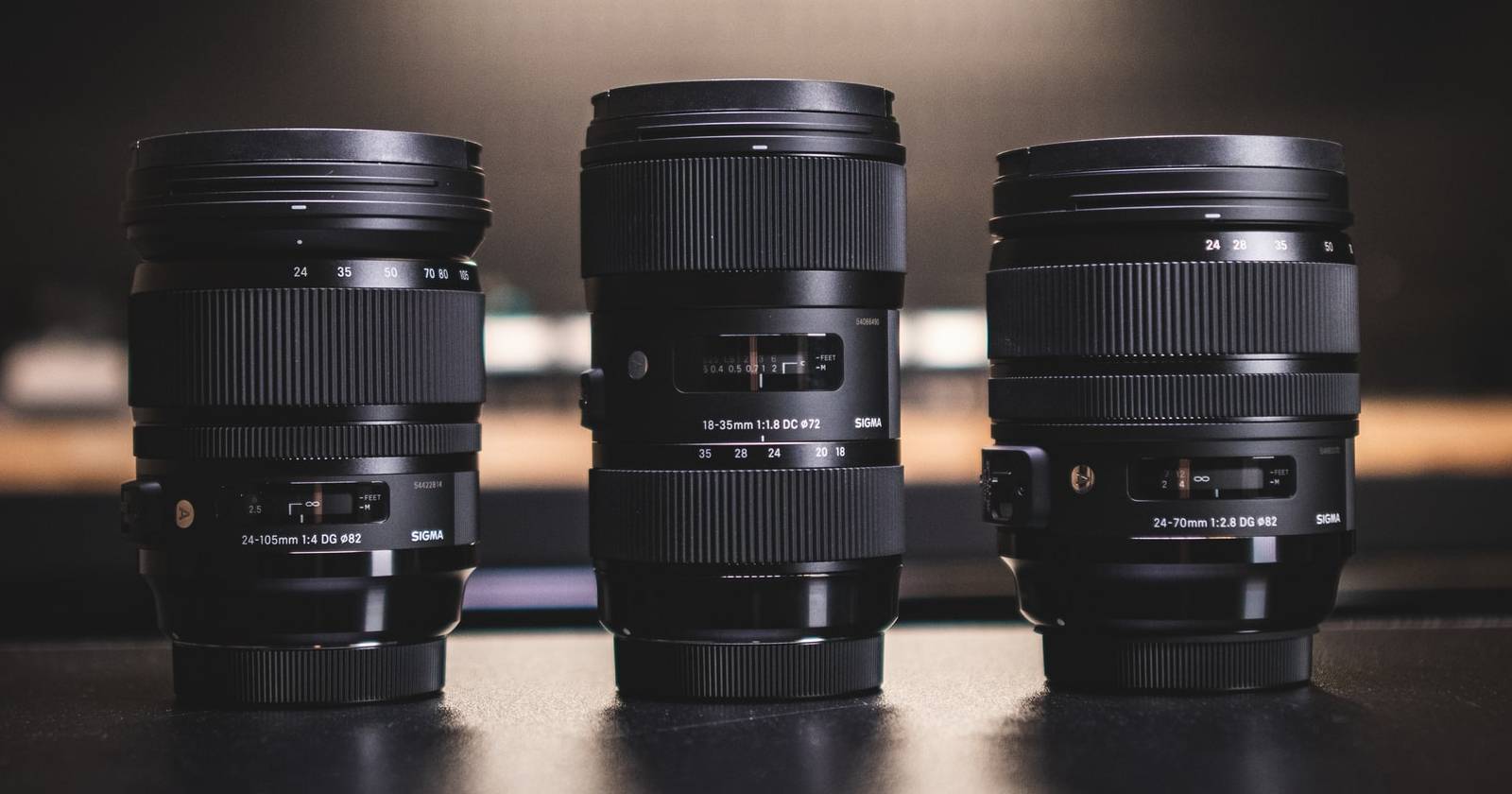
The lens must fit your camera mount. This is the first check because a lens with the wrong mount may not attach, communicate with the camera, or cover the sensor correctly.
Common interchangeable-lens camera mounts include:
- Canon RF for Canon EOS R mirrorless cameras
- Canon EF for older Canon DSLR cameras
- Nikon Z for Nikon mirrorless cameras
- Nikon F for older Nikon DSLR cameras
- Sony E for Sony mirrorless cameras
- Fujifilm X for Fujifilm APS-C mirrorless cameras
- Fujifilm G for Fujifilm medium-format cameras
- Micro Four Thirds for cameras from OM System and Panasonic
- Pentax K for many Pentax DSLR cameras
Do not assume that a lens from the same brand will fit every camera from that brand. Canon RF and Canon EF are different mounts. Nikon Z and Nikon F are also different.
Check three compatibility details
- Mount: The physical connection must match, or you need a suitable adapter.
- Sensor coverage: The lens should cover your sensor size.
- Autofocus and electronic support: An adapted lens may lose autofocus, image stabilization, aperture control, or EXIF data.
A full-frame lens usually works on an APS-C camera from the same mount family, though the view becomes narrower. An APS-C lens may work on a full-frame camera only in a crop mode, or it may produce dark corners.
Use your camera maker’s compatibility guide for exact limits. Manufacturer specifications are more reliable than a short retailer title or a third-party listing.
Understand Focal Length Before You Buy
Focal length controls how much of the scene the lens shows and how large distant subjects appear. It is measured in millimeters.
A lower number gives a wider view. A higher number gives a narrower view and more reach.
What common focal lengths are good for
- 14–20mm: Very wide landscapes, architecture, interiors, and dramatic foregrounds
- 24mm: Travel, real estate, landscapes, and environmental scenes
- 28mm: Street photography and general documentary work
- 35mm: Street, travel, family, and everyday photos
- 50mm: Natural-looking portraits, details, food, and general use
- 85mm: Portraits with flattering perspective and background separation
- 100–135mm: Headshots, close details, and some sports
- 200–400mm: Sports, wildlife, and distant action
- 600mm and longer: Birds and subjects that are far away
These ranges overlap. A 35mm lens can work for portraits. An 85mm lens can work for street photography. The best focal length depends on your distance from the subject and the look you want.
Crop factor changes the field of view
Sensor size affects the view a lens provides. This is often described with a crop factor.
Approximate crop factors are:
- Full frame: 1×
- Canon APS-C: about 1.6×
- Most Nikon, Sony, and Fujifilm APS-C cameras: about 1.5×
- Micro Four Thirds: 2×
To estimate the full-frame equivalent, multiply the lens focal length by the crop factor.
For example, a 35mm lens on a 1.5× APS-C camera gives a view similar to a 52.5mm lens on full frame:
35 × 1.5 = 52.5mm
This does not change the actual focal length. The lens remains a 35mm lens. The smaller sensor simply records a smaller part of the image.
Choose the Aperture for Your Light and Background
Aperture describes the opening inside the lens. It is written as an f-number, such as f/1.4, f/2.8, f/4, or f/5.6.
A smaller f-number means a wider opening. A wider opening can:
- Let in more light
- Help in dim rooms
- Create a softer background
- Allow faster shutter speeds
A larger f-number, such as f/8 or f/11, gives more depth of field. More of the scene appears sharp from front to back.
What aperture should you choose?
Choose a fast lens, such as f/1.4, f/1.8, f/2, or f/2.8, when you often shoot:
- Indoor events
- Weddings
- Concerts
- Night scenes
- Portraits with blurred backgrounds
- Moving subjects in low light
Choose a lens with a smaller maximum aperture, such as f/4–6.3, when you value:
- Lower cost
- Smaller size
- Lower weight
- Long zoom range
- Bright outdoor shooting
A wide aperture does not guarantee a better photo. At f/1.4, focusing must be precise, especially for a close portrait. Some subjects also need more depth of field to keep the whole subject sharp.
Constant and variable aperture zooms
A constant-aperture zoom keeps the same maximum aperture across its zoom range. A 24–70mm f/2.8 lens stays at f/2.8 from 24mm to 70mm.
A variable-aperture zoom changes its maximum aperture as you zoom. A lens may be f/3.5 at the wide end and f/5.6 at the long end.
Constant-aperture lenses are useful for events and video because exposure stays more consistent. Variable-aperture lenses are often smaller, lighter, and less expensive.

Decide Between a Prime Lens and a Zoom Lens
A prime lens has one focal length. A zoom lens covers a range of focal lengths.
Neither type is always better. The best option depends on whether you value flexibility or simplicity.
Prime lenses
A prime lens may be the better choice if you want:
- A wide maximum aperture
- A small camera kit
- Strong low-light performance
- A blurred background
- A simple way to learn composition
- A lighter lens for walking or travel
The main limitation is that you must move your feet or change lenses to alter the framing. That can be difficult at a sporting event, in a crowded room, or near a dangerous subject.
Zoom lenses
A zoom lens may be better if you photograph:
- Travel
- Children
- Sports
- Events
- Wildlife
- Landscapes from fixed viewpoints
- Subjects that change distance often
A zoom saves time and reduces lens changes. Its trade-offs may include more weight, a smaller maximum aperture, or a higher price.
A useful first-lens approach
If you already own a kit zoom, add a prime that solves a clear problem. For example:
- Buy a 35mm or 50mm prime for low light and portraits.
- Buy a wide-angle zoom for landscapes and interiors.
- Buy a telephoto zoom for sports and wildlife.
Avoid buying a second lens that covers the same range unless it gives you a meaningful advantage, such as a much wider aperture, better weather sealing, or improved autofocus.

Match the Lens to What You Photograph
The subject should guide your purchase more than brand loyalty.
For portraits
A lens between 50mm and 135mm in full-frame terms works well for many portraits. An 85mm lens is a common choice because it gives working distance and a flattering view of the face.
For APS-C cameras, a 50mm or 56mm lens can provide a similar angle of view. For Micro Four Thirds, a 42.5mm or 45mm lens gives a similar result.
A fast aperture can soften the background. But keep enough of the subject’s face in focus. For a close headshot, stopping down slightly may produce a sharper and more useful image.
For travel and family photos
A standard zoom is usually the most practical choice. Full-frame users can consider a 24–70mm or 24–105mm lens. APS-C users may prefer a 16–50mm, 18–55mm, or 18–135mm lens.
A longer range gives more framing options. A shorter range may offer a wider aperture, lower weight, or better optical performance.
For travel, also consider the lens’s size. A lens that stays in your bag does not help you make photographs.
For landscapes
A wide-angle lens can show a broad scene, but wider is not always better. Very wide lenses may make distant mountains look small and can stretch objects near the frame edges.
Consider:
- 14–24mm for very wide scenes
- 16–35mm for a flexible landscape range
- 24–70mm for landscapes that need normal and short telephoto views
A tripod, stable technique, and careful composition often matter more than a slightly wider lens.
For sports and wildlife
A telephoto zoom is usually the most useful starting point. A 70–300mm lens suits outdoor sports and larger animals. A 100–400mm or 150–600mm lens provides more reach for wildlife and field sports.
Long lenses are heavy and may require a monopod or strong handholding technique. Image stabilization can reduce camera shake, but it does not freeze a moving athlete or bird. Shutter speed still matters.
For fast action, also check:
- Autofocus tracking support
- Maximum aperture
- Focus limiter controls
- Weight and balance
- Compatibility with teleconverters
- Performance on your camera body
For street photography
A small 28mm, 35mm, or 50mm full-frame-equivalent lens is often easier to carry and less intimidating than a large zoom.
A 35mm-equivalent view shows both the subject and some surroundings. A 50mm-equivalent view gives a tighter and more focused frame.
The right choice depends on how close you like to work. Start with the focal length you use most on your current zoom and review your photos.
For video
Video shooters should check more than sharpness. Look for:
- Quiet autofocus
- Smooth focus transitions
- Low focus breathing
- A steady aperture across the zoom range
- Image stabilization when needed
- A focus ring that is easy to control
A lens designed mainly for still photography may still work well for video, but its autofocus or focus-breathing behavior may not suit every project.

Set a Realistic Camera Lens Budget
The right budget depends on the job the lens must do. A low-cost lens can produce excellent images when used in good light and paired with sound technique.
Before buying, separate the total cost into:
- Lens price
- Mount adapter, if needed
- Filters
- Lens hood
- Spare caps
- Carrying case
- Shipping and sales tax
- Possible repair or return costs
Do not pay for features you will not use. A weather-sealed, constant-aperture telephoto lens may be valuable to a sports photographer but unnecessary for a person who takes family photos outdoors in fair weather.
When a more expensive lens may be justified
A higher price may reflect:
- A wider maximum aperture
- Better control of flare
- Faster autofocus
- Better edge sharpness
- More durable construction
- Weather resistance
- A longer or more useful zoom range
- Compatibility with professional accessories
These benefits matter only when they solve a real problem. They do not automatically make every photograph better.
New versus used lenses
A used lens can offer strong value in the U.S. market. Buy from a seller with a clear inspection and return policy.
Check for:
- Scratches, haze, or fungus inside the optics
- Heavy dust or separation between glass elements
- Smooth zoom and focus movement
- Working autofocus
- Accurate aperture control
- Image stabilization, if included
- Damage around the mount
- Loose switches or unusual noise
- Missing hood, caps, or tripod collar
A small amount of external wear may be harmless. Haze, fungus, element separation, or a damaged mount can be expensive problems.

Check Features That Affect Daily Use
Optical quality matters, but daily handling can decide whether you enjoy the lens.
Image stabilization
Image stabilization helps reduce blur from camera movement. It is useful for still subjects in low light and for handheld video.
It does not replace a fast shutter speed for moving subjects. It also cannot correct subject movement.
Some cameras and lenses work together through combined stabilization. Confirm the feature and its limits in the camera and lens manuals.
Autofocus motor
Modern lenses may use different autofocus systems. Names vary by brand, but the practical questions are simple:
- Is autofocus fast enough for your subject?
- Is it quiet enough for video?
- Does it track well with your camera?
- Does it work with eye detection?
- Does it focus accurately at close range?
A lens may perform differently on two camera bodies. Read the manufacturer’s compatibility notes for firmware requirements and known limits.
Weather resistance
Weather-resistant does not mean waterproof. It may help against light rain or dust when the lens is used with a compatible camera body.
Avoid exposing any lens to heavy rain, salt water, sand, or rapid temperature changes without proper protection. Let a cold lens warm inside a sealed bag before bringing it into a warm, humid room. This reduces the risk of condensation.
Minimum focusing distance
Minimum focusing distance tells you how close the lens can focus. It affects close-up work, food photography, flowers, and product photos.
If you want true macro photography, look for a lens with a high reproduction ratio, often 1:1. A lens that focuses close is not always a true macro lens.

Use Your Existing Photos to Choose the Next Lens
Your own photos can reveal what you need better than a general buying list.
Follow this simple method:
- Review your last 100 to 200 photos.
- Record the focal length used for each useful image.
- Note which photos felt too wide or too tight.
- Mark images that were too dark, blurry, or poorly separated from the background.
- Identify the most common problem.
- Buy the lens that solves that problem.
For example, if most of your best photos were taken near 35mm but many were too dark indoors, a fast 35mm-equivalent prime may help.
If you often use the longest end of your kit zoom and still cannot fill the frame, a telephoto lens may be a better purchase.
If you rarely change focal length and often shoot in dim rooms, a prime lens may suit you. If you change focal length in nearly every scene, a zoom may save time.

Common Camera Lens Buying Mistakes
Buying for sharpness alone
Sharpness is only one part of lens performance. A sharp lens can still be too heavy, too narrow, too slow, or difficult to focus.
Consider the complete tool: focal length, aperture, autofocus, size, weight, stabilization, and handling.
Ignoring the sensor size
A 50mm lens does not give the same view on every camera. Check the crop factor before you compare lenses across systems.
Buying a lens that is too heavy
Large lenses can produce excellent results, but weight changes how often you carry them. A smaller lens may produce more useful photographs because it is always with you.
Expecting image stabilization to freeze action
Stabilization helps with camera shake. It does not stop a moving person, dog, car, or bird. Use a fast shutter speed for moving subjects.
Confusing lens coverage with zoom power
A 24–70mm lens does not bring distant subjects close in the same way as a 70–300mm lens. The numbers describe the angle of view, not a universal magnification score.
Forgetting about adapters
Adapters can solve mount problems, but results vary. Check autofocus, aperture, stabilization, and sensor coverage before buying.
Choosing a lens without checking your shooting space
A 200mm lens may be excellent outdoors but difficult in a small room. A 24mm lens may work indoors but place you too close for a flattering headshot.

A Simple Camera Lens Decision Checklist
Use this checklist before you place an order:
- What camera body and mount do I own?
- What sensor size does it use?
- What subject do I photograph most?
- Do I need a wide, normal, or telephoto view?
- Do I need a wide aperture for low light or background blur?
- Will I carry the lens for hours?
- Do I need image stabilization?
- Do I need fast or quiet autofocus?
- Will I use the lens for stills, video, or both?
- Is the lens compatible with my camera’s autofocus and firmware?
- Do I need weather resistance?
- Is a used lens covered by a return policy?
- Does this lens solve a problem that my current lens cannot?
If you cannot answer the focal-length question, rent or borrow a lens first. A short test can prevent an expensive mistake.
Key Takeaways
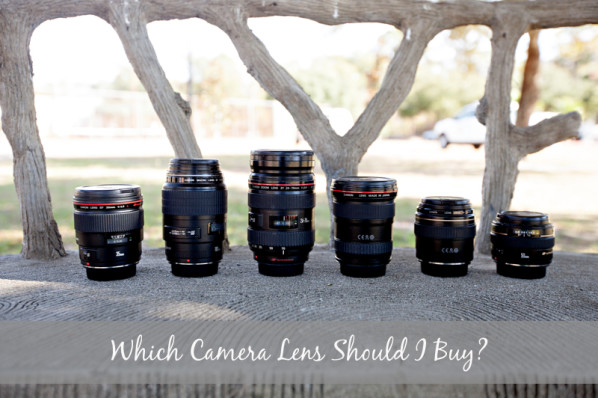
- Buy a standard zoom for the most flexible first lens.
- Choose a fast prime for low light, portraits, and a small kit.
- Choose a wide-angle lens for landscapes, interiors, and architecture.
- Choose a telephoto zoom for sports, wildlife, and distant subjects.
- Confirm the mount and sensor coverage before buying.
- Use your past photos to find the focal lengths and features you actually need.
- Do not confuse image stabilization with the ability to freeze motion.
- Consider size and weight as carefully as sharpness.
Frequently Asked Questions
Is a 50mm lens good for beginners?
Yes. A 50mm lens is affordable and useful for portraits, details, food, and general photography. On an APS-C camera, it gives a tighter view similar to about 75–80mm on full frame. That makes it useful for portraits but less flexible in small rooms.
Should I buy a 35mm or 50mm lens?
Choose 35mm for travel, street photography, family scenes, and indoor use. Choose 50mm for portraits, details, and a tighter, more focused view. On APS-C cameras, a 23mm or 24mm lens often gives a 35mm-equivalent view.
Is a kit lens good enough?
A kit lens is often good enough for learning, travel, family photos, and outdoor scenes. Replace it when you can name the limitation, such as poor low-light performance, insufficient reach, or a need for a wider view.
Do expensive lenses make better photos?
They can provide useful advantages, such as a wider aperture, faster autofocus, better build, or improved control of flare. They do not replace good light, composition, focus technique, or subject timing.
Should I buy a full-frame lens for an APS-C camera?
A full-frame lens can be a good long-term choice if you may move to a full-frame body. It may also be larger and more expensive than an APS-C lens. Buy one only if its size, price, and focal length suit your current camera.
Conclusion: The Best Lens Is the One That Solves Your Main Problem
For most first-time buyers, start with a standard zoom that matches your camera mount. It gives you a useful range and helps you learn which focal lengths you prefer.
If you already own a kit lens, study your recent photos before spending money. Buy a fast prime for low light, a wide lens for tight spaces, or a telephoto lens when your subjects are too far away.
Your next step is simple: check your camera mount, identify your main subject, and review the focal lengths you use most. That process will lead to a better choice than buying the lens with the most impressive specifications.