
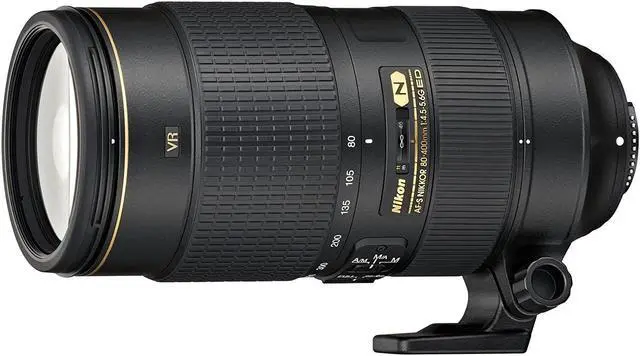
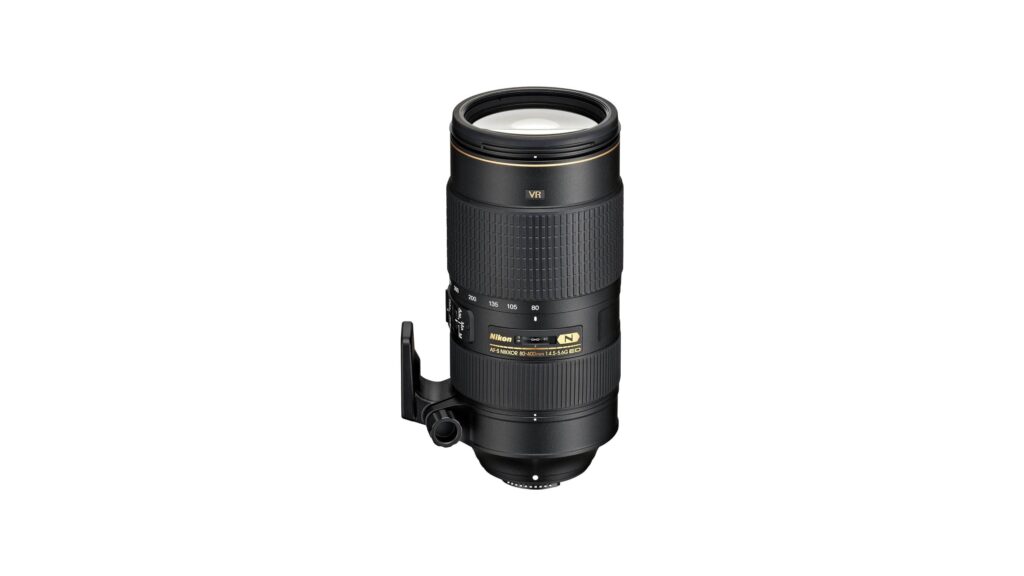
The Nikon AF-S NIKKOR 80-400mm f/4.5-5.6G ED VR is a full-frame telephoto zoom for Nikon F-mount cameras. It covers a useful range from short telephoto to strong super-telephoto reach, with vibration reduction, fast autofocus, and weather-resistant construction.
For photographers in the United States, this lens remains a practical used-market option for wildlife, birds, outdoor sports, travel, aviation, and distant landscapes. It is not the newest 100-400mm or mirrorless Z-mount lens, but it can still offer strong image quality when paired with a compatible Nikon DSLR or FTZ adapter.

What Is the Nikon 80-400mm f/4.5-5.6G ED VR?
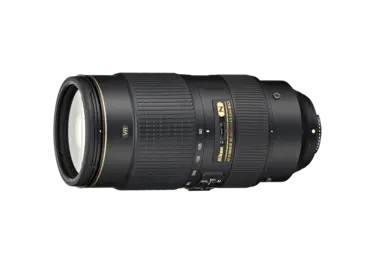
The Nikon 80-400mm f/4.5-5.6G ED VR is an FX-format F-mount zoom lens. Its 5x zoom range starts at 80mm and ends at 400mm.
That range gives you two useful roles in one lens:
- 80mm to 135mm: portraits, events, and travel details
- 200mm to 300mm: field sports, stage work, and larger wildlife
- 400mm: birds, small animals, aircraft, and distant subjects
The lens uses Nikon’s G-type design, so it has no physical aperture ring. Aperture control comes from the camera body.
“ED” means the lens uses Extra-low Dispersion glass. Nikon uses ED glass to help control color fringing, especially at long focal lengths. “VR” means Vibration Reduction, Nikon’s optical image stabilization system.
The lens is designed for Nikon FX cameras such as the D600, D610, D750, D780, D800 series, D810, D850, D4, D5, D6, and similar F-mount models. It also works on Nikon DX cameras, where the crop factor gives an angle of view similar to a 120-600mm lens on full frame.
Key specifications
| Feature | Nikon 80-400mm f/4.5-5.6G ED VR |
|---|---|
| Mount | Nikon F |
| Format | FX/full frame |
| Focal length | 80-400mm |
| Maximum aperture | f/4.5-5.6 |
| Minimum aperture | f/32-40 |
| Optical design | 20 elements in 12 groups |
| ED glass | Yes |
| Nano Crystal Coat | Yes |
| Autofocus | AF-S Silent Wave Motor |
| Vibration Reduction | Yes |
| Minimum focus distance | About 1.75m / 5.7 ft |
| Maximum reproduction ratio | About 0.20x |
| Filter size | 77mm |
| Diaphragm | 9 rounded blades |
| Weight | About 1,570g / 3.46 lb with collar |
Specifications can vary slightly by documentation method, such as whether the tripod collar or caps are included in the listed weight.

Nikon 80-400mm Optical Performance
The lens can produce sharp images across much of its range, but its results depend on focal length, aperture, subject distance, and camera body.
At 80mm, the lens is useful for portraits and larger subjects. It is not as bright as a professional 70-200mm f/2.8 lens, but its extra reach makes it more flexible outdoors.
From about 200mm to 300mm, the lens offers a strong balance between reach and image quality. This is often the most useful part of the zoom range for wildlife and sports.
At 400mm, the lens gives the photographer its greatest reach. Fine detail can remain strong, but atmospheric haze, camera movement, and subject motion become more visible. Clear air and good technique matter as much as the lens itself.
Aperture and light
the maximum aperture changes as the lens zooms:
- 80mm: f/4.5
- Around the middle of the range: approximately f/5
- 400mm: f/5.6
An f/5.6 maximum aperture lets in less light than an f/2.8 lens. In bright daylight, this is usually manageable. In early morning, late evening, forests, and indoor venues, you may need a higher ISO or slower shutter speed.
For moving subjects, shutter speed often matters more than low ISO. A sharp image at ISO 1600 is usually more useful than a blurred image at ISO 200.
Sharpness in practical use
The best results usually come from:
- Using a fast enough shutter speed
- Avoiding extreme digital cropping
- Focusing on the subject’s eye or most important detail
- Supporting the lens when practical
- Stopping down slightly when light allows
- Keeping the front and rear elements clean
A lens test chart cannot predict every field result. Wildlife distance, heat shimmer, wind, and subject movement may limit detail before the optics do.
Autofocus and Vibration Reduction
The 80-400mm uses Nikon’s AF-S Silent Wave Motor, or SWM. AF-S lenses contain a motor inside the lens, so they can autofocus on Nikon camera bodies without their own focus motor.
Autofocus performance is generally most useful when the camera is set up correctly for the subject. For birds or sports, use continuous autofocus, called AF-C on Nikon cameras. Select a focus-area mode that matches the subject and background.
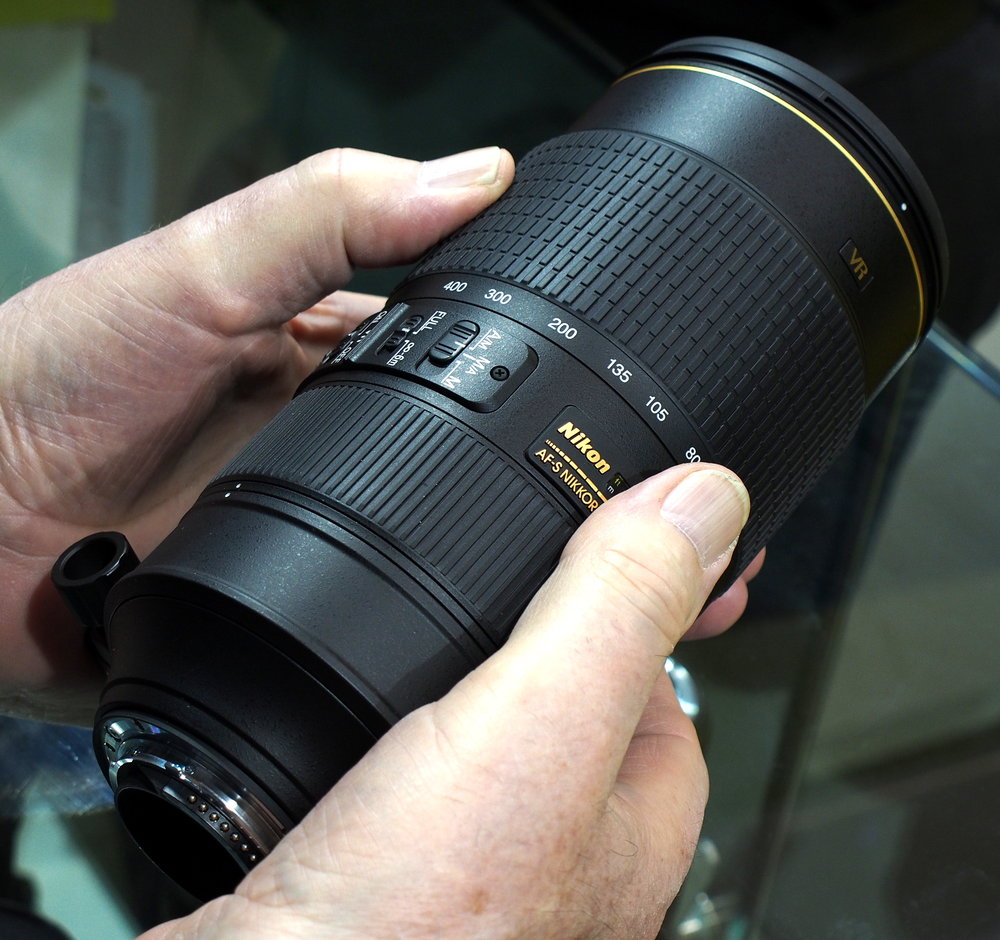
The lens also includes a focus-mode switch with settings such as:
- A/M: autofocus with manual override
- M/A: autofocus with immediate manual override
- M: manual focus
The exact control behavior can depend on the camera body and switch position. Read the camera manual if manual focus override does not work as expected.
VR modes
Nikon’s Vibration Reduction helps reduce blur caused by camera shake. The lens includes VR settings intended for different shooting conditions:
- Normal: general handheld photography
- Sport: moving subjects and panning
- Tripod: use where supported and appropriate
VR helps with photographer movement. It does not freeze a bird, runner, car, or airplane. If the subject moves, you still need a fast shutter speed.
A useful starting point for moving subjects is:
- Wildlife: around 1/1000 second or faster
- Birds in flight: around 1/1600 second or faster
- Field sports: around 1/1000 second or faster
- Static subjects: slower speeds may work with good support and VR
These are starting points, not fixed rules. Subject speed, focal length, camera resolution, and shooting technique all affect the result.
When to turn VR off
Turn VR off when the camera is firmly mounted on a stable tripod and the lens or camera manual recommends doing so. Some modern stabilization systems can detect tripod use, but the safest approach is to follow Nikon’s instructions for your camera and shooting setup.
When panning, use the lens’s Sport mode if it produces a more stable view for your subject. Test the setting before an important event.

Using the Lens on FX and DX Nikon Cameras
On an FX camera, the lens provides its stated 80-400mm focal-length range.
On a DX camera, the smaller sensor narrows the angle of view. Nikon DX bodies apply a 1.5x crop factor, so the framing is similar to what a 120-600mm lens would show on a full-frame body.
This does not turn the lens into a true 600mm lens. The lens still has the same optical focal length and maximum aperture. The change is in the recorded angle of view.
FX versus DX framing
| Camera format | Lens setting | Approximate full-frame angle of view |
|---|---|---|
| FX | 80mm | 80mm |
| FX | 400mm | 400mm |
| DX | 80mm | 120mm |
| DX | 400mm | 600mm |
The DX advantage can help when photographing distant subjects. However, a DX body may show more visible noise at high ISO, depending on its sensor design and image size.
Using the lens with Nikon Z cameras
Nikon Z mirrorless cameras can generally use compatible F-mount lenses through the Nikon FTZ or FTZ II adapter. Compatibility depends on the exact camera body, adapter, firmware, and lens version.
The 80-400mm is an AF-S lens, which is important because AF-S lenses are among the F-mount lenses designed to retain autofocus functions on supported Z cameras through the adapter.
Before buying for a Z camera, check Nikon’s current compatibility chart. Confirm:
- Autofocus support
- VR operation
- Exposure control
- EXIF data transfer
- Firmware requirements
- Tripod-collar clearance
- Any limitations with teleconverters or focus modes
Do not assume that every F-mount lens works in the same way on every Z body.
Wildlife, Birds, Sports, and Travel Use
The lens is most useful when you need reach but do not want to carry several prime lenses.
Wildlife photography
For large wildlife, 80-200mm can work at moderate distances. For smaller animals, 300-400mm is often more useful.
The lens is easier to carry than many 400mm f/2.8 or 500mm f/4 primes. Its trade-off is the slower f/5.6 aperture at the long end.
Use a monopod or tripod when shooting from a fixed position. A beanbag can also help when photographing from a vehicle, but do not rest the lens directly on a hard surface.
Bird photography
The 400mm end is helpful for larger birds and birds that allow a reasonable approach. Small birds may still appear too small in the frame.
For birds in flight:
- Set the camera to AF-C.
- Start with a shutter speed near 1/1600 second.
- Use Auto ISO or set ISO manually.
- Choose a suitable dynamic-area or tracking mode.
- Keep the focus point on the bird’s body or head.
- Use Sport VR when it improves viewfinder stability.
- Review focus and exposure before changing position.
A 400mm lens cannot overcome extreme distance or heavy heat haze. Moving closer is often more effective than applying a large crop later.
Outdoor sports
The 80-400mm range can cover action across a large field. At 80mm, you can include more of the scene. At 400mm, you can isolate athletes on the far side.
The f/5.6 maximum aperture may require higher ISO under stadium lights or overcast skies. A professional 70-200mm f/2.8 may focus more on low-light sports, while the 80-400mm offers more reach.
Travel and landscape photography
The lens can compress distant layers, isolate architectural details, and frame subjects without approaching them. It is less suitable for cramped rooms, narrow streets, or low-light interiors.
Its weight also matters. At roughly 3.5 pounds before adding a camera body, it is a serious item for a long day of walking.
Build, Handling, and Accessories
The lens has a broad zoom range, but it is not a small travel zoom. The included tripod collar helps balance the lens on a tripod or monopod.
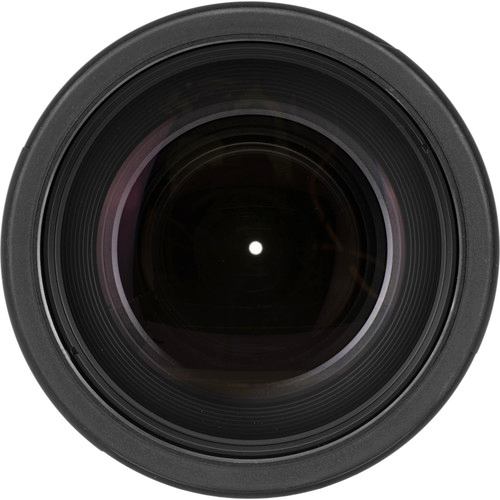
A 77mm filter thread supports common circular filters, including some polarizers and neutral-density filters. Large filters can be costly, so check the filter size before buying accessories.
Useful accessories may include:
- A strong camera strap or lens-support strap
- A monopod for long sessions
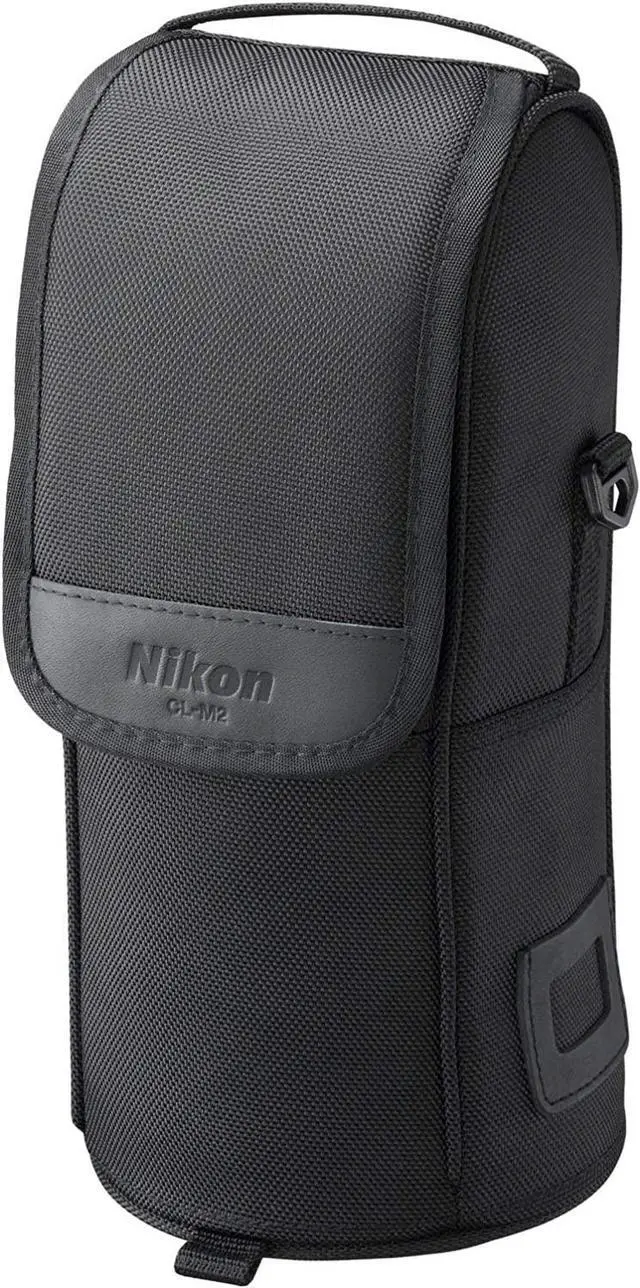
- A padded case
- A 77mm protective or polarizing filter
- A compatible tripod plate
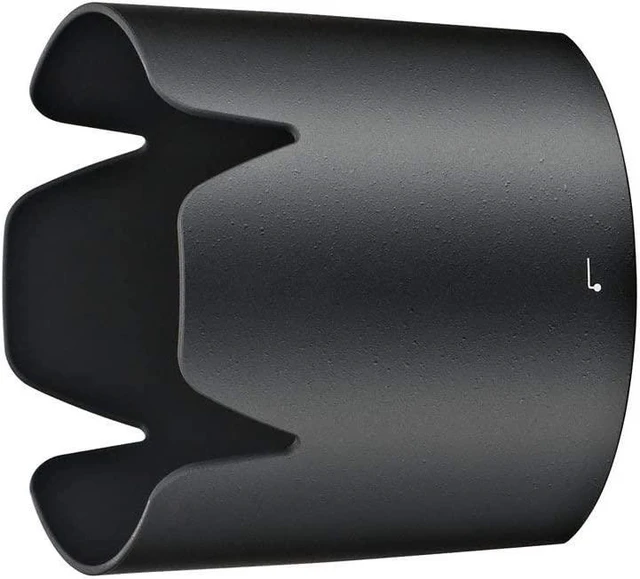
- A lens hood
- A rain cover for changing weather
Avoid cheap filters that can reduce contrast or add flare. A filter is not a substitute for a lens hood or careful handling.
The lens has seals intended to improve resistance to dust and moisture, but it should not be treated as waterproof. Keep it covered in rain, dry it before storage, and avoid changing lenses in blowing dust or spray.
Handling tips
The zoom ring and focus ring require deliberate movement because the lens is large and heavy. Support the lens under the barrel rather than holding only the camera body.
When carrying the camera with the lens attached, use a strap or support point designed for the combined weight. A weak strap connection can damage the camera mount or cause a fall.
Buying a Used Nikon 80-400mm Lens in the United States
Because this lens is an older F-mount design, many buyers will find it through used dealers, camera shops, or private listings in the U.S. Condition matters more than a low asking price.
Before buying, inspect the following:
1. Front and rear glass
Small marks on the exterior may have little effect, but deep scratches, fungus, haze, or separation can reduce image quality and repair value.
Use a flashlight at an angle, but do not shine a powerful light into the lens for a long period.
2. Zoom and focus movement
The zoom ring should turn smoothly. A small amount of normal resistance is expected. Grinding, stiffness, or a loose barrel may indicate wear or impact damage.
The focus ring should also move evenly in manual-focus mode.
3. Autofocus
Test autofocus at both 80mm and 400mm. Try a nearby subject and a distant subject. Listen for unusual clicking, grinding, or repeated hunting.
A camera body may cause some focus behavior, so test the lens on a known working body when possible.
4. VR
Take test images with VR on and off. Listen for abnormal sounds. A brief movement or click when VR starts may be normal, but persistent noise or unstable framing may require service.
5. Aperture control
Take photographs at several aperture settings. The exposure should change as expected. Sticky aperture blades can cause exposure errors.
6. Mount and contacts
Check the F-mount for bent parts, deep wear, or damaged electronic contacts. On an adapted Z camera, also inspect the adapter connection.
7. Included parts
A missing tripod collar, hood, caps, or case may add replacement cost. The collar is especially useful for tripod work and can be expensive to replace.
Ask for a short return period when buying from an unfamiliar seller. A clear test period is more valuable than a vague claim that the lens is “like new.”
Nikon 80-400mm Versus Common Alternatives
The best alternative depends on your camera system and the type of photography you do.
| Lens type | Main advantage | Main limitation |
|---|---|---|
| Nikon 80-400mm f/4.5-5.6G VR | Broad range and 400mm reach | Heavy and relatively slow |
| Nikon 70-200mm f/2.8 | Bright aperture and strong indoor performance | Much less reach |
| Nikon 200-500mm f/5.6E VR | More reach and constant f/5.6 aperture | Larger and less flexible at short focal lengths |
| Nikon 300mm f/4 prime | Strong reach-to-size balance | No zoom flexibility |
| Nikon Z 100-400mm VR S | Native Z-mount design and modern mirrorless features | Higher cost and incompatible with native F-mount bodies |
| Nikon 180-600mm VR | Very long reach for wildlife | Larger range and less useful for short telephoto work |
The 80-400mm is a sensible fit when you already own a Nikon F-mount body and need one lens for varied outdoor subjects.
Choose a 70-200mm f/2.8 when low-light work, subject separation, and indoor sports matter most. Choose a 200-500mm or 180-600mm when distant wildlife is the main priority.

Common Problems and Practical Fixes
The images are blurry
Possible causes include subject motion, camera shake, slow shutter speed, poor focus, or heat haze.
Start by increasing shutter speed. Then check whether the focus point is on the subject. Try a test subject that does not move, and compare images with VR on and off.
The lens hunts for focus
A low-contrast subject, busy background, poor light, or incorrect focus-area setting can cause hunting.
Try a larger subject, a single focus point, AF-C for moving subjects, or AF-S for still subjects. Clean the electronic contacts if autofocus fails across multiple bodies, but do not use harsh chemicals.
The lens feels too heavy
This lens is heavy for long handheld sessions. Use a monopod, support the barrel with your left hand, or choose a lighter lens if portability is the main goal.
Do not attach the lens to a lightweight tripod without checking balance and load capacity.
The image looks soft at 400mm
Check shutter speed, focus accuracy, atmospheric haze, and subject distance before blaming the lens. Long lenses magnify every small error.
Test the lens on a stable subject in clear air. Use a tripod, disable unnecessary movement, and compare several apertures.
VR does not appear to work
Confirm that VR is switched on. Check the camera’s stabilization settings and test at a shutter speed slow enough to reveal camera shake.
VR will not remove blur from a moving animal or athlete. Use a faster shutter speed for motion.
Is the Nikon 80-400mm Worth Buying?
The Nikon 80-400mm f/4.5-5.6G ED VR is worth considering when you need:
- A 400mm telephoto option for a Nikon DSLR
- One lens for wildlife, sports, and travel
- Autofocus on an AF-S-compatible Nikon body
- Optical stabilization for handheld shooting
- A used lens at a reasonable condition-adjusted price
It may not be the right choice when you need:
- A lightweight travel lens
- Strong low-light performance
- A bright f/2.8 aperture
- Native Z-mount operation without an adapter
- The fastest autofocus available for demanding professional sports
- Very long reach beyond 400mm
The key decision is not just price. Compare the lens condition, camera compatibility, expected shooting light, carrying weight, and cost of alternatives.
Frequently Asked Questions
Is the Nikon 80-400mm f/4.5-5.6G ED VR a full-frame lens?
Yes. It is designed for Nikon FX cameras. It also works on Nikon DX cameras, where the field of view is similar to 120-600mm on a full-frame camera.
Does the Nikon 80-400mm have image stabilization?
Yes. It includes Nikon Vibration Reduction, or VR. VR helps reduce blur from camera movement, but it does not freeze moving subjects.
Is the lens compatible with Nikon Z cameras?
It can be compatible through the Nikon FTZ or FTZ II adapter, depending on the camera, adapter, firmware, and selected features. Check Nikon’s current compatibility information before buying.
Can the Nikon 80-400mm photograph birds?
Yes. The 400mm focal length is useful for many birds, especially larger birds and subjects at moderate distances. Small birds may still require a closer position, better light, or a longer lens.
Does the lens work with teleconverters?
Teleconverter compatibility depends on the exact Nikon converter, camera body, autofocus system, and firmware. Nikon’s official compatibility chart should be checked before purchase. A teleconverter also reduces the effective maximum aperture and may slow autofocus.
What filter size does the lens use?
The lens uses 77mm filters.
Is the Nikon 80-400mm weatherproof?
It has sealing intended to improve resistance to dust and moisture, but it is not waterproof. Use protection in rain and dry the lens before storing it.
Final Recommendation
The Nikon AF-S NIKKOR 80-400mm f/4.5-5.6G ED VR remains a capable long-range zoom for U.S. photographers who use Nikon F-mount equipment. Its strongest feature is flexibility: 80mm is useful for nearby subjects, while 400mm provides meaningful reach for wildlife, sports, aircraft, and outdoor details.
Its main compromises are weight, the f/5.6 maximum aperture at 400mm, and the age of the F-mount platform. Buy it when those limits fit your camera and shooting style. Before purchasing a used copy, test autofocus, VR, aperture control, zoom movement, glass condition, and mount contacts.
The next practical step is simple: confirm your camera body, decide how often you need 400mm, and compare the lens’s used condition and total accessory cost with a newer 100-400mm or longer telephoto option.

