
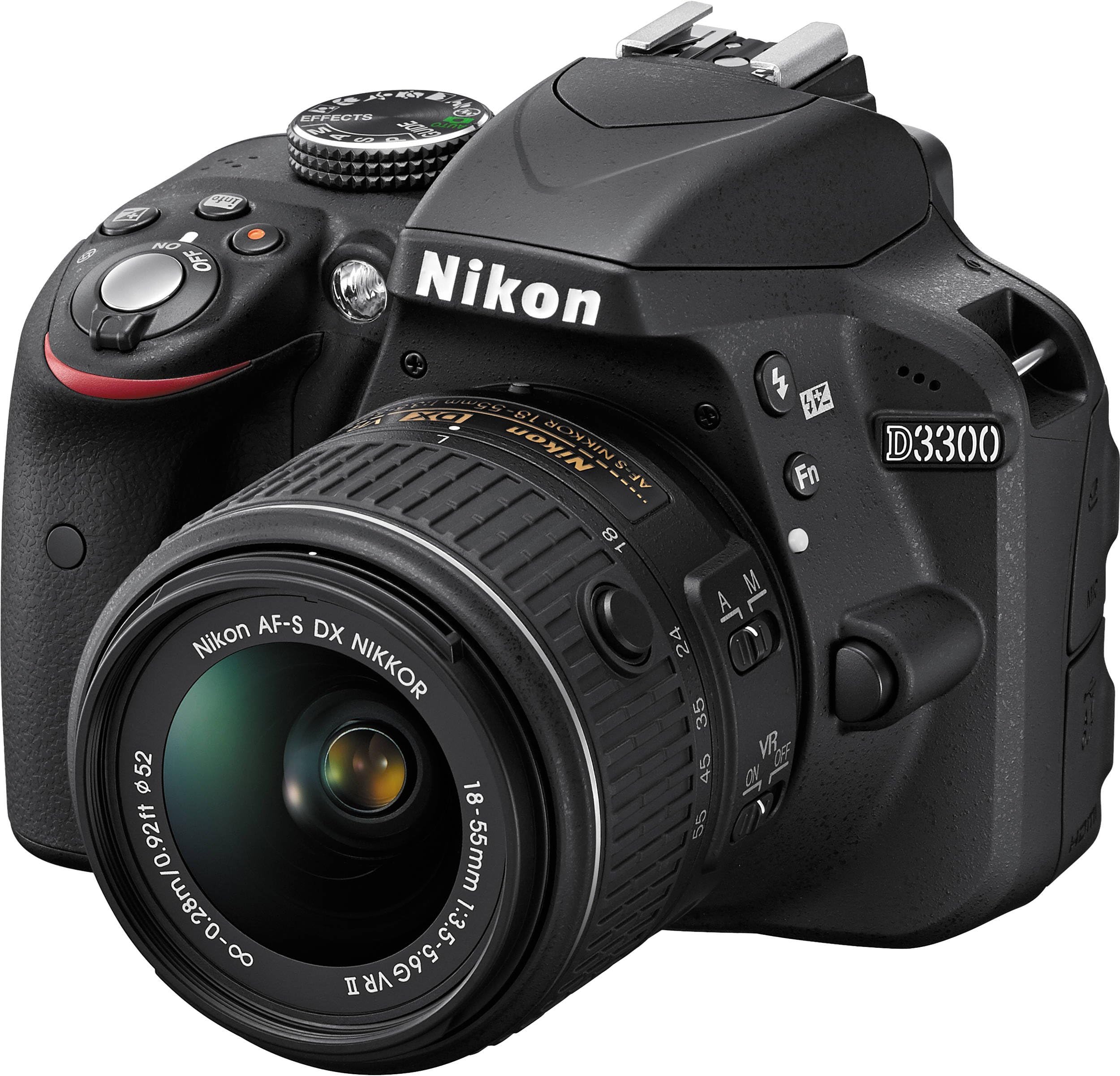
The Nikon D3400 with the 18-55mm VR DX AF-P zoom lens is an entry-level DSLR made for U.S. buyers who want better image quality and more control than a phone or basic point-and-shoot camera. It combines a 24.2-megapixel DX-format sensor, an optical viewfinder, simple controls, and a useful everyday zoom lens.
This camera is no longer a current Nikon model, so most buyers will find it used or refurbished in the United States. It remains a strong option for family photos, travel, school events, portraits, and learning photography. Its main limits are its fixed rear screen, basic autofocus system, lack of 4K video, and limited wireless features.

Nikon D3400 Specifications at a Glance
The Nikon D3400 provides the core features many new photographers need without the cost or complexity of a professional camera.
| Feature | Nikon D3400 specification |
|---|---|
| Camera type | Digital single-lens reflex camera |
| Sensor | 24.2MP DX-format CMOS |
| Processor | EXPEED 4 |
| ISO range | ISO 100–25,600 |
| Autofocus | 11-point AF system |
| Continuous shooting | Up to 5 frames per second |
| Viewfinder | Optical pentamirror viewfinder |
| Rear display | 3-inch LCD with about 921,000 dots |
| Video | Full HD 1080p, up to 60 frames per second |
| Lens mount | Nikon F mount |
| Included lens | AF-P DX NIKKOR 18-55mm f/3.5-5.6G VR |
| Crop factor | 1.5x DX format |
| Wireless feature | Bluetooth Low Energy through SnapBridge |
| Battery | EN-EL14a rechargeable lithium-ion battery |
| Camera weight | About 13.9 ounces without battery and card |
The 24.2MP sensor gives the D3400 enough detail for large prints and moderate cropping. Its ISO range also helps in dim rooms, although image noise increases as ISO rises.
The camera uses a 1.5x crop factor. As a result, the 18-55mm lens gives a field of view similar to a 27-82.5mm lens on a full-frame camera. That range covers wide-angle scenes, normal views, and short telephoto portraits.
What the Nikon D3400 18-55mm Lens Can Do
The included 18-55mm VR DX AF-P lens is a general-purpose zoom lens. It is designed for Nikon DX cameras such as the D3400, D3500, D5600, and many other compatible Nikon bodies.
At 18mm, the lens is wide enough for:
- Family groups
- Travel photos
- Indoor rooms
- Buildings and landscapes
- Everyday street scenes
At 55mm, it works better for:
- Head-and-shoulder portraits
- Detail shots
- School performances from nearby seats
- Food and small product photos
- Pets that are close to the camera
The lens has a maximum aperture of f/3.5 at 18mm and f/5.6 at 55mm. A maximum aperture describes how much light the lens can let in. A lower f-number lets in more light and can create a softer background.
This lens is not especially bright at the long end. In low light, the camera may need a slower shutter speed or a higher ISO setting. For indoor portraits or strong background blur, a low-cost 50mm f/1.8 lens can provide a visible improvement, but buyers must confirm autofocus compatibility with the D3400.
What VR Means
VR stands for Vibration reduction. The lens shifts an internal optical element to reduce the effect of small hand movements during a still photo.
VR can help when you shoot a still subject at a slow shutter speed. It cannot freeze a moving child, pet, athlete, or vehicle. For moving subjects, shutter speed matters more than VR.
The lens does not provide weather sealing designed for heavy rain. Keep the camera and lens dry, and use a protective bag when conditions change quickly.

Nikon D3400 Image Quality and Real-World Use
The D3400 can produce sharp, detailed photos when paired with good focus, suitable light, and a steady shooting technique. Its sensor is larger than the sensors in most phones and basic compact cameras, which can help with detail, tonal range, and background separation.
The camera performs well in daylight and bright indoor spaces. Its 24.2MP resolution also gives you room to crop an image while keeping useful detail. Cropping cannot replace a longer lens, but it can help when the subject is slightly too far away.
Low-light results depend on the subject and the lens setting. A still object can often be photographed at a slower speed with VR enabled. A moving subject may require ISO 1600, ISO 3200, or higher, where visible grain becomes more likely.
Image quality also depends on the file type:
- JPEG files are ready to share and take less storage space.
- RAW files preserve more editing information but require software and more storage.
- RAW + JPEG saves both versions but uses the most card space.
For a beginner, JPEG is simple. RAW is more useful when you plan to adjust exposure, white balance, shadows, or highlights after the photo is taken.
Autofocus, Shooting Speed, and Video
The Nikon D3400 uses an 11-point autofocus system through its optical viewfinder. It is suitable for portraits, family photos, travel, and ordinary action. The center focus point is generally the most useful point in difficult light.
The camera can shoot at up to 5 frames per second. This is adequate for children playing, casual sports, and short bursts of action. It is not designed as a high-speed sports camera, and autofocus tracking is less advanced than on newer Nikon mirrorless models.
For more reliable focus:
- Select a single focus point for a still subject.
- Place the point over the subject’s eye or key detail.
- Press the shutter button halfway to focus.
- Reframe only when the subject and camera remain still.
- Use continuous autofocus for moving subjects.
The D3400 records Full HD video up to 1080p at 60 frames per second. This is enough for family clips, online posts, and basic projects. It does not record 4K video.
The camera has a built-in monaural microphone and does not provide the same audio flexibility as higher-level cameras with an external microphone input. For serious video work, a separate audio recorder may be needed.
SnapBridge, Memory Cards, and Battery Life
The D3400 uses Bluetooth Low Energy with Nikon SnapBridge for selected wireless tasks. The connection can support automatic transfer of smaller photos to a compatible smartphone and remote communication features supported by the app.
Bluetooth is not the same as full Wi-Fi. It is designed for low-power connection and simple image transfer. Large files may take time to move, and app support can change as phone operating systems are updated.
The camera uses SD, SDHC, and SDXC memory cards. A Class 10 or UHS-I card is a sensible choice for still photos and Full HD video. Format the card in the camera before important use, and keep a spare card for travel.
The EN-EL14a battery is known for strong endurance under standard testing conditions. Actual battery life changes with:
- Live View use
- Video recording
- Flash use
- Image review
- Wireless connection
- Cold weather
- Battery age
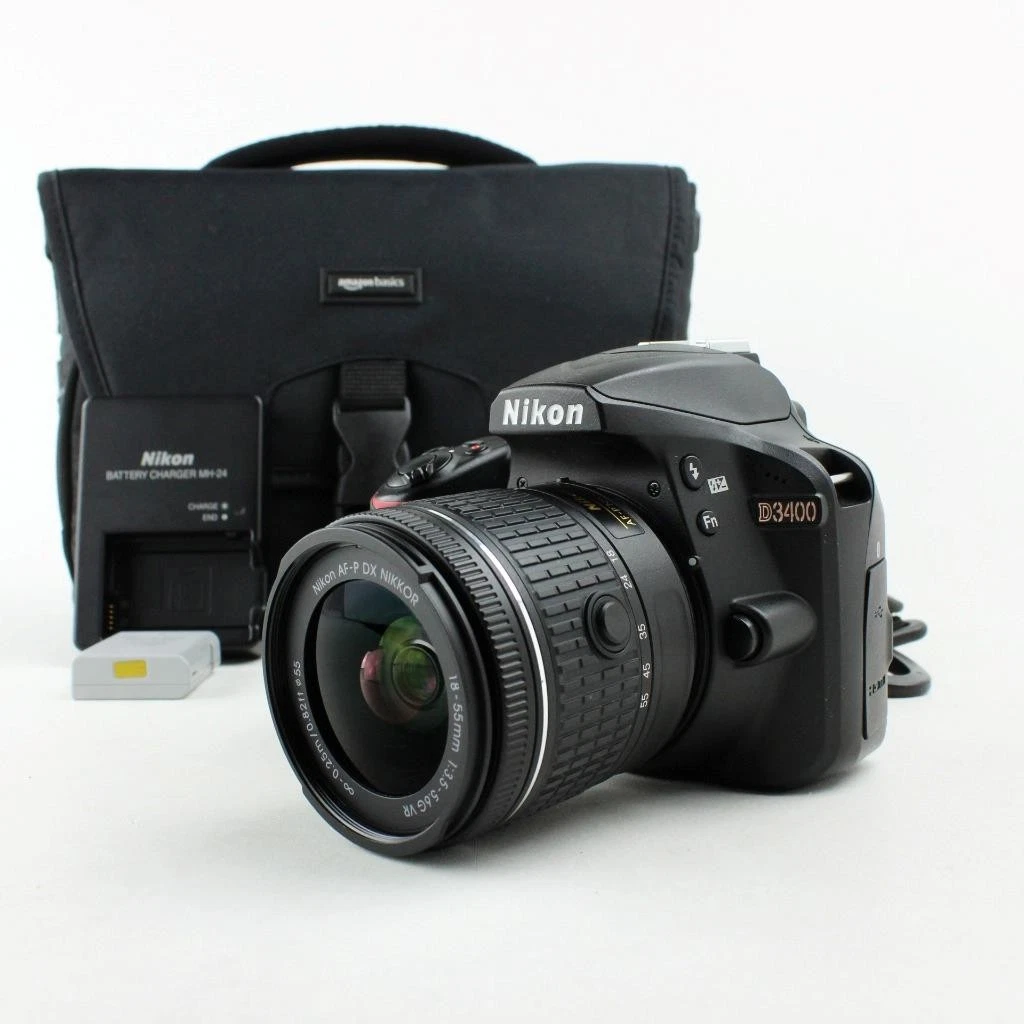
A used camera may include an old battery with reduced capacity. Ask whether the battery is genuine and whether the charger is included. A missing charger can add cost and delay your first use.

AF-P Lens Compatibility and Firmware Checks
The AF-P designation identifies a Nikon lens that uses a stepping motor for quiet, smooth autofocus. This is helpful for ordinary shooting and can reduce focus noise during video.
Compatibility deserves special attention when buying a used D3400 kit. The D3400 is designed to work with the AF-P DX 18-55mm lens, but Nikon firmware updates can affect lens behavior and menu support on some camera bodies.
Before buying a used kit:
- Confirm that the camera is a Nikon D3400, not a similar older model.
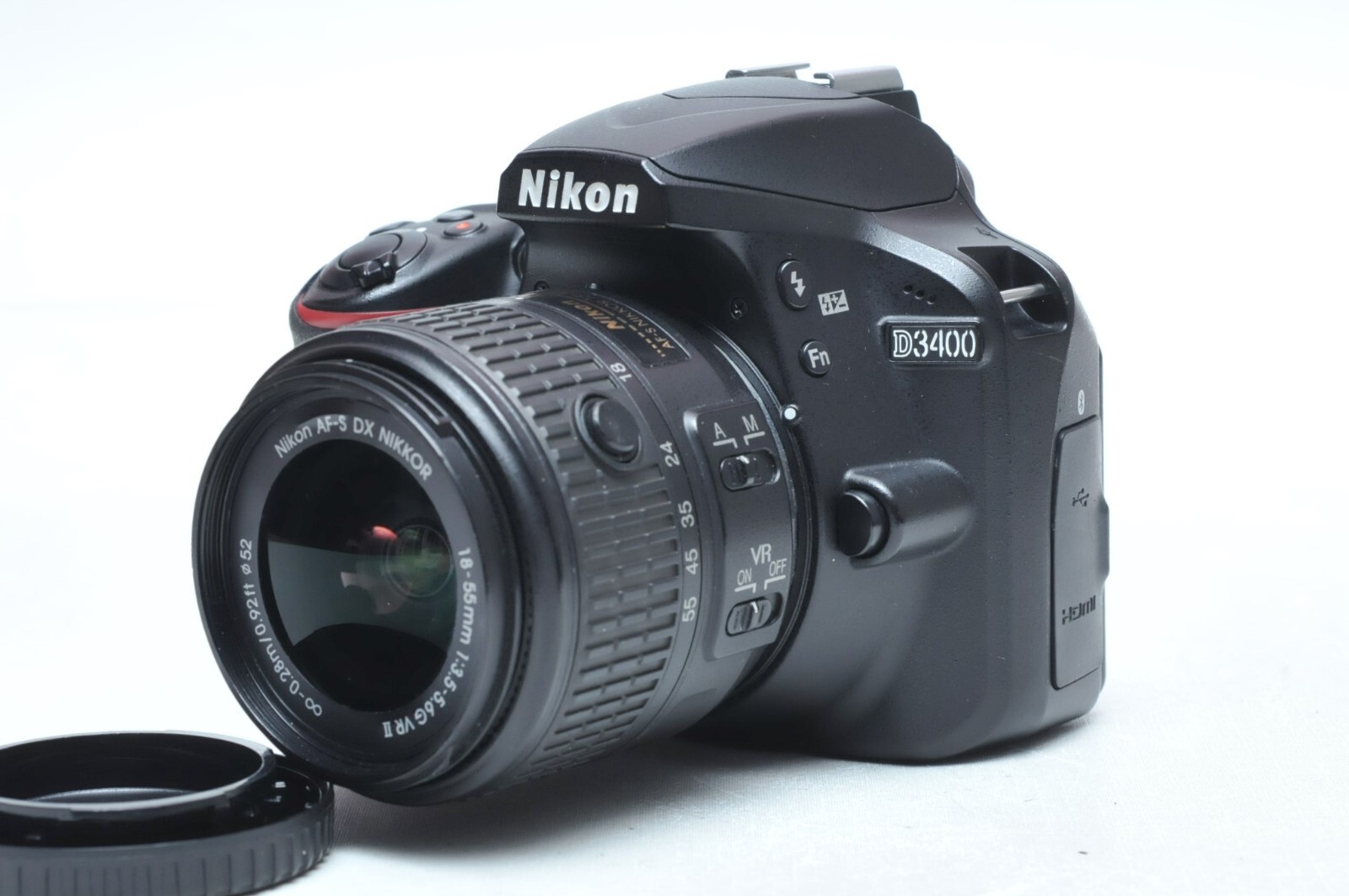
- Check the exact lens name: AF-P DX NIKKOR 18-55mm f/3.5-5.6G VR.
- Turn on the camera and test autofocus.
- Test both manual focus and autofocus.
- Confirm that VR can be turned on or off through the camera menu if supported.
- Check the camera firmware and lens compatibility information on Nikon’s support site.
Do not assume that every Nikon 18-55mm lens is the same. Older AF-S versions and newer AF-P versions may differ in focus behavior and camera support.

How to Set Up the Nikon D3400 for the First Time
A basic setup takes only a few steps.
- Charge the EN-EL14a battery.
- Insert the battery and an SD memory card.
- Attach the 18-55mm lens with the camera turned off.
- Remove the front and rear lens caps.
- Turn the camera on.
- Set the date, time, and time zone.
- Choose JPEG or RAW + JPEG.
- Set the mode dial to Auto for a first test.
- Turn VR on when shooting handheld.
- Take a test photo in daylight.
- Review focus and exposure on the rear screen.
- Transfer or back up the image before formatting the card.
For better control, use Aperture Priority mode. Turn the mode dial to A and choose the aperture. The camera then selects a matching shutter speed.
Use a wider aperture, such as the lowest available f-number, when you want more background blur. Use a smaller aperture, such as f/8, when you want more of a landscape or group to appear sharp.
A sign of correct basic setup is a sharp test image with normal color, no error message, and a lens that focuses smoothly. If the lens does not autofocus, check the lens switch, camera settings, battery charge, and firmware compatibility before assuming the lens is defective.

Buying a Used Nikon D3400 Kit in the United States
A used Nikon D3400 can be a good value, but condition matters more than the original retail price. The model was released several years ago, so age, storage, and previous use vary widely.
Check these points before paying:
- Sensor: Look for dust, scratches, or marks in test photos.
- Lens glass: Inspect the front and rear elements for scratches, haze, fungus, or internal dust.
- Lens barrel: Check for cracks and loose sections.
- Autofocus: Test focus at both 18mm and 55mm.
- VR: Confirm that vibration reduction works.
- Shutter: Ask for the shutter count when possible.
- Screen: Look for dead pixels, deep scratches, or damage.
- Card slot: Confirm that the camera saves and reviews images.
- Battery and charger: Verify that both are included and functional.
- Mount: Check that the lens locks firmly.
- Ports and doors: Inspect the USB, HDMI, battery, and card-compartment covers.
A high shutter count does not automatically mean the camera will fail. It does, however, provide useful context about prior use. A clean camera with a known history may be a safer purchase than a cheaper kit with no testing information.
Avoid a kit that shows fungus, heavy impact damage, battery leakage, intermittent errors, or a lens that cannot focus. Repair cost can exceed the value of an older entry-level DSLR.

Nikon D3400 Advantages and Limitations
The D3400’s main advantage is balance. It offers a large sensor, a clear optical viewfinder, strong battery life, and simple controls in a relatively light body.
Advantages
- High-resolution 24.2MP sensor
- Good daylight image quality
- Optical viewfinder with no electronic delay
- Simple controls for beginners
- 5 fps continuous shooting
- Full HD video
- Useful 18-55mm everyday zoom
- Low-cost access to Nikon F-mount lenses
- Long battery life under standard test conditions
- Lightweight body for a DSLR
Limitations
- No touchscreen
- No built-in Wi-Fi
- Bluetooth transfer is limited compared with modern Wi-Fi systems
- No 4K video
- Basic 11-point autofocus system
- No headphone or external microphone connection
- Fixed rear display
- Small viewfinder compared with many newer mirrorless cameras
- Used condition and battery age vary
- AF-P lens compatibility should be checked with older Nikon bodies
The camera fits beginners who want to learn traditional photography controls. A newer mirrorless camera may be a better choice if you need subject recognition, advanced video, silent shooting, or a fully rotating display.

Is the Nikon D3400 With 18-55mm Lens Still Worth Buying?
The Nikon D3400 is still worth considering when the price is low, the kit is tested, and your needs are mainly still photography. It can teach exposure, focus, lens choice, and composition without forcing you to manage a complex menu system.
It is less attractive when the price approaches that of a newer camera. A newer model may offer better autofocus, easier phone connection, a touchscreen, improved video, and a more modern lens system.
Choose the D3400 if you want:
- An affordable first interchangeable-lens camera
- Strong daylight photo quality
- An optical viewfinder
- A simple camera for travel and family use
- Access to Nikon DX and compatible F-mount lenses
Look elsewhere if you need:
- 4K video
- Fast subject tracking
- Reliable wireless transfer of large files
- A flip or touch display
- Advanced low-light autofocus
- Professional video audio features
The practical next step is to compare the complete used kit, not only the camera body. A working battery, charger, memory card, clean lens, and tested autofocus can make the difference between a useful bargain and an expensive repair project.

Frequently Asked Questions
Does the Nikon D3400 come with a lens?
Many retail kits included the AF-P DX NIKKOR 18-55mm f/3.5-5.6G VR lens. Used listings vary, so confirm that the lens is included and verify the exact model.
Is the Nikon D3400 good for beginners?
Yes. Its Auto, Guide, Program, Aperture Priority, Shutter Priority, and Manual modes allow a beginner to start simply and gain control over time.
Can the Nikon D3400 connect to a phone?
Yes, through compatible Nikon SnapBridge features using Bluetooth Low Energy. It does not offer the same full wireless functions as cameras with built-in Wi-Fi.
Can the Nikon D3400 shoot in RAW?
Yes. It can save NEF RAW files, JPEG files, or both. RAW files are useful when you plan to edit exposure and color on a computer or compatible mobile device.
Is the 18-55mm lens good for portraits?
It can produce good casual portraits, especially at 55mm with the subject separated from the background. A lens with a wider maximum aperture, such as an f/1.8 prime, can create more background blur and work better in low light.
Does the Nikon D3400 have image stabilization?
The camera body does not have sensor-shift stabilization. The included 18-55mm VR lens has optical Vibration Reduction, which helps reduce camera shake when photographing still subjects.
Final Recommendation
The Nikon D3400 with the 18-55mm VR DX AF-P zoom lens is a capable entry-level DSLR for U.S. buyers shopping in the used market. Its 24.2MP sensor, optical viewfinder, simple controls, and versatile kit lens make it suitable for learning photography and handling everyday subjects.
Buy it when the body and lens are in good condition, the battery and charger are included, and the price reflects its age. Skip it when you need modern mirrorless autofocus, 4K video, a touchscreen, or advanced wireless features.

