
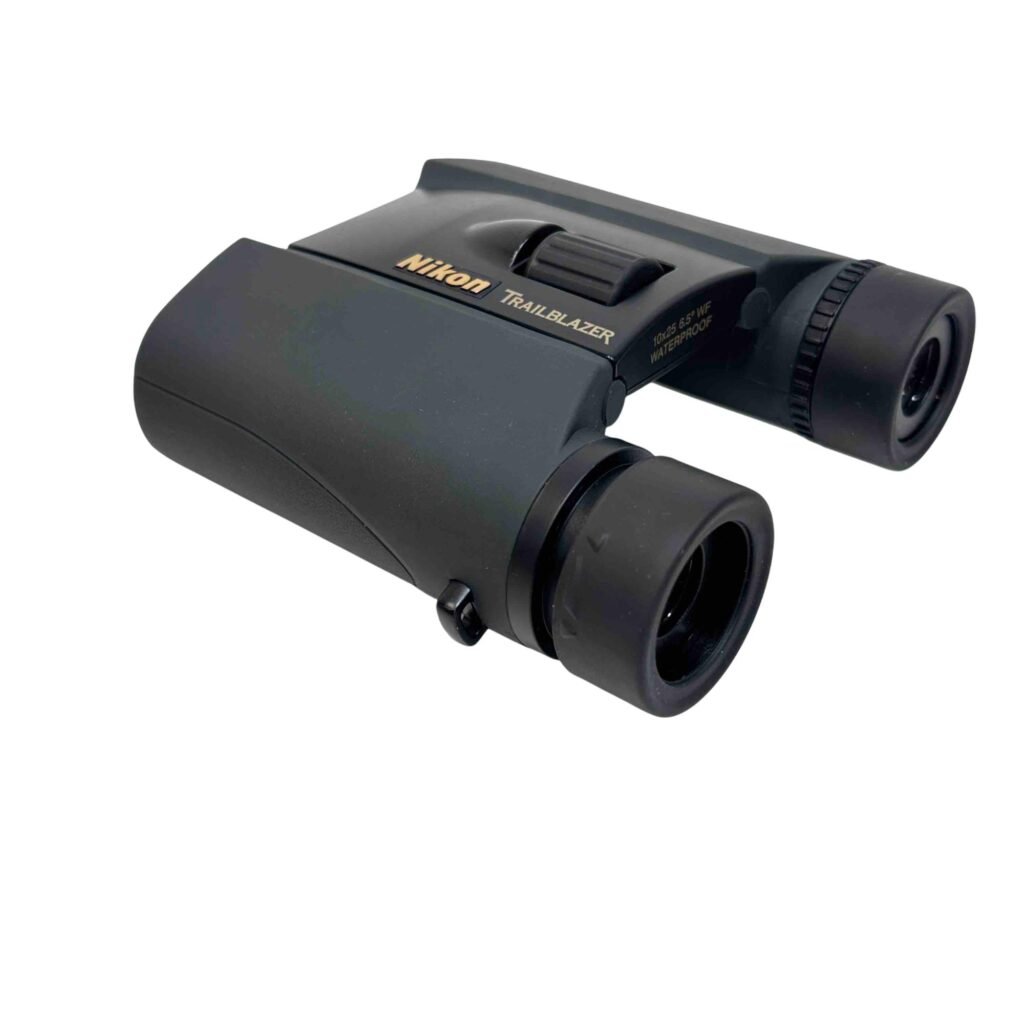
The Nikon Trailblazer 10x25mm binoculars are compact roof-prism binoculars made for travel, hiking, wildlife viewing, sports, and casual outdoor use in the United States. They offer 10x magnification in a small body, plus waterproof and fogproof construction, but their 25mm lenses collect less light than larger binoculars.
For most daytime users, the Nikon Trailblazer 10×25 is a practical balance of size, reach, and price. It is less suitable for dusk, dense woods, astronomy, or users who need a wide field of view.
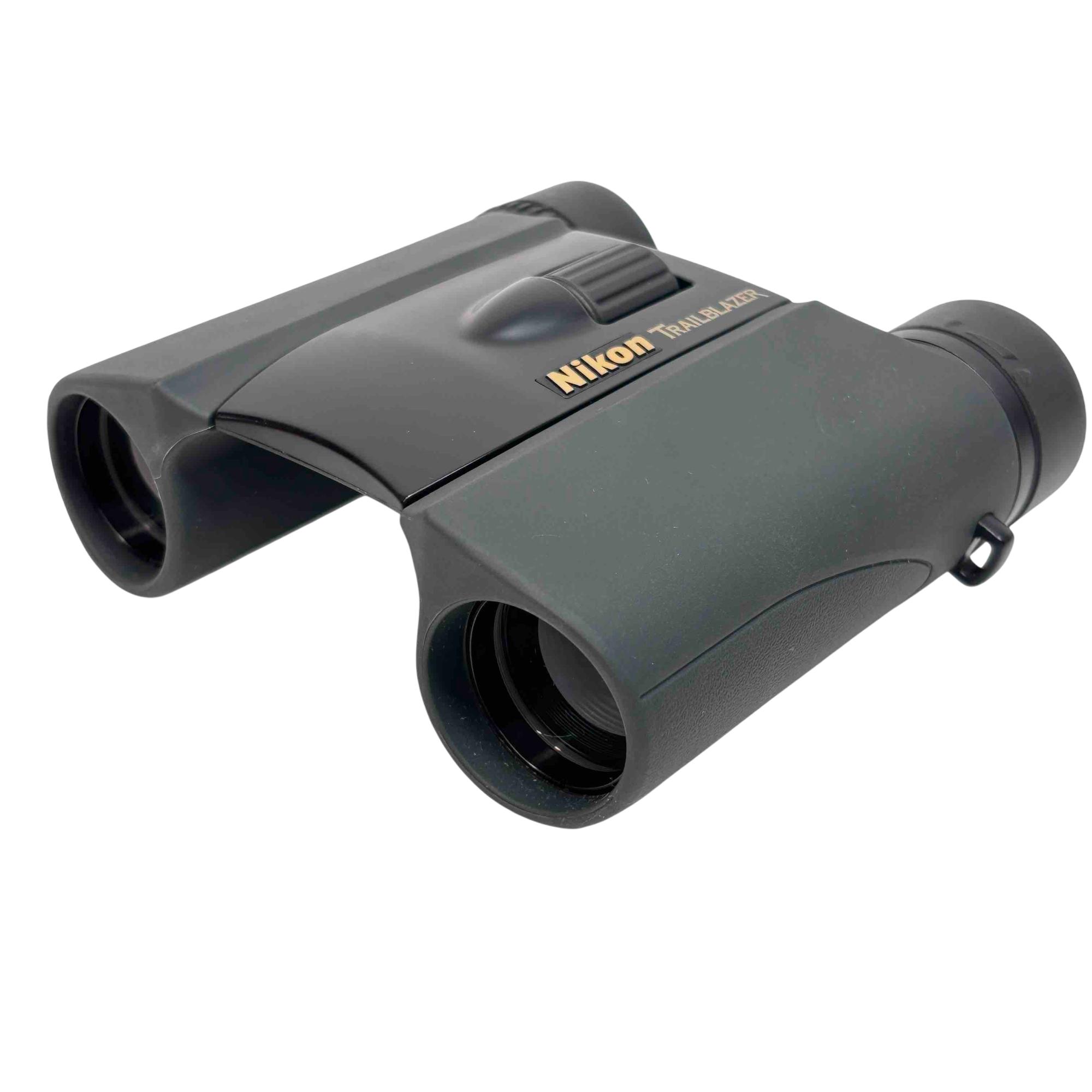
Nikon Trailblazer 10×25 at a glance
The Nikon Trailblazer 10×25 is a compact binocular with 10-power magnification and 25mm objective lenses. The first number, 10x, means distant objects appear about ten times closer than they would to the unaided eye. The second number, 25mm, is the diameter of each front lens.
Nikon markets the Trailblazer as a lightweight, waterproof, and fogproof binocular. The design uses roof prisms, which allow the two optical tubes to sit close together. This gives the binoculars a slim shape that fits well in a day pack, glove box, or travel bag.
| Feature | Nikon Trailblazer 10×25 |
|---|---|
| Magnification | 10x |
| Objective lens diameter | 25mm |
| Optical design | Roof prism |
| Exit pupil | 2.5mm |
| Field of view | About 294 feet at 1,000 yards |
| Close focus | About 11 feet |
| Construction | Waterproof and fogproof |
| Best use | Daytime travel, hiking, sports, and wildlife viewing |
| Main limit | Less low-light performance than larger binoculars |
Specifications can vary by model revision or regional listing. Check the product label, current Nikon documentation, and the seller’s exact model number before buying used or old stock.
What the 2.5mm exit pupil means
The exit pupil is the small circle of light that leaves the eyepiece. You can estimate it by dividing the objective lens size by the magnification:
25mm ÷ 10 = 2.5mm
A 2.5mm exit pupil works well in bright outdoor conditions. It becomes less forgiving as light fades. For comparison, a 10×42 binocular has a 4.2mm exit pupil, so it usually looks brighter at dawn, dusk, and under tree cover.
Optical performance in real use
The Nikon Trailblazer 10×25 is strongest in good daylight. Its 10x power can help you read trail signs, identify birds across a pond, follow players at a field, or inspect distant landmarks.
The small lenses reduce weight and bulk. That is the main reason to choose this model. The trade-off is a darker view in low light and a smaller apparent “window” than many 8x binoculars.
Best viewing conditions
These binoculars are a good match for:
- Day hikes and nature walks
- Travel and sightseeing in the United States
- Outdoor sports and concerts
- Wildlife viewing in open areas
- Camping and general outdoor use
- Carry-on or personal-item travel
- Emergency or backup use in a vehicle
The 10x magnification can reveal more detail than 8x power when your hands are steady. A stable stance helps. Brace your elbows against your body, or rest the binoculars on a rail or pack when possible.
Where the Trailblazer 10×25 is less effective
the compact format has clear limits. It is not the best choice for:
- Astronomy
- Night wildlife viewing
- Long sessions in deep shade
- Users with unsteady hands
- Very close subjects
- Wide panoramic views
- Observing through heavy rain or spray for long periods
At 10x, hand movement is easier to see. A person who struggles to hold binoculars still may find an 8x model easier and more comfortable.
Field of view and magnification
A stated field of view of about 294 feet at 1,000 yards gives the Trailblazer a useful but not especially wide view. A wider field makes it easier to find a moving bird or player. Higher magnification can show more detail, but it also narrows the viewing experience and increases visible shake.
This creates a simple choice:
- Choose 10×25 for compact size and extra reach.
- Choose 8×25 for easier aiming and a steadier view.
- Choose 8×42 for a brighter view and better comfort in low light.
- Choose 10×42 for more reach and stronger low-light ability, at the cost of size and weight.

Waterproof and fogproof construction
The Nikon Trailblazer 10×25 is described as waterproof and fogproof. These features help protect the internal optics when conditions change, such as when you move from an air-conditioned car into humid summer air.
Fogproof binoculars are usually sealed and filled with dry gas during manufacture. This helps reduce internal condensation. Waterproof construction helps keep water from entering through the body seals.
Water resistance does not mean the binoculars are safe for every water-related situation. Do not treat them as a dive product. Avoid dropping them into a lake, leaving them in heavy rain for hours, or rinsing them under a strong stream unless Nikon’s current instructions specifically allow it.
What to do if the binoculars get wet
If the outside becomes wet:
- Wipe the body with a clean, soft cloth.
- Remove moisture around the eyepieces and focus wheel.
- Let the binoculars dry at room temperature.
- Do not use a hair dryer, heater, or direct sunlight.
- Check the lens caps and body for damage before the next trip.
If water appears inside the optics, stop using the binoculars and contact Nikon or a qualified optical repair service. Internal moisture can damage coatings and cause lasting haze.
Used-model caution
Waterproof seals can age. A used Nikon Trailblazer may have been dropped, opened, repaired, or stored in poor conditions. Its original water resistance cannot be assumed from the model name alone.
For a used pair, inspect:
- Cracks in the housing
- Loose eyepieces
- A stiff or rough focus wheel
- Internal haze or spots
- Scratches on the lenses
- Damaged hinge or diopter ring
- Missing caps or strap hardware
A clean exterior does not prove that the seals remain intact.
How to set up the Nikon Trailblazer 10×25
Correct adjustment improves comfort and sharpness. The process takes less than a minute once you know the steps.
1. Set the interpupillary distance
Hold both barrels and move them closer together or farther apart until you see one round image. If you see two circles or dark edges, the spacing is not correct.
2. Adjust the eyecups
Users who do not wear glasses can often extend the eyecups. This helps place the eyes at the correct distance from the lenses.
Eyeglass wearers usually get a better view with the eyecups folded down. Keep your glasses close to the eyepieces without pressing hard against them.
3. Focus the left eye
Cover the right objective lens without touching it. Look at a distant object and turn the center focus wheel until the left eye sees a sharp image.
4. Set the right-eye diopter
Now cover the left objective lens. Use the diopter adjustment near the right eyepiece to sharpen the image for the right eye.
5. Recheck both eyes
Uncover both lenses and use only the center focus wheel for different distances. The diopter should not need frequent adjustment unless your vision or viewing conditions change.
If one eye never becomes clear, check for a dirty lens, a misplaced eyecup, incorrect diopter settings, or a possible optical fault.
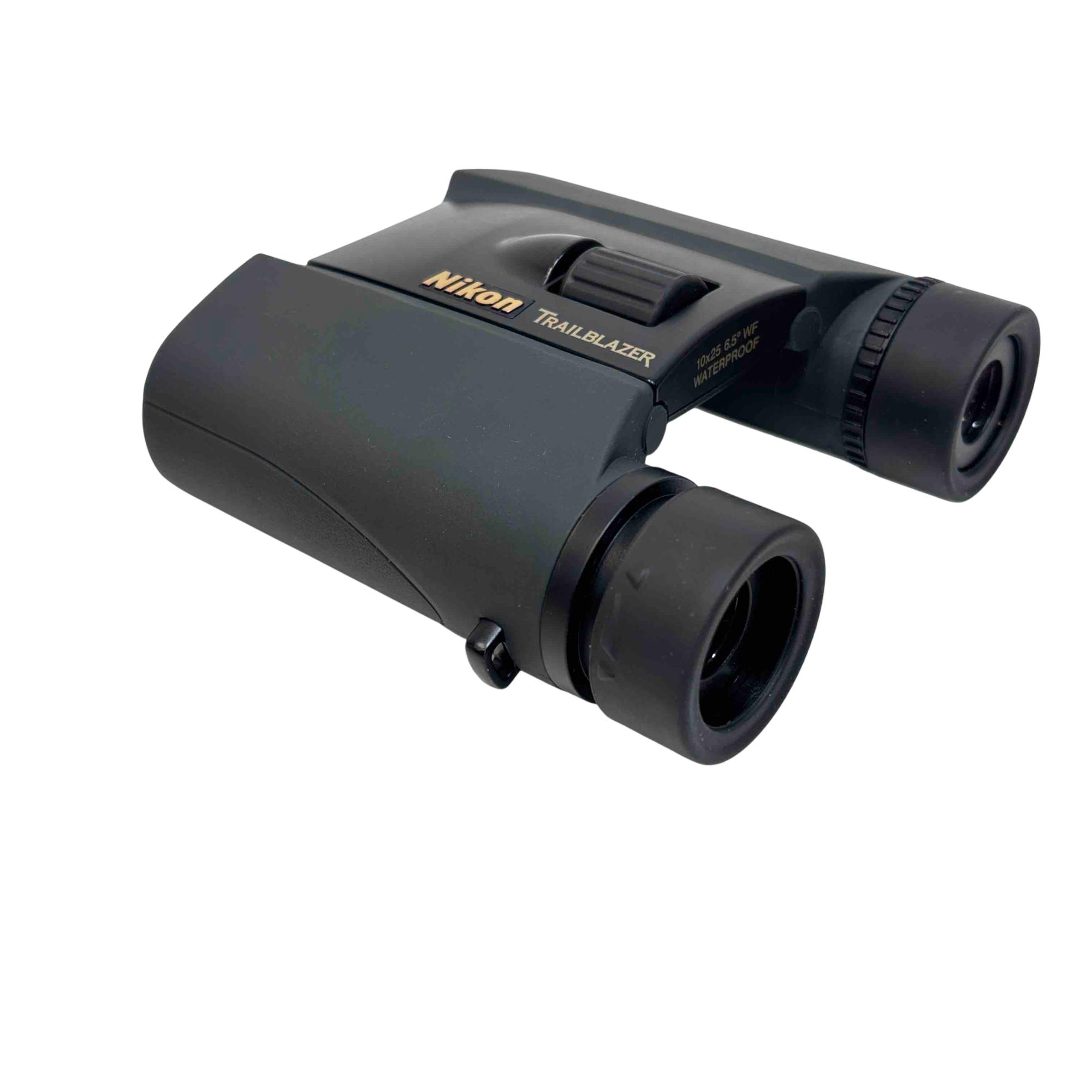
Nikon Trailblazer 10×25 compared with larger binoculars
The best binocular size depends on when and where you use it. There is no single format that wins in every situation.
| Format | Main advantage | Main drawback | Typical use |
|---|---|---|---|
| 8×25 | Compact and easy to hold | Less reach | Travel and casual viewing |
| 10×25 | More detail at distance | More hand shake and lower light performance | Sports, travel, and open-country viewing |
| 8×32 | Good balance of size and brightness | Larger than a pocket model | Hiking and general birding |
| 8×42 | Bright and comfortable view | Heavier and bulkier | Birding and low-light outdoor use |
| 10×42 | Strong reach and light collection | Heavy compared with 10×25 | Wildlife and open landscapes |
The 10×25 format makes the most sense when portability matters more than low-light performance. If you often view wildlife before sunrise or after sunset, a larger objective lens is usually the better choice.
Common problems and practical fixes
The image shakes too much
This is usually caused by the combination of 10x magnification and an unsupported grip.
Try standing with your feet apart, keeping your elbows close to your body, and breathing slowly. Support your hands on a railing or pack. If the problem continues, an 8x binocular may be a better fit.
The view looks dark
The 25mm lenses limit the amount of light that reaches your eyes. Dirty lenses, folded eyecups, and poor eye placement can make the problem worse.
Clean the lenses correctly and view through the binoculars in brighter conditions. For regular dusk use, consider 8×32, 8×42, or 10×42 binoculars instead.
The image has black edges
Black edges often result from incorrect eye position or eyecup height. Move your eyes slightly, adjust the eyecups, and confirm that the barrels are set to your interpupillary distance.
One side looks sharper than the other
The right-eye diopter may be misadjusted. Reset it using the focusing steps above. If the difference remains after careful adjustment, the binoculars may need service.
The focus wheel feels stiff
Cold weather, dirt, impact damage, or internal wear can affect the focus mechanism. Do not force it or apply household oil. Clean the outside and seek service if the problem remains.
Care and storage
Basic care can extend the life of compact binoculars.
- Use a blower or soft lens brush before wiping glass.
- Clean lenses with a microfiber cloth made for optics.
- Do not use paper towels, shirt fabric, or household glass cleaner.
- Keep the binoculars in a case during transport.
- Store them in a dry place away from extreme heat.
- Remove grit before turning the focus wheel.
- Replace damaged caps or straps before outdoor use.
Never rub dust across a dry lens. Fine grit can create small scratches that reduce contrast and cause glare.
Who should buy the Nikon Trailblazer 10×25?
The Nikon Trailblazer 10×25 is a good fit for a buyer who wants a small, weather-resistant binocular for daytime use. It is especially useful when a full-size 8×42 or 10×42 model would stay at home because it is too large.
It may not be the right choice for a serious birder, low-light observer, or anyone who needs a very stable image. Those users should compare it with a larger 8×32 or 8×42 design before buying.
The most important decision is not the Nikon name alone. It is whether the 10×25 format matches your hands, eyesight, viewing time, and need for portability.
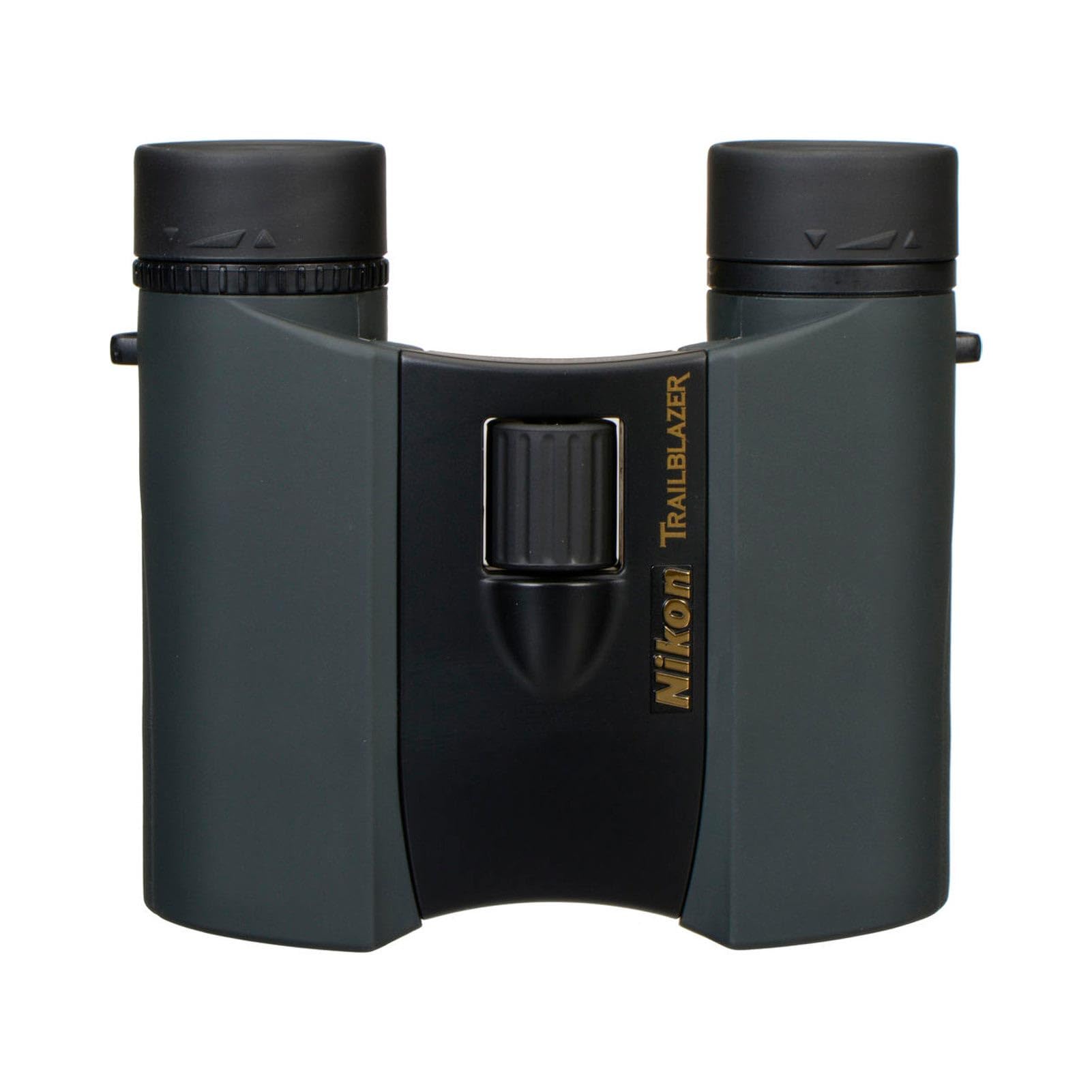
Buying checklist for new and used pairs
Before purchasing, confirm the exact model and condition. Product listings sometimes combine different Trailblazer versions or use incomplete specifications.
Check these points:
- The listing says 10×25, not 8×25 or another size.
- The binoculars are sold for use in the United States if warranty support matters.
- The seller identifies whether the item is new, refurbished, or used.
- The lenses are free from haze, fungus, and deep scratches.
- The focus wheel and diopter move smoothly.
- The hinge holds its position.
- The waterproof claim applies to the exact model.
- The package includes the case, strap, and lens caps if those accessories matter to you.
- The seller provides a return period for optical defects.
Price alone is not enough. A heavily discounted used pair may have worn seals or hidden alignment damage.
Frequently asked questions
Are Nikon Trailblazer 10×25 binoculars fully waterproof?
They are designed and marketed as waterproof and fogproof, but that does not make them a diving or underwater binocular. Avoid intentional submersion and inspect used pairs carefully because seals can wear or become damaged.
Are Nikon Trailblazer 10×25 binoculars good for bird watching?
They can work well for daytime bird watching, especially when compact size matters. However, 25mm lenses provide less light than 32mm or 42mm lenses, and 10x power can be harder to hold steady. A larger 8×32 or 8×42 model may be better for long birding sessions.
Can I use these binoculars with glasses?
Yes, but your view depends on eye relief and eyecup position. Fold the eyecups down and keep your glasses close to the eyepieces. If you see a narrow image, test the fit before relying on the binoculars for long viewing.
Are 10×25 binoculars suitable for children?
They can be, but 10x power may be difficult for a young child to hold steady. An 8x model is often easier for beginners. Supervise children around water and prevent them from looking at the sun through the binoculars.
Can I attach the Nikon Trailblazer 10×25 to a tripod?
Compact binoculars may not include a standard tripod socket. Do not force an adapter onto the body. Check the exact model instructions and use only an accessory designed for that binocular.
Final recommendation
The Nikon Trailblazer 10×25 is best understood as a portable daytime binocular, not a low-light or astronomy instrument. Its compact 10×25 design offers useful reach in a small package, while waterproof and fogproof construction adds protection for everyday outdoor use.
Choose it when travel size and daytime detail are your priorities. Choose a larger 8×32, 8×42, or 10×42 binocular if you need a brighter view, easier handling, or better performance in shade and fading light.

