
For photographers in the United States, the Nikon Z 5 is a small full-frame mirrorless camera made for travel, family photos, portraits, landscapes, events, and everyday video. It has a 24.3-megapixel full-frame sensor, in-body image stabilization, two SD card slots, a weather-sealed body, and a comfortable Nikon control layout.
The Nikon Z 5 is strongest as a stills camera. It gives you full-frame image quality in a body that is smaller and lighter than many Nikon DSLRs. It also records 4K video, but the strong crop in 4K and modest video features make it less suitable for serious video work than newer models such as the Nikon Z 6II, Z 6III, or Z 5II.
This guide explains the Nikon Z 5’s key features, real-world strengths, video limits, lens choices, and the type of photographer who should consider it.
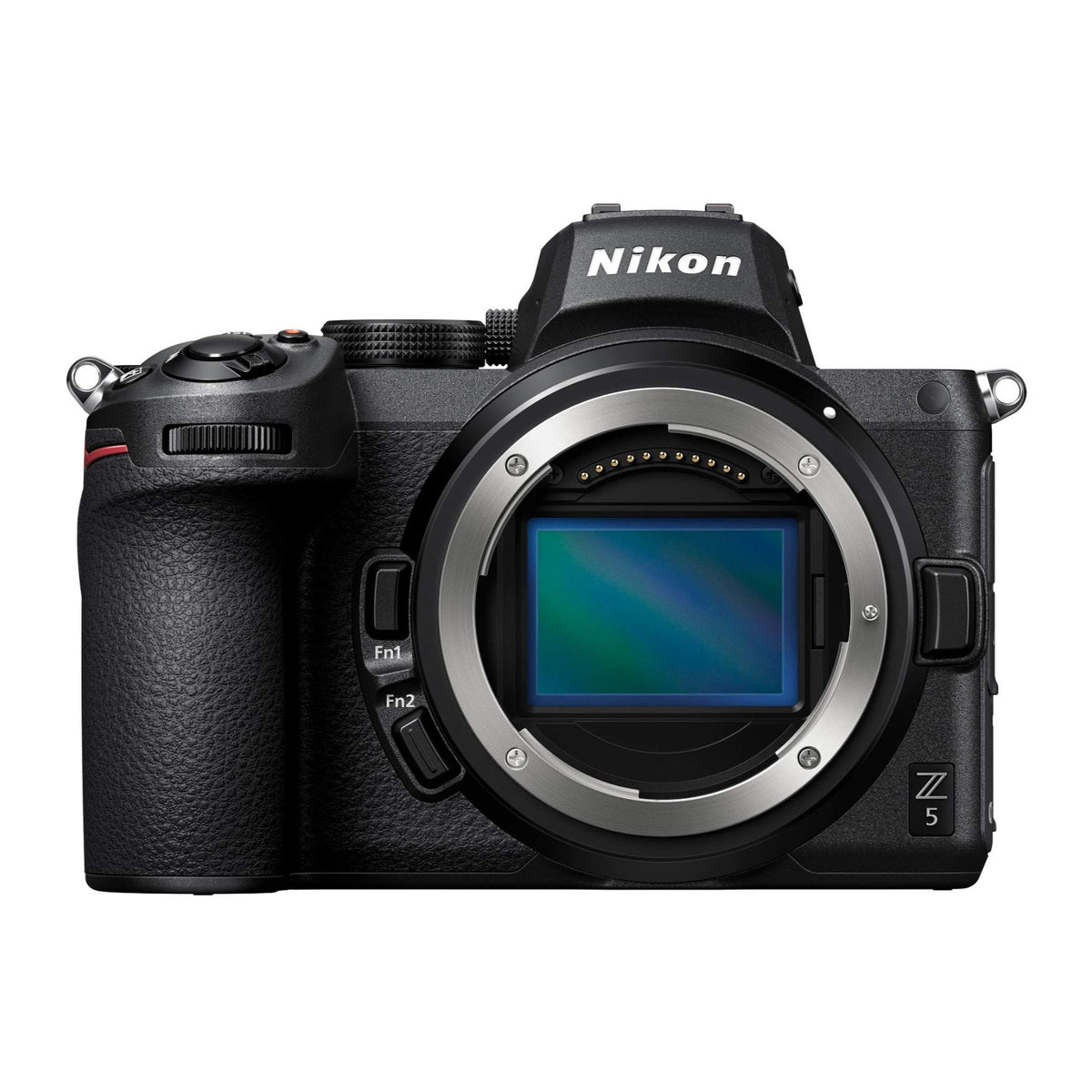
Nikon Z 5 key specifications
The Nikon Z 5 combines a 24.3MP FX-format sensor with Nikon’s Z mount. Its main features are built around still photography, reliable handling, and access to Nikon’s growing full-frame mirrorless lens system.
| Feature | Nikon Z 5 specification |
|---|---|
| Camera type | Full-frame mirrorless |
| Lens mount | Nikon Z mount |
| Sensor | 24.3MP FX-format CMOS |
| Image stabilization | Five-axis sensor-shift VR |
| Native ISO range | ISO 100–51,200 |
| Expanded ISO range | ISO 50–102,400 equivalent |
| Maximum still speed | Up to 4.5 frames per second |
| Video | 4K UHD up to 30p; Full HD up to 60p |
| 4K crop | Approximately 1.7x |
| Viewfinder | 3.69-million-dot electronic viewfinder |
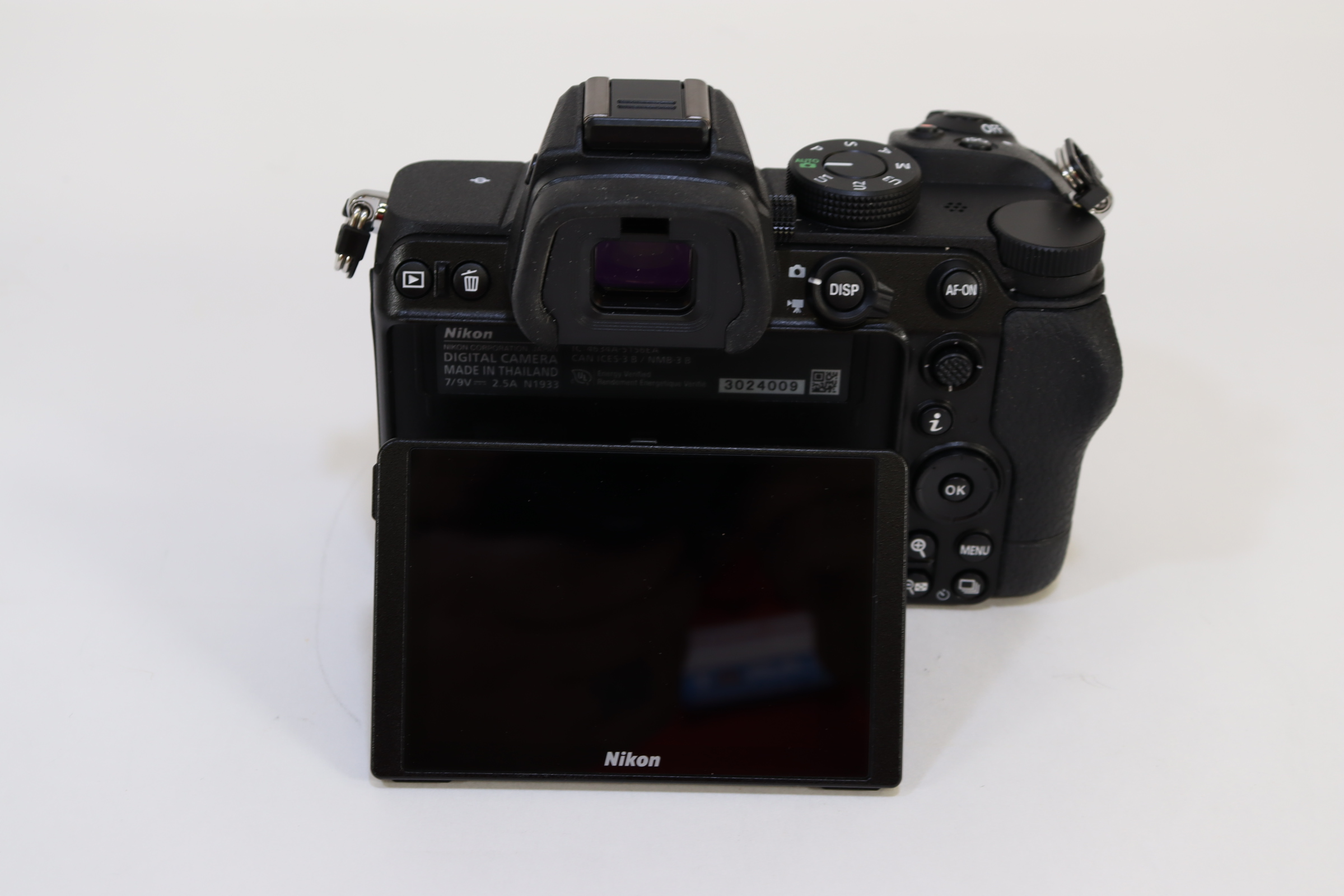
| Rear screen | 3.2-inch tilting touchscreen |
| Storage | Two UHS-II SD card slots |
| Battery | EN-EL15c lithium-ion battery |
| Weight | Approximately 675 g with battery and memory card |
| Weather resistance | Sealed construction designed for outdoor use |
| Headphone and microphone ports | Yes |
| USB charging | Yes, with compatible power sources |
These are documented specifications from Nikon. They describe what the camera is designed to do, not a guarantee of identical results in every situation.
The 24.3MP sensor gives the Nikon Z 5 enough resolution for large prints, detailed crops, and normal professional assignments. It does not chase very high resolution. That helps keep file sizes manageable and supports good low-light performance.
The Z 5 also uses Nikon’s larger FX sensor. Compared with a smaller APS-C or Micro Four Thirds sensor, a full-frame sensor can make it easier to create a soft background and retain clean detail at higher ISO settings. The lens, light, focus, and exposure still matter just as much.

What makes the Nikon Z 5 compact?
The Nikon Z 5 is compact because it removes some of the bulk found in professional cameras while keeping a full-frame sensor and a deep hand grip. It is not a pocket camera. Full-frame lenses can still be large, especially fast zooms and telephoto lenses.
The camera body is smaller than many full-frame DSLRs because it has no mirror box or optical viewfinder. The electronic viewfinder shows an exposure preview, white balance preview, and other shooting information before you press the shutter.
A compact body is most useful when paired with a compact lens. Good smaller choices include:
- Nikon NIKKOR Z 28mm f/2.8
- Nikon NIKKOR Z 40mm f/2
- Nikon NIKKOR Z 24-50mm f/4-6.3
- Nikon NIKKOR Z 24-70mm f/4 S
- Nikon NIKKOR Z 26mm f/2.8, where compatible with your shooting needs
The 24-50mm kit zoom is especially useful for travel. It folds into a short position and covers wide to normal focal lengths. Its smaller size comes with a narrower maximum aperture than a professional zoom.
The Nikon Z 5 has a substantial grip and a familiar control layout. It includes a mode dial, front and rear command dials, a joystick, and dedicated controls for key settings. This makes it more comfortable for long shoots than many very small cameras.
The main trade-off is that a compact full-frame kit is not always small. A Z 5 with a small prime lens can feel light and discreet. A Z 5 with a 70-200mm f/2.8 lens will be much larger and heavier.

Nikon Z 5 image quality for still photography
The Nikon Z 5 is best suited to still photography. Its full-frame sensor produces detailed files with good tonal range, and its 24.3MP resolution is enough for most home, travel, portrait, wedding, and editorial work.
The camera works well for:
- Travel photography
- Landscapes
- Portraits
- Family and everyday photos
- Street photography
- Food photography
- Indoor events
- Product photography
- Real estate work
- Astrophotography with suitable lenses and technique
Its ISO range runs from ISO 100 to 51,200, with expanded settings available. Expanded ISO settings are useful in some cases, but they do not create extra light. They may reduce image quality or provide less usable detail.
In-body image stabilization
The Nikon Z 5 has five-axis in-body vibration reduction, also called VR. The system moves the sensor to reduce blur caused by small hand movements. It works with compatible Z lenses and can also help when using some adapted lenses, depending on the lens and setup.
Image stabilization helps most when the subject is still. For example, it can let you use a slower shutter speed for a building, landscape, or interior scene.
It does not freeze a moving person, pet, or car. If the subject moves, you may still need a faster shutter speed. This is a common mistake. Stabilization can reduce camera shake, but it cannot stop subject motion.
Autofocus performance
The Nikon Z 5 uses a hybrid autofocus system with phase-detection and contrast-detection points. It supports face and eye detection for people, and its autofocus can perform well for portraits and general shooting.
AF performance depends on:
- Available light
- Subject contrast
- Subject speed
- Lens motor design
- Focus-area setting
- Firmware version
- Background complexity
The Z 5 is not designed as a high-speed action camera. Its maximum continuous shooting speed is about 4.5 frames per second. That is enough for casual sports, children, and some event work, but it is slower than cameras built for wildlife or fast action.
For birds in flight, field sports, or rapid bursts, a newer camera with faster readout and a higher frame rate may be a better fit.

Nikon Z 5 video performance and limitations
The Nikon Z 5 records 4K UHD video at up to 30 frames per second and Full HD video at up to 60 frames per second. It includes a microphone input and headphone output, which are useful for recording and monitoring sound.
The largest video limitation is the 4K crop. Nikon’s 4K recording uses a crop of about 1.7x. This narrows the view compared with still photography and changes how lenses behave.
For example, a 24mm lens used for stills gives a much narrower view in 4K video. The effective field of view is similar to what a roughly 41mm lens would show on a full-frame camera. This can make it hard to record self-facing video indoors or to use a wide lens in a small room.
When the Nikon Z 5 works well for video
The Z 5 can be a good choice for:
- Short travel clips
- Interviews with controlled framing
- Product demonstrations
- Family videos
- Online lessons
- Static tripod shots
- Full HD slow-motion-style footage at 60p
The camera’s headphone jack lets you monitor sound while recording. An external microphone can improve audio quality, but the microphone and cable must be secured so they do not create handling noise.
When the Nikon Z 5 is not the best video choice
The Z 5 may frustrate users who need:
- Uncropped 4K
- High frame rates in 4K
- Advanced internal 10-bit recording
- Strong rolling-shutter control
- Long handheld video sessions
- Fast subject tracking for action
- A dedicated cooling design for demanding production
The camera can output video through HDMI, but an external recorder does not remove every limitation. The sensor readout, crop, autofocus behavior, and camera design still affect the final result.
For video-first work, compare the Z 5 with the Nikon Z 5II, Z 6II, Z 6III, or another camera designed with stronger video tools. Check the exact model and firmware before buying because the original Z 5 and newer Z 5II are different cameras.
Nikon Z 5 lens choices
The lens has a large effect on the size, look, and cost of a Nikon Z 5 kit. The camera uses Nikon’s Z mount, and it can also use many F-mount DSLR lenses with the Nikon FTZ or FTZ II adapter.
Best compact lens types
A small prime lens is the best way to keep the Z 5 compact. A 28mm lens gives a wide view for travel, rooms, and street scenes. A 40mm lens offers a natural perspective for portraits, family photos, and everyday use.
A compact zoom is more flexible. The 24-50mm kit lens covers wide-angle and normal focal lengths while keeping the package small. Its limits are a slower aperture and less reach than a 24-70mm or 24-120mm zoom.
Faster lenses for low light
A lens with a wider maximum aperture, such as f/1.8 or f/2, lets in more light. It can also create a softer background and help keep shutter speeds higher.
Fast lenses are often larger and more expensive. They can also make the camera-lens combination front-heavy. Choose one when low-light work, portraits, or background separation matter more than size.
Using F-mount lenses
The FTZ adapter can make older Nikon F-mount lenses useful on the Z 5. Compatibility varies by lens type.
Before buying an adapter, check:
- Whether autofocus works
- Whether aperture control works
- Whether vibration reduction works
- Whether the lens needs a built-in focus motor
- Whether the lens creates the desired balance
- Whether the lens firmware is current
Older manual-focus lenses may work well for landscape, studio, and video use. They require more hands-on control.

Nikon Z 5 versus Nikon Z 50
The Nikon Z 5 is a full-frame camera. The Nikon Z 50 uses a smaller DX-format sensor. This creates a clear difference in size, cost, lens choice, and image characteristics.
| Consideration | Nikon Z 5 | Nikon Z 50 |
|---|---|---|
| Sensor | Full-frame FX | APS-C DX |
| Resolution | 24.3MP | 20.9MP |
| Background blur | Easier with similar framing and aperture | Usually needs a wider aperture or longer lens |
| Body size | Larger | Smaller |
| Lens size | Full-frame lenses can be larger | DX lenses can be smaller |
| Stabilization | In-body stabilization | No in-body sensor stabilization |
| Best fit | Full-frame stills and low-light work | Smaller travel kit and lower entry cost |
| 4K video | Has a strong crop | Different crop and video limits |
The Z 5 is the better choice when you want a full-frame sensor, in-body stabilization, dual card slots, and a more advanced stills platform.
The Z 50 is the better choice when low weight, smaller DX lenses, and a lower system cost matter most. A smaller sensor is not automatically poor. It may be the smarter choice for hiking, travel, or casual photography.
The same comparison applies to the Nikon Z fc, which uses a DX sensor in a retro-style body. The right choice depends on the complete system, not only the camera body.
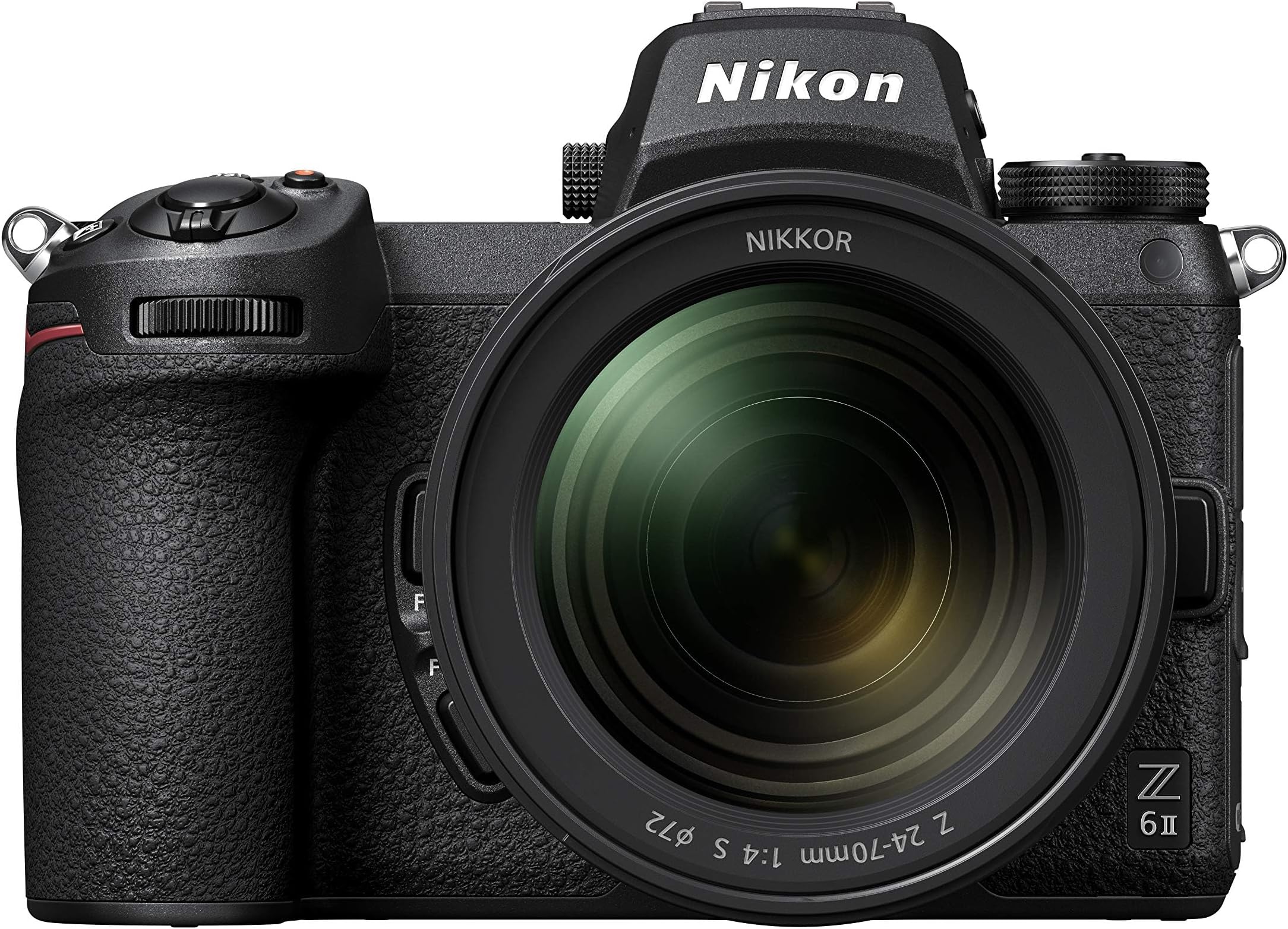
Nikon Z 5 versus newer full-frame Nikon cameras
The original Nikon Z 5 remains capable, but newer Nikon cameras offer faster processors, improved autofocus, stronger video functions, or higher burst rates.
Choose the Z 5 when you value:
- A lower-cost route into Nikon full frame
- Strong still-image quality
- Dual SD card slots
- A compact body
- In-body stabilization
- A simple and reliable control layout
Consider a newer model when you need:
- Faster continuous shooting
- Better subject detection
- Less restrictive 4K video
- Better rolling-shutter control
- More advanced video formats
- Faster readout for moving subjects
- More responsive performance for wildlife or sports
The Nikon Z 6II uses a 24.5MP full-frame sensor and is more suited to demanding hybrid work. The Z 6III adds newer technology and stronger video features. The Z 5II is a newer member of the Z 5 line and should not be confused with the original Nikon Z 5.
Used-market buyers should inspect the exact model name, shutter count, firmware, battery condition, card-slot operation, sensor condition, and included accessories.
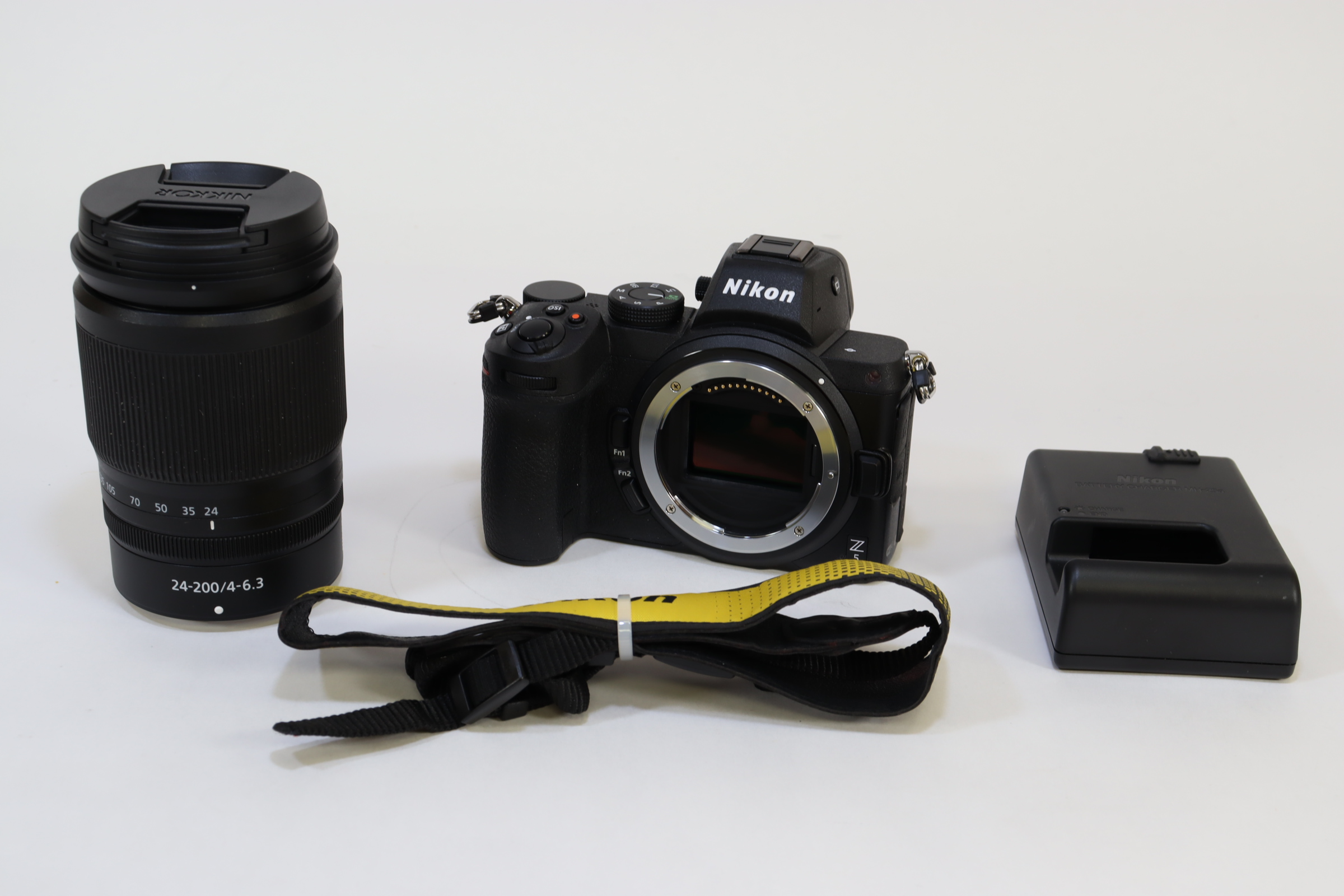
Nikon Z 5 buying guide for US photographers
The Nikon Z 5 makes sense when still photography is the main goal and video is secondary. It is also a strong option for photographers moving from a Nikon D750, D610, D780, or another DSLR who want a mirrorless body without changing the basic Nikon way of working.
Before buying, check the full kit rather than the body alone.
Choose the body and lens together
A compact body with a large professional zoom is not a compact system. Decide whether you want:
- The smallest travel kit
- A general-purpose zoom
- A portrait setup
- A low-light prime
- A two-lens travel kit
- A professional work kit
For travel, a Z 5 with a 24-50mm zoom or compact prime may be a good balance. For portraits, a 50mm or 85mm lens may be more useful. For landscapes, a wide-angle zoom gives more framing options.
Plan for two memory cards
The Z 5 has two SD card slots. You can use the second card for backup, overflow, or separate file types. For important work, in-camera backup can reduce the risk of losing photos if one card fails.
A backup card is not a complete backup system. Copy images to a computer or storage drive as soon as practical.
Check power needs
The EN-EL15c battery supports USB charging with compatible equipment. Battery life depends on screen use, autofocus, image review, temperature, and video recording.
Carry a spare battery for long days. Use a compatible USB-C power source and cable. Do not assume that every USB-C charger or power bank will provide the same result.
Confirm warranty and condition
For a new camera in the United States, check the seller, warranty terms, return policy, and included accessories. For a used camera, test:
- Both card slots.
- The electronic viewfinder.
- The rear touchscreen.
- Autofocus with more than one lens.
- The shutter at several speeds.
- Image stabilization.
- HDMI, USB, microphone, and headphone ports.
- Battery charging.
- Sensor and lens-mount condition.
- Weather seals for cuts or damage.
Weather resistance is not waterproofing. Do not expose the camera to rain, dust, or moisture beyond the limits described by Nikon. A sealed body can still fail if water enters through a lens, port cover, battery door, or damaged seal.
Common Nikon Z 5 mistakes
The most common mistake is buying the camera for video without understanding the 4K crop. Test your preferred focal length before filming. A lens that feels wide for stills may look normal or narrow in 4K.
Another mistake is assuming image stabilization freezes people. It does not. Use a faster shutter speed for moving subjects, even when VR is active.
Some buyers also overlook lens size. A full-frame camera may be compact at the body level, but a fast full-frame zoom can add substantial weight. The smallest body is not always the smallest complete kit.
Do not judge image quality by megapixels alone. Lighting, lens quality, focus accuracy, exposure, and technique often have a larger effect on the final image.
Finally, keep the original Z 5 separate from the Z 5II when comparing prices or specifications. They share a similar name but do not offer the same processing and feature set.

Frequently asked questions
Is the Nikon Z 5 a professional camera?
The Nikon Z 5 can produce professional-quality still images, but it is positioned below Nikon’s faster and more advanced full-frame bodies. Its 4.5 fps burst rate and 4K crop make it less suitable for demanding sports and video production.
Is the Nikon Z 5 good for beginners?
Yes. It offers automatic modes, a clear electronic viewfinder, a tilting touchscreen, and a familiar control layout. However, full-frame lenses can cost more than DX lenses, so beginners should budget for the complete system.
Does the Nikon Z 5 have a crop in 4K?
Yes. Nikon’s 4K video mode applies a crop of approximately 1.7x. Full HD video does not have the same 4K field-of-view limitation.
Can the Nikon Z 5 use Nikon DSLR lenses?
Yes, many Nikon F-mount lenses can be used with an FTZ or FTZ II adapter. Autofocus and other functions depend on the specific lens.
Is the Nikon Z 5 weather-sealed?
Nikon designed the Z 5 with sealing for outdoor use, but it is not waterproof. Avoid heavy rain, splashes, dust, and rapid temperature changes unless you use suitable protection.
Is the Nikon Z 5 good for wildlife photography?
It can work for casual wildlife photography, especially with a suitable telephoto lens. Its modest burst speed and older autofocus system make it less suitable for fast wildlife action than newer Nikon bodies.
Final recommendation
The Nikon Z 5 is a compact full-frame mirrorless camera with a clear strength: still photography. Its 24.3MP sensor, five-axis stabilization, dual SD slots, weather-sealed body, and broad Z-mount lens selection make it a useful choice for travel, portraits, landscapes, family work, and general photography in the United States.
Its main limits are equally clear. The 4K crop, 4.5 fps burst rate, and older video feature set reduce its appeal for action and video-first users.
Choose the Nikon Z 5 if you want full-frame still-image quality in a manageable body. Choose a newer Nikon model if fast action, advanced autofocus, or serious 4K production matters more than price and size.
Sources consulted
- Nikon USA, Nikon Z 5 product information and specifications: https://www.nikonusa.com/
- Nikon Z 5 User’s Manual and Reference Manual
- Nikon USA, NIKKOR Z lens specifications
- Nikon USA, FTZ and FTZ II Mount Adapter compatibility information

