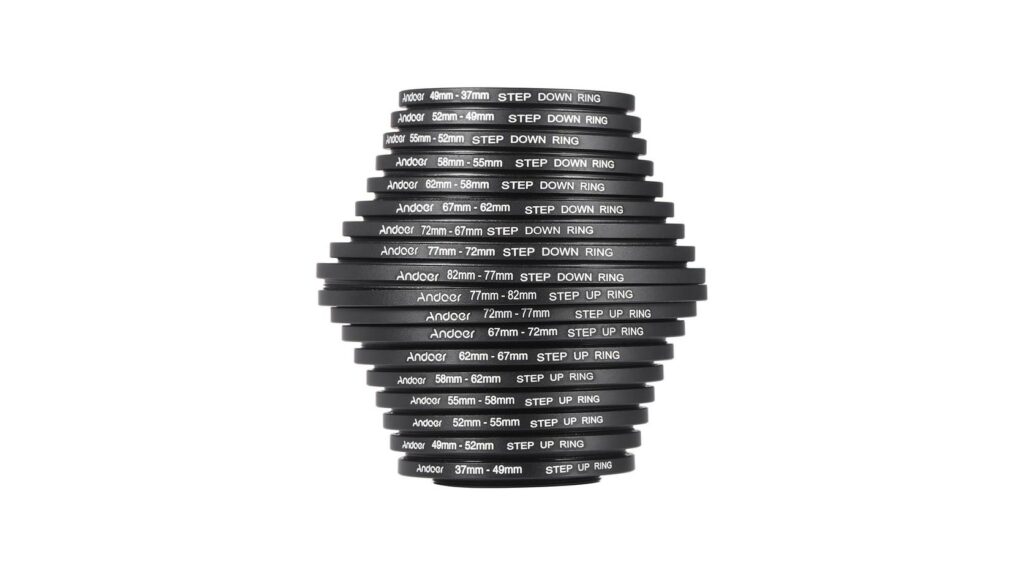
- Navigating the world of camera accessories can sometimes feel like deciphering a secret code, especially when it comes to lens filters and adapters. If you’ve ever found yourself with a filter that doesn’t quite fit your lens or vice versa, the Andoer® 18pcs Step Up/Step Down Lens Filter 37 49 52 55 58 62 67 72 77 82mm Metal Adapter Ring Kit might just be the versatile solution you’ve been searching for. This comprehensive kit offers a wide range of adapters designed to bridge the gap between your camera’s lens threads and various filter sizes, ensuring you can utilize your existing gear or expand your creative options without buying entirely new sets.
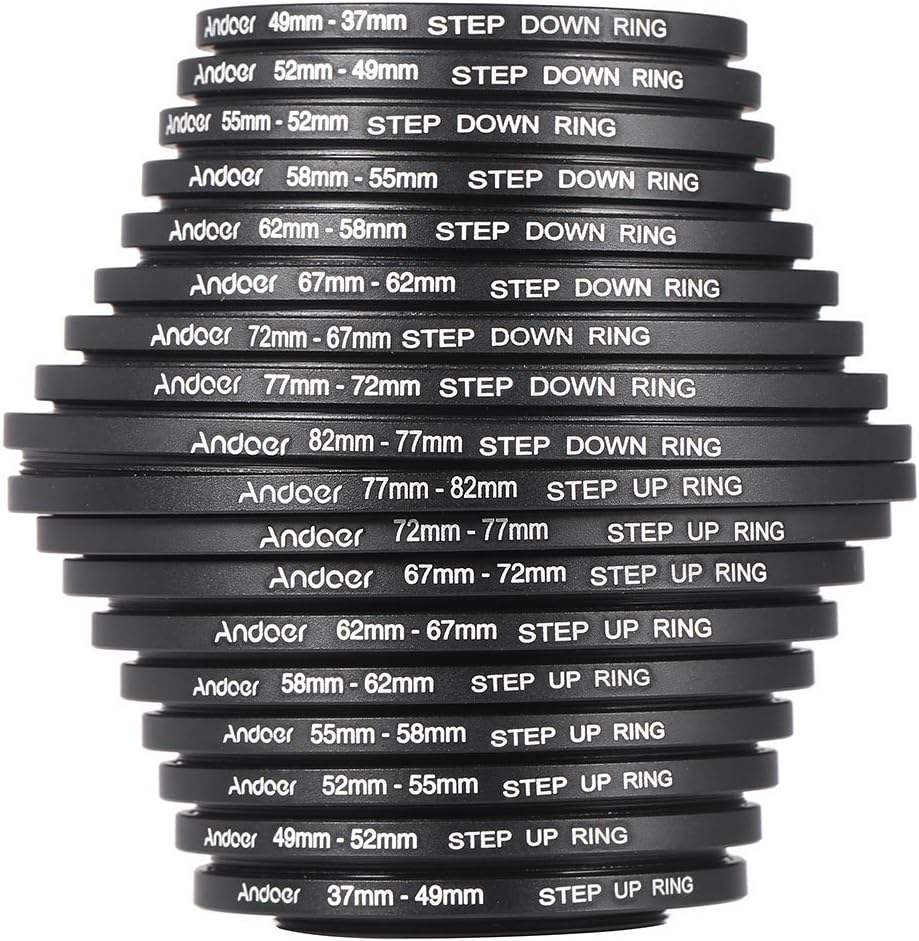
- 8 pieces of step up rings: This set includes adapters for common size conversions: 49-52mm, 52-55mm, 55-58mm, 58-62mm, 62-67mm, 67-72mm, 72-77mm, and 77-82mm.
- 8 pieces of step down rings: The kit also provides reverse adapters: 82-77mm, 77-72mm, 72-67mm, 67-62mm, 62-58mm, 58-55mm, 55-52mm, and 52-49mm.
- Versatile thread conversion: These rings are engineered to convert the thread size of your lens to the thread size of any other accessories, including filters, lens hoods, and lens converters.
- Durable construction: Crafted from high quality anodized aluminum alloy, these rings are built to last and withstand regular use.
- Comprehensive kit: The package contains a total of 18 rings, providing a wide array of options for adapting lenses and filters across a broad range of sizes from 37mm up to 82mm.
- Extensive Size Range: With adapters ranging from 37mm to 82mm, this kit covers a broad spectrum of common lens and filter sizes, making it highly versatile for different camera setups.
- Both Step Up and Step Down Capability: The inclusion of both step-up and step-down rings means you can attach larger filters to smaller lenses, and smaller accessories to larger lenses, offering unparalleled flexibility.
- Robust Metal Construction: The use of anodized aluminum alloy is a key positive. This material choice suggests durability and a premium feel, which is crucial for accessories that will be frequently attached and detached.
- Simplified Accessory Integration: The primary function of converting thread sizes is executed effectively, allowing photographers to easily mount filters, hoods, or conversion lenses without worry.
- Cost-Effectiveness: Purchasing individual adapter rings can quickly add up. This 18-piece kit provides a bundled solution at what is likely a more economical price point for acquiring such a variety of sizes.
Key Features That Stand Out
The Andoer® 18pcs Step Up/Step Down Lens Filter 37 49 52 55 58 62 67 72 77 82mm Metal Adapter Ring Kit is packed with features that make it a valuable addition to any photographer’s toolkit. These adapters are designed to solve common compatibility issues, allowing for seamless integration of different lens and filter sizes.
Andoer® 18pcs Step Up/Step Down Lens Filter 37 49 52 55 58 62 67 72 77 82mm Metal Adapter Ring Kit
What We Like
This kit’s value lies in its comprehensive nature and practical application for photographers facing common compatibility hurdles. The sheer number of included adapters is a significant advantage, offering a solution for many different lens and filter combinations.
Performance Analysis
The Andoer® 18pcs Step Up/Step Down Lens Filter 37 49 52 55 58 62 67 72 77 82mm Metal Adapter Ring Kit is fundamentally designed to bridge thread size discrepancies between camera lenses and accessories like filters, hoods, and converters. Based on its stated features, its performance hinges on the precision of its threading and the quality of its construction. The use of anodized aluminum alloy suggests a robust build capable of resisting wear and tear from repeated screwing and unscrewing. The kit’s strength lies in its breadth; by offering both step-up and step-down capabilities across a wide range of common thread sizes (from 37mm to 82mm), it addresses a significant portion of compatibility issues photographers might encounter. The 8 step-up rings and 8 step-down rings provide a comprehensive set for increasing or decreasing filter thread diameters, ensuring that a 52mm filter can be used on a 49mm lens, or conversely, a 77mm lens can accommodate a 72mm accessory. The effectiveness of these adapters in a real-world scenario would depend on how snugly they fit, avoiding any light leaks or vignetting, especially when stacked or used with wide-angle lenses. The anodized finish is also important as it helps with grip and prevents the metal from oxidizing, which could lead to sticking or difficulty in removal.
Best For
This expansive adapter ring kit is best suited for photographers who own a diverse collection of camera lenses and filters with varying thread sizes, or those looking to maximize the utility of their existing accessories without incurring the cost of purchasing new ones for each lens. It’s particularly ideal for hobbyists and semi-professional photographers who frequently experiment with different filters, such as UV, polarizers, neutral density, or graduated filters, and need to adapt them across multiple camera bodies and lens diameters, ranging from smaller 37mm lenses up to larger 82mm lenses. It’s also a great option for anyone who has recently upgraded to a new lens with a different filter thread size and wants to use their old filters, or for those building a starter kit for adaptable photography. This kit simplifies the process of attaching accessories like lens hoods or converters to lenses, ensuring a secure fit and optimal performance by correctly aligning the accessory’s thread size with the lens’s thread size.
Buying Guide
When considering an adapter ring kit like the Andoer® 18pcs Step Up/Step Down Lens Filter 37 49 52 55 58 62 67 72 77 82mm Metal Adapter Ring Kit, several factors come into play to ensure you make the most suitable purchase for your photographic needs.
Key Features to Look For
The most crucial features to assess are the number of rings included and the range of sizes covered. For this particular product, the inclusion of both step-up and step-down rings is a significant advantage, offering maximum versatility. Verify that the specific size conversions offered in the kit (e.g., 49-52mm, 77-72mm) align with the lenses and accessories you currently own or plan to acquire. The ability to convert thread sizes for filters, hoods, and converters is also a key function to prioritize.
Important Materials
The material used for adapter rings directly impacts their durability and longevity. Look for rings made from robust metals like anodized aluminum alloy, as seen in this Andoer kit. Aluminum alloy offers a good balance of strength and light weight, and the anodized finish provides resistance to scratches and corrosion, ensuring the rings remain functional and easy to screw and unscrew over time. Cheaper plastic alternatives can be prone to breaking or stripping threads, leading to frustrating user experiences.
Essential Factors to Consider
Compatibility is paramount. Before purchasing, meticulously check the thread sizes of all your lenses and the accessories you intend to use with the adapter rings. Ensure the kit provides the specific step-up or step-down conversions you need. Consider the overall diameter and how stacked rings might affect the physical profile of your lens setup, especially with wide-angle lenses where vignetting could become an issue if the adapters are too bulky. The ease of attachment and removal is also important; well-machined threads should screw on and off smoothly without binding.
Budget Planning
Adapter ring kits can vary significantly in price depending on the number of pieces, the materials used, and the brand reputation. A comprehensive kit like the 18-piece Andoer set, offering a wide array of sizes in metal construction, typically represents a good value proposition. While individual rings might seem inexpensive, acquiring a comprehensive set like this can be more cost-effective in the long run, especially if you have a diverse lens collection. Consider the price relative to the number of conversion options provided and the perceived quality of the materials.
When to Buy
The best time to buy adapter rings is generally when you identify a specific need, such as acquiring a new lens with a different filter thread or purchasing a new set of filters that don’t match your existing lenses. There aren’t typically strong seasonal sales for accessories like adapter rings, but keeping an eye out during major online shopping events like Black Friday or Prime Day can sometimes yield discounts. If you are a photographer who frequently upgrades or experiments with gear, investing in a versatile kit like this can save you money and hassle over time, making it a worthwhile purchase whenever the need arises.
Frequently Asked Questions
What is the main purpose of a step-up/step-down adapter ring kit?
The primary purpose of a step-up/step-down adapter ring kit is to bridge the difference in thread sizes between your camera lens and other photographic accessories, such as filters, lens hoods, or conversion lenses. A step-up ring allows you to attach a larger diameter filter to a smaller diameter lens thread, while a step-down ring allows you to attach a smaller diameter filter to a larger diameter lens thread. This ensures compatibility and allows you to use a wider range of accessories with your existing lenses.
How do I know which adapter ring to use?
To determine which adapter ring to use, you first need to know the filter thread size of your camera lens and the filter thread size of the accessory you want to attach. Lens thread sizes are usually printed on the front of the lens, often in a diameter symbol (e.g., ø52mm). If you want to attach a larger filter to a smaller lens (e.g., a 55mm filter to a 52mm lens), you need a step-up ring (52-55mm). If you want to attach a smaller filter to a larger lens (e.g., a 72mm filter to a 77mm lens), you need a step-down ring (77-72mm).
What does “anodized aluminum alloy” mean for the adapter rings?
“Anodized aluminum alloy” means that the adapter rings are made from a metal alloy, primarily aluminum, that has undergone an electrochemical process called anodization. This process creates a durable, corrosion-resistant, and scratch-resistant oxide layer on the surface of the metal. For adapter rings, this translates to a tougher, longer-lasting product that is less likely to corrode or get damaged from regular use, ensuring smooth threading and easy attachment/detachment.
Can these adapter rings cause vignetting (dark corners) in my photos?
Vignetting can occur if the adapter rings are too thick, especially when used with wide-angle lenses. The adapter ring effectively increases the diameter of the accessory mount. If this added diameter obstructs the light path at the edges of the frame, it can result in darkened corners in your photos. While this kit offers a broad range of sizes, it’s always a good practice to test your setup, particularly with wider focal lengths, to check for any unwanted vignetting. The specific thread conversions and the lens’s angle of view will determine the likelihood of vignetting.
How many total adapter rings are included in this kit?
This kit, the Andoer® 18pcs Step Up/Step Down Lens Filter 37 49 52 55 58 62 67 72 77 82mm Metal Adapter Ring Kit, includes a total of 18 adapter rings. This comprises 8 step-up rings and 8 step-down rings, as detailed in the product features. Additionally, the product description mentions “9pcs step up ring and 9pcs step down ring” in one of the bullet points, which seems to be a slight discrepancy from the initial listing of 8 of each. However, the core value is the comprehensive set of 16 specific size conversions listed.
Are these adapter rings suitable for professional use?
The Andoer® 18pcs Step Up/Step Down Lens Filter 37 49 52 55 58 62 67 72 77 82mm Metal Adapter Ring Kit is made of anodized aluminum alloy, which suggests good durability for regular use. For professional photographers who demand the absolute highest precision and are working in critical situations where even the slightest imperfection could be detrimental, they might prefer higher-end, individually crafted rings. However, for many professional applications, especially those where budget is a consideration or where a wide range of adaptations is frequently needed, this kit can be a very practical and reliable solution.
What is the smallest and largest lens thread size supported by this kit?
This kit supports a broad range of lens thread sizes. The smallest lens thread size that can be accommodated for step-down conversions is 37mm, as mentioned in the product name. The largest lens thread size that can be accommodated for step-up conversions is 82mm. The kit effectively bridges many common sizes in between, offering significant flexibility for photographers working with a variety of lens diameters.
Final Thoughts
The Andoer® 18pcs Step Up/Step Down Lens Filter 37 49 52 55 58 62 67 72 77 82mm Metal Adapter Ring Kit presents itself as a comprehensive and practical solution for photographers looking to overcome lens and filter compatibility issues. Its standout feature is the sheer volume and variety of adapter rings included, covering a wide spectrum of common thread sizes from 37mm up to 82mm, with both step-up and step-down capabilities. The construction from anodized aluminum alloy speaks to its durability and the potential for a reliable user experience. For hobbyists and even many semi-professionals, this kit offers exceptional value by consolidating a large number of essential adapter rings into one package, likely at a more affordable price than purchasing them individually. While extreme professional use might warrant even higher-tier options, for the vast majority of photographic needs, this kit provides the adaptability and functionality required to effectively use filters, hoods, and other accessories across a diverse lens collection. It simplifies the process of gear adaptation, allowing photographers to focus more on their creative vision rather than on equipment limitations. The robust build suggests these rings will withstand regular use, making them a worthwhile investment for expanding your photographic potential.