
In photography, the f-number of a lens denotes the ratio of the lens’ focal length to the diameter of the aperture. A higher f-number indicates a smaller aperture, which results in a longer depth of field (the distance between the nearest and furthest objects in a scene that appear acceptably sharp). Conversely, a lower f-number indicates a larger aperture, which results in a shorter depth of field.
What is the F number in a camera lens?

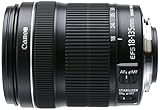



KEYWING Phone Camera Lens 3 in 1 Phone Lens Kit, 198 Fisheye Lens + 120 Super Wide-Angle Lens + 20x Macro Lens for iPhone Samsung Android Smartphone Black 3in1
- 3 in 1 Phone Camera Lens Set: Every lens can be used separately. The 20X Macro lens has a best focusing distance of 1.18-3.54 inch, help you to explore the microworld. 120° Wide lens can expand the shooting area of 10%, make a bigger view to the world. 198° Fisheye lens can produce a strong visual effect to make thing cuter
- High Quality: Professional HD Lens with advanced lanthanide optical glass can reduce the reflection and ghosting, bringing you amazing vision with details and clarify. High quality grade aluminum shell can protect the glass offering a long durability
- Clip-on Phone Lens: Easy Use Design. Just attach the lens to the clip and clip it on the phone camera, then you can enjoy the amazing effect of the lens. The clip has soft rubber to avoid scratch on your phone. Strong spring can hold on tightly
- Compatible with Most Smartphones: Universal design of 3.6 cm clip make the lenses compatible with most iPhone, Samsung google phone etc. Note: For different model you might have to use different way to clip the clamp. NOTE: Do Not use with phone case for a better effect.
- Package Content: 1x 120° Wide Angle Lens, 1×198° Fisheye Lens, 1x 20X Macro Lens, 1x Universal Clip, 1x Storage Bag, 1x User’s Manual
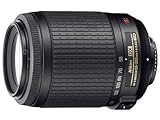
Nikon 55-200mm f/4-5.6G ED-IF AF-S DX VR Vibration Reduction Lens F/DSLR Cameras (Renewed)
- 55-200mm zoom Nikon lens with f/4-5.6 maximum aperture for Nikon digital SLR cameras
- 2 extra-low-dispersion (ED) glass elements for minimized chromatic aberration and superior optics
- Silent Wave Motor produces quick and quiet high-speed autofocusing; weighs 9 ounces
- Measures 2.7 inches in diameter and 3.1 inches long; 1-year warranty
- White box(bulk packaging)

Meike 85mm f1.8 Wide Aperture Full Frame Auto Focus Telephoto Lens for Nikon F Mount DSLR Camera and Compatible with Nikon APS-C Cameras D610 D750 D780 D810
- Compatible with Nikon F mount full frame mirrorless cameras, such as D610 D750 D780 D810 D850 D3300 D3500 D5100 D5200 D5300 D7100 D7200 cameras other digital DSLR cameras with standard stand
- The classic 85mm portrait lens with a wide aperture of f/1.8, the lens can capture beautiful photos with smooth background blur effect, even in dark environment.
- Suitable for a wide range of other subjects, including selective architecture, landscapes, portrait, short range sports and theatre photography.
- The lens is a auto focus lens and automatic aperture, Lens carrying the usual electronic contacts, but also a USB connection that can be used to upgrade the lens firmware
- The lens constructure is 6 groups,11 elements, makes the lens capable of delivering sharp images
The F number in a camera lens is the ratio of the lens’ focal length to the diameter of the aperture. A higher F number means a smaller aperture and a longer focal length.
A lower F number means a wider aperture and a shorter focal length. The F number is often used to indicate the amount of light that a lens can let in.
How does the F number affect the image?
The F-number of a camera lens indicates the size of the lens aperture, or how much light the lens can let in. A higher F-number means a smaller aperture and vice versa.
The aperture affects two important factors in photography: depth of field and amount of light. A large aperture (low F-number) results in a shallow depth of field, which means that only a small portion of the image will be in focus.
This can be used to create a pleasing bokeh effect, where the background is blurred and the subject is in sharp focus.
A small aperture (high F-number) results in a greater depth of field, which means that more of the image will be in focus. This is ideal for landscape photography, where you want as much of the scene in focus as possible.
The aperture also affects the amount of light that reaches the sensor. A large aperture (low F-number) lets in more light, while a small aperture (high F-number) lets in less light. This is why a low F-number is often used in low-light situations, such as indoor photography or night photography.
So, how does the F-number affect the image? The answer is: it depends. The F-number can be used to control depth of field and amount of light, two important factors in photography. Choose the right F-number for the situation and you can create some stunning images.
Why is the F number important?
The F number is important because it indicates how much light your camera lens is letting in. A low F number means that your lens is letting in more light, which is great for taking pictures in low light conditions.
A high F number means that your lens is letting in less light, which is good for taking pictures in bright conditions.
How can you use the F number to your advantage?
The F number of a camera lens is a measurement of the lens’ ability to gather light. The higher the F number, the more light the lens can gather.
This makes the F number an important factor to consider when choosing a camera lens.
The F number can also be used to your advantage when taking pictures.
A higher F number will result in a narrower depth of field. This means that objects in the foreground will be in focus, while objects in the background will be blurry. This can be used to create interesting effects in your photos.
So, when choosing a camera lens, keep in mind the F number. It can be a useful tool for taking better photos.
Tips for using the F number to your advantage.
If you’re a photographer, you know that the F number is important. But what exactly is it?
The F number is the ratio of the focal length of the lens to the diameter of the aperture.
So, a lens with a focal length of 50mm and an aperture of f/2.8 would have an F number of 18.
A higher F number means a smaller aperture, and vice versa.
Why is the F number important? Because it affects the amount of light that reaches the sensor. A higher F number means less light, and a lower F number means more light. So, if you’re trying to take a low-light photo, you’ll want to use a lens with a low F number.
Of course, there’s more to taking a great photo than just the F number, but it’s an important consideration. So next time you’re choosing a lens, make sure to keep the F number in mind.
Conclusion
The F number in a camera lens is the ratio of the lens’ focal length to the diameter of the entrance pupil. The F number affects the image by determining the amount of light that is able to pass through the lens. The higher the F number, the smaller the amount of light that is able to pass through the lens. The F number is important because it allows the photographer to control the amount of light that is entering the camera. This can be used to your advantage by using a higher F number when you want to reduce the amount of light entering the camera, such as when you are taking a picture in low light. You can also use a lower F number when you want to increase the amount of light entering the camera, such as when you are taking a picture in bright light. Tips for using the F number to your advantage include using a higher F number when you want to reduce the amount of light entering the camera and using a lower F number when you want to increase the amount of light entering the camera.