
A camera lens is an important part of a photographer’s toolkit. A lens allows a photographer to capture light and create an image. There are many different types of camera lenses available on the market, and each has its own set of capabilities and features. The term “mm” refers to the focal length of a lens. The focal length is the distance from the lens to the image sensor (or film) when the subject is in focus. A lens with a shorter focal length has a wider field of view, while a lens with a longer focal length has a narrower field of view.
What are the different types of millimeters available for camera lenses?

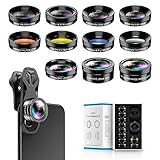


uxcell 8mm 5MP F2.0 FPV CCTV Camera Lens Wide Angle for CCD Camera 20×15.5mm(LxD)
- This is a 8mm focal length camera lens.
- It has F2.0 large aperture.
- This CCTV camera is suitable for all IP cameras with M12*0.5mm mount.
- It allows more of the scene to be included in the photograph and performs well during the day.
- It is easy to install and remove without affecting the installation and use of other accessories.

Altura Photo 58MM 0.35x Fisheye Wide Angle Lens (w/Macro Portion) for DSLR Cameras EOS Rebel 70D 77D 80D 90D T8i T7 T7i T6i T6s T6 T5i T5 T4i T3i T100 SL1 SL2 SL3
- LENS ATTACHMENT: Easily screws on to the front of your lens, and instantly expands the field of view for breathtaking fisheye photography. Features a detachable macro lens for extremely high-resolution close-ups of small objects.
- LENS COMPATIBILITIES: Popular 58MM Lens models including Canon EF-S 18-55mm f/4-5.6 IS STM, Canon EF-S 55-250mm f/4-5.6 IS STM, Canon EF 75-300mm f/4-5.6 III USM, Canon EF-S 18-55mm f/3.5-5.6 IS STM, Canon EF 85mm f/1.8 USM, Canon EF 50mm f/1.4 USM, Nikon AF-P DX NIKKOR 70-300mm f/4.5-6.3G ED VR, Nikon AF-S NIKKOR 50mm f/1.8G, Nikon AF-S NIKKOR 50mm f/1.4G, Olympus M.Zuiko Digital ED 40-150mm f/4-5.6 R, Panasonic Lumix G X Vario 12-35mm f/2.8 II
- CAMERA MODELS: Canon EOS Rebel T7 T7i T6i T6 T6s T5i T5 T4i T3i T100 SL3 SL2 SL1 90D 80D 77D 70D 1100D 700D 650D 600D 550D 7D Mark II 6D Mark II 5DS 5D Mark II 1D Mark II M3 M5 M6 M10 M50 M100 M200 R RP
- NOTE: PLEASE VERIFY YOUR CAMERA’S LENS THREAD SIZE BEFORE ORDERING. This Fisheye is compatible with 58MM lenses only. Lens sizes vary regardless of camera brand or model. Your camera’s lens thread size will be marked somewhere on the lens barrel or printed underneath your lens cap. This number is always preceded by a ”Ø” (diameter) symbol. For example: Ø58 = 58mm lens thread size.
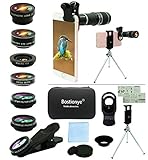
Cell Phone Camera Lens Kit,11 in 1 Universal 20x Telephoto 0.63Wide Angle 15X Macro 198°Fisheye 2X Telephoto Kaleidoscope CPL Starlight Eyemask Tripod,for Most iPhone Smartphone (Black)
- ★11-in-1 most complete mobile camera lens kit★:Bostionye phone camera lens kit is perfect for exploring more advanced mobile photography and Videography.Includes 8 lenses:20 times telephoto lens,0.63X wide angle Lens, 15X Macro lens, 198°Fisheye lens, 2X telephoto lens,Kaleidoscopes, 4-line star filter, CPL Filter.Auxiliary equipment:universal clip, tripod, eyecup and Bostionye storage bag。 (Note: macro lens and wide angle lens are screwed together).
- ★With unique features★: 20x telephoto lens (fixed focus)-magnifies distant subjects and clearly presents long-distance vision. 198 ° fisheye lens-create interesting and unique circular mysterious effect pictures. 15x macro lens-Alignment lens for shooting flowers, insects and other small objects (optimal shooting distance: 1 to 3 inches).0.63X ultra wide-angle lens-capture a large field of view to get an amazing angle of view (The wide-angle lens should be used with a macro lens).
- ★Create surprise★:The unique functions of each small lenses can be seen in detail in the auxiliary picture display.tripod for easy shooting,An eyecup also allows you to use the telephoto lens as a monocular or a telescope.It is a good companion in the tourism industry and a favorite of animal observers.NOTE: It’s recommended to take off the phone case when using the lens since it may cause unstability while shooting.
- ★The kit is suitable for use on my phone?★:The lens kit works on 99% popular cell phones on the market. If the distance from the center of the camera(the phone has only one camera) or the main camera(two or more cameras) to any edge of your phone is less than 2.2cm, then the kit will work on your phone.How to know which is the main camera: block the camera one by one with the camera app on, the one you see a blockage there is the main camera.
- ★Best Gift Choice & 100% Satisfaction★:A phone lens kit that will provide you an extraordinary experience to capture wonderful moments in your life. The kit is fully equipped and packed in a storage box (can be carried by hand), this lens kit would be a very nice gift choice.Your satisfaction is the most important thing for us. Don’t be hesitate. Thrill your family and friends with Bostionye phone lens right now!
When it comes to camera lenses, millimeters (mm) are used to describe the size and focus of the lens. The higher the millimeter number, the larger the lens.
The size of the lens directly affects the amount of light that is able to enter the camera, which then affects the overall image quality.
There are three main types of millimeters available for camera lenses: wide-angle, standard, and telephoto.
Wide-angle lenses have a lower mm number and provide a wider field of view. They are often used for landscape photography or when shooting in tight spaces.
Standard lenses have a medium mm number and provide a natural field of view. They are often used for general photography or portraits.
Telephoto lenses have a higher mm number and provide a narrower field of view. They are often used for sports or wildlife photography.
Which millimeter is right for you?
When it comes to camera lenses, the millimeter measurement is very important. This number refers to the focal length of the lens, which is the distance between the lens and the image sensor.
A higher number means a longer focal length, and this results in a narrower field of view. For example, a 50mm lens will have a much narrower field of view than a 10mm lens.
So, which millimeter is right for you? It really depends on what you want to photograph. If you’re shooting landscapes, you’ll probably want a wider field of view, so a shorter focal length is ideal. On the other hand, if you’re photographing a subject that’s far away, you’ll need a longer focal length to zoom in.
ultimately, it’s up to you to decide which millimeter is right for your needs. experiment with different focal lengths and see what works best for you.
How to get the most out of your millimeter camera lens.
When shopping for a new camera, one of the first things you’ll notice is the various types of lenses available. You’ll see everything from wide-angle to telephoto, and each type of lens serves a different purpose.
But what does “mm” mean when it comes to camera lenses?
MM stands for millimeter and it’s a unit of measurement used to describe the focal length of a camera lens. The focal length is the distance between the lens and the sensor (or film) inside the camera.
A lens with a shorter focal length will have a wider field of view, while a lens with a longer focal length will have a narrower field of view.
So, why does focal length matter? Well, it all comes down to what you want to photograph. For example, if you’re wanting to capture a large landscape, you’ll want to use a lens with a shorter focal length like a 10-20mm lens. This will give you a wider field of view and allow you to fit more of the landscape into your frame.
On the other hand, if you’re wanting to photograph a specific subject like a person or an animal, you’ll want to use a lens with a longer focal length like a 70-200mm lens. This will allow you to zoom in on your subject and fill your frame with them.
So, the next time you’re shopping for a new camera or lens, be sure to pay attention to the focal length. It can make a big difference in the types of photos you’re able to take.
Conclusion
There are a few different types of millimeters available for camera lenses and it really depends on what you’re looking to use the camera for as to which one is right for you. If you’re looking to get the most out of your millimeter camera lens, then you’ll want to make sure you’re getting one that’s going to work well for the type of photography you’re interested in.