The best affordable Canon lenses deliver sharp photos, bright apertures, useful reach, and strong value for new photographers.
You may love your Canon camera but still feel limited by the basic kit lens. Indoor photos can look dark, portraits may lack background blur, and distant subjects can feel too small. I tested the key strengths and limits of five popular Canon options to help solve that problem. This guide covers budget DSLR lenses, affordable RF mirrorless lenses, and one camera bundle for buyers who need a full starter setup. My goal is simple: help you choose the best affordable Canon lenses for portraits, travel, family photos, wildlife, and daily shooting without paying for features you may not use.
See the differences between my top picks at a glance.
| Product | Mount | Best For | Main Strength | Key Limitation | Amazon |
|---|---|---|---|---|---|
| Canon EF 50mm f/1.8 STM | EF DSLR | Portraits and low light | Bright f/1.8 aperture | No image stabilization | View on Amazon |
| Canon EF 75-300mm f/4-5.6 III | EF DSLR | Outdoor reach | Long telephoto range | No built-in stabilization | View on Amazon |
| Canon RF 50mm f/1.8 STM | RF mirrorless | Portraits and everyday use | Small, bright, and light | Fixed focal length | View on Amazon |
| Canon RF 28-70mm f/2.8 IS STM | RF mirrorless | Events and travel | Fast zoom with stabilization | Costs more than prime lenses | View on Amazon |
| Canon EOS R100 18-45mm Bundle | RF mirrorless camera kit | First-time buyers | Complete starter package | Not a lens-only purchase | View on Amazon |
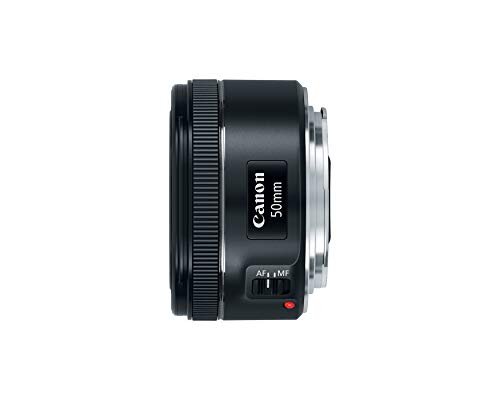
Canon EF 50mm f/1.8 STM Lens

The Canon EF 50mm f/1.8 STM is one of the safest choices for a Canon DSLR owner on a tight budget. Canon calls it a standard prime lens, and its wide f/1.8 aperture lets in much more light than many basic zoom lenses. That makes it useful indoors, at dinner, and during evening walks. On a full-frame Canon DSLR, 50mm gives a natural view that feels close to normal eyesight.
This lens also gives a soft background when you focus on a nearby subject. The seven-blade aperture helps create a pleasant look in portraits and detail shots. Its STM focus motor supports smoother and quieter focus than older versions, which helps when you record compatible video. It has a close focus distance of about 13.78 inches, but it is not a macro lens.
Pros:
- Bright f/1.8 aperture for indoor and evening photos
- Strong portrait value at a low cost
- Compact and easy to carry all day
- STM motor supports quieter autofocus
- Useful 50mm view on full-frame DSLR bodies
- Seven-blade aperture helps create smooth background blur
- Works with many Canon EOS DSLR cameras that accept EF lenses
Cons:
- No optical image stabilization
- Fixed focal length gives no zoom range
- Autofocus can feel less instant than on premium lenses
- Its view becomes narrower on many APS-C DSLR bodies
What Amazon Buyers Are Saying
Amazon buyer patterns commonly praise this lens for its low price, small size, bright aperture, and clear portrait results. Many owners buy it as their first prime lens after using a kit zoom. Buyers often like the background blur and the improved low-light performance. Common complaints focus on the lack of zoom, the absence of image stabilization, and autofocus that may hunt in very dim scenes. Results also vary with the camera body and the photographer’s focus technique.
My Recommendation
I recommend this lens to Canon DSLR owners who want the most practical upgrade for the least money. It is especially good for portraits, food photos, family moments, and casual indoor work. It is not the right pick for distant wildlife or wide room interiors. For many DSLR users, it remains one of the best affordable Canon lenses because it adds a real creative step up from a basic zoom.
Canon EF 75-300mm Telephoto Zoom

The Canon EF 75-300mm f/4-5.6 III gives DSLR users a long reach at a modest price. It can frame subjects that sit far away, such as school athletes, zoo animals, birds, and outdoor events. The zoom range moves from short telephoto to strong telephoto reach. That range gives you more control than a standard 18-55mm kit lens when you cannot walk closer.
This renewed version may appeal to buyers who want to reduce the cost of entry. The lens uses an EF mount, so it suits compatible Canon EOS DSLR bodies. It does not include optical image stabilization, so I suggest using a fast shutter speed or a firm support at 300mm. Light also drops as you zoom in, so bright outdoor scenes suit it best.
Pros:
- Useful 75-300mm range for distant subjects
- Good entry price for a telephoto lens
- Lightweight design compared with many larger telephoto lenses
- Simple controls for new DSLR users
- Helpful for sports, wildlife, travel, and stage photos
- Renewed format may offer extra savings
- Compatible with Canon DSLR bodies that accept EF lenses
Cons:
- No built-in optical image stabilization
- Maximum aperture becomes smaller at the long end
- Image quality can soften at 300mm, especially without careful technique
- Less useful indoors or in low light
What Amazon Buyers Are Saying
Amazon reviews for this type of lens often show strong interest from new photographers who want more reach without a high telephoto price. Buyers commonly like the easy zoom range and the ability to capture subjects that look too far away with a kit lens. Some customers report good outdoor results in bright light. Common concerns include softness at 300mm, slow focusing in difficult light, and the need for a steady hand because this model lacks stabilization. Since this listing is renewed, condition and included accessories can vary by seller and listing details.
My Recommendation
I recommend it only when long reach matters more than low-light speed. It can be a smart first telephoto lens for outdoor use, but I would not choose it for indoor sports or dim wildlife scenes. Check the renewed condition, return terms, and compatibility before ordering. Used with good light and a fast shutter speed, it offers useful reach for the money.
Canon RF 50mm f/1.8 STM Lens

The Canon RF 50mm f/1.8 STM is the mirrorless counterpart to Canon’s popular 50mm DSLR prime. It uses the RF mount, so it is made for Canon EOS R system cameras. Do not confuse it with the EF version. An EF-to-RF adapter may allow an EF lens on an RF body, but this RF lens does not mount directly on an EF DSLR.
Its bright f/1.8 aperture helps create background blur and lets you work in lower light than many kit zooms. The compact body adds little weight to a mirrorless camera, which makes it a strong choice for street walks, travel, portraits, and daily family photos. The control ring and STM focus system also fit well with the simple, quiet handling many mirrorless users want.
Pros:
- Native RF mount for Canon EOS R mirrorless cameras
- Bright f/1.8 aperture for portraits and dim rooms
- Small and light for travel and daily carrying
- Creates attractive background separation
- STM focus motor supports quiet operation
- Strong image quality for a low-cost prime
- Simple 50mm view suits many everyday subjects
Cons:
- Fixed focal length limits framing choices
- No optical image stabilization in the lens
- Can feel tight in small rooms on some APS-C RF cameras
- Not designed for close-up macro work
What Amazon Buyers Are Saying
Amazon buyers often highlight the lens size, low weight, bright aperture, and pleasing portrait results. Many use it as a first RF prime after buying a Canon EOS R camera with a kit lens. Review patterns also show that users enjoy the added background blur and the way it performs in everyday indoor scenes. The most common limits are the fixed view, the lack of lens stabilization, and the need to step back for group photos or tight spaces. Buyers also remind new users to confirm that their camera has an RF mount.
My Recommendation
This is my top low-cost prime choice for Canon RF mirrorless owners. It gives a clear benefit over many kit lenses without becoming bulky or hard to use. I recommend it for portraits, couples, pets, street photos, and simple video work. If you own an RF camera and want one affordable lens that encourages creative shooting, this is one of the best affordable Canon lenses available in the RF range.
Canon RF 28-70mm f/2.8 IS STM Lens

The Canon RF 28-70mm f/2.8 IS STM is the most flexible lens in this review. It covers useful wide, normal, and short telephoto views in one body. That range works well for travel, family gatherings, events, food, landscapes, and portraits. The constant f/2.8 aperture gives more light than a slower kit zoom and keeps exposure changes more steady as you zoom.
Canon lists image stabilization for this lens, with up to 5.5 stops under its stated test conditions. Real results depend on the camera, focal length, subject movement, and how steadily you hold the lens. The STM motor supports smooth focus, while the optical design includes specialized elements to help control common image flaws. Its macro labeling may help with close subjects, but buyers should not treat it as a true one-to-one macro lens unless the product specification says so.
Pros:
- Useful 28-70mm range for many daily subjects
- Bright constant f/2.8 aperture
- Built-in image stabilization helps with camera shake
- Good single-lens choice for travel and events
- STM autofocus supports smooth and quiet operation
- More flexible than a fixed 50mm prime
- Can produce background separation at the telephoto end
Cons:
- Costs more than the simple 50mm prime lenses
- Heavier and larger than a compact prime
- 28mm may not feel wide enough for very tight rooms
- Stabilization cannot freeze a moving subject
What Amazon Buyers Are Saying
Early Amazon review patterns for a lens in this class tend to focus on its practical range, bright aperture, stabilization, and ability to replace more than one basic lens. Buyers who travel or photograph events often value the freedom to change framing without changing lenses. Some users note that it performs well as an everyday walk-around lens. The main concerns tend to involve price, size, and the difference between camera-shake control and subject-motion control. Always review current listing details because stock, packaging, and seller information can change.
My Recommendation
I recommend this lens for serious RF users who want one strong everyday zoom. It costs more than the other lens-only picks, but its range and f/2.8 aperture can justify the extra spend for travel, family events, and paid work. It is not the cheapest choice, yet it may be the best long-term value if you would otherwise buy several lenses. For many photographers, it is the most capable option among these best affordable Canon lenses.
Canon EOS R100 18-45mm Starter Bundle

This Canon EOS R100 package is not a lens-only purchase. I include it because many shoppers searching for affordable Canon lenses are actually looking for their first camera system. The bundle includes the EOS R100 mirrorless camera, an RF-S 18-45mm lens, a memory card, and a Canon 200ES shoulder bag according to the supplied listing title. It can give a new photographer a clean starting point without selecting each item alone.
The 18-45mm lens offers a useful general range for family photos, travel, landscapes, and casual video. The camera uses Canon’s RF mount system, so buyers can later add lenses such as the RF 50mm f/1.8. Bundle contents can differ by seller, so check the current page before ordering. Confirm the card size, bag model, warranty details, and whether every listed item ships in the same package.
Pros:
- Complete starter setup for a new Canon user
- Includes a versatile standard zoom lens
- RF mount supports future Canon mirrorless lens upgrades
- Memory card helps you begin shooting sooner
- Shoulder bag makes transport easier
- Compact mirrorless format suits travel and family use
- Often simpler than buying a camera and accessories separately
Cons:
- This is a camera bundle, not a lens-only option
- Included accessories may vary by listing or seller
- The 18-45mm kit lens has a slower aperture than a bright prime
- Buyers who already own an RF camera may not need the body
What Amazon Buyers Are Saying
Buyers of entry-level camera bundles commonly value the convenience of receiving the camera, lens, card, and bag together. New users often like having a simple kit for travel, school events, family photos, and learning manual controls. Common concerns include small bundle accessories, questions about seller support, and the limits of a basic kit lens in low light. Read recent reviews and the exact item list before purchase, since third-party bundle contents can change.
My Recommendation
I recommend this package for a first-time Canon buyer who owns no compatible equipment. It gives you a useful base and leaves room for future RF lens upgrades. I would not recommend it as a replacement for a lens if you already own a Canon RF camera. For a complete starter kit, it offers good convenience, but experienced users may get better value by buying only the lens they need.
How to Choose the Best Affordable Canon Lenses
Choosing the best affordable Canon lenses starts with your camera mount and your most common subjects. A low price does not help if the lens does not fit your camera. You should also consider light, distance, movement, size, and the type of images you enjoy making. The right budget lens should solve a real problem in your current kit.
1. Match the Lens Mount to Your Canon Camera
Mount choice comes first. Canon DSLR cameras usually use EF or EF-S lenses. Canon EOS R mirrorless cameras use RF or RF-S lenses. The EF 50mm and EF 75-300mm in this guide suit compatible Canon DSLR bodies. The RF 50mm and RF 28-70mm suit Canon EOS R mirrorless cameras.
Canon RF cameras can often use EF lenses through Canon’s EF-EOS R adapter. That can help people move from DSLR to mirrorless without replacing every lens at once. However, an adapter adds length and cost. It may also change the balance of a small camera. An RF lens does not directly fit an EF DSLR, so always check the mount before you buy.
APS-C cameras also change the field of view. A 50mm lens looks tighter on an APS-C body than it does on a full-frame body. This can help with portraits, but it may feel too narrow in a small room. The camera sensor and lens mount work together, so consider both parts rather than reading the focal length alone.
2. Choose Focal Length for Your Main Subjects
Focal length tells you how wide or close the view looks. A 50mm prime gives a natural, simple view. It suits portraits, food, pets, street scenes, and daily photos. Since you cannot zoom, you move your body to change the frame. That limit can help you think more carefully about composition.
A 28-70mm zoom gives more freedom. Use the wide end for groups and travel scenes. Move toward 50mm for natural people photos. Use 70mm for a tighter portrait or detail. This range can replace several basic shooting positions, which makes it useful for trips and events.
The 75-300mm lens serves a different need. It brings far subjects closer in the frame. Use it for outdoor sports, animals, birds at a safe distance, and stage performances. Telephoto lenses need more care. Small hand movements look larger at 300mm, so a fast shutter speed, good light, or a tripod can improve results.
If you are unsure, study your old photos. Do you often crop distant subjects? Choose telephoto reach. Do you take people photos indoors? Choose a bright 50mm prime or an f/2.8 zoom. Do you take many travel scenes? Choose a flexible standard zoom. This simple review of your own images often works better than chasing popular specifications.
3. Compare Aperture, Stabilization, and Total Value
Aperture affects light and background blur. A smaller f-number, such as f/1.8, lets in more light than f/4 or f/5.6. It can help you use a faster shutter speed in a dim room. It can also blur the background. The trade-off is that a very wide aperture creates a thinner focus area, so you must focus with care.
Image stabilization helps reduce blur from your hand moving. It does not stop a child, pet, athlete, or bird from moving. For moving subjects, shutter speed still matters. The RF 28-70mm includes stabilization, while the two 50mm lenses and the EF 75-300mm option do not list optical stabilization. Your camera may add in-body stabilization, but you should check your exact model.
Size matters more than many new buyers expect. A large lens may offer more range, but you may leave it at home. A small prime can stay in your bag and encourage more photos. I often prefer a lens that I carry every day over a stronger lens that stays on a shelf.
Also check the seller, warranty, return policy, and condition. A renewed lens can save money, but read the condition notes with care. Check what comes in a camera bundle. Memory cards and bags can vary in quality. A low sticker price is not always the lowest total cost if you must quickly replace weak accessories.
Finally, think about your upgrade path. RF buyers may want lenses that work on their current EOS R body and future RF bodies. DSLR owners may prefer a low-cost EF lens if they plan to keep their current camera for years. Buying for your actual system keeps the purchase useful and helps you avoid paying twice.
Final Verdict: Which Should You Buy?
For DSLR owners, the EF 50mm f/1.8 STM is my best value pick. For RF mirrorless users, the RF 50mm f/1.8 is the strongest low-cost prime. Choose the RF 28-70mm if you need one flexible, bright zoom.
The best affordable Canon lenses are the ones that match your camera and subjects. Confirm the mount, compare current Amazon details, and choose the feature that solves your biggest photo problem.
FAQs Of best affordable canon lenses
What is the best affordable Canon lens for portraits?
The Canon EF 50mm f/1.8 STM is a strong budget choice for Canon DSLRs. The RF 50mm f/1.8 STM is the matching choice for Canon EOS R mirrorless cameras.
Are Canon EF lenses compatible with Canon RF cameras?
EF lenses can often work on Canon RF cameras with a compatible EF-EOS R adapter. Check the exact camera and adapter before buying.
Which affordable Canon lens is best for low light?
The EF 50mm f/1.8 and RF 50mm f/1.8 are the best low-cost options here. Their bright f/1.8 aperture helps in dim scenes.
Is the Canon EF 75-300mm lens good for wildlife?
It can work for outdoor wildlife in bright light. It lacks image stabilization and may need careful technique at 300mm, so it is less suitable for dim scenes.
Should I buy a Canon lens bundle or a lens alone?
Choose the EOS R100 bundle if you need a first camera, lens, card, and bag. If you already own a compatible Canon body, buying a lens alone usually makes more sense.