The Canon RF50mm F1.8 STM is my top Canon lens for sharp, bright northern lights photos.
You arrive under a clear Arctic sky, set your tripod, and wait for green light to spread across the stars. Then the aurora appears, but your lens struggles in the dark. The image looks soft, noisy, or too narrow to show the full sky. I tested the key features that matter most for aurora photography, including aperture, focal length, camera fit, weight, and value. These Canon lenses suit different cameras and budgets, but fast 50mm lenses offer the best starting point for most northern lights trips.
See the differences between my top picks at a glance.
Canon EF 50mm f/1.8 STM Lens

The Canon EF 50mm f/1.8 STM remains one of the easiest ways to improve low-light photos with an EOS DSLR. Its f/1.8 maximum aperture lets in much more light than the f/4-5.6 telephoto lenses in this guide. That matters when you photograph a moving aurora with a short shutter speed. The lens also works on full-frame Canon DSLR cameras and can work on compatible APS-C bodies.
For northern lights, 50mm gives a tighter view than a wide landscape lens. You may not fit a huge sweep of sky into one frame. Still, the view can look natural and can include a cabin, mountain, tree, or person below the aurora. On an APS-C camera, the view becomes tighter still, so check your camera sensor before you travel. The STM focus motor also helps with quiet and smooth focus for normal shooting, though I prefer manual focus at night.
Pros:
- Bright f/1.8 aperture for dark scenes
- Low weight for long outdoor sessions
- Sharp results when stopped down slightly
- Useful for stars, portraits, and travel photos
- Works with many Canon EOS DSLR cameras
- Affordable entry into fast prime lenses
Cons:
- 50mm may feel too narrow for a large aurora display
- Requires an EF-to-RF adapter on Canon RF mirrorless cameras
- No image stabilization
What Amazon Buyers Are Saying
Common buyer themes praise this lens for its small size, low price, and clear step up from a basic kit lens. Many owners like the bright aperture for indoor photos, portraits, and evening scenes. Buyers also often mention that the plastic body feels simple, but the lens still offers strong value. Some users report slower or less certain autofocus in very dark scenes, which is expected when contrast is low. For aurora work, manual focus and a tripod remain the better method.
My Recommendation
I recommend this lens to Canon DSLR owners who want the best Canon lens for northern lights without spending much. It is bright, light, and easy to carry. Its main weakness is the fixed 50mm view, so it is not my first choice for very wide aurora landscapes. Still, it is a strong travel lens and a smart upgrade from many standard zooms.
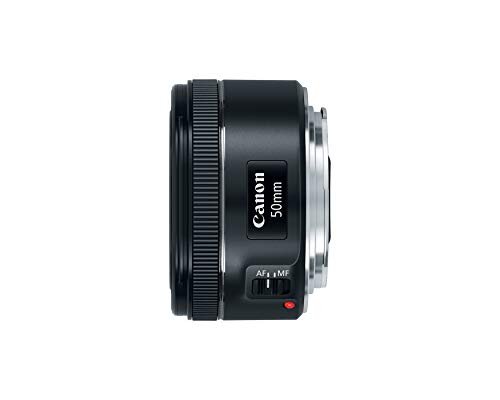
Canon RF50mm F1.8 STM Lens

The Canon RF50mm F1.8 STM is my favorite option in this group for Canon RF mirrorless users. It has the same bright f/1.8 aperture that makes the EF version useful at night. The RF mount gives it direct compatibility with Canon EOS R-series cameras that use the RF mount. Its compact build also saves space in a cold-weather camera bag.
This lens can capture stars and aurora with less need for extreme ISO settings than a slower zoom. Its 50mm view works well when you want the sky and a clear foreground subject. It does not show as much sky as a 24mm or 14mm lens, so composition takes more care. I would use it for an aurora over a cabin, road, mountain ridge, or person rather than for the widest possible sky view.
Pros:
- Bright f/1.8 aperture for night photography
- Native RF mount for compatible Canon mirrorless cameras
- Small and easy to pack
- Useful for portraits, travel, and street photos too
- STM motor supports quiet focusing
- Strong value for photographers building an RF kit
Cons:
- Too narrow for some large aurora scenes
- No built-in image stabilization
- Not compatible with Canon EF DSLR cameras without a suitable change in system
What Amazon Buyers Are Saying
Amazon review patterns often highlight the lens size, easy handling, and bright aperture. Buyers commonly use it for portraits, family photos, low-light scenes, and everyday carry. Some reviewers note that the lens does not feel as rugged as a premium L-series model. Others mention that autofocus can hunt in dim light. That issue matters less for northern lights because manual focus at infinity is often the most reliable setup.
My Recommendation
This is the best Canon lens for northern lights among these five if you own a Canon RF mirrorless camera. The f/1.8 aperture gives it a clear advantage over every 75-300mm lens listed here. Buy it if you want a light, bright lens for aurora trips and daily photography. Choose a wider RF lens instead if your main goal is to capture the full sky.
Canon EF 75-300mm III Telephoto Lens

The renewed Canon EF 75-300mm f/4-5.6 III gives you a long zoom range at a low entry cost. It can frame distant subjects, bright moon scenes, and small details across a wide landscape. However, it is not a natural first choice for northern lights. Its maximum aperture is much slower than f/1.8, so it needs more light, a higher ISO, or a longer shutter speed.
A long focal length also magnifies movement. Even a small shake can soften the image at 300mm. A solid tripod helps, but the aurora itself can move during a long exposure. I see this lens as a specialist add-on for distant details, not the main lens for an aurora trip. The renewed format may offer value, but condition and included accessories can vary, so inspect the listing before purchase.
Pros:
- Long reach from 75mm to 300mm
- Useful for distant subjects and tight landscape views
- Lightweight for a telephoto zoom
- Compatible with many Canon EF DSLR cameras
- Can add variety to a two-lens travel kit
- Renewed pricing may lower the cost of entry
Cons:
- Slow f/4-5.6 aperture for night photography
- Not designed as a wide aurora landscape lens
- Renewed condition may vary by listing
- No image stabilization
What Amazon Buyers Are Saying
Buyers often like this zoom because it provides a lot of reach without the cost or weight of a professional telephoto. Common positive themes include casual wildlife use, outdoor events, and moon photos. Review concerns often focus on the basic build, limited low-light performance, and soft results at the long end. With renewed products, buyers also pay close attention to cosmetic condition, focus behavior, and packaging. These points make a careful return policy important.
My Recommendation
I would not select this renewed 75-300mm as the best Canon lens for northern lights. It can support a wider lens by capturing distant details, but its slow aperture limits its value for dark skies. Buy it only if you also need a low-cost telephoto for daytime work. For a dedicated aurora trip, the RF50mm or EF50mm is a better first purchase.
Canon EF 75-300mm III DSLR Lens

This Canon EF 75-300mm f/4-5.6 III offers the same broad telephoto range in a standard new-product listing. The 75mm end can frame a distant ridge or a small section of sky. The 300mm end can isolate the moon, a far structure, or a distant subject. Those uses can make it handy in a larger kit.
For aurora photography, though, the lens has two clear limits. First, f/4-5.6 does not gather as much light as a fast prime. Second, 75mm is already too tight for many sweeping displays. A tripod and remote release can reduce camera shake, but they cannot make the aperture faster. I would use this lens after the main aurora images are complete, when I want a different and more compressed view.
Pros:
- Flexible 75-300mm focal range
- Good reach for distant subjects
- Simple design for casual outdoor use
- Compatible with Canon EF DSLR bodies
- Useful for daytime wildlife and sports on a budget
- Light enough to carry beside a standard lens
Cons:
- Slow aperture reduces night performance
- Very narrow for broad aurora scenes
- No built-in image stabilization
- Long focal lengths need careful tripod technique
What Amazon Buyers Are Saying
Customer review themes often show that buyers value the reach and low cost. Many use this lens for family sports, outdoor events, wildlife, and basic moon photos. Some buyers report that results look better in good daylight than in dim conditions. Softness at 300mm and the lack of stabilization also appear as practical concerns in user discussions. These points match the lens design and explain why I see it as a budget telephoto rather than a night-sky specialist.
My Recommendation
This lens is worth buying when you need affordable telephoto reach for a Canon DSLR. It is not my recommendation for the best Canon lens for northern lights because the aperture and focal range work against wide, bright aurora photos. Pair it with the EF 50mm f/1.8 STM if you already own it. That combination gives you both low-light ability and long daytime reach.
Canon EF 75-300mm III Value Pick

This EF 75-300mm lens is another budget telephoto option for Canon SLR cameras. It covers a useful range for distant objects and lets you change framing without moving your tripod. At 75mm, it can show more of the scene. At 300mm, it can isolate a small detail that would disappear with a normal lens.
The trade-off stays the same: this is a slow telephoto, not a fast night lens. Northern lights often need a lens that gathers light while keeping exposure times short. This lens may force a higher ISO or a longer exposure, which can add noise or blur moving aurora patterns. I like it more for daylight travel than for the main aurora session. It can still add creative variety after you capture your wide and medium views.
Pros:
- Wide telephoto range in one lens
- Helpful for distant landscape details
- Budget-friendly option for Canon DSLR owners
- Simple controls for new photographers
- Useful for moon and daytime outdoor photos
- Can complement a fast 50mm prime
Cons:
- f/4-5.6 aperture is weak for dark skies
- Does not provide a wide field of view
- No image stabilization
- 300mm magnifies camera shake and subject movement
What Amazon Buyers Are Saying
Buyers commonly like the low price and the ability to reach far-away subjects. The lens often attracts beginners who want to try wildlife, sports, or moon photography without a large investment. Reviews also show realistic limits: low-light work can be difficult, and the long end may need good light and steady support. As with any budget lens, results depend on focus, light, shutter speed, and camera technique.
My Recommendation
I recommend this lens only as a secondary lens for an aurora trip. It does not compete with a fast 50mm prime for the best Canon lens for northern lights. However, it can make sense for a DSLR owner who also needs a cheap telephoto for daytime use. If you can buy only one lens for the northern lights, choose the EF 50mm f/1.8 STM instead.
How to Choose the Best Canon Lens for Northern Lights
Choosing the best Canon lens for northern lights takes more than checking the focal length. You must match the lens to your camera mount, sensor size, shooting style, and expected light. A lens that works well for a distant moon will not always work well for a moving aurora. Use these points before you buy.
1. Start With the Aperture
A wide aperture lets more light reach the camera sensor. For aurora photos, f/1.8 is far more useful than f/4-5.6. It can help you use a faster shutter speed or a lower ISO. That can preserve detail in moving green and purple light.
Fast primes, such as the Canon EF 50mm f/1.8 STM and Canon RF50mm F1.8 STM, have the strongest aperture in this group. The 75-300mm lenses use slower apertures. They may work when the aurora is bright, but they give you less room when the sky grows dark.
2. Match the Mount and Field of View
Check whether your camera uses Canon EF or RF lenses. EF lenses fit many Canon EOS DSLR cameras. RF lenses fit Canon EOS R-series mirrorless cameras with an RF mount. An EF lens may work on some RF cameras with the correct Canon adapter, but you should confirm the camera and adapter before your trip.
Next, consider the view. A 50mm lens gives a tighter scene than a wide-angle lens. That can help you include a strong foreground subject. It may not capture the full aurora arc. On an APS-C camera, the view becomes narrower than it does on a full-frame camera. Think about the sky, land, and subject you want in one frame.
3. Balance Night Features With Travel Value
Aurora trips often involve cold air, snow, long waits, and limited bag space. A small lens is easier to carry and faster to set up. A tripod helps, but lens quality and aperture still matter. Look for a lens that supports manual focus and lets you focus at infinity with care.
Also consider your other photo needs. The RF50mm and EF50mm can handle portraits, travel scenes, and indoor photos. The 75-300mm lenses offer more reach for daylight wildlife or sports. If you need one lens for the whole trip, a fast 50mm gives a better mix of low-light skill and daily use than these slow telephoto zooms.
Final Verdict: Which Should You Buy?
The Canon RF50mm F1.8 STM is my top pick for the best Canon lens for northern lights when you use a Canon RF mirrorless camera. DSLR owners should choose the Canon EF 50mm f/1.8 STM.
Both primes offer a bright f/1.8 aperture, light weight, and useful travel value. The 75-300mm lenses work better as budget daytime telephotos than as main aurora lenses.
FAQs Of best canon lens for northern lights
What is the best Canon lens for northern lights?
The Canon RF50mm F1.8 STM is my top pick for RF mirrorless cameras. The EF 50mm f/1.8 STM is the better match for Canon DSLR cameras.
Is a 50mm lens wide enough for northern lights?
A 50mm lens can capture an aurora with a foreground subject. It may not show a very wide sky arc. A wider lens works better for full-sky scenes.
Why is f/1.8 useful for aurora photography?
An f/1.8 aperture gathers more light than an f/4-5.6 aperture. This can support faster shutter speeds and lower ISO settings in dark conditions.
Can I use a Canon EF lens on an RF camera?
You may use some Canon EF lenses on compatible RF cameras with a suitable EF-EOS R adapter. Check your exact camera and adapter before buying.
Are Canon 75-300mm lenses good for northern lights?
They can capture tight, distant details, but their slow aperture and narrow view make them less suitable than a fast 50mm prime for most aurora photos.