The best E-mount APS-C lenses balance sharp images, useful focal lengths, fast focus, and strong value.
Choosing a Sony E-mount APS-C lens can feel hard when one camera body supports so many options. A travel photographer may need a light telephoto lens, while a vlogger may want a wide prime. Some buyers also need autofocus, low-light performance, or a small lens for daily use. I reviewed five practical choices for Sony APS-C cameras, including the a6000 series, ZV-E10, a6700, and FX30. The right pick depends on your subject, shooting style, and comfort with manual focus.
See the differences between my top picks at a glance.
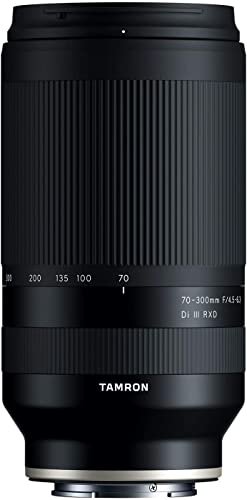
Tamron 70-300mm: Best E-Mount APS-C Telephoto

The Tamron 70-300mm Di III RXD gives Sony APS-C users a useful telephoto range. On a Sony APS-C body, the view looks similar to about 105-450mm on full frame. That extra reach helps with birds, distant people, outdoor sports, and travel details. The lens uses Tamron’s RXD autofocus system for Sony E-mount cameras.
This is a full-frame lens, but it works well on APS-C bodies. It can also move with you if you later buy a full-frame Sony camera. The variable f/4.5-6.3 aperture is not ideal for dark venues, so I like it most outdoors in good light. Its biggest appeal is reach without the cost and bulk of many professional telephoto lenses.
Pros:
- Excellent reach for wildlife, sports, and distant subjects
- Autofocus support for Sony E-mount cameras
- Useful full-frame compatibility for future upgrades
- More manageable than many large professional telephoto lenses
- Good choice for travel and outdoor photography
- Works well as a second lens beside a standard zoom
Cons:
- The f/4.5-6.3 aperture is slow compared with a constant f/2.8 lens
- Telephoto framing can feel tight in small rooms
- Low-light users may need higher ISO or a tripod
What Amazon Buyers Are Saying
Buyer feedback commonly focuses on the lens’s reach, low weight compared with larger telephoto designs, and useful autofocus. Many owners choose it for outdoor subjects and casual wildlife work. A repeated limitation in this type of lens is the slower aperture, especially near 300mm. Buyers also tend to note that sharp results depend on good light, steady technique, and realistic expectations at this price level.
My Recommendation
I recommend the Tamron 70-300mm to APS-C owners who want long reach without buying a large professional zoom. It is a strong outdoor lens, but it is not my first choice for indoor sports or night work. For wildlife, travel, and field use, it offers excellent flexibility and room to grow with your camera system.
| Category | Rating |
|---|---|
| Reach and framing | 4.8/5 |
| Autofocus | 4.3/5 |
| Low-light ability | 3.4/5 |
| Outdoor value | 4.6/5 |
| Overall Rating | 4.4/5 |
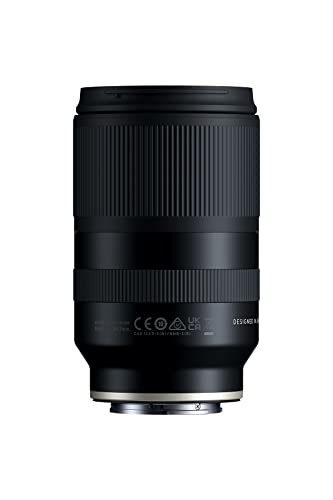
Tamron 28-75mm G2: Best Fast Standard Zoom

The Tamron 28-75mm f/2.8 Di III VXD G2 is a fast standard zoom made for Sony E-mount full-frame cameras, yet it also works on APS-C bodies. On APS-C, its view is similar to about 42-112.5mm. That range covers portraits, family photos, product shots, events, and many everyday scenes. Its constant f/2.8 aperture keeps exposure more consistent as you zoom.
This lens makes the most sense for APS-C users who want a portrait-focused zoom and may later move to full frame. The wide end is not very wide on an APS-C body, so it does not replace an ultra-wide lens for vlogging or small rooms. Still, the bright aperture gives you better subject separation and more control in dim light than many kit zooms. The VXD focus motor also suits users who need quick focus for people and moving subjects.
Pros:
- Constant f/2.8 aperture across the zoom range
- Strong portrait range on APS-C cameras
- Useful autofocus for people, events, and video
- Full-frame compatibility adds long-term value
- Better low-light control than many basic kit lenses
- Good option for a one-lens portrait and event kit
Cons:
- 28mm is not especially wide on an APS-C body
- It may feel large on small Sony cameras
- It costs more than many entry-level APS-C zooms
What Amazon Buyers Are Saying
Amazon buyers often praise the sharp look, bright aperture, focus speed, and flexible portrait range. Many users see it as a major step up from a basic kit zoom. Common concerns include size, weight, and the limited wide-angle view on APS-C cameras. These points match the lens’s design: it is a fast full-frame standard zoom, not a small ultra-wide APS-C lens.
My Recommendation
I recommend this Tamron when image quality, subject separation, and low-light control matter more than a compact setup. It is especially useful for portraits, indoor gatherings, and paid work. For a small vlogging camera, I would choose a wider lens instead. For a serious hybrid kit, this is one of the most capable options in the group.
| Category | Rating |
|---|---|
| Image quality | 4.7/5 |
| Aperture and low light | 4.8/5 |
| Autofocus | 4.6/5 |
| APS-C handling | 4.0/5 |
| Overall Rating | 4.5/5 |
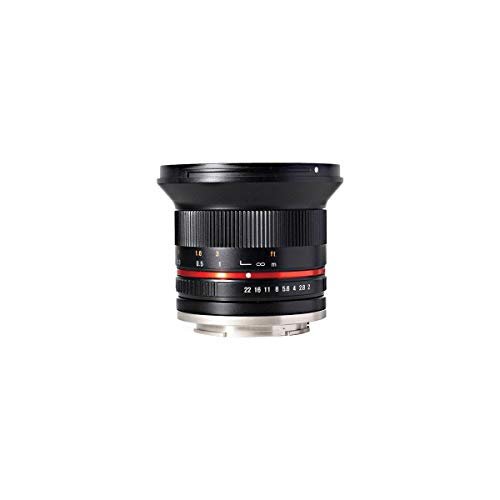
TTArtisan 25mm f/2: Best Manual Wide Prime

The TTArtisan 25mm f/2 is a manual-focus prime for Sony E-mount cameras. On an APS-C body, it gives a view similar to about 37.5mm on full frame. That makes it a natural fit for street scenes, travel, food photos, family shots, and documentary work. The f/2 aperture also gives you useful control over light and background blur.
This lens does not offer electronic autofocus, so it rewards a slower and more careful shooting style. I see that as a benefit for photographers who enjoy manual focus and want a simple creative tool. Focus peaking on many Sony bodies makes the process easier. It is also a good way to learn distance, aperture, and composition without relying on the camera to make every choice.
Pros:
- Natural everyday view on Sony APS-C cameras
- Bright f/2 aperture for creative low-light work
- Manual focus encourages careful composition
- Compact prime format suits travel and street photography
- Useful for video when focus stays fixed
- Often attractive to buyers who want a low-cost creative lens
Cons:
- No autofocus for fast-moving subjects
- Manual aperture and focus need more user control
- Not the best choice for quick family or sports photos
What Amazon Buyers Are Saying
Feedback for manual primes often centers on the low price, solid feel, fun shooting experience, and pleasing results when the user focuses carefully. Buyers who understand the manual design tend to value the control. The main complaints usually come from people who expect autofocus or electronic camera communication. Before buying, I would make sure you are comfortable using focus peaking and setting the lens by hand.
My Recommendation
I recommend the TTArtisan 25mm f/2 for learners, street photographers, and creators who enjoy a hands-on process. It is not the most convenient lens for action or family events. However, it offers a strong creative experience at a modest cost. If manual focus does not bother you, this is an appealing budget option among the best E-mount APS-C lenses.
| Category | Rating |
|---|---|
| Manual handling | 4.5/5 |
| Image control | 4.1/5 |
| Low-light aperture | 4.2/5 |
| Ease for beginners | 3.5/5 |
| Overall Rating | 4.1/5 |
Viltrox Air AF 9mm: Best Ultra-Wide E-Mount Prime

The Viltrox Air AF 9mm f/2.8 is built for a very wide view on Sony E-mount APS-C cameras. Its angle suits vlogging, architecture, interiors, landscapes, and dramatic foreground shots. A 9mm APS-C lens feels much wider than a typical kit zoom at its short end. That lets you hold the camera close while still showing the room or scene around you.
The f/2.8 aperture gives this lens more light than a basic variable-aperture zoom. Autofocus also makes it easier to use for video and self-recording. Wide lenses can make faces and objects near the edge look stretched, so I would keep people near the center when possible. For creators who need an ultra-wide angle without carrying a large zoom, this lens has a clear purpose.
Pros:
- Very wide view for vlogging and interior spaces
- Bright f/2.8 aperture for a wide prime
- Autofocus supports quick setup and video use
- Useful for architecture, landscapes, and travel
- Prime design keeps the framing simple and direct
- Can create strong foreground depth and visual impact
Cons:
- Ultra-wide perspective can distort faces and close objects
- Fixed focal length offers less framing flexibility
- Wide primes may need careful composition around the edges
What Amazon Buyers Are Saying
Buyers looking for an ultra-wide lens commonly value the broad view, autofocus, and usefulness for video. Feedback tends to be strongest among vloggers, travel users, and photographers who work in tight spaces. The usual learning point is perspective control. People who place subjects too close to the edge may see stretched features, which is normal for an ultra-wide lens rather than a defect.
My Recommendation
I recommend this Viltrox when your main need is a wide APS-C view with autofocus. It is a better match for vlogging and interiors than either Tamron zoom in this guide. It will not replace a normal lens for portraits, but it can solve the common problem of not fitting yourself or a large scene into the frame.
| Category | Rating |
|---|---|
| Ultra-wide coverage | 4.8/5 |
| Video usefulness | 4.5/5 |
| Autofocus convenience | 4.3/5 |
| Framing flexibility | 3.7/5 |
| Overall Rating | 4.4/5 |
Viltrox 9mm f/2.8: Best Lightweight Wide Lens

This Viltrox 9mm f/2.8 APS-C prime takes a similar ultra-wide approach but focuses on a very light setup. The listed weight is 175g, which makes it appealing for compact Sony bodies such as the a6400, a6600, ZV-E10, and FX30. It uses autofocus and an STM motor, so it suits creators who want a simple lens for walking, filming, and travel. The fixed 9mm view remains the main reason to buy it.
A lightweight lens can change how often you carry your camera. That matters for travel and daily video work. The wide view helps with self-recording and small rooms, while the f/2.8 aperture gives the camera a useful amount of light. As with any ultra-wide prime, you should watch the edges and keep important faces away from extreme corners.
Pros:
- Very light 175g design for compact camera kits
- Ultra-wide 9mm view for vlogging and interiors
- Autofocus helps with quick video recording
- STM focus motor suits quiet shooting needs
- Bright f/2.8 aperture in a small prime format
- Easy to carry for travel and everyday filming
Cons:
- Fixed framing does not suit every subject
- Ultra-wide images need careful edge control
- Not designed as a general portrait or telephoto lens
What Amazon Buyers Are Saying
The main buyer appeal is clear: a light ultra-wide autofocus lens for Sony APS-C cameras. Owners who film themselves or work in tight spaces tend to value the size and broad view. The most likely learning curve involves composition, since 9mm can exaggerate distance and edge shapes. I would also check the current Amazon listing for updated compatibility notes, firmware details, and user feedback before ordering.
My Recommendation
I recommend this version for creators who care most about low weight. It is a practical choice for a ZV-E10 or FX30 travel kit, especially when a normal lens feels too narrow. If you want a wide prime that takes up very little room, it deserves serious attention. It is less suitable as your only lens.
| Category | Rating |
|---|---|
| Portability | 4.9/5 |
| Wide-angle usefulness | 4.7/5 |
| Autofocus for video | 4.3/5 |
| All-purpose use | 3.5/5 |
| Overall Rating | 4.3/5 |
How to Choose the Best E-Mount APS-C Lenses
The best E-mount APS-C lenses are not the same for every Sony user. A lens that works for wildlife may be too long for a vlog. A small prime may be perfect for travel but slow for sports. I suggest starting with your main subject, then checking the focal length, focus system, aperture, size, and long-term value.
1. Match the Focal Length to Your Subject
Focal length controls how much of the scene fits in the frame. Sony APS-C cameras use a crop factor of about 1.5x compared with full frame. A 25mm lens gives a view similar to about 37.5mm on full frame. That feels natural for street work and daily photos.
A 9mm lens gives an ultra-wide view. It works well for self-recording, rooms, buildings, and wide landscapes. A 70-300mm lens gives much more reach. It suits birds, sports, and far-away details. The Tamron 28-75mm becomes a portrait-friendly range on APS-C, but its 28mm end may feel narrow indoors.
2. Decide Between Autofocus and Manual Focus
Autofocus saves time. It helps when a child runs toward you, when a bird moves, or when you record yourself. Sony camera bodies can offer useful focus aids, but autofocus still makes daily shooting easier. The Tamron and Viltrox options in this guide target users who want that convenience.
Manual focus can still be rewarding. The TTArtisan 25mm gives you direct control over focus and aperture. That works well for calm subjects, planned video, and street photography. It takes more practice, so I would not choose it for fast action unless you already enjoy manual focusing.
3. Compare Aperture, Size, and Future Value
A wider aperture, such as f/2 or f/2.8, lets in more light than a slow zoom aperture. It can also make the background look softer. The Tamron 28-75mm uses a constant f/2.8 aperture, while the Tamron 70-300mm uses a variable f/4.5-6.3 range. That difference matters in dim scenes.
Size also matters. A large lens can balance well on an a6700 but feel awkward on a small ZV-E10. The lightweight Viltrox 9mm is easier to carry for long days. Finally, consider future upgrades. Full-frame-compatible lenses may cost more now, but they can continue to serve you if you later move beyond APS-C.
Final Verdict: Which Should You Buy?
For most serious users, the Tamron 28-75mm G2 is the strongest all-round upgrade, while the Tamron 70-300mm is best for outdoor reach. Choose the Viltrox 9mm for vlogging, or the TTArtisan 25mm for manual creative work.
The best E-mount APS-C lenses should fit your subjects, camera size, and shooting habits. Choose the focal length you will use most, then confirm current compatibility and price before ordering.
FAQs Of best e mount apsc lenses
What is the best E-mount APS-C lens for Sony cameras?
The best choice depends on your subject. The Tamron 28-75mm suits portraits and events, the Tamron 70-300mm suits wildlife, and the Viltrox 9mm suits vlogging and interiors.
Can full-frame Sony E-mount lenses work on APS-C cameras?
Yes. Full-frame E-mount lenses can work on Sony APS-C bodies, but the camera shows a narrower view because of the 1.5x crop factor.
Is a 9mm lens good for vlogging?
Yes. A 9mm APS-C lens gives a very wide view, so it can fit both the creator and the background in a small space.
Is the TTArtisan 25mm lens autofocus?
No. The TTArtisan 25mm f/2 is a manual-focus lens. You must set focus yourself, though Sony focus peaking can help.
Which Sony APS-C lens is best for wildlife?
The Tamron 70-300mm is the best fit in this guide because it offers long reach and autofocus for distant subjects.