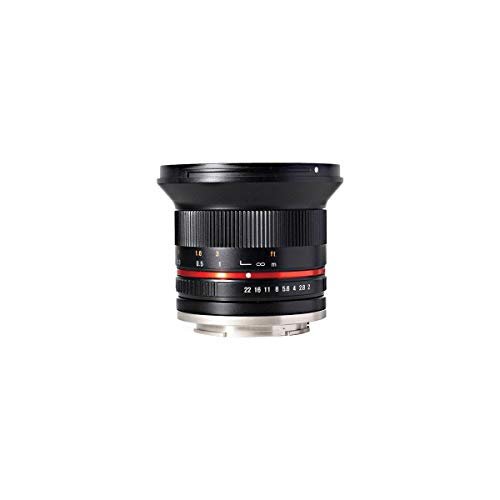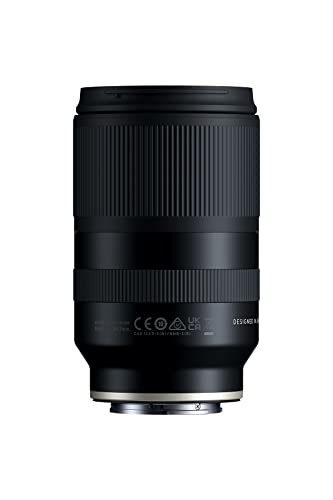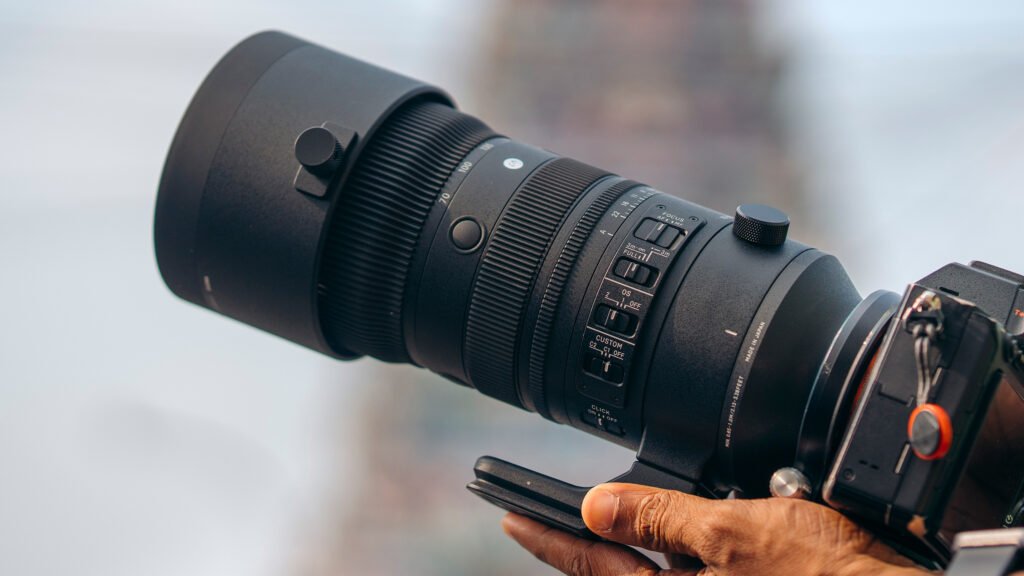
For photographers in the United States, the Sigma 70-200mm F2.8 DG DN OS Sports is the best third-party 70-200mm lens for most full-frame mirrorless users. It offers a bright f/2.8 aperture, optical stabilization, strong autofocus, high image quality, and versions for Sony E and Leica L mounts.
The Tamron 70-180mm F2.8 Di III VC VXD G2 is the better choice when low weight, a smaller bag, and a lower price matter more than reaching exactly 200mm. DSLR owners should consider the Tamron SP 70-200mm F/2.8 Di VC USD G2 or Sigma 70-200mm F2.8 DG OS HSM Sports, depending on the camera mount and used-market price.

Quick answer: the best third-party 70-200mm lenses
| Best for | Lens | Main strength | Main limitation |
|---|---|---|---|
| Best overall mirrorless option | Sigma 70-200mm F2.8 DG DN OS Sports | Strong optics, stabilization, and pro features | Heavy and costly |
| Best lightweight option | Tamron 70-180mm F2.8 Di III VC VXD G2 | Much lighter than most 70-200mm lenses | Stops at 180mm |
| Best for Sony E value | Tamron 70-180mm F2.8 G2 | Compact design and fast autofocus | Less reach and smaller feature set |
| Best for DSLR users | Tamron SP 70-200mm F/2.8 G2 | Very good image quality and stabilization | Older, large, and mainly a used-market lens |
| Best for sports on a budget | Sigma 70-200mm F2.8 DG OS HSM Sports | Durable build and strong tracking | Heavy, especially with an adapter |
| Best for Canon RF or Nikon Z | Check native-brand options first | Better camera integration | Third-party choices are limited |
What “third-party 70-200mm lens” means
A third-party lens is made by a company other than the camera manufacturer. For example, a Sigma lens used on a Sony camera is a third-party lens. Tamron, Sigma, and Tokina are the main brands buyers usually consider in this class.
The 70-200mm range is popular because it covers:
- Portraits
- Weddings
- Indoor events
- Field sports
- Wildlife at moderate distances
- School performances
- Travel details
- Landscapes with compressed perspective
A constant f/2.8 aperture lets the lens keep the same maximum aperture throughout its zoom range. This helps maintain shutter speed and gives more background blur than an f/4 or variable-aperture zoom.
A 70-200mm lens is not small. It is best viewed as a specialized tool rather than an all-purpose travel lens.
Best overall: Sigma 70-200mm F2.8 DG DN OS Sports
The Sigma 70-200mm F2.8 DG DN OS Sports is the strongest overall third-party choice for full-frame mirrorless photographers who use Sony E or Leica L cameras.
It combines the features most users expect from a professional telephoto zoom:
- Constant f/2.8 aperture
- Optical image stabilization
- Fast autofocus motors
- Weather-resistant construction
- Custom controls and switches
- Strong sharpness across much of the frame
- Full 70-200mm coverage
The lens is designed for mirrorless cameras, so it is a better fit than adapting an older DSLR lens. Its autofocus system communicates directly with supported camera bodies. This can improve subject tracking, eye detection, and control of lens corrections.
The main drawback is weight. A professional f/2.8 telephoto zoom takes up space and can become tiring during a full wedding day or long sports event. It also costs more than the Tamron 70-180mm.
Who should buy the Sigma 70-200mm DG DN?
Choose the Sigma if you:
- Use a Sony full-frame or Leica L camera
- Photograph sports, weddings, portraits, or events
- Need optical stabilization
- Want exactly 200mm
- Prefer a durable professional build
- Use the lens often enough to justify its size and price
The Sigma is less attractive for casual travel. A 70-180mm lens or a slower f/4 zoom may be easier to carry.

Best lightweight choice: Tamron 70-180mm F2.8 Di III VC VXD G2
The Tamron 70-180mm F2.8 Di III VC VXD G2 is the best choice for many Sony E photographers who want a fast telephoto zoom without the bulk of a typical 70-200mm lens.
It gives up only 20mm at the long end but is notably easier to carry than many full-size 70-200mm f/2.8 lenses. That difference matters when the lens stays on your camera for hours.
The G2 version adds important improvements over the original model, including:
- Vibration Compensation image stabilization
- Updated autofocus performance
- Improved close-focus capability
- A lighter design than many 70-200mm competitors
- USB-based firmware and customization support through Tamron’s software
The loss from 180mm to 200mm is small in many real-world situations. At a subject distance of 20 feet, the difference changes framing, but it does not transform the lens into a different class of tool. You can often take a small step forward or crop slightly.
However, the Tamron may not be the right pick for users who need every bit of reach. Sports shooters working from fixed positions, wedding photographers at the back of a church, and wildlife photographers may prefer a true 200mm lens.
Who should buy the Tamron 70-180mm G2?
It makes the most sense for:
- Sony full-frame users
- Portrait photographers
- Wedding and event photographers
- Travelers who still need f/2.8
- People who dislike carrying heavy lenses
- Buyers who want strong value
Check the exact mount before buying. The 70-180mm G2 is commonly associated with Sony E, while mount availability can change by model and market.

Best third-party DSLR options
DSLR users have fewer new choices because Sigma and Tamron have focused much of their development on mirrorless systems. Still, several DSLR lenses remain useful on the used market.
Tamron SP 70-200mm F/2.8 Di VC USD G2
The Tamron SP 70-200mm G2 is one of the best used-market choices for Canon EF and Nikon F users.
Its strengths include:
- Constant f/2.8 brightness
- Optical stabilization
- Good central sharpness
- Professional weather sealing
- Useful portrait rendering
- Strong value when bought used
The lens is a good match for Canon and Nikon DSLRs. It may also work through an adapter on some mirrorless cameras, but autofocus results depend on the camera, adapter, firmware, and subject.
Before buying used, check:
- The exact Canon EF or Nikon F mount
- Autofocus operation on your camera
- Stabilization noise or failure
- Zoom and focus-ring movement
- Internal dust or haze
- Firmware compatibility
- Included tripod collar and hood
Sigma 70-200mm F2.8 DG OS HSM Sports
The Sigma 70-200mm F2.8 DG OS HSM Sports is a robust DSLR lens designed for demanding use. It has strong stabilization, a durable body, and a feature set aimed at sports and event photographers.
Its greatest weakness is size and weight. When paired with an adapter, the setup can become front-heavy. It is also less convenient for users who have already moved to a compact mirrorless system.
The Sigma is worth considering when:
- You already own a compatible Canon or Nikon DSLR
- You find a clean used copy at a strong price
- You need a rugged lens for outdoor work
- You value 200mm reach more than portability

Third-party 70-200mm lens comparison
The table below compares the main buying factors. Weight and features can vary slightly by mount, so confirm the manufacturer’s specifications for the exact version.
| Lens | Camera type | Aperture | Stabilization | Approximate position in the market |
|---|---|---|---|---|
| Sigma 70-200mm DG DN OS Sports | Mirrorless | f/2.8 | Yes | Premium |
| Tamron 70-180mm G2 | Mirrorless | f/2.8 | Yes on the G2 version | Midrange to upper midrange |
| Tamron SP 70-200mm G2 | DSLR | f/2.8 | Yes | Used-market value |
| Sigma 70-200mm DG OS HSM Sports | DSLR | f/2.8 | Yes | Used-market professional |
| Nikon Z 70-200mm f/2.8 VR S | Nikon Z | f/2.8 | Yes | Native-brand alternative |
| Sony FE 70-200mm f/2.8 GM II | Sony E | f/2.8 | Yes | Native-brand alternative |
| Canon RF 70-200mm f/2.8 L IS USM | Canon RF | f/2.8 | Yes | Native-brand alternative |
The main point is simple: the best third-party lens depends on your camera mount. Sony E and Leica L users have the widest choice. Canon RF and Nikon Z users should check native lenses first because third-party autofocus support is more limited in these mounts.

Why the 20mm difference matters less than you may think
A 70-180mm lens gives about 90% of the maximum focal length of a 70-200mm lens. That does not mean the two lenses produce identical framing, but the practical difference is often modest.
For example, a photographer covering a portrait session can usually move slightly closer. A wedding photographer may also be able to crop a high-resolution image. A sports photographer seated in a fixed position has less freedom, so the extra 20mm may matter more.
The 200mm setting is more valuable when:
- You cannot move closer
- Your subject is small in the frame
- You photograph field sports
- You shoot wildlife
- You work from the back of a venue
- You need maximum background compression
The 180mm setting is usually enough when:
- You photograph portraits
- You work at weddings or events
- You travel often
- You use a high-resolution camera
- You value lower weight
- Your subjects are close or medium distance
This is a trade-off, not a defect. The right choice depends on whether reach or portability affects your work more often.
Autofocus and camera compatibility
Autofocus performance depends on the complete camera system, not just the lens name. A lens may focus quickly on one camera but behave differently on another.
Before buying, verify:
- Mount: Confirm Sony E, Leica L, Canon EF, Nikon F, or another exact mount.
- Sensor format: Make sure the lens covers your sensor properly.
- Autofocus support: Check the lens maker’s compatibility list.
- Firmware: Look for required updates.
- Image stabilization: Confirm whether lens stabilization works with your camera.
- Teleconverter support: Do not assume a teleconverter will fit or autofocus correctly.
- Adapter use: Check real compatibility if adapting a DSLR lens to mirrorless.
A Canon EF lens may physically attach to a Canon RF camera with the correct adapter, but this does not make it a native lens. A third-party lens may also lose some functions when adapted, such as continuous autofocus, eye detection, or in-body and lens stabilization coordination.
For critical work, rent the exact lens and test it on the exact camera body. This is more reliable than assuming that two cameras from the same brand will perform the same way.

Optical stabilization versus camera-based stabilization
Optical stabilization moves lens elements to reduce the effect of camera shake. In-body image stabilization moves the camera sensor. Some systems combine both methods.
Stabilization helps when the photographer is moving or the camera is handheld. It does not freeze a running athlete or a moving bird. For moving subjects, shutter speed remains the main control.
As a general starting point:
- Static subjects may allow slower shutter speeds with stabilization.
- Walking people often need around 1/250 second or faster.
- Field sports may need 1/500 second or faster.
- Fast action may need 1/1000 second or faster.
These are starting points, not fixed rules. Subject speed, camera angle, lighting, and the photographer’s technique all change the result.
The Sigma DG DN and Tamron G2 are more attractive than unstabilized lenses for handheld events. If your camera has effective in-body stabilization, the difference may be smaller, but lens stabilization can still help at longer focal lengths.
Image quality: what to look for
A good 70-200mm lens should deliver useful detail at both ends of the zoom range. Look beyond a single sharpness chart.
Important factors include:
- Center sharpness at f/2.8
- Edge detail
- Contrast in backlight
- Chromatic aberration
- Flare control
- Bokeh quality
- Focus breathing
- Distortion correction
- Stabilization behavior
- Autofocus consistency
Portrait photographers may care more about smooth background blur and skin-friendly rendering than extreme corner sharpness. Sports photographers may care more about tracking and shutter speed. Landscape photographers may prioritize edge detail and flare control.
No single lens wins every category. A lens with slightly less perfect corners may still be the better sports lens if its autofocus is more reliable and its controls are easier to use.

Which lens is best for portraits?
The Tamron 70-180mm G2 is an excellent portrait choice for Sony E users who value low weight. The Sigma 70-200mm DG DN OS Sports is better for photographers who want 200mm reach, more controls, and a more substantial professional build.
At 70mm, you can include more of the environment. At 135mm, facial proportions often look flattering while keeping a comfortable working distance. At 200mm, the background appears more compressed, but you need more space between you and the subject.
An f/2.8 aperture can create a soft background, but background blur also depends on:
- Focal length
- Subject distance
- Background distance
- Sensor size
- Framing
- Aperture
A 70-200mm lens is not automatically better for portraits than a 85mm or 135mm prime. The zoom is more flexible, while the prime may be smaller, brighter, or sharper at a similar price.

Which lens is best for sports and wildlife?
For sports, the Sigma 70-200mm DG DN OS Sports is the strongest third-party mirrorless choice when its mount matches the camera. Its f/2.8 aperture, stabilization, autofocus, and 200mm reach suit many indoor and outdoor events.
For wildlife, 200mm is often only a starting point. Small or distant animals may require a 100-400mm, 150-600mm, or 200-600mm lens. A 70-200mm is more useful for large animals, nearby subjects, zoos, and wildlife scenes that include the environment.
A 70-180mm lens can still work well for sports, especially on a high-resolution camera. The smaller size may make it easier to pan and carry. But if you are restricted to one seat at a stadium, the longer Sigma or a native 70-200mm may be the better tool.

Which lens is best for weddings and events?
For wedding photographers, the decision usually comes down to reach versus fatigue.
Choose the Sigma 70-200mm DG DN Sports when you:
- Photograph from the back of large rooms
- Need 200mm during ceremonies
- Work in poor light
- Use the lens for long professional assignments
- Want extensive controls
Choose the Tamron 70-180mm G2 when you:
- Carry several lenses
- Move often between locations
- Photograph portraits and receptions
- Want to reduce shoulder and hand strain
- Can work around the shorter maximum focal length
A fast 70-200mm lens can be valuable in dim venues, but f/2.8 does not remove the need for good exposure technique. Raise ISO when needed rather than using a shutter speed so slow that people blur.

How much should you pay?
Prices change by country, retailer, sale period, and used condition. In the United States, compare the total cost rather than the sticker price alone.
Include:
- Lens price
- Sales tax
- Shipping
- Adapter cost
- Extended warranty
- Replacement tripod collar
- Filter cost
- Rental cost for testing
- Used-market return policy
A discounted DSLR lens may look inexpensive, but an adapter can reduce the savings. A used lens with worn stabilization or damaged autofocus can also cost more after repair.
The best value is usually the lens that fits your camera natively and solves your main shooting problem. Saving money on a lens that is too heavy, too short, or poorly supported by your camera can lead to another purchase later.
Common buying mistakes
Buying by focal length alone
A 70-200mm label does not tell you how heavy the lens is, how well it focuses, or whether it works properly with your camera. Check the complete specification and the exact mount.
Assuming all f/2.8 lenses are equal
The same aperture does not guarantee the same autofocus, stabilization, bokeh, or sharpness. Camera communication and firmware also matter.
Ignoring weight
A lens that stays at home is not a good value. Compare the lens weight with your camera, grip, and other equipment.
Using the wrong version
Sigma and Tamron often sell different versions for DSLR and mirrorless cameras. Do not buy based only on the focal length and aperture.
Expecting stabilization to freeze action
Stabilization reduces camera movement. It does not stop subject movement. Use a suitable shutter speed for people, sports, and animals.
Buying without checking support
Confirm firmware updates, repair service, return terms, and warranty coverage in the United States. Support can be more important than a small difference in optical performance.
Buying checklist
Before ordering a third-party 70-200mm lens, confirm these points:
- Does the mount match your camera?
- Is the lens designed for your camera’s sensor size?
- Does autofocus support your main subjects?
- Does stabilization work with your camera body?
- Is the lens too heavy for your typical assignments?
- Do you need 200mm, or would 180mm be enough?
- Is f/2.8 necessary, or would an f/4 lens suit you?
- Does the lens accept your preferred filter size?
- Is a tripod collar included?
- Can you return the lens if autofocus performance is poor?
- Is firmware support still available?
- Are you buying new, refurbished, or used?
If the lens is for paid work, test it before the assignment. Check autofocus at near and far distances, continuous tracking, stabilization, and image quality at f/2.8.
Key takeaways
- Best overall third-party mirrorless option: Sigma 70-200mm F2.8 DG DN OS Sports.
- Best lightweight option: Tamron 70-180mm F2.8 Di III VC VXD G2.
- Best DSLR value: Tamron SP 70-200mm F/2.8 Di VC USD G2.
- Best for demanding DSLR use: Sigma 70-200mm F2.8 DG OS HSM Sports.
- Best choice for Canon RF and Nikon Z: Compare native-brand lenses first because third-party autofocus choices are limited.
- Buy for your camera mount, subject, weight limit, and working distance—not just the focal-length label.
Frequently asked questions
Is Sigma or Tamron better for a 70-200mm lens?
Sigma is usually the better choice when you want a true 70-200mm range, a professional build, and more controls. Tamron is often better when you want lower weight, a smaller body, and stronger value. The best option also depends on whether you use Sony E, Leica L, Canon EF, Nikon F, or another mount.
Is 70-180mm close enough to 70-200mm?
For portraits, weddings, travel, and many events, yes. The difference becomes more important when you cannot move closer, such as at field sports, performances, or wildlife locations. If you often need maximum reach, choose a 200mm lens.
Are third-party 70-200mm lenses reliable?
Modern Sigma and Tamron lenses can provide strong autofocus, stabilization, and image quality. Reliability still depends on the exact lens, camera, firmware, and maintenance. Buying from a seller with a clear US warranty and return policy reduces risk.
Should I buy a 70-200mm f/2.8 or f/4 lens?
Choose f/2.8 for low light, faster shutter speeds, and stronger background separation. Choose f/4 when lower weight, lower price, and easier travel matter more. An f/4 lens can be the better choice if you mostly photograph outdoors in good light.
Can I use a DSLR third-party 70-200mm lens on a mirrorless camera?
Sometimes. You need the correct adapter, and autofocus or stabilization may not work as well as with a native lens. Check compatibility for the exact lens, adapter, firmware, and camera body before relying on the combination for paid work.
Do I need a tripod collar?
A tripod collar is useful when the lens is mounted on a tripod or monopod. It places the support point closer to the lens and can improve balance. You may not need it for handheld work, but replacing a missing collar can be costly.
Final recommendation
For most US photographers using Sony E or Leica L full-frame mirrorless cameras, buy the Sigma 70-200mm F2.8 DG DN OS Sports if you want the most complete third-party package.
Choose the Tamron 70-180mm F2.8 G2 if you value a lighter kit and can accept 180mm. DSLR owners should compare clean used copies of the Tamron 70-200mm G2 and Sigma 70-200mm Sports.
The final decision is less about finding one universal winner and more about matching the lens to your mount, subject, working distance, budget, and tolerance for weight.