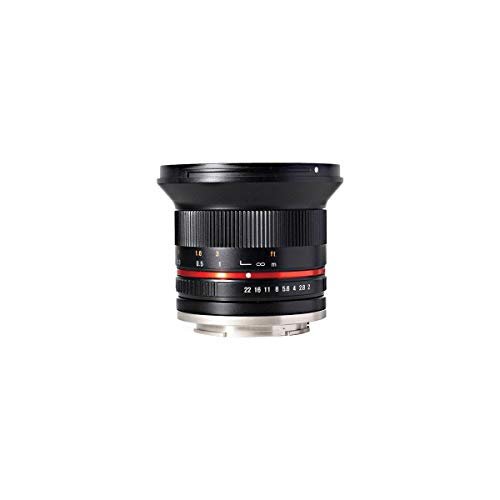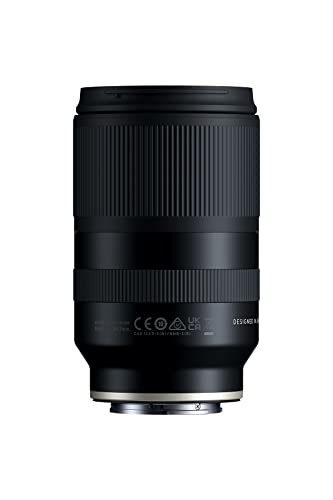
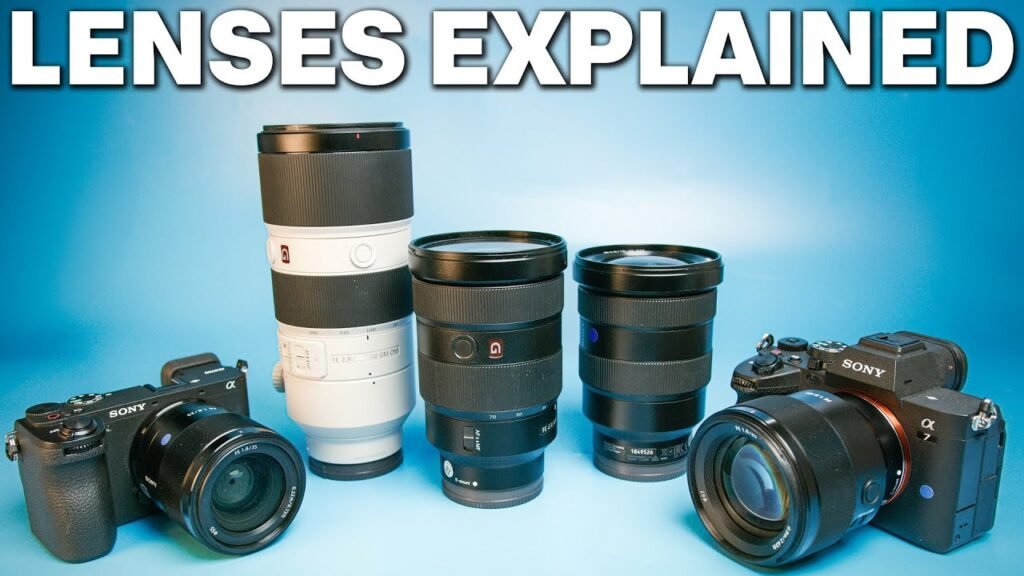
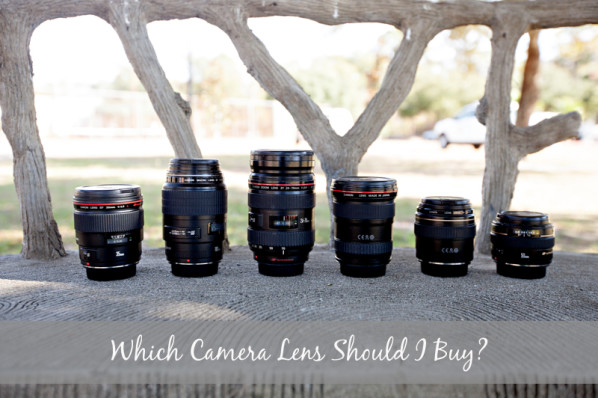
The best camera lens to buy depends on what you photograph, your camera’s mount and sensor size, your budget, and how much weight you want to carry. For most beginners in the United States, a flexible zoom lens is the safest first purchase. Choose a standard zoom for travel and daily use, a wide-angle lens for landscapes and real estate, a telephoto lens for sports and wildlife, or a fast prime lens for portraits and low-light photos.
The lens matters more than many camera features. A good lens affects your field of view, background blur, low-light ability, sharpness, size, and cost. This guide will help you choose without relying on vague “best lens” lists.

Quick answer: Which lens should you buy?
Use this table as a starting point:
| Your main subject | Best lens type | Useful focal length |
|---|---|---|
| Everyday photos and travel | Standard zoom | 24–70mm full frame; 16–50mm APS-C |
| Portraits | Short telephoto prime or zoom | 50–85mm full frame; 35–56mm APS-C |
| Landscapes | Wide-angle zoom or prime | 14–35mm full frame; 10–24mm APS-C |
| Street photography | Compact prime | 28mm or 35mm full frame |
| Sports and wildlife | Telephoto zoom | 70–300mm or 100–400mm |
| Birds and distant subjects | Long telephoto | 400mm or longer |
| Astrophotography | Fast wide-angle lens | 14–24mm, often f/1.4–f/2.8 |
| Macro and close-up work | Macro lens | 60mm, 90mm, 100mm, or 105mm |
| Video and interviews | Standard zoom or prime | 24–70mm full frame equivalent |
If you are unsure, start with the lens that covers your most common subjects. Do not buy a specialty lens for a type of photography you may only try once.
Start with camera compatibility
Before comparing focal lengths, confirm that the lens fits your camera. A lens must match the camera’s mount, and its image circle must suit the camera’s sensor.
Check the lens mount
Common interchangeable-lens mounts in the U.S. market include:
- Canon RF for Canon mirrorless cameras
- Canon EF and EF-S for Canon DSLR cameras
- Nikon Z for Nikon mirrorless cameras
- Nikon F for Nikon DSLR cameras
- Sony E for Sony mirrorless cameras
- Fujifilm X for Fujifilm APS-C cameras
- Fujifilm G for Fujifilm medium-format cameras
- Micro Four Thirds for cameras from OM System and Panasonic
- Pentax K for Pentax DSLR cameras
A lens made for one mount usually will not attach directly to another. Adapters can help, but they may affect autofocus, aperture control, stabilization, or lens size.
Check your camera manual or the manufacturer’s website before buying. Do not rely only on a retailer’s product title. Some listings group several mounts together, while others use similar names for lenses with different fittings.
Match the lens to the sensor
Your camera may use a:
- Full-frame sensor
- APS-C sensor
- Micro Four Thirds sensor
- Medium-format sensor
The focal length printed on a lens does not change when you use it on a smaller sensor. The view you see changes.
A 50mm lens remains a 50mm lens. On a smaller sensor, however, it shows a narrower portion of the scene. This is often described as the equivalent focal length.
Approximate comparisons:
| Lens focal length | Full frame view | APS-C view, about 1.5× crop | Micro Four Thirds view, 2× crop |
|---|---|---|---|
| 16mm | 16mm | 24mm equivalent | 32mm equivalent |
| 24mm | 24mm | 36mm equivalent | 48mm equivalent |
| 35mm | 35mm | 52mm equivalent | 70mm equivalent |
| 50mm | 50mm | 75mm equivalent | 100mm equivalent |
| 85mm | 85mm | 128mm equivalent | 170mm equivalent |
| 200mm | 200mm | 300mm equivalent | 400mm equivalent |
These figures are viewing comparisons, not exact changes in optical behavior. Depth of field and background blur also vary with sensor size, subject distance, aperture, and framing.
Check crop-sensor lens coverage
Some lenses are designed only for smaller sensors. Canon EF-S, Nikon DX, Fujifilm X, and many Micro Four Thirds lenses are examples of lenses made for crop-sensor systems.
A crop-sensor lens may fit a full-frame camera in some systems, but the camera may switch to a crop mode or show dark corners. A full-frame lens can usually work on a crop-sensor camera, although it may be larger and more expensive than needed.

Choose the focal length for your subject
Focal length controls how much of the scene fits in the frame. It also changes how close you need to stand and how large distant subjects appear.
Wide-angle lenses: 14mm to 35mm
Wide-angle lenses show more of a scene. They work well for:
- Landscapes
- Architecture
- Real estate interiors
- Travel
- Large groups
- Environmental portraits
- Night-sky photography
Wide lenses can make nearby objects look large and distant objects look small. This can create strong depth, but it can also stretch faces near the frame edge.
For real estate photography, a very wide lens can make a room look larger than it feels. Use a level camera and avoid extreme focal lengths unless the space truly requires them.
Standard lenses: about 35mm to 60mm
Standard lenses give a natural-looking view. They are useful for:
- Family photos
- Travel
- Street photography
- Food
- Documentary work
- Everyday snapshots
On a full-frame camera, 35mm is a flexible choice for travel and street work. A 50mm lens offers a tighter view and often works well for portraits, food, and low-light photos.
On an APS-C camera, a 23mm or 35mm lens often gives a similar view to 35mm or 50mm on full frame.
Short telephoto lenses: about 70mm to 135mm
Short telephoto lenses are popular for portraits because they let you stand farther from the subject. This can produce a more comfortable working distance and a flattering view of the face.
Common choices include:
- 85mm on full frame
- 56mm on APS-C
- 42.5mm on Micro Four Thirds
These lenses also work well for events, details, concerts, and indoor sports when you can get reasonably close.
Telephoto lenses: 200mm and longer
Telephoto lenses magnify distant subjects. They are useful for:
- Wildlife
- Birds
- Outdoor sports
- Air shows
- Outdoor performances
- Candid photos from a distance
Long lenses are often heavy and expensive. They also need faster shutter speeds or effective image stabilization. A 70–300mm zoom is a practical starting point for many outdoor subjects. Bird photography often needs more reach than general wildlife photography.
Decide between a prime and a zoom lens
A prime lens has one focal length. A zoom lens covers a range of focal lengths.
Neither type is always better. The right choice depends on how you work.
Buy a prime lens when you want simplicity or low-light ability
Prime lenses often offer:
- A wider maximum aperture
- Lower weight
- Smaller size
- Strong image quality
- A lower price at some focal lengths
- A reason to move and compose with care
A wide aperture such as f/1.8 lets in more light than f/4. It can help in dim rooms and create a shallower depth of field.
A 50mm f/1.8 or 35mm f/1.8 is often a useful second lens for a beginner. On an APS-C camera, a 35mm f/1.8 may be more useful than a 50mm lens for indoor photos because it gives a wider view.
Buy a zoom lens when you need speed and flexibility
Zoom lenses help when you cannot move closer or farther away. They are useful for:
- Travel
- Events
- Weddings
- Sports
- Wildlife
- Family photos
- Video
A 24–70mm lens covers wide, standard, and short telephoto views on full frame. An 18–55mm or 16–50mm lens serves a similar everyday role on many APS-C cameras.
A zoom lens may have a smaller maximum aperture than a prime. It may also be larger or heavier. The trade-off is that one lens can replace several primes.

Understand aperture before you spend more
Aperture is the opening inside the lens. It controls how much light reaches the sensor and affects depth of field.
A smaller f-number means a wider opening:
- f/1.4 lets in more light than f/2.8
- f/2.8 lets in more light than f/4
- f/4 lets in more light than f/5.6
A wider aperture can help you:
- Use a faster shutter speed
- Keep ISO lower
- Blur the background
- Photograph indoors
- Separate a subject from a busy scene
Do not buy a wide aperture for blur alone
Background blur depends on more than aperture. It also depends on:
- Focal length
- Subject distance
- Background distance
- Sensor size
- Framing
An 85mm f/1.8 lens can produce strong background blur for a portrait. A 24mm f/1.8 lens may show much more of the background, even at the same f-number.
A wide aperture can also make focus less forgiving. At close range, part of a person’s face may be sharp while the ears or back eye become soft.
Constant and variable aperture zooms
A lens marked 24–70mm f/2.8 keeps an f/2.8 maximum aperture across its zoom range. This helps when exposure must stay steady during a zoom.
A lens marked 18–135mm f/3.5–5.6 has a variable maximum aperture. It is usually smaller and less expensive, but the maximum aperture becomes narrower as you zoom in.
Variable aperture is not a flaw. It may be a good fit for daylight travel photography.
Match the lens to your photography type
Best lens for travel
A travel lens should balance range, size, weight, and low-light performance.
Good options include:
- A standard kit zoom
- A 24–70mm full-frame equivalent lens
- An 18–135mm APS-C lens
- A compact 24mm, 28mm, or 35mm prime
A long all-purpose zoom reduces lens changes but may not perform as well in dim interiors. A small prime is easier to carry, but you may need to walk more or crop more often.
Best lens for portraits
Choose a lens that gives enough working distance and does not distort the face.
Useful focal lengths include:
- 50mm on full frame
- 85mm on full frame
- 35mm to 56mm on APS-C
- 42.5mm to 60mm on Micro Four Thirds
An 85mm lens is a classic portrait choice, but it may feel too tight indoors. A 50mm lens is more flexible for full-body portraits and small rooms.
For group portraits, step back or use a wider lens. Avoid placing people near the edge of an ultra-wide frame.
Best lens for landscapes
Landscape photographers often choose a wide-angle zoom for flexibility. A 16–35mm or 14–30mm full-frame lens can cover broad scenes, foreground detail, and dramatic perspectives.
Do not assume that wider is always better. A 24mm lens may produce a stronger image than a 14mm lens when the scene has one clear subject.
A standard zoom can also be excellent for landscapes. It encourages you to isolate distant peaks, layers, and patterns instead of including every part of the view.
Best lens for sports
Sports photography usually needs reach, autofocus, and a fast shutter speed.
Consider:
- 70–200mm f/2.8 for indoor or field-side sports
- 70–300mm for daylight outdoor sports
- 100–400mm for field sports and distant action
- 200–600mm for distant subjects and large fields
A wider aperture helps in low light, but it increases cost and weight. Image stabilization can reduce camera shake, but it does not freeze a moving athlete. Shutter speed still matters.
Best lens for wildlife and birds
Wildlife lenses need reach and reliable autofocus. A 100–400mm or 200–600mm zoom can cover many situations. A 400mm or 600mm prime may offer more light and sharpness but usually costs more and gives you less framing flexibility.
Check the lens weight before buying. A lens that stays at home is less useful than a slightly slower lens you can carry.
A tripod, monopod, or supported shooting position may help with large telephoto lenses. Follow local rules around wildlife and keep a safe distance from animals.
Best lens for macro photography
A true macro lens can focus closely and often provides 1:1 reproduction. This means the subject can appear life-size on the camera sensor.
Macro lenses are useful for:
- Insects
- Flowers
- Jewelry
- Product details
- Coins
- Small crafts
- Food details
A 90mm, 100mm, or 105mm macro lens gives more working distance than a 50mm macro lens. That can help with insects and lighting. A shorter macro lens is often smaller and easier to use for tabletop work.
Best lens for video
For video, consider more than sharpness. Look for:
- Smooth and quiet autofocus
- Low focus breathing
- A useful zoom range
- Controlled distortion
- An aperture suited to the light
- Image stabilization when handheld
- A focus ring that feels easy to control
A lens that is excellent for still photos may produce distracting focus noise or visible changes in framing during focus. Read the manufacturer’s video notes and, when possible, watch footage recorded with the exact lens and camera combination.

Consider image stabilization and autofocus
Image stabilization helps reduce blur caused by camera movement. It does not stop subject movement.
Stabilization is most useful when:
- You photograph still subjects in low light
- You use a long lens
- You shoot handheld video
- You work from a fixed position
A stabilized lens can allow a slower shutter speed for a still building or landscape. It will not reliably freeze a running child, moving athlete, or flying bird.
Autofocus performance depends on the lens, camera body, lighting, subject, and settings. A lens may focus quickly on one camera and less well on another. Compatibility updates can also matter.
Look for the autofocus features documented for your exact mount and camera. Do not assume that a third-party lens behaves the same on every brand.
Compare lens quality beyond sharpness
Sharpness is useful, but it is not the only factor.
Check distortion
Wide lenses may bend straight lines near the edges. Cameras and editing software can correct some distortion, but correction may crop the image or reduce edge detail.
Check vignetting
Vignetting makes the corners darker than the center. It may be pleasing in portraits, but it can be unwanted in architecture or product work.
Check chromatic aberration
Chromatic aberration appears as colored edges near high-contrast lines. Many modern cameras and editing programs correct it, but severe examples can reduce detail.
Check flare and ghosting
Bright lights can create veiling flare or colored shapes. Lens hoods help, but they do not prevent every flare pattern.
Check close-focus distance
A lens may have the focal length you want but still fail to focus close enough for food, flowers, or product photos. Read the stated minimum focus distance and maximum magnification.
Check size and weight
A heavier lens can be more tiring and may need a larger bag or tripod collar. Compare the full kit weight, not just the lens.
For example, a camera with a small body and a heavy professional zoom may feel unbalanced. A compact prime may produce better results simply because you carry it more often.

Set a realistic lens budget
Lens prices vary by mount, aperture, condition, and design. Instead of setting a budget by brand, divide the purchase into three levels:
Entry-level option
Best for learning and general use:
- Kit zoom
- Compact 50mm or 35mm prime
- Basic telephoto zoom
- Used lens in good condition
Mid-range option
Best for regular hobby use:
- Constant-aperture standard zoom
- Weather-sealed prime
- Higher-quality telephoto zoom
- Macro lens with strong autofocus
Professional option
Best for frequent paid work or demanding conditions:
- Wide-aperture zoom
- High-end telephoto
- Durable weather-resistant construction
- Fast autofocus and advanced optical correction
A more expensive lens does not automatically make better photographs. It may offer a wider aperture, stronger build, better autofocus, less distortion, or improved edge performance. Decide which feature solves your problem before paying for it.
Buying used lenses
Used lenses can offer good value, but inspect them carefully.
Check for:
- Haze inside the lens
- Fungus or web-like growth
- Deep scratches on glass
- Loose zoom or focus rings
- Damaged filter threads
- Broken switches
- Decentered optics
- Inconsistent autofocus
- Missing caps or hood
- Mount damage
Test the lens at several apertures and focal lengths. Photograph a flat, detailed subject to check whether one side is much softer than the other. Buy from a seller with a clear return policy when possible.
Use this lens decision process
Follow these steps before ordering.
-
Write down your three most common subjects.
Do not start with a lens brand. Start with the photos you want to make. -
Choose the needed field of view.
Decide whether you need wide, standard, or telephoto coverage. -
Check your camera mount.
Confirm the exact version, not only the camera brand. -
Check sensor coverage.
Confirm that the lens works correctly with your camera’s sensor. -
Choose prime or zoom.
Pick a prime for size and low-light ability, or a zoom for flexibility. -
Set the minimum acceptable aperture.
Decide whether f/1.8, f/2.8, f/4, or a variable aperture meets your needs. -
Check weight and size.
Consider whether you can carry the lens for a full day. -
Review autofocus and stabilization needs.
These features matter more for action and video than for still landscapes. -
Compare independent tests with manufacturer specifications.
Specifications describe features. Independent tests can reveal handling, autofocus behavior, and real-world limits. Treat any single test as evidence under its own conditions, not as a universal result. -
Buy only when the lens solves a clear problem.
If you cannot explain what the new lens will let you do, wait.

Common mistakes to avoid
Buying the wrong mount
This is the most basic mistake and the easiest to prevent. Confirm the mount on the lens and camera before checkout.
Confusing focal length with distance
A 200mm lens does not let you photograph every distant subject clearly. Atmospheric haze, subject movement, autofocus, light, and technique still affect the result.
Assuming a larger aperture fixes every low-light problem
A wide aperture helps, but you may still need a faster shutter speed, higher ISO, a tripod, or additional light.
Ignoring the crop factor
A 50mm lens on an APS-C camera does not show the same view as a 50mm lens on full frame. Use an equivalent field of view when comparing systems.
Buying too much reach
Long lenses are useful only when you can carry them and keep them steady. A modest telephoto that you use often may be a better choice than a large lens that stays in a closet.
Treating weather sealing as waterproofing
Weather-resistant equipment is not automatically safe in heavy rain, water spray, dust, or extreme conditions. The camera body, lens, adapter, and accessories may have different limits. Follow the manufacturer’s care instructions.
Expecting every lens to be equally good for photos and video
Focus noise, focus breathing, stabilization behavior, and zoom control can change the video experience. Check video-specific reviews for serious filming.

Lens choices by camera system
The exact lens names change by mount, but the buying logic stays the same.
Canon
Canon mirrorless users should identify whether the camera uses the RF or RF-S system. Canon DSLR users may use EF or EF-S lenses. An adapter may allow some EF lenses on RF cameras, but confirm autofocus and feature support for the specific body.
Nikon
Nikon mirrorless cameras use the Z mount. Nikon DSLR cameras commonly use the F mount. Older F-mount lenses may require an adapter on Z cameras, and compatibility can vary by lens type.
Sony
Sony mirrorless cameras use the E mount. Full-frame and APS-C Sony cameras can share many E-mount lenses, but a full-frame lens may be larger than necessary on an APS-C body.
Fujifilm
Fujifilm X cameras use the X mount and an APS-C sensor. Fujifilm lenses marked for the X system are designed around that format. Fujifilm G cameras use a different medium-format mount and require different lenses.
OM System and Panasonic
Many OM System and Panasonic cameras use Micro Four Thirds. The system offers a 2× field-of-view crop compared with full frame. A 25mm lens gives a view similar to 50mm on full frame.
Third-party lenses
Brands such as Sigma, Tamron, Tokina, and Viltrox make lenses for several mounts. The same lens name may come in separate versions for different systems. Check the exact mount, firmware support, autofocus limits, and image stabilization behavior.
Frequently asked questions
Should I buy a camera lens or upgrade my camera body first?
Buy a lens first if your current camera works well but lacks the focal length, aperture, or low-light ability you need. Upgrade the body when the camera limits autofocus, resolution, video, durability, or another specific task.
Is a 50mm lens good for beginners?
Yes. A 50mm lens is a useful beginner prime on a full-frame camera. On an APS-C camera, it gives a narrower view similar to about 75mm, which can work well for portraits but may feel tight indoors.
Is a kit lens worth keeping?
Usually, yes. A kit lens often covers useful focal lengths and can teach you which focal length you use most. Replace it only when you can name a clear limitation, such as poor low-light performance, insufficient reach, or slow autofocus.
What lens is best for family photography?
A standard zoom is the most flexible choice. On full frame, consider a range near 24–70mm. On APS-C, a range near 16–50mm or 18–55mm is useful. Add a 35mm or 50mm prime if you often photograph indoors.
Do I need image stabilization?
You may benefit from stabilization for handheld video, still subjects in low light, and telephoto work. You need a fast shutter speed for moving subjects even when the lens has stabilization.
Should I buy full-frame lenses for a crop-sensor camera?
You can, but it may not be the most efficient choice. Full-frame lenses can offer future flexibility, but they are often larger and more expensive. Choose them when you plan to change systems or need a feature unavailable in the crop-sensor range.
Key takeaways
- Choose the lens for your main subject, not for a popularity label.
- Confirm the camera mount before buying.
- Account for the sensor’s crop factor.
- Buy a zoom for flexibility and a prime for size or low-light work.
- A wide aperture helps, but it does not solve every exposure problem.
- Check weight, autofocus, stabilization, close focus, and video behavior.
- Keep your kit lens until a new lens solves a real limitation.
- Used lenses can be good value when you inspect them and have return protection.
Conclusion
For most new photographers, the best first lens is a standard zoom that matches the camera system. It gives you room to learn what focal lengths you use most. If you already know your subject, choose more directly: a fast prime for portraits, a wide zoom for landscapes and interiors, a telephoto zoom for sports and wildlife, or a macro lens for small subjects.
The next step is simple: write down your camera model, sensor size, three main subjects, and the lighting conditions where you shoot most. Then choose the lens that addresses the biggest limitation in your current kit.