
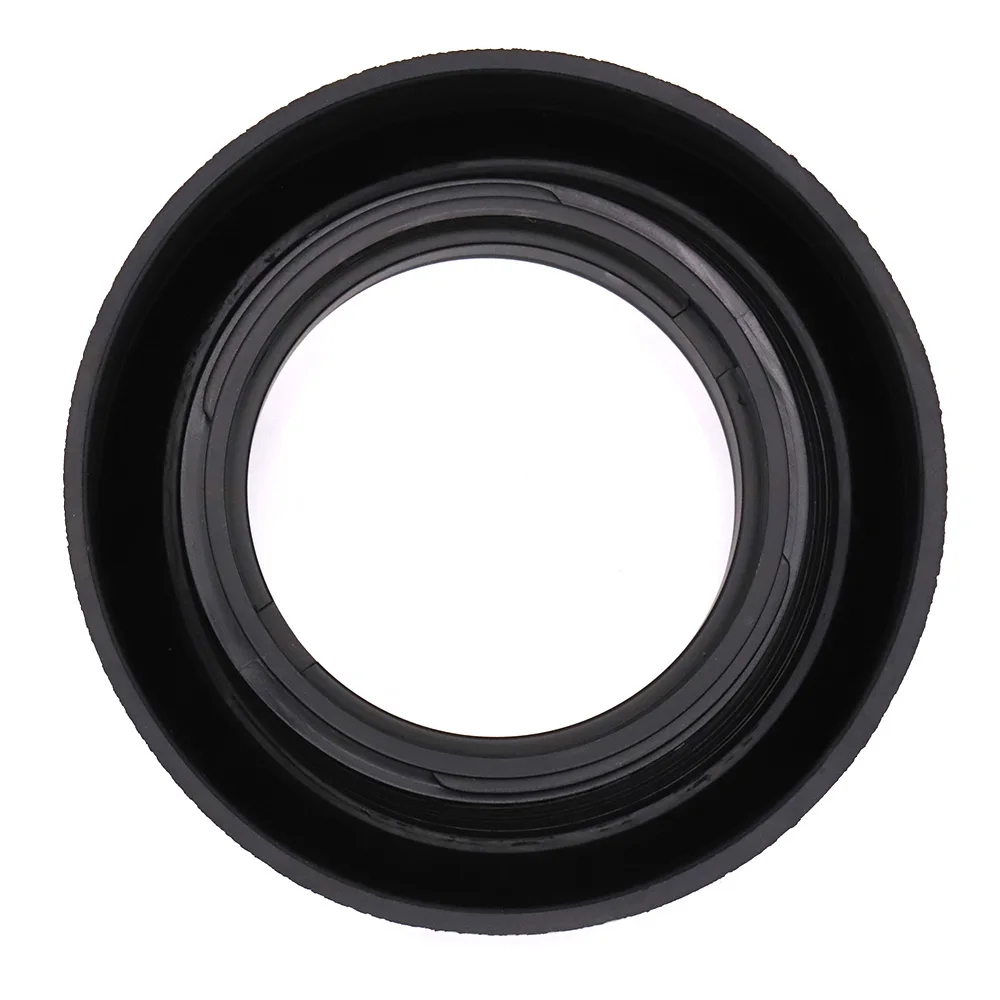
For photographers in the United States, the DS. DISTINCTIVE STYLE Rubber Lens Hood Anti Reflection is designed to help reduce stray light that can lower contrast and create lens flare. Its value depends on one key factor: whether the hood fits the lens correctly. Before buying, check the hood’s thread size, lens diameter, focal-length coverage, and filter clearance against your camera lens.

What Is the DS. DISTINCTIVE STYLE Rubber Lens Hood?
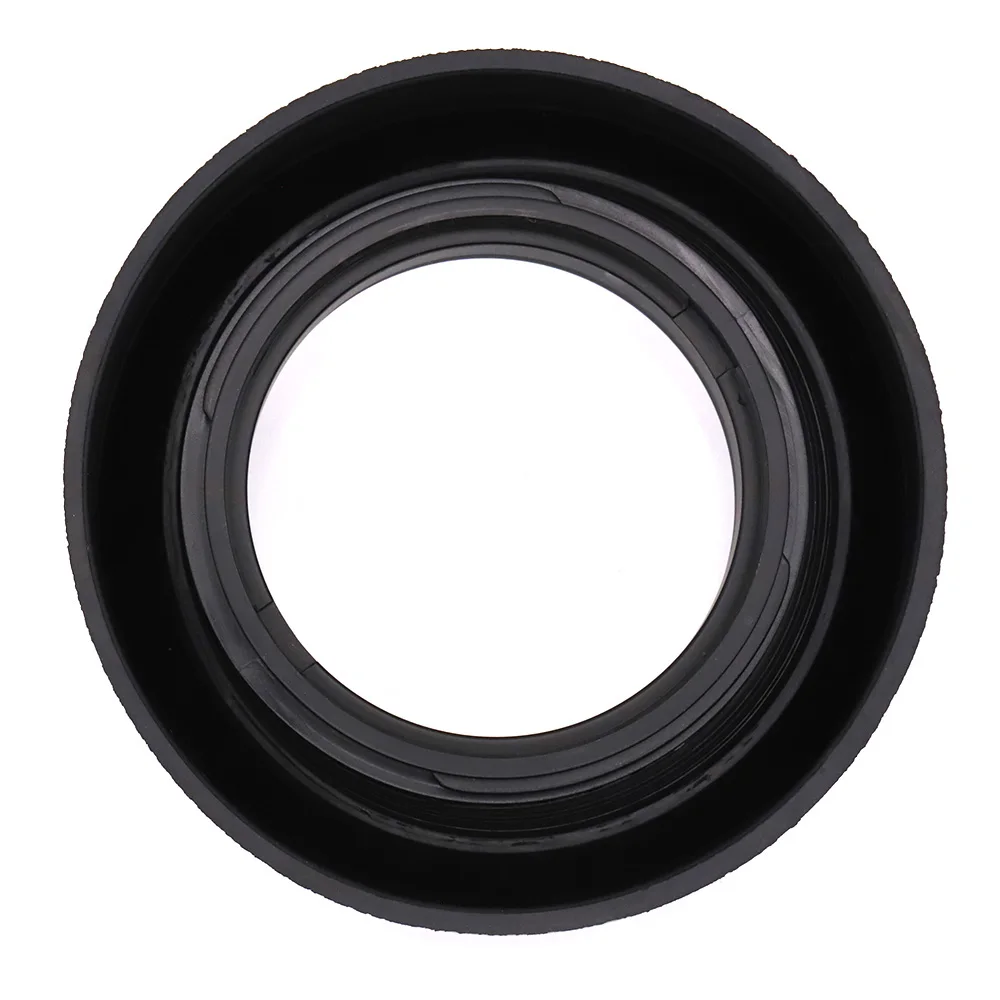
The DS. DISTINCTIVE STYLE Rubber Lens Hood is a screw-on or filter-mounted lens accessory made from flexible rubber. It sits in front of the camera lens and blocks light that enters from outside the image area.
The term “anti reflection” can be misleading. A lens hood does not remove reflections from glass, water, or metal. Instead, it can reduce internal reflections caused by stray light entering the lens at an angle.
This may help preserve:
- Image contrast
- Shadow detail
- Color strength
- Black levels
- Overall clarity
- Resistance to flare and ghosting
The hood may also provide a small amount of physical protection. The rubber rim can help shield the front element from light bumps, dust, and accidental contact. It is not a replacement for a lens cap or protective filter.
How a lens hood reduces flare
A camera lens works best when only useful light reaches the sensor. Strong light from the side can bounce between lens elements or reflect from the inside of the lens barrel.
This unwanted light may create:
- Bright circles or spots
- Hazy areas
- Reduced contrast
- Washed-out colors
- Uneven exposure
- Loss of detail near bright sources
The hood acts like a short tunnel. It blocks some side light before it reaches the front element. The effect is strongest when the light source sits just outside the frame.
A hood cannot correct every flare problem. If the sun or another bright source appears inside the image, the hood will not block it. Changing the camera angle or placing the light source behind the camera may help more.
What “rubber” adds
A rubber hood differs from a rigid plastic petal hood in several ways.
| Feature | Rubber hood | Rigid plastic hood |
|---|---|---|
| Storage | Often folds down | Usually takes its full shape |
| Impact response | Flexible and soft | Can crack or break under force |
| Shape | Usually round and collapsible | Often round or petal-shaped |
| Protection | Helps cushion light contact | May offer a harder barrier |
| Flare control | Depends on depth and fit | Depends on depth and fit |
| Filter access | May vary by design | May be easier or harder to reach |
Rubber is useful for travel, street photography, outdoor work, and storage in a crowded camera bag. However, a flexible hood may collapse during use if pressed against a surface. That can reduce its ability to block side light.

Does the DS. DISTINCTIVE STYLE Lens Hood Fit Your Camera Lens?
The hood fits only when its mounting size matches the lens. Camera brand alone is not enough. A hood that fits a Canon, Nikon, Sony, fujifilm, or other camera body may still be wrong for the specific lens.
Check these details before purchase:
-
Mounting type
Determine whether the hood screws into the lens filter thread, clips onto the lens barrel, or attaches through another system. -
Thread size
Look for the lens filter diameter. It is shown in millimeters and often marked with a symbol such as “Ø.” Common sizes include 49 mm, 52 mm, 55 mm, 58 mm, 62 mm, and 67 mm, but your lens may use another size. -
Lens focal length
A hood that works on a standard or telephoto lens may cause dark corners on a wide-angle lens. -
Filter and cap clearance
Check whether the hood leaves room for a UV filter, circular polarizer, variable neutral-density filter, or lens cap. -
Front thread design
Some hoods include a front thread for filters or caps. Others do not. Do not assume this feature is present unless the product listing confirms it.
How to find your lens size
Look at the front rim of the lens. The filter diameter is often printed near the glass. You can also check the lens manual or the manufacturer’s specifications.
The number may look like:
- Ø52 mm
- Ø58 mm
- Ø67 mm
- 52 mm filter thread
The hood’s listed size must match this number. A 58 mm hood will not correctly screw onto a 55 mm lens without the correct step-up ring.
Using a step-up ring
A step-up ring lets you use a larger hood or filter on a lens with a smaller thread. For example, a 52-to-58 mm step-up ring connects a 52 mm lens thread to a 58 mm accessory.
This setup can work, but it adds length. That extra length may increase the risk of vignetting on a wide lens. It may also prevent the original lens cap from fitting.
A step-down ring is more likely to cause problems. It can block the corners of the image, especially at wide focal lengths. Use one only after checking the complete setup at the widest focal length.

How to Install the DS. DISTINCTIVE STYLE Rubber Lens Hood
Install the hood slowly and without force. Cross-threading can damage the lens thread or the hood.
Installation steps
- Remove the lens cap.
- Clean loose dust from the lens thread and hood thread.
- Align the hood with the lens.
- Turn it counterclockwise first until the threads settle.
- Turn it clockwise by hand.
- Stop when the hood is secure and properly aligned.
- Check that the hood does not touch the front glass.
- Take a test photo against a bright, even surface.
The counterclockwise alignment step is useful for screw-on accessories. It helps you feel the point where the threads match. If the hood feels rough or stops after only a partial turn, remove it and start again.
Do not use pliers or excessive force. Camera lens threads are small and can be damaged easily.
Signs of a correct installation
A properly installed hood should:
- Sit evenly around the lens
- Remain stable during normal handling
- Avoid contact with the front element
- Leave the image free of dark corners
- Allow normal focus and zoom operation
- Avoid blocking the flash, if the flash is mounted near the lens
If the hood rotates slightly but does not loosen, that may be normal for some designs. If it wobbles, binds, or tilts, check the thread size and mounting method.
How to test for vignetting
Vignetting appears as darkening in one or more image corners. It is most common with wide-angle lenses and accessories that extend too far in front of the lens.
To test:
- Set the lens to its widest focal length.
- Photograph a bright, plain wall or an evenly lit sky.
- Use a small aperture, such as f/8, if practical.
- Review all four corners at full image size.
- Repeat with any filter or adapter installed.
If dark corners appear, remove the hood and take the same photo. If the corners become clear, the hood or combined accessory stack is too deep for that lens setting.

What Are the Benefits and Limits of This Rubber Lens Hood?
The main benefit is simple: the hood can reduce stray light without adding much weight. The flexible design may also fold down for storage.
Potential benefits
The DS. DISTINCTIVE STYLE Rubber Lens Hood may suit photographers who need:
- A compact hood for travel
- A flexible accessory for outdoor shooting
- Added side-light control
- A softer front rim than hard plastic
- A low-cost replacement for a missing hood
- A hood that can stay attached while the camera is stored
The result depends on the hood’s depth and the lens’s field of view. A narrow telephoto lens can often use a deeper hood. A wide-angle lens needs a shorter hood to avoid blocking the image.
Important limitations
A rubber lens hood does not guarantee flare-free images. It cannot solve flare caused by:
- A bright source inside the frame
- Dirty front or rear lens surfaces
- Strong reflections between filter surfaces
- Poor-quality filters
- Light entering from the viewfinder or another opening
- A hood that is too short
- A hood that is too deep for the lens
The hood may also interfere with built-in or pop-up flash systems. The lower part of the hood can cast a shadow into the frame. Test the camera at the flash settings you plan to use.
Another limit is heat and storage. Do not leave the hood pressed into a sharply folded shape for long periods unless the manufacturer says this is safe. Rubber can develop permanent bends or lose its shape over time.
Hood versus lens coating
A lens hood and lens coating solve different problems.
- A lens hood blocks some outside light before it reaches the front element.
- Lens coatings reduce reflections between glass surfaces inside the lens.
- A polarizing filter controls some reflected light from nonmetal surfaces.
- A lens cap protects the front element when the camera is not in use.
These tools can work together, but none of them replaces the others.

DS. DISTINCTIVE STYLE Rubber Lens Hood Buying Checklist
Use this checklist before ordering the hood in the United States:
| Check | Why it matters |
|---|---|
| Exact thread size | Prevents an incompatible purchase |
| Mounting method | Confirms how the hood attaches |
| Lens focal length | Helps avoid corner darkening |
| Hood depth | Affects flare control and vignetting |
| Front thread | Determines filter and cap compatibility |
| Rubber shape | Shows whether it folds or collapses |
| Camera flash use | Helps prevent unwanted shadows |
| Return policy | Useful if the listed fit is unclear |
| Product dimensions | Helps with bag storage |
| Manufacturer details | Reduces uncertainty about the exact model |
Do not rely only on a product title. Titles may use broad terms such as “universal,” “anti-glare,” or “for DSLR.” The lens thread and dimensions provide more useful compatibility information.
When this hood may be a good choice
This type of accessory may be a practical choice if:
- Your lens has the matching filter thread.
- You often shoot outdoors in strong side light.
- You want a flexible hood that stores easily.
- You do not need a specialized petal hood.
- You understand that flare control depends on the shooting angle.
When another hood may be better
Consider the lens manufacturer’s dedicated hood when:
- You use an expensive wide-angle zoom.
- You need confirmed edge coverage.
- You use the camera’s pop-up flash.
- You require a secure bayonet mount.
- You need exact compatibility with a specific lens model.
A dedicated hood usually costs more, but its shape is made for a particular lens. That can reduce guesswork.

Common Problems and Troubleshooting
The hood will not screw on
Likely causes:
- Incorrect thread size
- Cross-threaded mounting
- Dirt in the threads
- A damaged filter thread
- The hood uses a different mounting system
Remove the hood and compare its size with the lens. Never force it. If the threads look bent, stop using the accessory until the lens is inspected.
The image has dark corners
Likely causes:
- The hood is too deep
- The lens is set to a wide focal length
- A filter and step-up ring are stacked with the hood
- The hood is tilted
- The accessory is not designed for the lens
Test the lens without the hood. If the dark corners disappear, reduce the accessory depth or use a lens-specific hood.
Flare remains visible
A hood cannot block light that enters from the front. Change your position, turn the camera away from the light, or shade the lens with your hand while keeping the hand outside the frame.
Also clean the front element and inspect any filter. Fingerprints and low-quality filters can make flare worse.
The hood keeps collapsing
The rubber may be folded too far, stored under pressure, or too soft for the way you use it. Extend it fully before shooting. If it still collapses during normal handling, a rigid hood may be more suitable.
The flash creates a shadow
Remove the hood and repeat the photo with the same flash position. If the shadow disappears, the hood is blocking part of the flash beam. Use the manufacturer’s flash-compatible hood or an external flash placed above or to the side of the lens.

Cleaning and Care
Clean the rubber hood with a soft, dry cloth. For light dirt, use a slightly damp cloth and let the hood dry fully before storage.
Avoid:
- Strong solvents
- Household cleaners
- Excessive heat
- Sharp tools
- Oily dressings
- Long-term compression
- Storing the hood against wet equipment
Do not use lens-cleaning fluid on the rubber unless the hood’s instructions permit it. A cleaner that is safe for optical glass may still affect rubber.
Keep the hood away from loose sand and grit. Small particles can scratch the lens filter thread during installation. A soft brush or air blower can remove loose dust before mounting.
Key Takeaways
- The DS. DISTINCTIVE STYLE Rubber Lens Hood is intended to reduce stray light and lens flare.
- Fit depends on the lens thread size, mounting system, focal length, and hood depth.
- Check the lens diameter in millimeters before buying.
- Test for dark corners at the lens’s widest focal length.
- A hood will not remove reflections from shiny surfaces or bright objects inside the frame.
- Do not force the hood onto the lens.
- A dedicated manufacturer hood may be better when exact compatibility matters.
FAQs
Does a rubber lens hood reduce reflections?
It can reduce internal reflections caused by stray light entering the lens from the side. It does not remove reflections from glass, water, windows, or polished metal. A polarizing filter may help with some of those reflections.
Can I use the hood with a UV or clear filter?
Possibly. The answer depends on the hood’s front and rear thread design. Check whether the hood accepts filters and whether the combined thickness causes vignetting.
Will the DS. DISTINCTIVE STYLE hood fit any DSLR lens?
No. DSLR and mirrorless camera lenses use different filter sizes and mounting designs. Match the hood to the exact lens thread, not only the camera brand or camera type.
Can I leave the rubber hood attached while storing the camera?
You can if the hood fits securely and does not press against the camera bag or lens. Avoid long-term sharp folds or heavy pressure, which may deform the rubber.
Is a rubber lens hood better than a petal hood?
Neither is always better. A petal hood can provide efficient coverage for some wide lenses because its shape follows the image frame. A rubber hood is often easier to fold and store. The correct choice depends on the lens and shooting conditions.
Can the hood protect the lens from impact?
It may provide limited protection from light contact, but it is not impact armor. Use a lens cap during storage and handle the camera carefully.
Conclusion
The DS. DISTINCTIVE STYLE Rubber Lens Hood Anti Reflection can be useful for U.S. photographers who want a compact way to limit stray light and improve contrast in difficult lighting. Its performance depends more on correct fit and hood depth than on the word “anti reflection” in the product name.
Before purchase, verify the exact filter thread, lens focal length, mounting method, and filter clearance. After installation, test the setup for corner darkening, flash shadows, and flare control. If the hood fits cleanly and does not block the image, it can be a simple and practical addition to a camera kit.

