
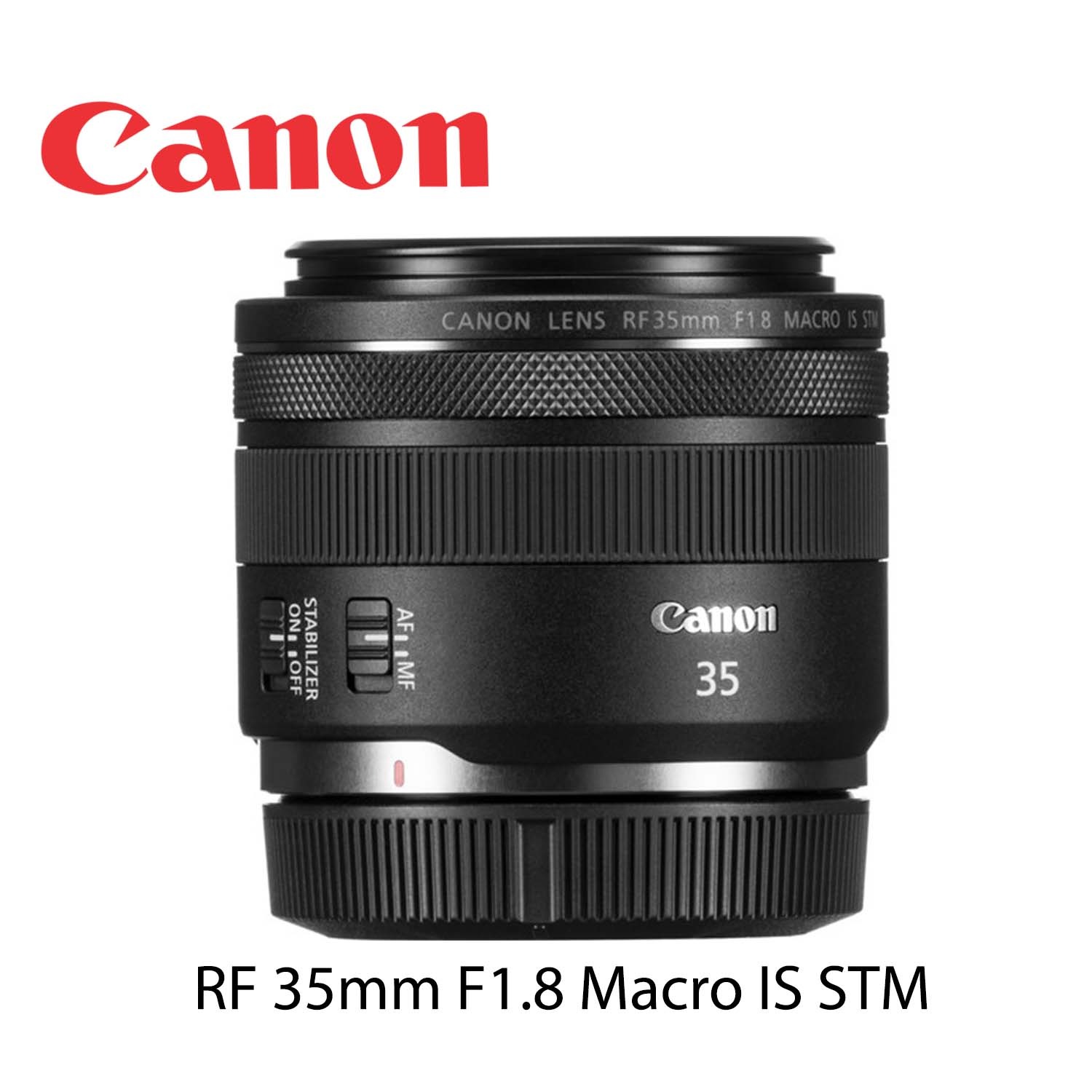
For photographers in the United States, the Canon RF35mm F1.8 Macro IS STM is a small, bright prime lens for Canon EOS R cameras. It combines a useful 35mm view, close-focus ability, image stabilization, and a wide f/1.8 aperture in one compact body.
The lens is a strong fit for street photos, travel, family moments, food, products, and environmental portraits. It is not a true 1:1 macro lens, and its lack of official weather sealing may matter to photographers who work outdoors in rain, dust, or snow.

Canon RF35mm F1.8 Macro IS STM: Quick Verdict
The Canon RF35mm F1.8 Macro IS STM is one of the most practical small prime lenses in the Canon RF system. Its 35mm focal length feels natural without being too tight, while the f/1.8 aperture helps in low light and can soften backgrounds.
Its key strength is flexibility. You can use it for a dinner scene, then move close for a product detail or flower. The built-in optical image stabilization also helps when you shoot handheld at slower shutter speeds.
The main limits are just as clear:
- Macro magnification stops at 0.5x, not 1:1.
- Autofocus is useful but not built for high-speed sports.
- The lens is not officially marketed as weather-sealed.
- Wide-open images can show softer corners than images made at smaller apertures.
- The 35mm view may feel too wide for tight headshots.
Overall rating by use
| Use | Assessment | Why |
|---|---|---|
| Street photography | Excellent | Small size and natural field of view |
| Travel | Excellent | Bright, light, and useful for many scenes |
| Environmental portraits | Very good | Shows the person and the setting |
| Close-up work | Very good | 0.5x magnification and short focusing distance |
| Low-light stills | Very good | f/1.8 aperture and optical stabilization |
| Video | Good | STM focus and stabilization help, but focus changes may still be visible |
| Sports and action | Fair | 35mm framing and moderate autofocus speed are not ideal |
| Tight portraits | Fair | The wide view can distort faces at close range |
Key Specifications and What They Mean
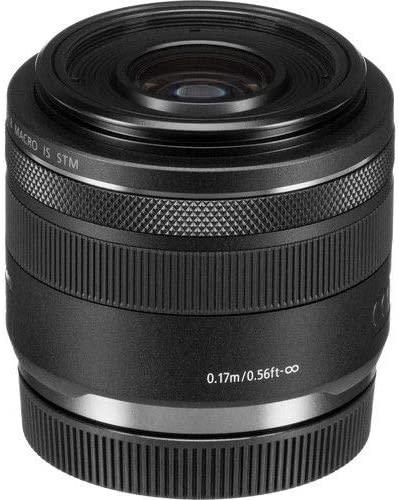
The Canon RF35mm F1.8 Macro IS STM uses a full-frame RF mount and is designed for Canon EOS R-series cameras. Canon lists a 35mm focal length, a maximum aperture of f/1.8, and 0.5x maximum magnification.
| Specification | Canon RF35mm F1.8 Macro IS STM |
|---|---|
| Lens mount | Canon RF |
| Format | Full frame |
| Focal length | 35mm |
| Maximum aperture | f/1.8 |
| Minimum aperture | f/22 |
| Optical design | 11 elements in 9 groups |
| Minimum focus distance | 0.17 m / 0.56 ft |
| Maximum magnification | 0.5x |
| Image stabilization | Up to 5 stops, under Canon test conditions |
| Autofocus motor | STM |
| Filter size | 52mm |
| Diaphragm | 9 blades |
| Approximate weight | 305 g / 10.8 oz |
| Approximate length | 74.4mm |
| Control ring | Yes |
| Weather sealing | No official full weather-sealing claim |
Specifications can vary in how manufacturers measure them. Canon’s image stabilization figure is a laboratory-based maximum, so real results depend on the camera body, shooting technique, subject movement, and shutter speed.
The 35mm focal length shows more of the scene than a 50mm lens. That makes it useful for travel and documentary work. It also means you should avoid placing a face too close to the frame edge, where wide-angle distortion can become more obvious.
The lens uses a 52mm filter thread. A clear filter, polarizer, or neutral-density filter can be useful, but every added filter may affect flare and image quality.

Image Quality
The Canon RF35mm F1.8 Macro IS STM produces sharp central detail at f/1.8 and becomes more even across the frame as you stop down. The center is usually the strongest area at the widest aperture, while corners may look softer until around f/2.8 to f/4.
That behavior is common for a compact, bright prime lens. It is rarely a problem for portraits, food, or close-up work because the subject often sits near the center. Landscape photographers may prefer f/5.6 or f/8 when they need strong detail from corner to corner.
Sharpness
At f/1.8, the lens can create clear subject detail with a soft background. The result is most useful when the focus point is placed carefully on the subject’s eye, label, or key detail.
At close focus, depth of field becomes very thin. Even at f/5.6, a small object may not be sharp from front to back. For close-up photography, focus stacking may be needed when you want the entire object in focus.
Stopping down improves corner detail, but diffraction can reduce fine detail at very small apertures such as f/16 and f/22. Use those settings when depth of field matters more than maximum sharpness.
Distortion, vignetting, and corrections
A 35mm lens can show barrel distortion and darkened corners, especially at wide apertures. Canon cameras and raw-processing programs may apply lens corrections automatically or through a lens profile.
These corrections are helpful, but they can change the final image slightly. If you photograph architecture, straight lines near the frame edge deserve extra attention.
Vignetting is often useful for portraits because it can draw the eye toward the subject. For copy work or flat objects, correct it in camera or during raw processing.
Color and bokeh
The lens can produce soft background blur at f/1.8, especially when the subject is close and the background is far away. The nine-blade diaphragm helps keep out-of-focus highlights reasonably rounded when the aperture is stopped down.
Bokeh quality depends on distance and background detail. Small lights, branches, and bright reflections may look busier than a plain background. A longer lens will usually provide more background separation at the same framing.
Chromatic aberration can appear as purple or green color fringing around high-contrast edges. Modern Canon cameras and raw software can reduce much of it, but careful editing may still be needed in difficult lighting.

Autofocus and Manual Focus
The Canon RF35mm F1.8 uses an STM focus motor. STM stands for stepping motor, a system designed to provide smooth and relatively quiet focus changes for still images and video.
Autofocus is well suited to everyday subjects, portraits, travel, and casual close-ups. It may not match Canon’s larger professional lenses for fast sports, erratic subjects, or demanding tracking work.
Close focusing can be slower when the lens must move through a large focus range. If the camera hunts, place the focus point on a high-contrast edge or move the camera slightly farther from the subject.
The lens also includes a manual-focus control option and a customizable control ring. Depending on the camera body and settings, the ring can adjust aperture, shutter speed, ISO, or exposure compensation.
A caution about the control ring
The control ring is useful, but it can move by accident. This is most likely when the ring is assigned to exposure compensation or ISO and the camera is carried in a bag.
For paid work or changing light, check the control-ring setting before shooting. Some photographers prefer a clickless control-ring modification for video, but that change is an accessory service and may affect warranty or resale considerations.

Macro Performance
The Canon RF35mm F1.8 Macro IS STM is a close-up lens, but it is not a dedicated 1:1 macro lens. Its maximum magnification is 0.5x, which means the subject appears at half life size on the camera sensor.
The 0.17-meter minimum focus distance is measured from the camera’s focal plane, not from the front of the lens. The working distance from the front element is much shorter. This can make lighting small subjects more difficult.
The lens works well for:
- Food photography
- Small products
- Flowers
- Crafts
- Electronics
- Detail shots during travel
- Environmental close-ups
It is less suitable for very small insects or technical reproduction work where 1:1 magnification is required. A dedicated macro lens such as the Canon RF100mm F2.8 L Macro IS USM gives more working distance and higher magnification, but it is larger, heavier, and more expensive.
How to get sharper close-ups
- Use a single autofocus point or a small subject-tracking area.
- Focus on the most important detail.
- Keep the camera parallel to a flat subject.
- Raise the shutter speed if the subject may move.
- Use a tripod for static objects.
- Stop down when you need more depth of field.
- Add light instead of relying only on a very slow shutter speed.
Image stabilization helps reduce camera shake. It cannot freeze a moving flower, insect, hand, or person.

Image Stabilization and Low-Light Use
Canon rates the lens’s optical image stabilization at up to 5 stops under its stated test conditions. Stabilization is most useful for camera movement when photographing still subjects.
For example, a photographer may handhold a static indoor scene at a slower shutter speed than would normally be possible without stabilization. The exact limit varies with technique and subject detail.
Stabilization does not prevent subject movement. If a person moves, use a faster shutter speed even when the stabilizer is active. For moving people indoors, f/1.8 and a shutter speed around 1/125 second or faster may be more useful than relying on stabilization alone.
The lens can also help with low-light video, but stabilization is not the same as a gimbal. Walking footage may still show motion, and camera movement can cause visible changes in framing.
Practical shutter-speed examples
These are starting points, not fixed rules:
| Subject | Suggested starting shutter speed |
|---|---|
| Static object on a tripod | 1/30 second or slower may work |
| Static handheld scene | 1/15 to 1/30 second may work with good technique |
| Standing person | About 1/100 to 1/125 second |
| Walking person | About 1/250 second |
| Active child or pet | About 1/500 second or faster |
The camera body, lighting, subject movement, and your technique may require different settings.

Design, Handling, and Build Quality
The lens is compact and light enough for daily carry. At about 305 grams, it balances well on many Canon EOS R bodies and does not make a small camera feel front-heavy.
The focus ring turns electronically rather than moving the optical elements through a direct mechanical connection. Its response depends on camera settings and the speed at which you turn it.
The control ring adds a useful physical input without adding a large external switch panel. This keeps the lens simple, but users who want a traditional aperture ring may need time to adjust.
Canon does not position this model as a fully weather-sealed professional lens. That does not mean a brief encounter with light moisture will always cause damage, but it does mean you should not treat it like a sealed outdoor lens.
Use a rain cover or protect the camera and lens when working in wet, dusty, sandy, or snowy conditions. Avoid changing lenses in exposed environments when possible.

Canon RF35mm F1.8 vs. Other Lens Choices
The best alternative depends on whether you value size, reach, macro ability, or professional weather protection.
| Lens type | Main advantage | Main trade-off |
|---|---|---|
| Canon RF35mm F1.8 | Small, bright, stabilized, close focusing | Only 0.5x macro and no full weather-sealing claim |
| Canon RF50mm F1.8 STM | Lower-cost normal prime and stronger portrait perspective | No optical stabilization and less wide for indoor scenes |
| Canon RF24mm F1.8 Macro IS STM | Wider view and close focusing | More expensive and less natural for tight portraits |
| Canon RF85mm F2 Macro IS STM | Better portrait compression and 0.5x macro | Larger, heavier, and less useful in tight indoor spaces |
| Canon RF100mm F2.8 L Macro IS USM | High magnification and longer working distance | Much larger and more expensive |
| Canon RF24-105mm zoom | Broad focal-length range | Usually larger and slower at the wide end |
RF35mm F1.8 vs. RF50mm F1.8
Choose the RF35mm when you often photograph indoors, travel scenes, groups, food, or people in their surroundings. Choose the RF50mm when you want a tighter view and stronger subject separation for portraits.
Neither lens replaces the other. The difference is not only focal length. The 35mm lens shows more context, while the 50mm lens gives a more focused view.
RF35mm F1.8 vs. RF24mm F1.8 Macro IS STM
The RF24mm F1.8 is better for very tight interiors, landscapes, and wide environmental scenes. The RF35mm usually gives a more natural perspective for people.
Both lenses offer close-focus capability and image stabilization. The choice depends on whether you more often need extra width or a more neutral view.
RF35mm F1.8 vs. RF85mm F2 Macro IS STM
The RF85mm F2 is more suitable for classic portraits and subjects that are farther away. Its longer focal length also gives more working distance for close-ups.
The RF35mm is easier to use in small rooms and better for showing the setting around a person. It is the more flexible travel lens, while the 85mm is the more specialized portrait option.
Who Should Buy the Canon RF35mm F1.8?
The lens makes the most sense for Canon EOS R users who want one small prime that can handle several types of work.
It is especially suitable for:
- Travel photographers who want a light kit
- Street photographers who prefer a natural wide view
- Parents photographing daily family life
- Food and product photographers who need close focus
- Content creators using a full-frame Canon EOS R camera
- Photographers moving from a kit zoom to a brighter prime
- Users who want optical stabilization in a compact lens
It may not be the best choice for:
- Sports photographers who need very fast subject tracking
- Wildlife photographers who need reach
- Macro specialists who require 1:1 magnification
- Outdoor professionals who need confirmed weather sealing
- Portrait photographers who prefer tight framing and strong compression
- APS-C users seeking a classic wide-angle view
On Canon APS-C RF bodies, the lens gives a field of view similar to about 56mm on full frame because of the 1.6x crop factor. That can be useful for portraits and everyday photography, but it is no longer a wide-normal 35mm view.
Common Mistakes to Avoid
Treating 0.5x as 1:1 macro
A 0.5x rating does not mean the subject is recorded at life size on the sensor. If you need technical reproduction or very small subjects, compare the lens with a true 1:1 or higher-magnification macro lens.
Shooting faces too close to the edge
The 35mm view can stretch facial features when the camera is close. Keep faces near the center or step back and crop when a more natural look matters.
Using a slow shutter speed for moving people
Image stabilization can reduce camera shake, but it does not stop people from moving. Raise the shutter speed when the subject is active.
Assuming all EOS cameras are compatible
This lens uses the Canon RF mount. It fits Canon EOS R-series mirrorless cameras, not Canon EF or EF-S DSLR bodies. An EF-to-RF adapter allows many EF lenses to work on RF cameras, but an RF lens cannot be adapted for normal use on an EF DSLR.
Ignoring the short working distance
At maximum magnification, the front of the lens sits close to the subject. This may block light or frighten small subjects. Use a longer macro lens when working distance is important.
Leaving the control ring unconfigured
A ring assigned to exposure compensation or ISO can change settings without the photographer noticing. Set it to a function that fits your workflow, or disable it if accidental movement is a concern.

Care and Maintenance
Keep the front and rear caps on the lens when it is not attached to a camera. Store it in a dry, clean bag and avoid prolonged exposure to heat, moisture, or sand.
Clean the front element only when needed. First remove loose dust with a blower. Then use a clean lens cloth or lens tissue made for optical surfaces. Do not use household glass cleaner.
When moving between cold outdoor air and a warm indoor room, condensation can form. Keep the camera and lens inside a sealed bag until they warm gradually.
If the lens becomes wet, remove it from use, wipe the exterior, and allow it to dry in a ventilated place. Do not apply direct heat such as a hair dryer.
Canon’s warranty terms and service options can vary by country and purchase region. Buyers in the United States should retain the receipt and check Canon USA’s current warranty conditions before purchase.

Frequently Asked Questions
Is the Canon RF35mm F1.8 a true macro lens?
It is a macro-capable lens with 0.5x maximum magnification. It is not a 1:1 macro lens, so it cannot reproduce a subject at life size on the camera sensor.
Does the Canon RF35mm F1.8 work on Canon DSLR cameras?
No. The lens is made for Canon’s RF mount and EOS R-series mirrorless cameras. It is not designed for Canon EF or EF-S DSLR bodies.
Is the Canon RF35mm F1.8 weather-sealed?
Canon does not present this lens as a fully weather-sealed professional model. Use added protection in rain, snow, dust, or sand.
Is 35mm good for portraits?
Yes, 35mm is useful for environmental portraits and people in their surroundings. For close headshots, an 85mm lens usually gives a more flattering perspective because you can stand farther away.
Does the lens have image stabilization?
Yes. Canon rates its optical image stabilization at up to 5 stops under specified test conditions. Stabilization helps with camera movement, not subject movement.
Is the Canon RF35mm F1.8 good for video?
It can be useful for video because of its bright aperture, STM focus motor, and optical stabilization. However, it is not a complete replacement for a gimbal, and focus or framing changes may still be visible during recording.
What filter size does it use?
The lens uses 52mm filters. Check the filter’s thickness and quality because some filters can increase flare or cause vignetting.
Research Notes and Source Basis
The documented specifications in this review are based primarily on Canon’s product and support information for the Canon RF35mm F1.8 Macro IS STM. Practical image-quality and handling comments are presented as analysis of the lens design and commonly reported review behavior, not as first-hand laboratory testing.
Useful source pages include:
- Canon USA: RF35mm F1.8 Macro IS STM
- Canon Camera Museum: RF35mm F1.8 Macro IS STM
- Canon USA RF Lens Support
- DPReview lens coverage
Prices, stock, promotions, firmware support, and warranty terms can change. Check Canon USA and the retailer’s current listing before buying.
Conclusion
The Canon RF35mm F1.8 Macro IS STM is a well-rounded compact prime for Canon EOS R photographers in the United States. Its strongest features are the bright f/1.8 aperture, useful 35mm view, optical stabilization, close-focus ability, and low weight.
Buy it if you want one small lens for travel, street work, family photos, food, products, and environmental portraits. Choose another lens if you need 1:1 macro, long portrait reach, high-end weather protection, or serious sports performance.
The clearest next step is to compare your most common subjects with the lens’s three key limits: 0.5x magnification, 35mm perspective, and no full weather-sealing claim.

