
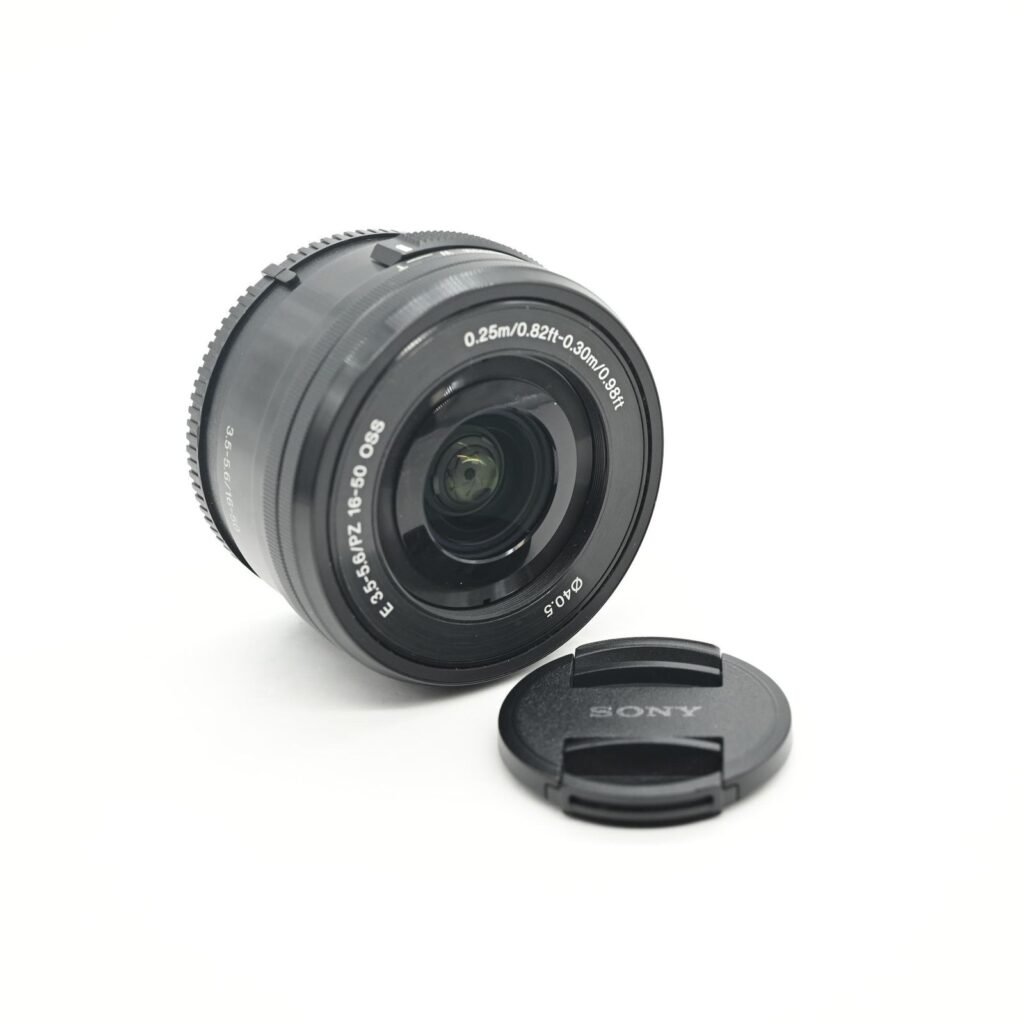
The Sony SELP1650, also called the Sony E PZ 16-50mm F3.5-5.6 OSS, is a small power-zoom lens made for Sony APS-C mirrorless cameras in the United States. It offers a useful 24–75mm full-frame equivalent range, optical image stabilization, and a compact design that works well for travel, family photos, street scenes, and casual video.
Its main strength is size. Its main limits are the slow variable aperture, modest low-light performance, and softer corners at some settings. For many Sony camera owners, it is a practical kit lens rather than a specialist lens.
Sony SELP1650 specifications at a glance
The Sony 16-50mm OSS is an APS-C E-mount power-zoom lens with a retractable design. The following specifications are documented by Sony for the SELP1650 model.
| Feature | Sony SELP1650 specification |
|---|---|
| Lens name | Sony E PZ 16-50mm F3.5-5.6 OSS |
| Model number | SELP1650 |
| Camera format | Sony APS-C |
| Mount | Sony E mount |
| Focal length | 16–50mm |
| Full-frame equivalent | 24–75mm |
| Maximum aperture | f/3.5–5.6 |
| Minimum focus distance | 0.25 m at 16mm; 0.30 m at 50mm |
| Maximum magnification | Approximately 0.215x |
| Optical stabilization | Yes, Optical SteadyShot |
| Filter size | 40.5mm |
| Diaphragm | 7 rounded blades |
| Optical design | 9 elements in 8 groups |
| Length | Approximately 29.8mm when retracted |
| Weight | Approximately 116g |
Sony lists the lens as having aspherical elements and an ED, or extra-low-dispersion, element. These elements help control distortion, chromatic aberration, and other optical errors, although they do not make the lens free from those issues.
The compact size makes the SELP1650 especially useful on cameras such as the Sony a6000, a6100, a6300, a6400, a6500, a6600, ZV-E10, and other Sony APS-C E-mount bodies. Exact features such as stabilization control, correction data, and focus behavior depend on the camera body and firmware.

What does “SELP1650” mean?
“SELP1650” is Sony’s model number for the lens. The longer name explains its design:
- E means the lens uses Sony’s E mount.
- PZ means power zoom.
- 16-50mm is the actual focal-length range.
- F3.5-5.6 is the variable maximum aperture.
- OSS means Optical SteadyShot image stabilization.
The lens is designed for APS-C sensors. On a Sony APS-C camera, its 16–50mm range gives a field of view similar to a 24–75mm lens on a full-frame camera.
That range covers many common shots. The 16mm setting works for landscapes, rooms, travel scenes, and group photos. The 50mm setting is more useful for portraits, details, and subjects that are a short distance away.
The lens can physically mount on a Sony full-frame E-mount camera, but the camera will normally use APS-C crop mode. This reduces the active sensor area and produces a narrower field of view than a full-frame lens. It is not a full-frame lens in the usual sense.
How the 16-50mm focal range works in practice
The focal range is the lens’s most useful feature. It moves from a wide view to a short telephoto view without changing lenses.
At 16mm, the lens can capture more of a scene. This helps when photographing:
- buildings and interiors
- Landscapes
- Travel locations
- Groups of people
- Video pieces to camera
At 35mm, the view looks more natural and works well for everyday snapshots. At 50mm, the lens gives a tighter view that can help isolate a face or small subject.
The full-frame equivalent values are approximate. Sony APS-C cameras use a crop factor of about 1.5x, so:
- 16mm × 1.5 = approximately 24mm
- 50mm × 1.5 = approximately 75mm
This does not change the lens’s physical focal length. It describes the angle of view compared with a full-frame camera.
The range is broad enough for daily use, but it does not reach far enough for wildlife, distant sports, or many outdoor events. It also does not provide the strong background blur that a fast prime lens can create.

Power zoom controls and video use
The SELP1650 uses a powered zoom mechanism rather than a fully manual zoom ring. A zoom lever on the lens moves the focal length in a controlled way. The camera can also control the zoom on some compatible bodies.
Power zoom has two clear benefits. It can produce a smooth zoom during video, and it keeps the lens short and light. This makes the lens easy to carry on a small Sony camera or a compact gimbal.
The trade-off is speed and control. A manual zoom ring usually gives a more direct response for fast photography. The SELP1650 can feel slower when a photographer needs to move quickly from wide to telephoto.
For video, the lens is most useful when:
- The camera supports electronic power-zoom control.
- The operator wants a smooth change in framing.
- The scene has enough light for the f/3.5–5.6 aperture.
- The user accepts that focus and zoom performance depend on the camera body.
Power zoom does not guarantee a cinema-style result. Zoom noise, autofocus noise, and camera-specific control behavior can vary. For important video work, test the lens on the exact camera, microphone, and rig before recording.
Aperture and low-light performance
The maximum aperture changes from f/3.5 at 16mm to f/5.6 at 50mm. This is typical of a small kit zoom, but it affects exposure and background blur.
At the wide end, f/3.5 lets in more light than f/5.6. At the telephoto end, the smaller f/5.6 aperture may require:
- A slower shutter speed
- A higher ISO setting
- More available light
- A flash or continuous light
Optical SteadyShot can reduce blur caused by camera movement. It cannot stop a moving person, pet, or vehicle from appearing blurred. For moving subjects, shutter speed still matters.
The aperture also affects background separation. At 50mm and close focus, the lens can create some subject separation. However, it will not usually match an f/1.4, f/1.8, or f/2.8 lens.
A fast prime such as a 35mm f/1.8 or 50mm f/1.8 is a better choice when the main goal is low-light work or strong background blur. The SELP1650 is better when flexibility and small size matter more than maximum optical performance.
Optical SteadyShot image stabilization
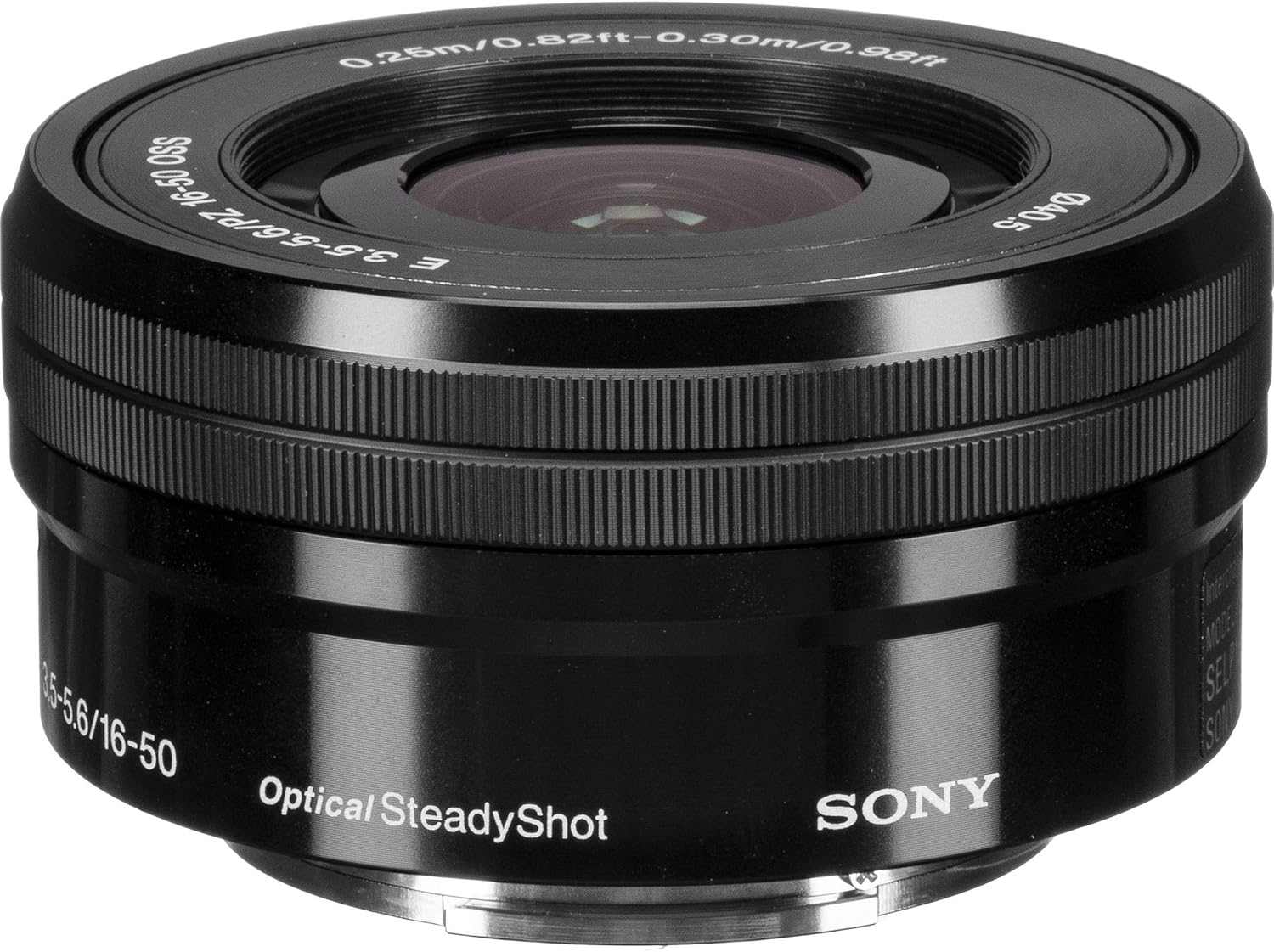
The OSS system is built into the lens. It helps reduce blur from small hand movements during still photography and can make handheld video easier to manage.
Stabilization works best when the subject is still. For example, it can help when photographing a building at dusk or taking a handheld shot indoors. It is less useful for a child running across a room because the subject moves independently of the camera.
Use these general practices:
- Hold the camera with both hands.
- Keep elbows close to the body.
- Half-press the shutter or use the camera’s stabilization display when available.
- Use a faster shutter speed for moving subjects.
- Turn stabilization off when the camera is firmly mounted on a tripod if the camera manual recommends doing so.
Some Sony camera bodies also have sensor-shift stabilization. When both lens and body stabilization are present, the camera decides how to coordinate them. The exact mode depends on the camera model.
OSS is helpful, but it does not turn the lens into a low-light lens. The f/3.5–5.6 aperture remains the main exposure limit.
Image quality: strengths and limitations
The SELP1650 can produce sharp, attractive images in good light, especially near the center of the frame. Its small size makes it easy to carry, which can lead to more consistent use than a larger lens.
Image quality is affected by focal length, aperture, focus distance, and camera correction settings. Common characteristics include:
- Strong center detail in many normal shooting conditions
- More visible corner softness at some focal lengths and apertures
- Distortion at the wide end that is often corrected in camera
- Vignetting that may be reduced by software correction
- Less detail in low light when high ISO is required
- Some flare risk when a bright light source enters the frame
Sony cameras often apply lens corrections to JPEG images. RAW files may show more of the lens’s native distortion or shading until a compatible profile is applied in editing software.
This distinction matters. A JPEG from a Sony camera may look more corrected than an unedited RAW file. That does not mean the lens changed; the camera applied correction data.
For the best results, avoid judging the lens only from close-up corner crops. A travel lens is often used for scenes where the center, framing, exposure, and timing matter more than laboratory-level corner detail.
Close focusing and portrait use
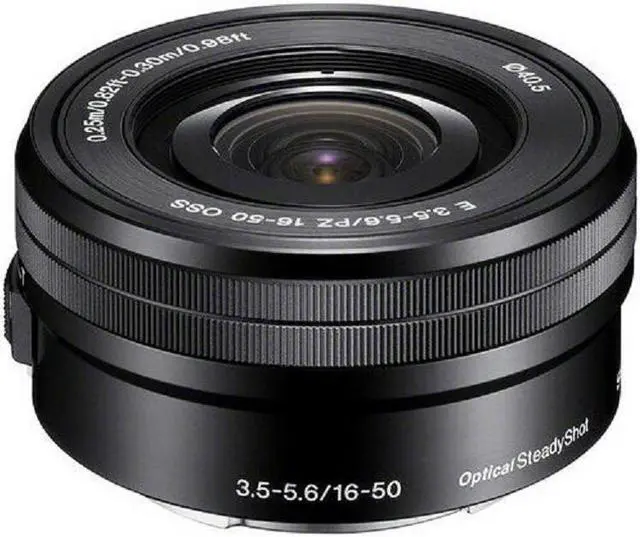
The lens focuses as close as approximately 0.25 meters at 16mm and 0.30 meters at 50mm. These distances are measured from the camera’s image plane, not from the front of the lens.
This allows useful close shots of food, small objects, travel details, and household items. It is not a true macro lens, so it will not fill the frame with very small subjects at high magnification.
For portraits, 50mm is the more natural choice within this lens. On an APS-C camera, it gives an angle of view similar to 75mm on full frame. Step back when possible, keep the subject away from the background, and use the widest available aperture.
The lens can make pleasant portraits in daylight, but its f/5.6 limit at 50mm reduces background blur. A dedicated portrait lens will usually offer a brighter aperture and better subject separation.
Compatibility with Sony cameras
The SELP1650 is intended for Sony APS-C E-mount cameras. It is commonly paired with models in the Alpha and ZV lines, including many a6000-series bodies.
Before buying a used lens, check these points:
- The camera has a Sony E mount, not Sony A mount.
- The camera supports APS-C lenses.
- The lens includes the electronic contacts needed for autofocus and power zoom.
- The lens retracts and extends correctly when powered on.
- The camera recognizes the lens without an error message.
It is not compatible with Canon EF, Nikon F, Micro Four Thirds, Fujifilm X, or Sony A-mount cameras without additional adapters. An adapter may not preserve autofocus, power zoom, aperture control, or stabilization.
On a full-frame Sony camera, the lens may work in crop mode, but the camera uses less of the sensor. Buyers seeking full-frame coverage should choose a lens designed for Sony FE mount.
How to check a used Sony SELP1650
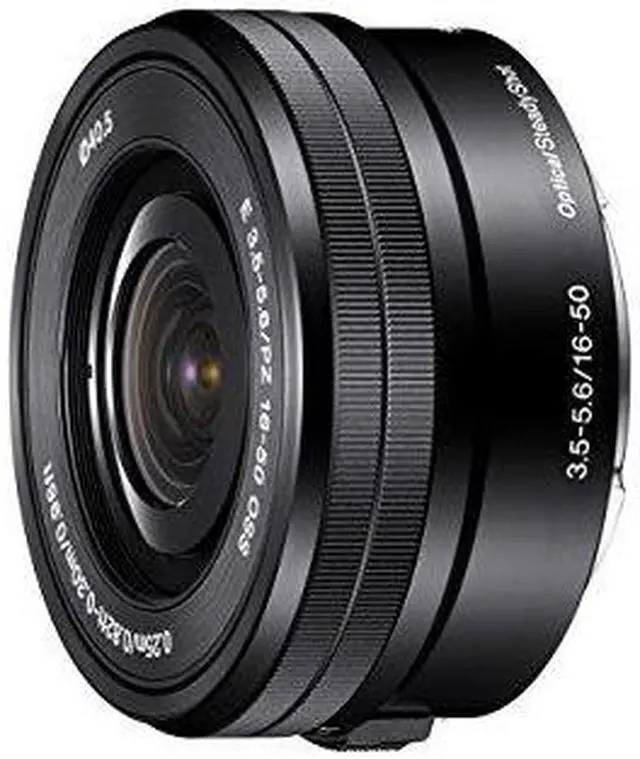
A used SELP1650 can be a good value, but test its electronic and mechanical functions before purchase.
- Inspect the glass. Look for deep scratches, haze, fungus, or separation.
- Check the mount. The metal mount should not be badly bent or loose.
- Power on the camera. Confirm that the lens extends from its retracted position.
- Test the zoom lever. Move from 16mm to 50mm and back several times.
- Test autofocus. Focus on both a nearby and distant subject.
- Check OSS. Confirm that the camera detects the lens and that stabilization behaves normally.
- Take sample images. Inspect the center and corners at different focal lengths.
- Listen for unusual sounds. A small operating sound can be normal, but grinding or repeated clicking is a warning sign.
- Check the filter thread. A damaged 40.5mm thread can make filters difficult to attach.
- Confirm the model number. Make sure the lens is SELP1650 and not another Sony 16–50mm lens.
Do not force the zoom or retract the lens by hand while the camera is powered on. If the lens does not extend, remove the battery, check the contacts, and consult Sony support or a qualified camera repair service.
Sony SELP1650 versus a 16-50mm alternative
Sony also sells other 16-50mm lenses, and the model name can cause confusion. The SELP1650 is the compact power-zoom kit lens with OSS. It should not be confused with larger, faster, or full-frame Sony zoom lenses.
| Buyer priority | Better direction |
|---|---|
| Smallest everyday kit lens | SELP1650 |
| Smooth electronic zoom for casual video | SELP1650 |
| Better low-light performance | Fast prime or f/2.8 zoom |
| Stronger background blur | Fast prime lens |
| Longer reach | Telephoto zoom |
| Full-frame coverage | Sony FE lens |
| Higher corner detail and fewer compromises | More advanced zoom |
The best choice depends on the camera and the task. A larger lens may offer better image quality, but it can make the camera less convenient to carry. A small lens may produce more useful real-world photos simply because it is with you.

Common problems and practical fixes
The lens will not extend
Check that the camera battery has enough power and that the lens is fully mounted. Remove and remount it with the camera turned off. Clean dirty electronic contacts with a dry, lint-free cloth.
If the lens still will not extend, do not force it. The power-zoom mechanism may need service.
The camera shows an aperture of f/5.6
This is normal at the 50mm end. The lens has a variable maximum aperture. At shorter focal lengths, the camera may show a wider maximum aperture, such as f/3.5 or a value between f/3.5 and f/5.6.
Photos look soft
Confirm that the shutter speed is high enough, autofocus is locking on the intended subject, and the lens glass is clean. Test the lens in bright light at several focal lengths.
Softness can also result from subject movement, camera shake, atmospheric haze, or high ISO noise. One soft image does not prove that the lens is defective.
The lens does not zoom during video
Check whether the camera supports power-zoom control and whether the zoom switch is active. Some cameras provide zoom control through a menu or a compatible remote. Refer to the camera’s current manual for model-specific settings.
The lens shows distortion
Wide-angle distortion is normal, especially near 16mm. Enable lens correction in the camera when available. For RAW files, use editing software with a compatible Sony lens profile.
Is the Sony SELP1650 worth buying?
The Sony SELP1650 is worth considering when you want a very small general-purpose lens for a Sony APS-C camera. It is a strong match for travel, family photos, street photography, casual video, and users who value low weight.
It is less suitable when you need reliable low-light performance, strong subject separation, professional event coverage, wildlife reach, or the highest corner sharpness. In those cases, a fast prime, telephoto zoom, or more advanced standard zoom may be a better investment.
The deciding trade-off is simple: the SELP1650 gives you convenience and range in a very small package, but it gives up aperture and some optical performance to achieve that size.
Frequently asked questions
Is the Sony 16-50mm OSS lens good for beginners?
Yes. The focal range covers many everyday subjects, and the lens is small enough to keep on the camera. Beginners should understand that the f/3.5–5.6 aperture is not ideal for dark rooms or strong background blur.
Does the Sony SELP1650 work on a full-frame Sony camera?
It can mount on many full-frame Sony E-mount cameras, but the camera normally uses APS-C crop mode. It does not provide the same full-frame coverage as a Sony FE lens.
Does the SELP1650 have image stabilization?
Yes. The lens includes Sony Optical SteadyShot. Stabilization helps reduce camera shake, but it does not freeze moving subjects.
Can I use filters on the Sony 16-50mm lens?
Yes. The documented filter size is 40.5mm. Use a filter made for that diameter and avoid overtightening it on the compact front barrel.
Is the SELP1650 a macro lens?
No. It can focus fairly close for small objects, but its maximum magnification is only about 0.215x. A dedicated macro lens is better for detailed close-up work.
Final recommendation
The Sony SELP1650 16-50mm OSS Lens, formally the Sony E PZ 16-50mm F3.5-5.6 OSS, is a compact kit zoom built around convenience. Its 24–75mm equivalent view, power zoom, OSS stabilization, and low 116g weight make it useful for everyday Sony APS-C photography.
Choose it when portability matters most. Look for a faster prime or a more advanced zoom when low-light work, background blur, demanding video, or maximum sharpness is the priority.
For current compatibility details, firmware information, and regional support, consult Sony’s official SELP1650 product page and the Sony support website.

