
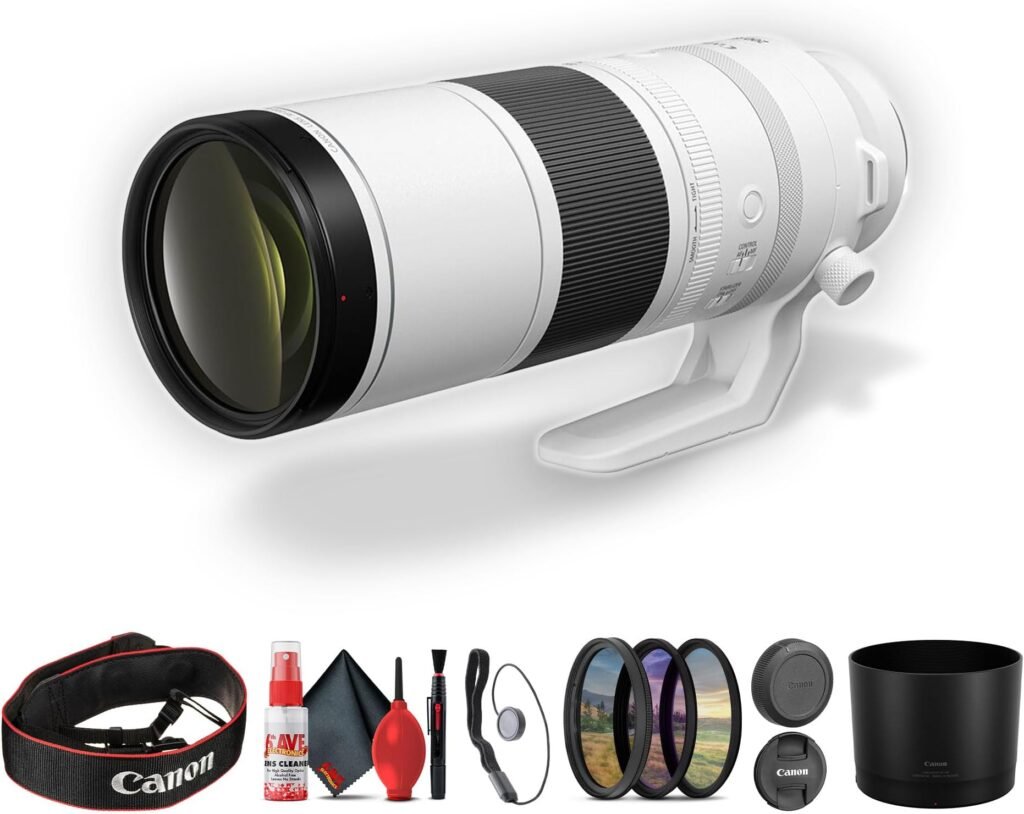
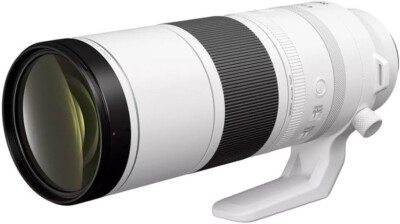
For photographers in the United States, the Canon RF200-800mm F6.3-9 IS USM is a full-frame super telephoto zoom lens for Canon EOS R cameras. It reaches 800mm without an extender, includes optical image stabilization, and uses a Nano USM autofocus motor. Its long reach makes it useful for birds, wildlife, aviation, outdoor sports, and distant subjects.
The trade-off is its slow maximum aperture. The lens starts at f/6.3 at 200mm and drops to f/9 at 800mm. That means it needs good light, higher ISO settings, or slower shutter speeds compared with large professional telephoto lenses.
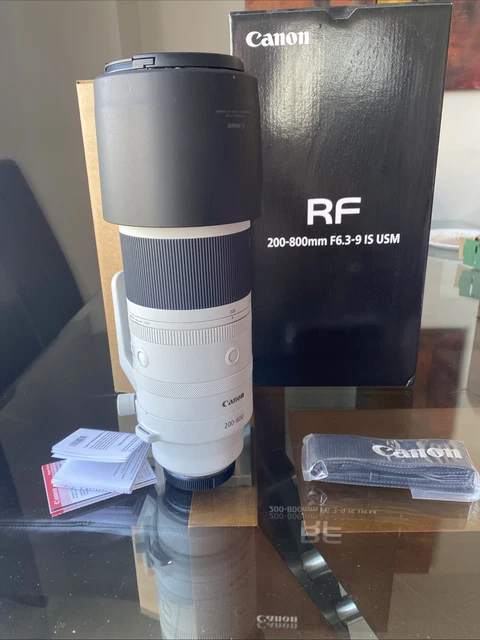
Canon RF200-800mm F6.3-9 IS USM at a Glance
The RF200-800mm is a versatile long-range zoom for Canon’s RF mount. It is designed for full-frame EOS R cameras, but it also works on compatible APS-C EOS R bodies, where the 1.6x crop factor gives it an angle of view similar to a 320-1280mm lens.
| Feature | Canon RF200-800mm F6.3-9 IS USM |
|---|---|
| Lens mount | Canon RF |
| Format | Full frame |
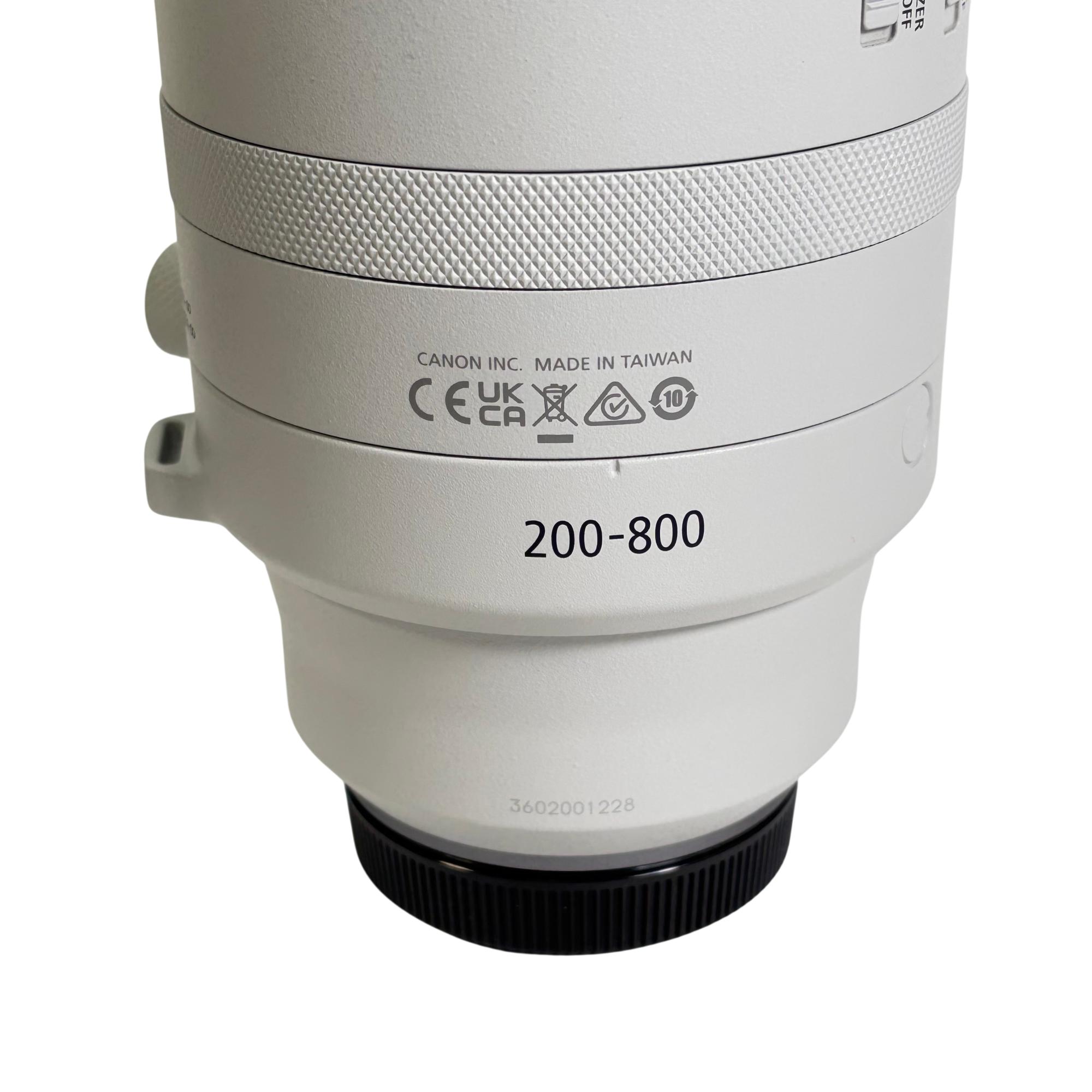
| Focal length | 200-800mm |
| Maximum aperture | f/6.3-9 |
| Minimum aperture | f/32-54 |
| Autofocus motor | Nano USM |
| Image stabilization | Optical IS |
| Rated IS performance | Up to 5.5 stops |
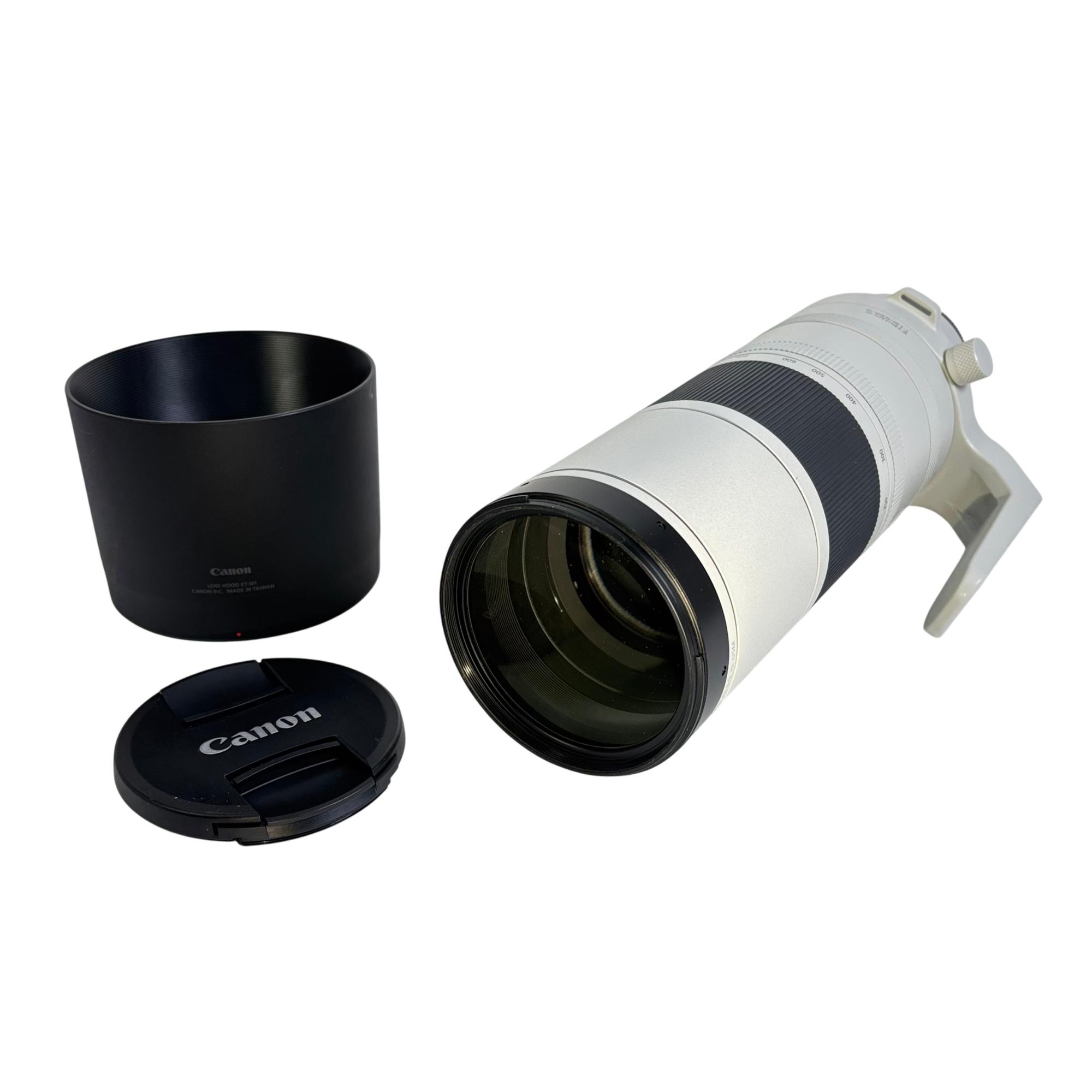
| Filter size | 95mm |
| Minimum focus distance | About 3.3 feet at 200mm; about 19.7 feet at 800mm |
| Maximum magnification | About 0.25x |
| Diaphragm | Nine rounded blades |
| Length | About 12.4 inches |
| Weight | About 4.5 pounds |
| Compatible extenders | Canon RF1.4x and RF2x, with camera and aperture limits |
| Tripod support | Removable tripod collar and foot included |
| Weather resistance | Dust- and moisture-resistant design |
The lens does not have a constant aperture. At 200mm, the widest aperture is f/6.3. As the lens zooms, the aperture becomes smaller. At 800mm, the maximum aperture is f/9.
Canon’s published specifications are the correct reference for compatibility, dimensions, and performance claims. Actual autofocus speed, stabilization results, and image quality can vary with the camera body, subject, light, distance, and shooting technique.

What Is the Canon RF200-800mm Lens Designed For?
The RF200-800mm is designed to place distant subjects much closer in the frame. Its main strength is reach, not low-light performance.
At 800mm, a bird that appears small at 400mm can occupy much more of the image. This helps wildlife photographers fill the frame without moving closer. It is also useful when a subject is behind a barrier, across a field, or too sensitive to approach.
Typical uses include:
- Bird photography
- Wildlife photography
- Nature and conservation work
- Aviation photography
- Outdoor field sports
- Motorsports
- Ships and distant landscapes
- Moon photography
- Outdoor events where long working distance matters
The 200mm starting point is also useful. It gives the photographer a wider view for locating a subject before zooming in. This is easier than using a fixed 800mm lens when a bird suddenly flies or an athlete moves across the frame.
The lens is less suited to indoor sports, concerts, weddings, or dim forests. Its f/9 maximum aperture at 800mm limits the amount of light reaching the sensor. In those settings, a faster lens or a shorter focal length may produce better results.

Focal Length and Field of View
The 200-800mm range covers a very large change in magnification. The difference between 200mm and 800mm is four times in focal length, although the subject does not appear simply “four times closer” in every practical situation.
On a full-frame Canon EOS R camera:
- 200mm provides a relatively broad telephoto view.
- 400mm works well for larger wildlife and field sports.
- 600mm gives strong reach for birds and distant action.
- 800mm is useful for small subjects and long distances.
On an APS-C Canon EOS R camera, multiply the focal length by 1.6 to estimate the full-frame equivalent angle of view:
- 200mm behaves like approximately 320mm.
- 400mm behaves like approximately 640mm.
- 600mm behaves like approximately 960mm.
- 800mm behaves like approximately 1280mm.
This crop-factor calculation changes the angle of view, not the lens’s actual focal length or optical aperture. The lens remains a 200-800mm f/6.3-9 lens.
A narrow field of view also makes subject tracking harder. At 800mm, a bird can leave the frame with a small movement of the camera. Start at 200mm or 400mm, find the subject, then zoom in.
Aperture: What f/6.3-9 Means in Real Use
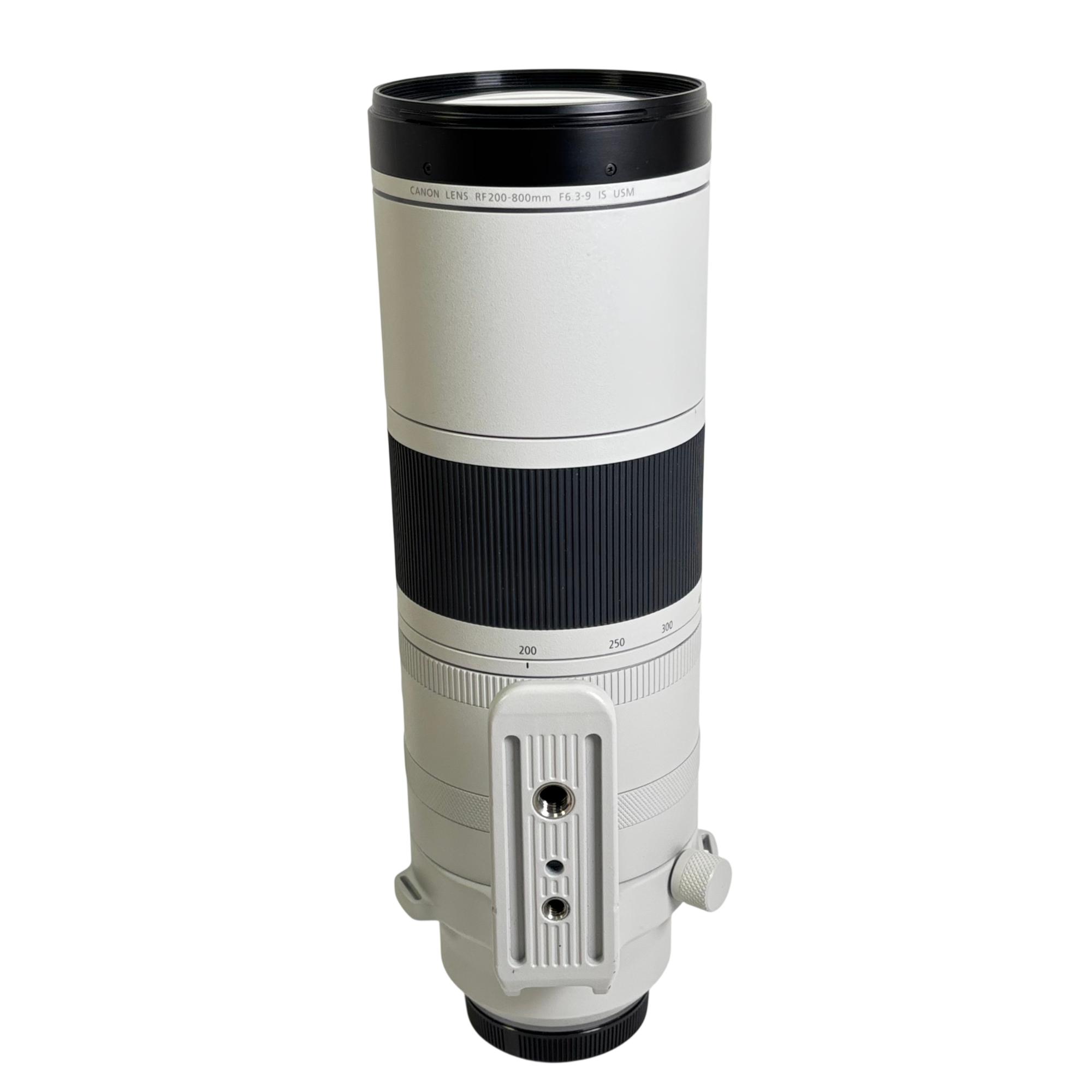
The f/6.3-9 specification describes the lens’s maximum aperture across its zoom range. The lens can open to f/6.3 at the short end and f/9 at the long end.
A smaller maximum aperture has three main effects:
-
Less light reaches the sensor.
The camera may need a higher ISO or slower shutter speed. -
The background may be less blurred than with an f/4 or f/5.6 lens.
Long focal lengths still create background separation, but aperture and subject distance matter. -
Autofocus has less light to work with.
Modern EOS R cameras can focus at relatively small apertures, but low light can still reduce focus speed and tracking reliability.
For moving birds or sports, a shutter speed around 1/1000 second is a common starting point. Fast birds, aircraft, and motorsports may need 1/1600 second or faster. These are starting points, not universal rules.
A simple exposure example:
- In bright midday sun, f/9 may allow a fast shutter speed at a moderate ISO.
- Under heavy cloud, the same f/9 setting may require ISO 1600, ISO 3200, or higher.
- In shade or near sunset, the lens may struggle to maintain both a fast shutter speed and clean image quality.
The right setting depends on light, subject motion, camera body, and the amount of noise the photographer can accept.

Image Stabilization and Shutter Speed
The RF200-800mm includes optical image stabilization, or IS. The system shifts internal lens elements to reduce the effect of camera movement.
Canon rates the lens at up to 5.5 stops of stabilization under its stated test conditions. Some compatible EOS R cameras with in-body image stabilization can provide higher coordinated stabilization figures. The exact result depends on the camera model and shooting conditions.
Image stabilization helps most with:
- Handheld shots of still subjects
- Panning at moderate shutter speeds
- Composing at 800mm
- Reducing shake in viewfinder and live-view images
IS does not freeze a moving bird, athlete, or aircraft. If the subject moves, the shutter speed still needs to be fast enough to stop that motion.
A useful distinction is:
- Camera shake: caused by movement of the photographer or camera.
- Subject motion: caused by movement of the subject.
IS can reduce the first problem. It cannot fully correct the second.
For a moving subject, choose the shutter speed for the subject first. Then use IS as extra support. For a stationary subject, slower shutter speeds may work if the photographer holds the camera well and the subject remains still.
Autofocus Performance and Subject Tracking
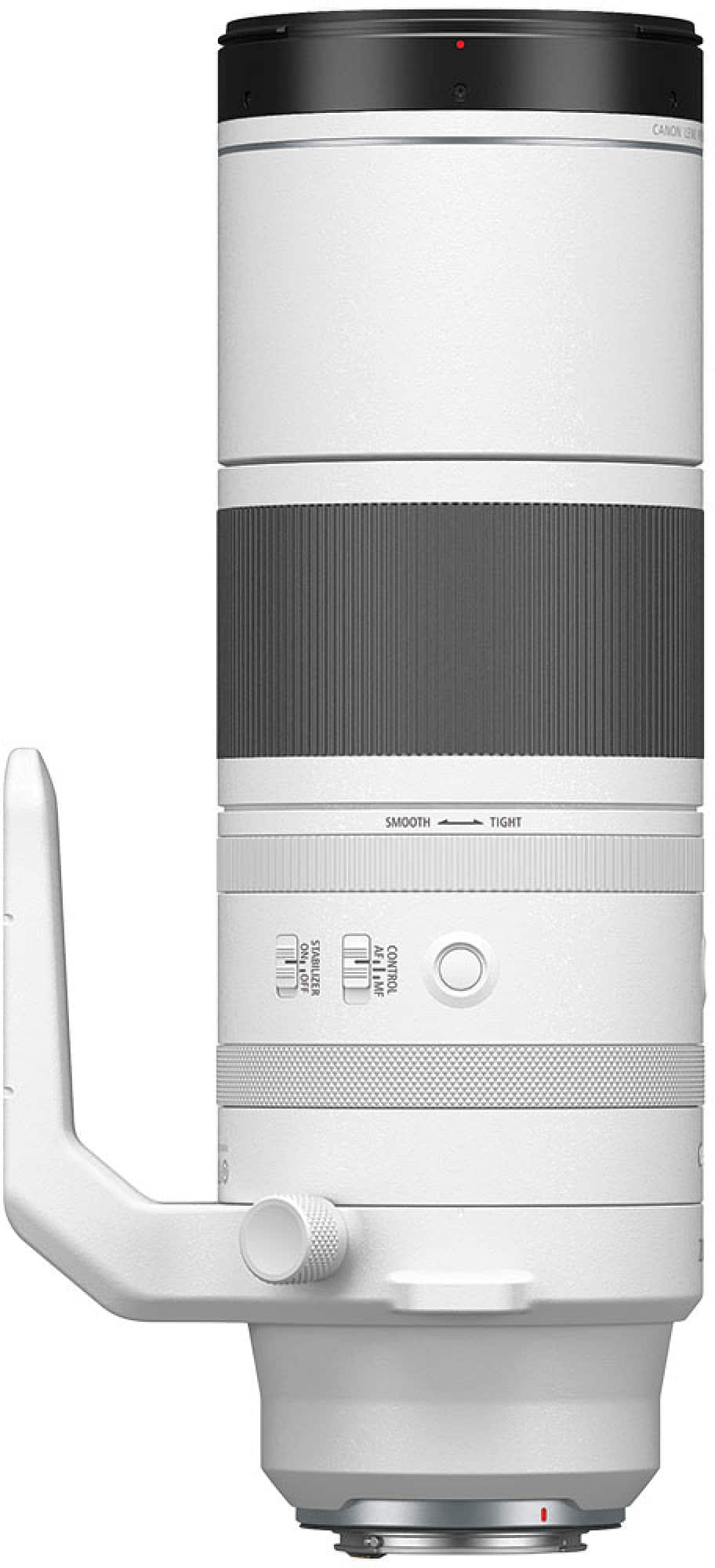
The lens uses Canon Nano USM autofocus technology. Nano USM motors are designed to provide fast, quiet autofocus for still photography and video.
Autofocus performance depends on more than the lens. The camera body, firmware, focus mode, subject contrast, light level, and distance all affect results.
For wildlife and birds, these settings are sensible starting points:
- Use continuous autofocus, such as Servo AF.
- Select an animal, bird, or subject-detection mode if the camera supports it.
- Use a suitable tracking area rather than relying on a very small point at 800mm.
- Keep the focus area over the subject.
- Use a fast shutter speed for movement.
- Set a short burst rather than holding the shutter button without pause.
- Check focus and exposure during the session.
For aircraft and motorsports, subject detection may be less reliable than a defined tracking area. A zone or expanded focus area can help when the subject has a clear shape against the sky or a simple background.
At 800mm, atmospheric distortion can become a major limit. Heat shimmer over pavement, water, or grass can soften distant subjects even when autofocus works correctly. No lens or sharpening tool can fully restore detail lost to moving air.

Handling, Size, and Support
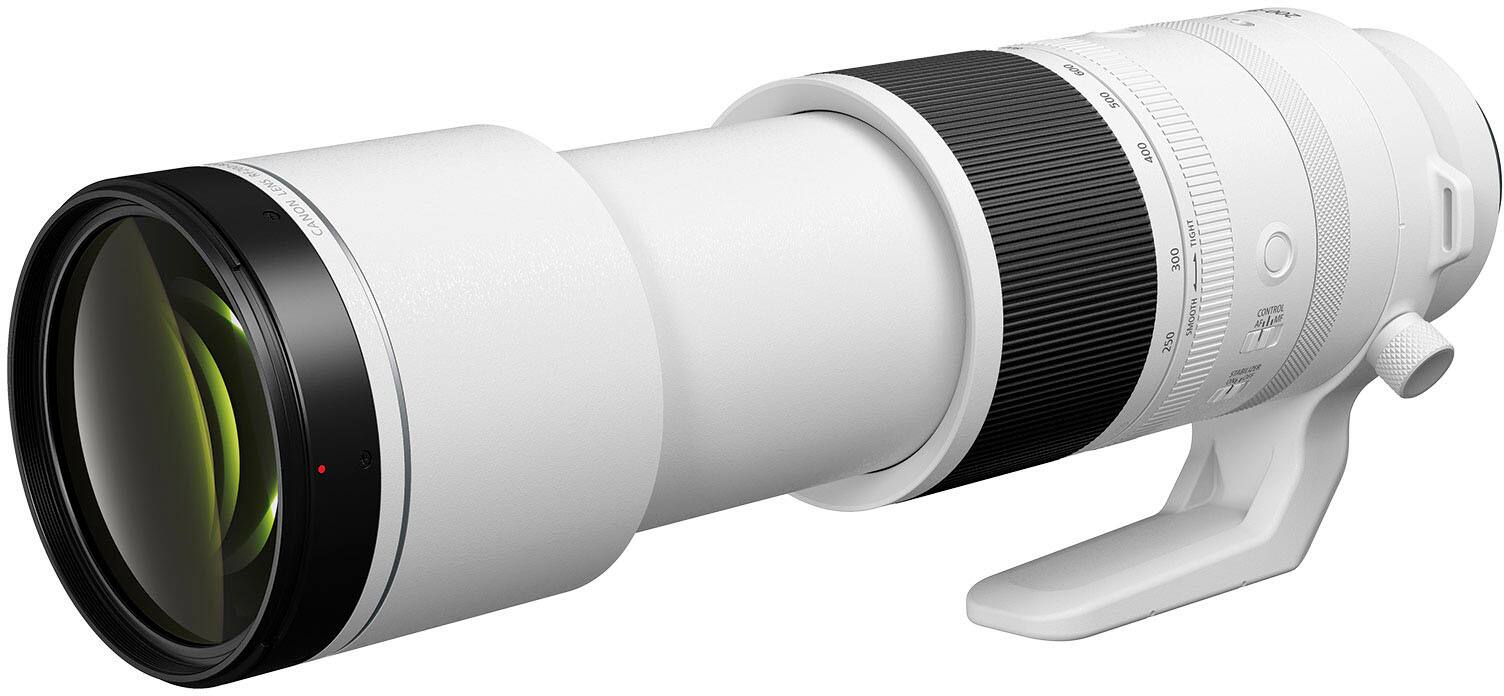
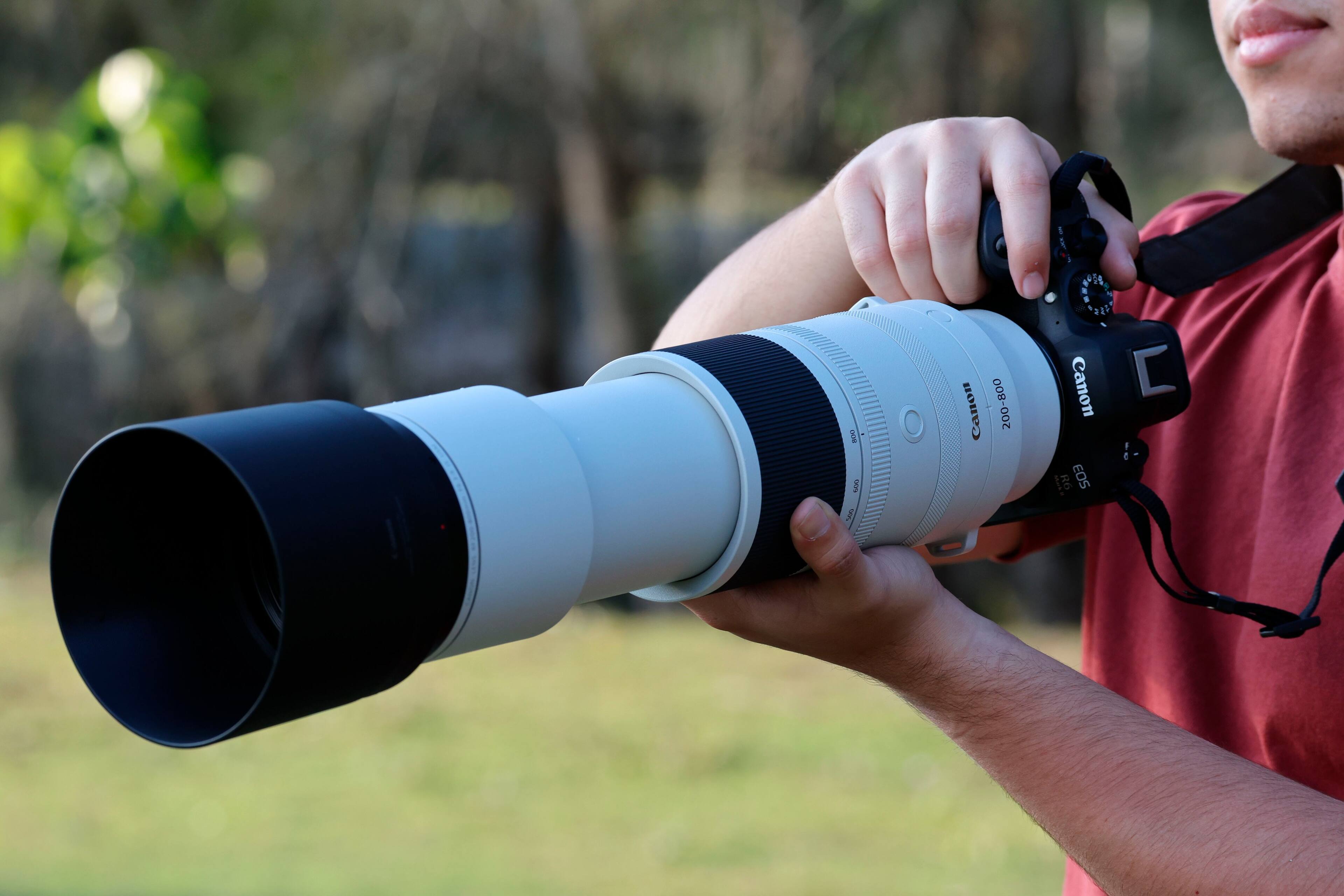
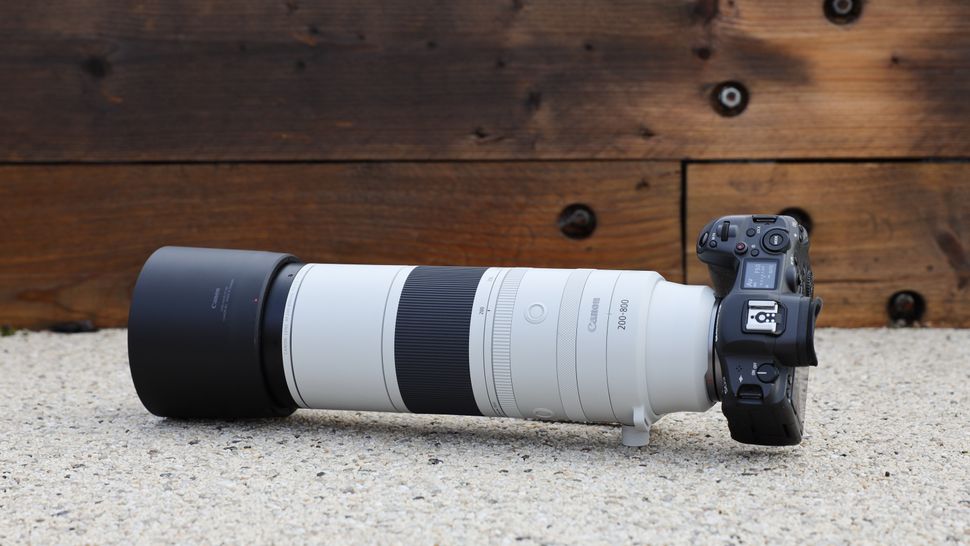
The lens weighs about 4.5 pounds and extends to roughly 12.4 inches. It is manageable for handheld use, but it is not a small travel lens.
The included tripod collar and foot help support the lens on a monopod or tripod. They also improve balance when the lens is mounted to a support. The lens should be supported through the collar when practical, rather than placing all the weight on the camera’s tripod socket.
Handholding technique matters:
- Hold the lens under the barrel with the left hand.
- Keep the right hand on the camera grip.
- Tuck the elbows toward the body.
- Brace against a rail, tree, or vehicle when safe.
- Use a monopod for long sessions.
- Keep the shutter speed high enough for the subject.
The zoom ring and focus ring should be easy to reach while the camera is at the eye. Because the barrel changes length while zooming, allow room in front of the lens when using a tripod or gimbal.
A camera bag must fit the lens at its stored length, plus the camera body and hood. Check the internal bag dimensions before buying accessories.
Canon RF Extender Compatibility
Canon lists the RF200-800mm as compatible with the Canon RF1.4x and RF2x extenders. An extender increases focal length but also reduces the maximum aperture.
Approximate combinations are:
| Setup | Effective focal length | Approximate maximum aperture |
|---|---|---|
| Lens alone | 200-800mm | f/6.3-9 |
| RF1.4x extender | 280-1120mm | f/9-12.6 |
| RF2x extender | 400-1600mm | f/12.6-18 |
These combinations can provide extreme reach, but they also reduce light and may affect autofocus behavior. The camera must support autofocus at the resulting aperture. Performance may be less consistent in dim light or with low-contrast subjects.
An extender also magnifies atmospheric haze, vibration, and focusing errors. It is most useful in bright, clear conditions when the subject is far away and extra reach matters more than speed.
Do not assume every RF accessory has the same compatibility. Check Canon’s current camera, firmware, lens, and extender information before purchase.

Image Quality: Strengths and Limits
The RF200-800mm’s main image-quality advantage is reach in a relatively flexible zoom design. It lets the photographer change composition without changing lenses or moving closer.
Sharpness can vary with:
- Focal length
- Aperture
- Subject distance
- Atmospheric conditions
- Shutter speed
- Focus accuracy
- Camera technique
- Digital cropping
At 800mm, small errors become easier to see. A slight focus miss, wind movement, or camera shake can make a detailed subject look soft. A sharp image at 400mm may also look cleaner than a heavily cropped image at 200mm, depending on the subject and light.
For the best results:
- Use a fast enough shutter speed.
- Place the focus area on the subject’s eye or key detail.
- Avoid shooting through heat shimmer.
- Use RAW capture if you plan to edit.
- Check images at 100% magnification.
- Avoid excessive sharpening, which can make noise and haze more visible.
The lens may produce attractive background blur at long focal lengths, especially when the subject is close and the background is far away. However, the f/9 aperture does not provide the same low-light performance or background separation as a large professional 400mm f/2.8 or 600mm f/4 lens.
Best Camera Settings for Wildlife and Birds
There is no single best setup, but the following settings provide a practical starting point for daylight wildlife photography:
For birds in flight
- Exposure mode: Manual with Auto ISO, or Shutter Priority
- Shutter speed: 1/1600 second or faster
- Aperture: The widest available aperture
- Autofocus: Servo AF
- Drive mode: High-speed continuous
- Focus area: Tracking or a suitable zone
- Image stabilization: On
- File type: RAW or RAW plus JPEG
For perched birds
- Shutter speed: About 1/800 to 1/1600 second
- Aperture: Wide open or stopped down slightly when light allows
- ISO: Keep as low as the needed shutter speed permits
- Focus: Eye or animal detection when reliable
- Support: Handheld, monopod, or tripod
For large wildlife
- Shutter speed: About 1/500 to 1/1000 second
- Aperture: Wide open in low light
- Focus area: Tracking or expanded area
- ISO: Increase it rather than allowing motion blur
These settings are not rules. A slow-moving animal may allow a slower shutter speed. A fast bird may need more speed. Review the first few frames and adjust based on motion blur, focus, and exposure.
Is the Canon RF200-800mm Good for Sports and Aviation?
The lens can work very well for outdoor sports and aviation when light is strong and the photographer needs long reach.
For outdoor sports, 200mm can frame nearby action while 800mm can reach across a large field. The long zoom range reduces the need to switch lenses during a game. The f/9 limit at the long end becomes a concern under clouds, late-day light, or stadium shadows.
For aviation, the lens can frame aircraft at different distances and sizes. Its weight may become tiring during long handheld spotting sessions. A monopod or other stable support can help.
The lens is less suitable for indoor sports. Indoor venues often require fast shutter speeds, and f/9 can force high ISO settings. A shorter, faster lens such as a 70-200mm f/2.8 may be a better fit for many indoor events, though it will not provide the same reach.
Weather Resistance and Outdoor Care
Canon describes the lens as having dust- and moisture-resistant construction, but weather resistance is not the same as waterproofing.
Use reasonable protection in rain, snow, blowing dust, or coastal spray:
- Fit the lens hood.
- Keep the mount covered when changing lenses.
- Use a rain cover during sustained rain.
- Wipe moisture from the exterior.
- Let a cold lens warm gradually inside a sealed bag.
- Avoid opening the battery or card compartment in wet conditions.
- Clean salt spray promptly with a clean, slightly damp cloth.
Do not rely on weather sealing if the camera body has a different or lower level of protection. The camera and lens form one system, and the weaker component may determine the practical limit.
Before storage, make sure the lens and hood are dry. Keep the front and rear caps in place when the lens is not attached to a camera.
Accessories Worth Considering
The most useful accessories depend on how the lens will be used.
Recommended for many owners
- A sturdy monopod for long wildlife sessions
- A deep camera bag that fits the extended lens
- A 95mm protective or clear filter only when its quality and use justify it
- A rain cover for wet conditions
- Extra batteries for long field days
- A fast, high-capacity memory card
- A lens cleaning kit
- A compatible tripod head or gimbal for supported shooting
Use caution with filters
A low-quality filter can reduce contrast, create flare, or add ghost images. It may also make cleaning harder. A hood often provides useful protection from stray light and minor contact.
Consider support before buying a gimbal
The lens can be used on a tripod or monopod, but the support must handle the combined weight of the lens and camera. Check the load rating and balance range of any gimbal head.
Common Problems and Practical Fixes
The subject looks soft at 800mm
Possible causes include camera shake, subject motion, poor focus, heat shimmer, or atmospheric haze.
Try a faster shutter speed, a more suitable focus area, careful support, and a shorter shooting distance. Compare several frames rather than judging one image.
Autofocus hunts
Low light, low contrast, a cluttered background, and an incorrectly selected focus area can cause hunting.
Place the focus point on a higher-contrast part of the subject. Use a larger tracking area if the subject is moving. If the camera repeatedly focuses on the background, reduce the focus area or start focus on the subject before engaging tracking.
The camera cannot use autofocus with an extender
Check the camera model, firmware, extender, and resulting maximum aperture. At f/12.6 or f/18, some cameras may have limited or unavailable autofocus functions.
Remove the extender and test the lens alone. If autofocus returns, the aperture or compatibility limit is likely involved.
Images are noisy
Noise is often caused by the high ISO needed to maintain a fast shutter speed at f/9. Underexposure can make noise worse during editing.
Expose as brightly as practical without clipping highlights. Use noise reduction carefully, since excessive reduction can remove fine feather or fur detail.
The lens feels heavy
Use a monopod, tripod, or supportive camera strap. Take breaks during long sessions. A stable support can also improve framing and reduce missed shots.

Canon RF200-800mm vs. a Prime Super Telephoto Lens
The RF200-800mm is not a direct replacement for a professional 400mm, 500mm, or 600mm prime lens. The two types serve different needs.
| Priority | RF200-800mm advantage | Fast prime advantage |
|---|---|---|
| Reach | Zooms to 800mm | Fixed focal length |
| Framing | Quickly changes composition | Requires movement or cropping |
| Low light | Limited by f/6.3-9 | Usually much faster |
| Weight and cost | Often more practical for enthusiasts | Usually heavier and more expensive |
| Background blur | Possible at long focal lengths | Stronger at wide apertures |
| Flexibility | Very high | Lower |
| Indoor action | Limited | Usually better |
| Portability | Manageable, but heavy | Varies by model |
Choose the RF200-800mm when flexible framing and maximum reach matter most. Choose a fast prime when low-light action, subject separation, and autofocus performance in difficult light matter more than zoom flexibility.
Who Should Buy the Canon RF200-800mm?
The lens is a strong match for:
- Canon EOS R users who need more reach
- Wildlife photographers working in daylight
- Bird photographers who want 800mm without a separate prime lens
- Aviation photographers
- Outdoor sports photographers
- Travelers who want one long telephoto zoom
- Photographers who accept higher ISO in exchange for reach
It may not be the best choice for:
- Indoor sports photographers
- Concert photographers
- Users who need a compact lens
- Photographers who work mainly at night or in deep shade
- People who need strong low-light background separation
- Users with non-Canon RF-mount cameras
The key decision is simple: Do you need reach more often than you need a wide aperture? If reach is the priority and your subjects are usually outdoors, the RF200-800mm is easier to justify.
Frequently Asked Questions
Is the Canon RF200-800mm compatible with full-frame Canon cameras?
Yes. It is designed for Canon RF-mount EOS R cameras, including full-frame models. It can also work with compatible APS-C EOS R bodies, where the field of view becomes narrower because of the crop factor.
Can the Canon RF200-800mm be used handheld?
Yes, but its roughly 4.5-pound weight can become tiring. Optical image stabilization helps with camera shake, but a fast shutter speed remains important for moving subjects. A monopod can improve comfort during long sessions.
Is f/9 too slow for wildlife photography?
Not always. In bright daylight, f/9 can work well with a suitable shutter speed. In shade, cloudy weather, or early morning, the camera may require a high ISO. The answer depends on the light and the movement of the subject.
Does the lens work with Canon RF extenders?
Canon lists compatibility with the RF1.4x and RF2x extenders. The resulting maximum apertures become approximately f/9-12.6 and f/12.6-18. Autofocus and exposure behavior depend on the camera and conditions.
Does image stabilization freeze a moving bird?
No. Image stabilization reduces camera movement. It does not stop the bird’s motion. Use a fast shutter speed for birds in flight or other moving subjects.
What filter size does the lens use?
The lens uses 95mm filters. Large filters can be expensive, so check the exact filter type and quality before buying.
Is the RF200-800mm weatherproof?
Canon describes it as dust- and moisture-resistant, but it is not waterproof. Use a rain cover and protect the camera system during heavy rain, snow, spray, and blowing dust.
Final Recommendation
The Canon RF200-800mm F6.3-9 IS USM is a reach-focused super telephoto zoom for Canon EOS R photographers in the United States. Its 200-800mm range, optical stabilization, Nano USM autofocus, and extender support make it especially useful for daylight wildlife, birds, aviation, and outdoor sports.
Its main limits are clear: it is heavy, it has a slow f/9 maximum aperture at 800mm, and long-distance images can suffer from atmospheric haze. If those limits fit your shooting conditions, the lens offers a practical way to reach distant subjects without carrying several telephoto lenses.
Before buying, confirm three points: your camera has an RF mount, your subjects are usually well lit, and your support system can handle the lens for the length of your planned sessions.

