
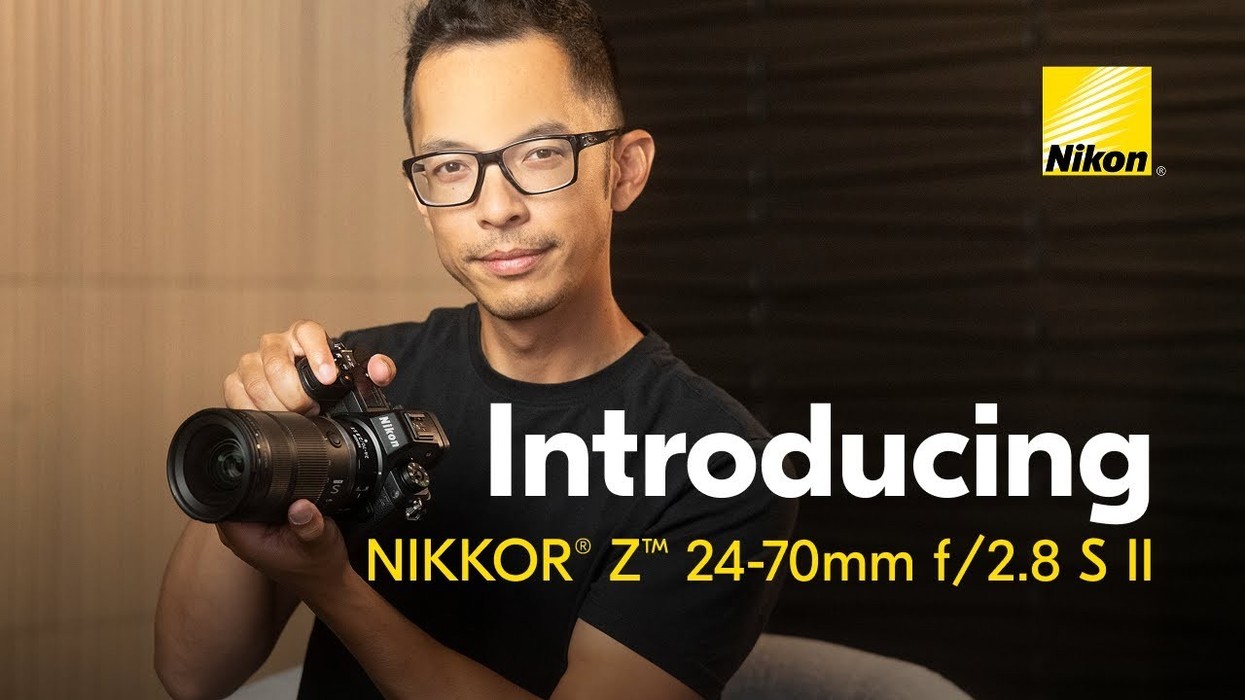
For photographers in the United States, the Nikon NIKKOR Z 24-70mm f/2.8 S II is a professional standard zoom for Nikon Z cameras. Its key feature is an internal zoom design. The lens changes focal length without extending or retracting its barrel. Nikon describes it as the world’s first standard zoom lens with a constant f/2.8 aperture and an internal zoom mechanism.
That design can help keep the lens balanced on a camera, gimbal, or rig. It also gives the lens a fixed outer length during use. The trade-off is simple: this is a large, costly lens made for demanding work, not a small travel zoom.

What Makes the NIKKOR Z 24-70mm f/2.8 S II Different?
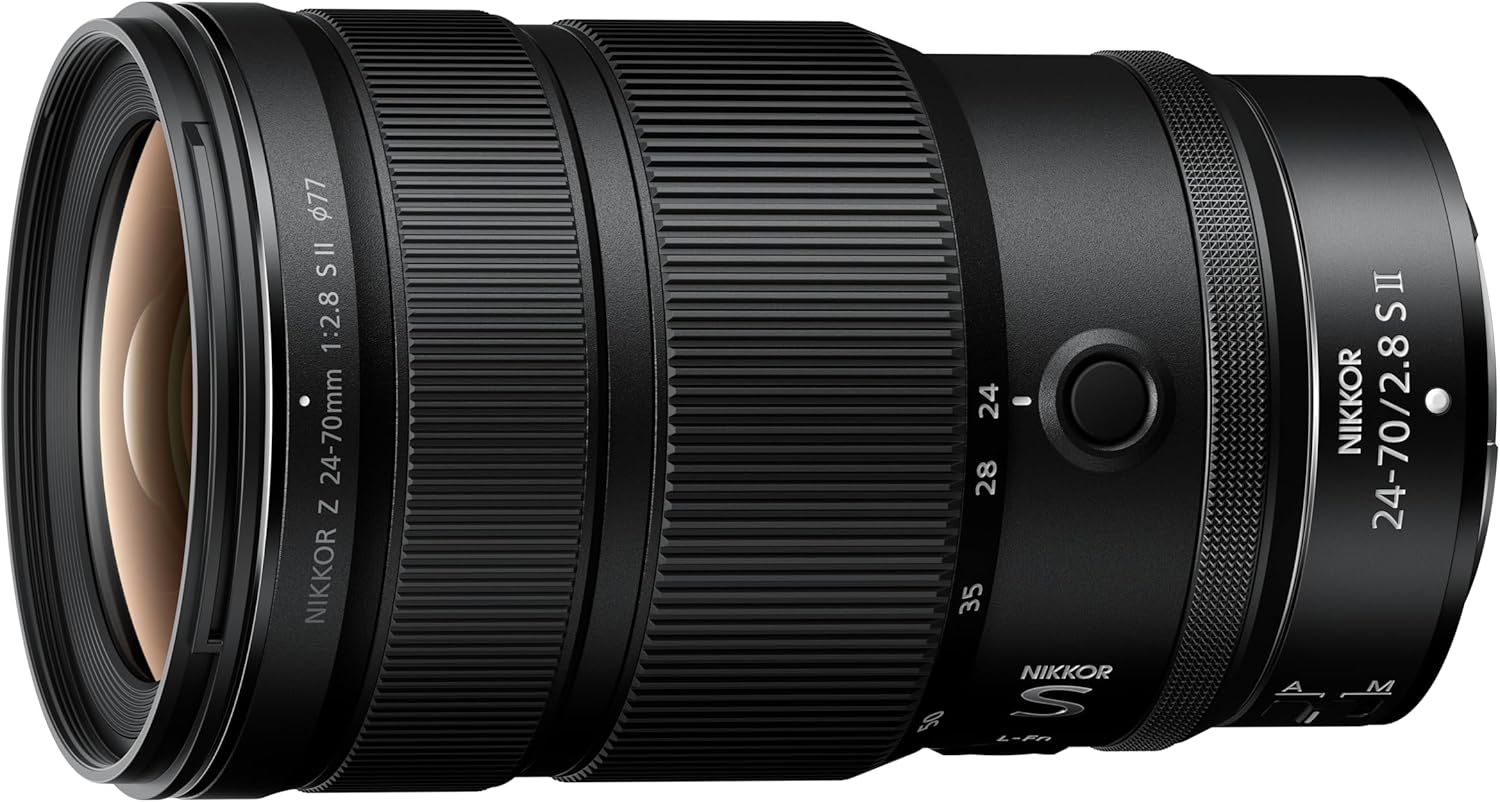
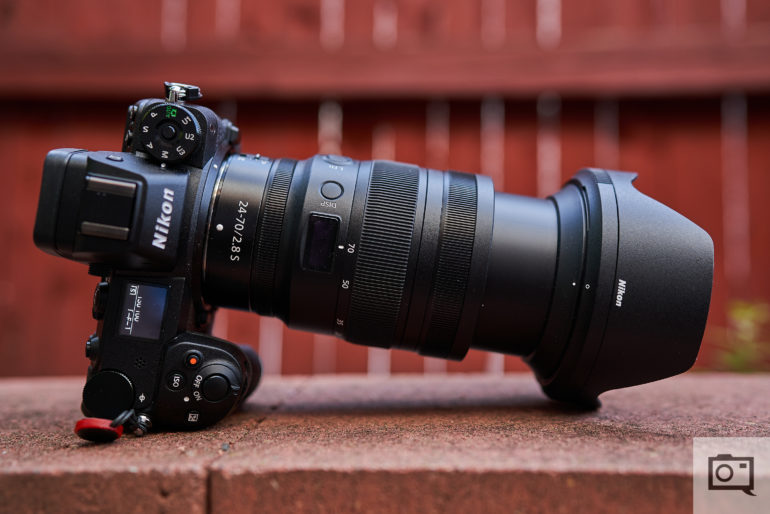
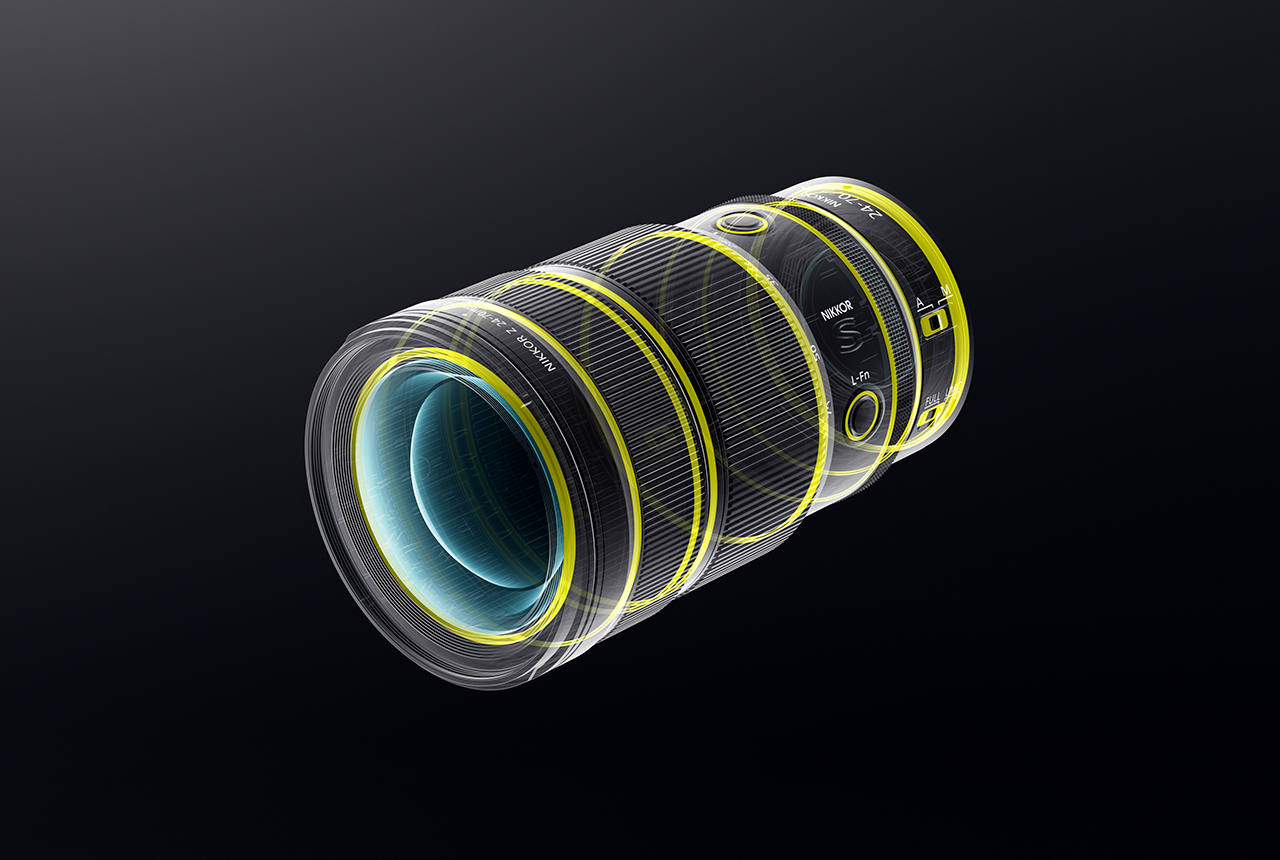
The main difference is the lens barrel. Most 24-70mm f/2.8 lenses extend as you zoom. The NIKKOR Z 24-70mm f/2.8 S II uses internal lens movement instead.
When you turn the zoom ring, its outer barrel stays at the same length. The optical groups move inside the lens. This is the feature behind the “world’s first internal” claim.
A fixed-length lens can offer several practical benefits:
- The lens keeps a more stable balance as you zoom.
- A gimbal may need fewer balance changes.
- The front of the lens does not move toward or away from the subject.
- The lens can feel more consistent during video work.
- The design may help reduce the chance of dust entering through a moving barrel.
The internal zoom system does not make the lens small. The NIKKOR Z 24-70mm f/2.8 S II remains a professional f/2.8 zoom with large glass elements.
What does “standard zoom” mean?
A standard zoom covers a useful range from wide angle to short telephoto:
- 24mm: Wide enough for landscapes, rooms, groups, and environmental portraits.
- 35mm: A natural view for street work and documentary photos.
- 50mm: A classic perspective for portraits and daily scenes.
- 70mm: A short telephoto view for headshots, details, and tighter framing.
This range is popular because it can cover much of a wedding day or event without a lens change.
Key Specifications and Practical Meaning
The following features define how the Nikon NIKKOR Z 24-70mm f/2.8 S II works in the field.
| Feature | What it means |
|---|---|
| Mount | Nikon Z mount |
| Focal-length range | 24-70mm |
| Maximum aperture | Constant f/2.8 |
| Zoom design | Internal zoom |
| Camera format | Full-frame FX, with DX support |
| Minimum focus distance | About 0.24m at the wide end |
| Maximum reproduction ratio | About 0.21x |
| Filter size | 82mm |
| Weight | About 675g |
| Image stabilization | No lens-based VR |
| Main use | Weddings, events, portraits, news, travel, and video |
Specifications can vary slightly by market listing or measurement method. Check Nikon USA’s current product page and manual before buying accessories or planning a production.
Constant f/2.8 aperture
The lens keeps an f/2.8 maximum aperture across the full zoom range. You do not lose light when moving from 24mm to 70mm.
This helps in several ways:
- It supports faster shutter speeds in low light.
- It gives more control over background blur.
- It keeps exposure more stable during video zooms.
- It reduces the need to change ISO while framing a shot.
The f/2.8 aperture is not always necessary. A smaller and lighter 24-70mm f/4 lens may be better for hiking or travel. The f/2.8 model makes more sense when low light, subject separation, or professional workflow matters.
Weight and size
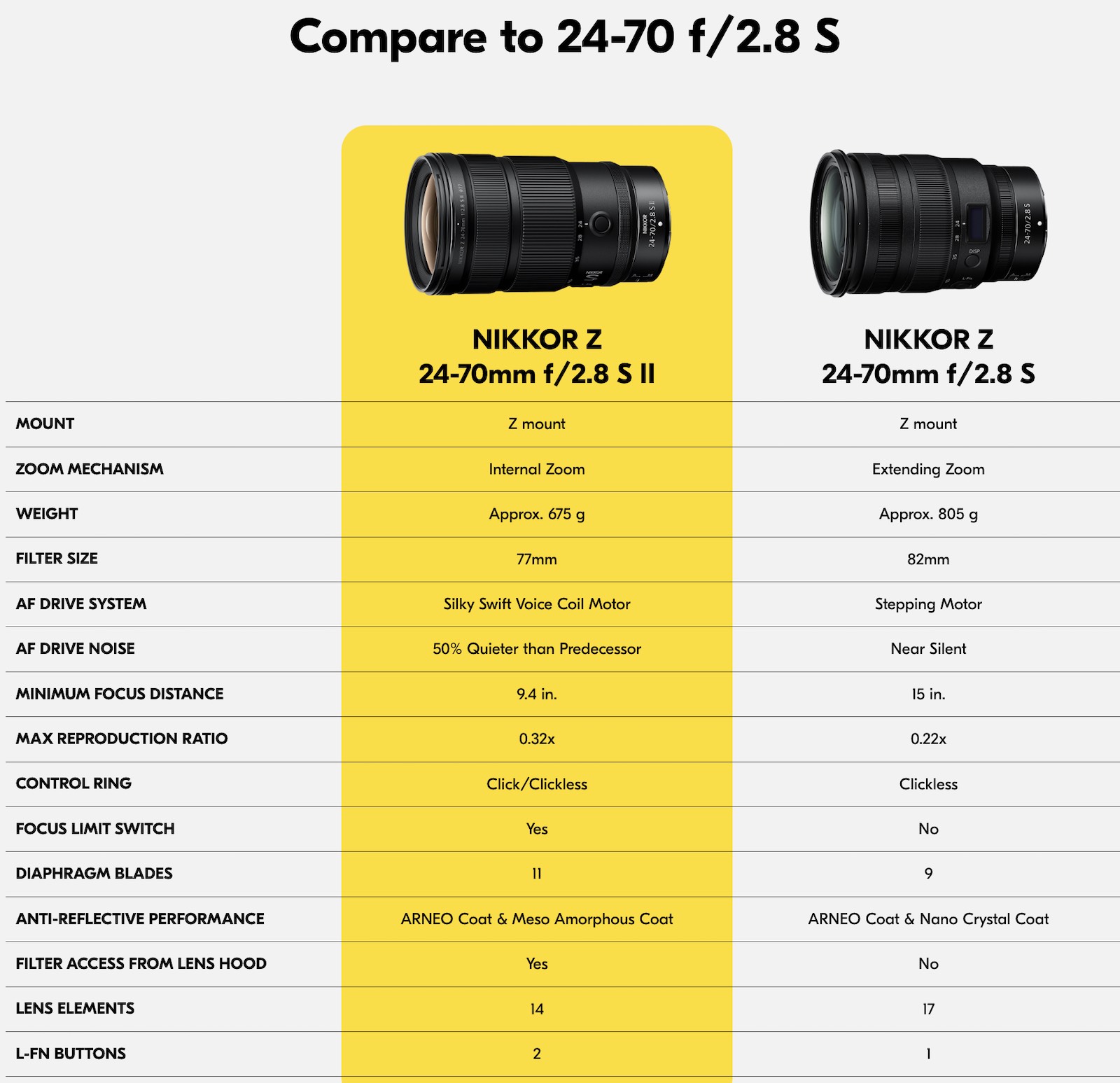
At about 675 grams, the NIKKOR Z 24-70mm f/2.8 S II is lighter than Nikon’s original NIKKOR Z 24-70mm f/2.8 S. That reduction matters during long wedding ceremonies, press assignments, and event coverage.
It is still heavier than an f/4 zoom or a small prime lens. A full-frame Z camera and this lens create a serious kit. Test the combination with your camera body before buying, especially if you have small hands or often work one-handed.
How the Internal Zoom Mechanism Helps Photographers
The internal zoom design matters most when the camera must stay balanced or the lens must keep a steady physical shape.
Better balance on a gimbal
An extending zoom changes its center of gravity. That can force a gimbal operator to rebalance the camera when changing focal length.
The NIKKOR Z 24-70mm f/2.8 S II keeps its outside length fixed. Its internal optical movement still changes the balance slightly, but the shift is generally less obvious than with a long extending barrel. The exact result depends on the camera, plate position, follow-focus system, and gimbal.
This does not mean every gimbal will work without adjustment. Always check the supported payload and balance range of your stabilizer.
More stable handling
A fixed outer barrel gives your left hand a constant support point. This can help when you move quickly between wide and telephoto views.
For photographers, the benefit is subtle but useful. The lens feels less like it is growing in your hand. For videographers, the fixed shape can also make a camera rig easier to manage in tight spaces.
Possible dust-control benefits
An internal zoom removes the large sliding barrel found on many standard zooms. That can reduce the amount of external barrel movement during use.
However, no interchangeable lens is dustproof. Dust can enter through mounts, control rings, switches, or normal lens changes. Nikon’s environmental design should be treated as protection against reasonable conditions, not permission to use the lens in heavy rain or blowing sand without care.

Image Quality, Autofocus, and Video Use
The NIKKOR Z 24-70mm f/2.8 S II belongs to Nikon’s S-Line family. Nikon uses S-Line lenses for its higher-level Z-mount optics and build standards.
Image quality
The lens is designed to deliver strong detail across its zoom range and aperture range. Its optical design uses specialized glass and anti-reflection coatings to control common problems such as:
- Chromatic aberration
- Flare
- Ghosting
- Distortion
- Loss of contrast near the frame edges
Real results depend on the camera body, focus accuracy, subject distance, aperture, and light source. A manufacturer specification does not replace independent testing at every focal length.
For critical work, shoot a short test at 24mm, 35mm, 50mm, and 70mm. Check corners and fine detail at the apertures you use most.
Autofocus
The lens uses Nikon Z autofocus technology and is designed for fast, quiet operation. That makes it suitable for weddings, sports near the sidelines, events, and video.
Autofocus performance also depends on the camera body and firmware. A newer Z body may track a moving subject better than an older body with the same lens.
For reliable focus:
- Update the camera and lens firmware when Nikon provides a relevant update.
- Select an AF mode that matches the subject.
- Use subject detection only when it fits the scene.
- Watch for low contrast, backlight, fog, and fast motion.
- Test continuous AF before an important assignment.
Video performance
The lens is well suited to video because the internal zoom keeps the outside barrel fixed. Nikon also designed it with video needs such as quiet operation and reduced focus breathing in mind.
Focus breathing occurs when the angle of view changes as focus shifts. Lower focus breathing helps a rack-focus shot look more natural. It does not mean the view will never change during focus pulls.
For video, also consider:
- The camera’s electronic stabilization.
- The gimbal’s weight limit.
- The sound of the camera and lens in the recording.
- Exposure changes caused by lighting.
- The need for a power zoom, which this lens does not provide.
Who Should Buy the Nikon NIKKOR Z 24-70mm f/2.8 S II?
This lens is a strong fit for photographers who need one fast zoom for a wide range of professional work.
Best use cases
The lens is especially useful for:
- Wedding photography
- Corporate events
- Photojournalism
- Concerts and indoor performances
- Environmental portraits
- Editorial assignments
- Documentary video
- Commercial work
- Travel where low light matters
A wedding photographer can use 24mm for a group photo, 50mm for a natural portrait, and 70mm for a tighter image without changing lenses.
Who may prefer another lens?
The NIKKOR Z 24-70mm f/2.8 S II may not be the best choice for:
- Lightweight backpacking
- Casual family photography
- Budget systems
- Users who prefer small prime lenses
- Photographers who need strong telephoto reach
- Video shooters who need motorized zoom control
A 24-120mm f/4 lens gives more reach. A 24-70mm f/4 lens gives lower weight. A 28-75mm f/2.8 lens may cost less, depending on the market and brand.
The decision comes down to priorities. Choose the NIKKOR Z 24-70mm f/2.8 S II when internal zoom, f/2.8 speed, and professional handling are worth its size and cost.
NIKKOR Z 24-70mm f/2.8 S II Compared With Other Nikon Options
The best comparison depends on your work rather than on a single specification.
| Lens type | Main advantage | Main compromise |
|---|---|---|
| NIKKOR Z 24-70mm f/2.8 S II | Fast aperture and internal zoom | Higher weight and cost |
| NIKKOR Z 24-70mm f/4 S | Smaller size and lower weight | One stop slower |
| NIKKOR Z 24-120mm f/4 S | Wider useful range and more reach | Slower aperture |
| NIKKOR Z 28-75mm f/2.8 | Often lighter or less costly | Starts at 28mm and may differ in build and optics |
| 24-70mm f/2.8 prime-style kit | Strong low-light flexibility | Large and expensive compared with slower zooms |
NIKKOR Z 24-70mm f/2.8 S II vs. the original Z 24-70mm f/2.8 S
The newer lens adds the internal zoom mechanism and reduces weight compared with the original model. It is also designed with newer video and handling needs in mind.
The original lens may still make sense if it is available at a lower used price and you do not need internal zoom. Check its condition, warranty, mount wear, focus behavior, and service history before buying used.
NIKKOR Z 24-70mm f/2.8 S II vs. 24-120mm f/4 S
The 24-120mm f/4 S reaches much farther. That extra range can reduce lens changes during travel, events, and outdoor work.
The 24-70mm f/2.8 S II is one stop faster. In equal conditions, that can allow a faster shutter speed or a lower ISO. It also gives more control over background blur.
Choose the 24-120mm f/4 S for reach and travel flexibility. Choose the 24-70mm f/2.8 S II for low light, subject separation, and a fixed internal zoom design.
Important Limitations Before You Buy
The internal zoom claim should not be mistaken for a claim that the lens is small, silent in every situation, or fully sealed against the environment.
Keep these limits in mind:
- The lens does not have built-in optical VR.
- Stabilization depends on the camera body and shooting mode.
- The f/2.8 aperture increases size and weight.
- An internal zoom does not remove the need for careful cleaning.
- Autofocus results vary by camera body and subject.
- A fixed outer barrel does not guarantee perfect gimbal balance.
- The lens uses an 82mm filter size, so existing smaller filters need step-up rings.
- Compatibility is limited to Nikon Z-mount cameras; it does not mount directly on Nikon F-mount cameras.
For harsh weather, use a cover and avoid changing lenses in rain, dust, or blowing sand. Dry the equipment before storage. If moisture enters the lens or camera, stop using the system and follow Nikon’s service guidance.
Setup Tips for Better Results
A few simple steps can help you get more from the lens.
For still photography
- Use 24mm for groups and broad scenes.
- Move closer instead of relying on 24mm for every portrait.
- Use 50mm to 70mm for more natural facial proportions.
- Keep shutter speed high enough for moving people.
- Use the camera’s in-body stabilization when available.
- Check the corners if you photograph architecture or flat subjects.
- Carry a clean microfiber cloth and a protective front filter only if you accept its possible effect on flare.
For video
- Balance the camera before recording.
- Test the full 24-70mm range on your gimbal.
- Record a focus pull at different distances.
- Check for focus breathing in the final camera output.
- Use a matte box only if it does not interfere with the lens or filter system.
- Confirm that the camera can power the functions you need.
- Record a short audio test before a paid shoot.
Signs the setup is working
Your setup is ready when:
- The camera stays balanced through the zoom range.
- Autofocus holds the intended subject.
- The lens does not produce unwanted flare in your planned light.
- The chosen shutter speed prevents motion blur.
- Your camera, rig, and lens remain comfortable to hold.
Frequently Asked Questions
Is the Nikon NIKKOR Z 24-70mm f/2.8 S II really an internal zoom lens?
Yes. Its optical groups move inside the lens barrel, so the outside length does not change as you zoom from 24mm to 70mm. Nikon identifies this as the first standard zoom with a constant f/2.8 aperture and an internal zoom mechanism.
Does the NIKKOR Z 24-70mm f/2.8 S II have image stabilization?
The lens does not include its own optical VR system. Compatible Nikon Z camera bodies may provide in-body image stabilization. Confirm the exact stabilization behavior in your camera manual.
Is it compatible with Nikon DX cameras?
Yes, it can be used on Nikon Z DX cameras. The smaller sensor creates a narrower angle of view than on a full-frame Nikon FX camera. The lens remains useful, but 24mm will not look as wide on DX.
Is the lens good for portraits?
Yes. The 50mm to 70mm range works well for portraits, especially when you want some background separation. For very tight headshots, a longer lens can provide more working distance and a different perspective.
Is it suitable for wedding photography?
It is a strong wedding lens for photographers who need a fast, flexible zoom. Its weight, price, and lack of lens-based VR should be considered alongside the camera body and other lenses in the kit.
Do filters rotate or move during zooming?
The lens uses an internal zoom design, but filter behavior should still be confirmed in the official Nikon manual. Test any polarizer, variable ND filter, or matte-box setup before an important shoot.
Conclusion: Is the NIKKOR Z 24-70mm f/2.8 S II Worth It?
The Nikon NIKKOR Z 24-70mm f/2.8 S II stands out because it combines a professional 24-70mm range, a constant f/2.8 aperture, and an internal zoom mechanism. Its fixed outer length can improve handling and simplify balance on camera rigs.
It is best for US-based Nikon Z photographers who work in low light, cover events, shoot weddings, or need a dependable general-purpose professional zoom. Travelers, casual users, and photographers who value minimum weight may prefer a 24-70mm f/4 or 24-120mm f/4 lens.
Before buying, compare the lens with your camera body, gimbal, filters, bag, and other working lenses. The right choice is not simply the fastest lens. It is the lens that gives you the needed light, range, balance, and comfort for the work you actually do.

