

For photographers in the United States, the Nikon Z5 II with the NIKKOR Z 24-50mm f/4-6.3 lens is a compact full-frame mirrorless kit for travel, family photos, portraits, street work, and everyday video. The camera gives you a 24.5-megapixel full-frame sensor, Nikon’s EXPEED 7 processor, strong subject detection, in-body image stabilization, and two memory-card slots. The bundled 24-50mm zoom keeps the kit small, but its narrow maximum aperture limits low-light work and background blur.
Introduction
The Nikon Z5 II sits below Nikon’s higher-speed Z6 III and Z8 models. It is aimed at people who want full-frame image quality without carrying a large professional kit.
The most practical version for many U.S. buyers is the camera-and-lens kit. The NIKKOR Z 24-50mm f/4-6.3 covers useful focal lengths for travel, landscapes, casual portraits, food, and daily snapshots. It is also light enough to keep the camera easy to carry for long periods.
This article explains what the Nikon Z5 II offers, what the lightweight zoom lens can and cannot do, and who should consider this kit.

Nikon Z5 II Key Specifications
The Nikon Z5 II is a full-frame mirrorless camera with a 24.5MP sensor and a modern autofocus system. Its core specifications make it more capable than a basic entry-level camera, while its body remains simpler than Nikon’s professional models.
| Feature | Nikon Z5 II |
|---|---|
| Camera type | Full-frame mirrorless |
| Sensor | 35.9 × 23.9mm CMOS |
| Resolution | 24.5 megapixels |
| Processor | EXPEED 7 |
| Lens mount | Nikon Z mount |
| Image stabilization | In-body, sensor-shift VR |
| Viewfinder | Electronic viewfinder |
| Rear screen | 3.2-inch vari-angle touchscreen |
| Continuous shooting | Up to 30 fps in selected electronic-shutter modes |
| Video | Up to 4K at 60p with a crop |
| Memory cards | Two UHS-II SD card slots |
| Battery | EN-EL15c rechargeable battery |
| Body weight | Approximately 700g with battery and card |
| Weather sealing | Nikon-designed dust and drip resistance |
Some shooting speeds use image-area, file-format, or autofocus restrictions. Read the camera manual before treating the highest frame rate as a general-purpose setting.
What “full frame” means
A full-frame sensor is close in size to 35mm film. Compared with a smaller APS-C sensor, it can give you:
- More control over background blur at the same framing
- Better high-ISO potential in many real-world situations
- Wider views from the same lens
- More room for cropping than many lower-resolution cameras
The result still depends on the lens, light, focus, and exposure settings. A full-frame sensor does not automatically make every photograph sharper or better.
Why the EXPEED 7 processor matters
The EXPEED 7 processor handles autofocus, subject recognition, noise reduction, high-speed shooting, and video processing. It gives the Z5 II access to features that are not common on older entry-level full-frame cameras.
Its practical value is clearest when you photograph moving people, pets, children, or events. It also supports faster camera response and more advanced subject-detection modes.

Nikon Z5 II With the 24-50mm Lightweight Zoom Lens
The NIKKOR Z 24-50mm f/4-6.3 is one of Nikon’s smallest full-frame zoom lenses. It weighs about 195g and uses a retractable design, so it takes up little space when packed.
Its focal-length range is useful for general photography:
- 24mm: landscapes, architecture, interiors, and groups
- 35mm: street scenes, travel, and environmental portraits
- 50mm: portraits, food, details, and natural-looking everyday images
The lens is not a constant-aperture zoom. Its maximum aperture changes from f/4 at 24mm to f/6.3 at 50mm. That design keeps the lens small, but it lets in less light than a larger f/2.8 or f/4 zoom.
What the lens does well
The 24-50mm lens makes sense when portability matters more than maximum lens speed. It is well suited to:
- Travel photography
- Family events in good indoor light
- Daytime street photography
- Landscapes and city scenes
- Basic video production
- Everyday carry use
The short zoom range also encourages you to move closer or farther from the subject. That can help you build better composition habits.
What the lens does not do well
The lens is less suitable for:
- Sports shot from a distance
- Wildlife
- Dark wedding receptions
- Strong background separation
- Tight headshots
- Distant subjects
- Very dark interiors without added light
At 50mm and f/6.3, you may need a slower shutter speed, a higher ISO, or extra light. Nikon’s in-body stabilization can help reduce camera shake for still subjects, but it does not freeze a moving person or animal.
Lens size versus lens speed
A small lens is easier to carry. A faster lens is better in dim light and can produce more background blur.
| Lens type | Main benefit | Main trade-off |
|---|---|---|
| 24-50mm f/4-6.3 | Small and light | Less light at the long end |
| 24-70mm f/4 S | Wider range and stronger optical design | Larger and heavier |
| 24-70mm f/2.8 S | Better low-light ability and blur | Much larger, heavier, and more expensive |
| 28-75mm f/2.8 | Fast aperture at a lower cost than some pro zooms | Starts less wide at 28mm |
The 24-50mm is the better choice when the camera will stay in your bag only if the kit remains compact.
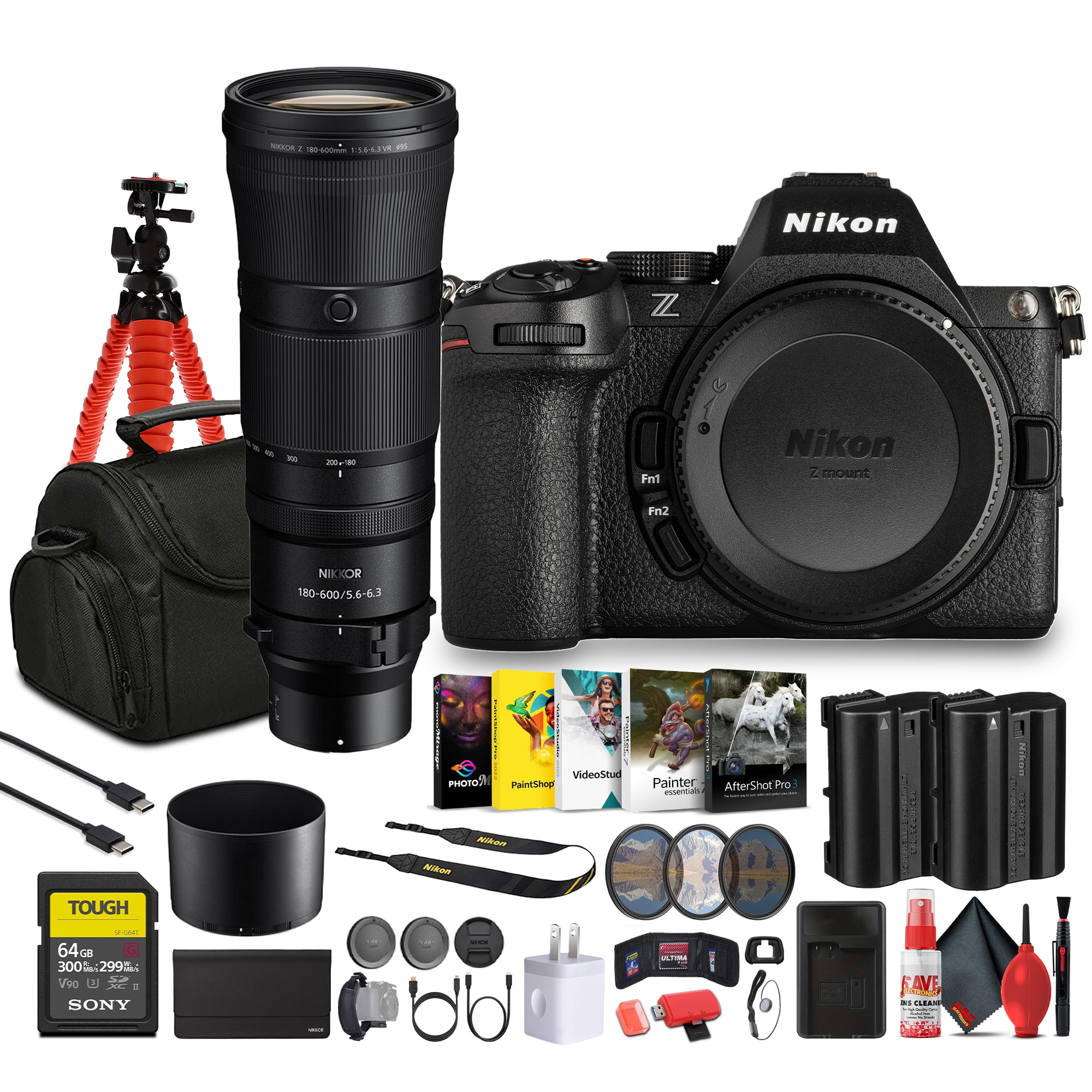
Autofocus and Image Quality
The Z5 II uses Nikon’s EXPEED 7-based autofocus system with subject detection. It can recognize common subjects such as people, animals, vehicles, and aircraft, depending on the selected autofocus mode.
For people, Eye-Detection AF can help keep focus on the eye instead of the clothing or background. This is useful for portraits and family photography, but it is not a substitute for choosing the right focus area or checking the image.
Low-light autofocus
Nikon lists autofocus performance down to very low light levels when the camera is set up under the stated conditions. Actual results depend on the lens aperture, subject contrast, available light, and autofocus mode.
The 24-50mm lens can make low-light autofocus more difficult because its maximum aperture becomes smaller as you zoom in. A fast prime, such as a 35mm or 50mm lens with a wider aperture, can give the autofocus system more light to work with.
In-body image stabilization
The Z5 II includes sensor-shift vibration reduction. Nikon states that the system can provide up to 7.5 stops of compensation under specified conditions.
That number is a test-based maximum, not a promise for every photograph. Results vary with focal length, shooting technique, subject movement, and the direction of camera shake.
Stabilization helps most when:
- The subject is still
- You are shooting handheld
- The shutter speed is slow
- You want to keep ISO lower
It cannot stop motion blur from a moving child, pet, athlete, or vehicle.
Image quality in practical use
The 24.5MP sensor gives enough resolution for:
- Large household prints
- Online galleries
- Cropping for many everyday subjects
- Portraits and travel images
- Commercial work with reasonable framing discipline
A high-resolution camera may give more cropping room, but resolution is only one part of image quality. Good light, accurate focus, lens performance, and careful exposure still matter.

Video Features and Limits
The Nikon Z5 II can record 4K video at up to 60 frames per second, but 4K/60p uses a crop. That crop narrows the field of view compared with full-width 4K modes.
The camera also supports Full HD recording at higher frame rates, including slow-motion options. The exact recording mode affects resolution, crop, autofocus behavior, and file size.
The Z5 II works well for
- Travel videos
- Family clips
- Interviews
- Product demonstrations
- YouTube videos
- Short-form social video
- Basic documentary work
The vari-angle screen helps when the camera is placed low, high, or facing the operator. A microphone input can improve sound quality over the built-in microphones, while headphones help monitor recorded audio when supported by the selected setup.
Video limitations to understand
The 24-50mm lens is compact, but its changing aperture can affect exposure as you zoom. It also does not offer the reach needed for distant subjects.
The camera is not the best fit if you need:
- Full-width 4K at 60p
- Long recording sessions in hot conditions
- Extensive professional video connections
- A built-in cooling fan
- High-end cinema workflow features
For casual and serious hobby video, it has a useful feature set. For demanding commercial video, Nikon’s Z6 III, Z8, or dedicated cinema options may be a better match.
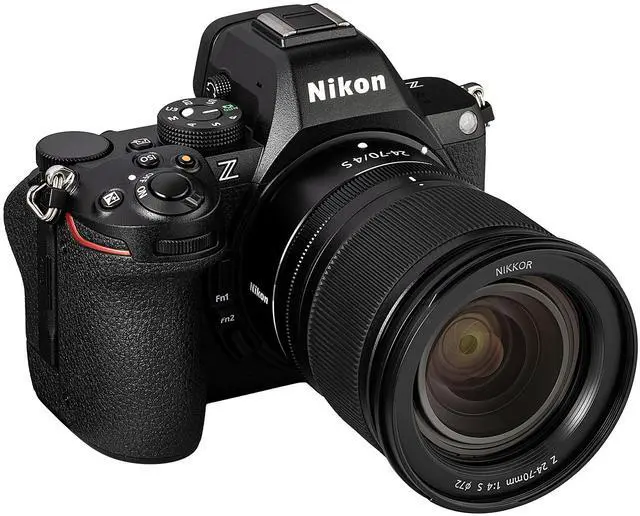
Is the Nikon Z5 II Lightweight?
The camera body is not an ultra-light camera. A full-frame body with a battery and memory card weighs about 700g. The 24-50mm lens is light, so the combined kit remains much easier to carry than a full-frame camera paired with a large professional zoom.
The kit’s advantage is not that it is weightless. Its advantage is the balance between full-frame capability and manageable size.
A smaller APS-C or Micro Four Thirds kit may still be lighter. However, the Z5 II gives you the full-frame look, a larger sensor, and access to Nikon’s growing Z-mount lens system.
Carrying comfort depends on the lens
The body can feel compact with the 24-50mm lens. It becomes noticeably larger with lenses such as:
- 24-70mm f/2.8
- 70-200mm f/2.8
- 100-400mm
- Large fast prime lenses
If your goal is a travel camera, the lens choice matters as much as the camera body.
Suggested carry setup
For a small daily kit, consider:
- Nikon Z5 II body
- NIKKOR Z 24-50mm f/4-6.3
- One spare EN-EL15c battery
- Two UHS-II SD cards
- Small shoulder bag or compact backpack
- Lens cloth and blower
- USB-C charging or a dedicated charger
Avoid storing loose batteries or memory cards where dust and moisture can reach the contacts.
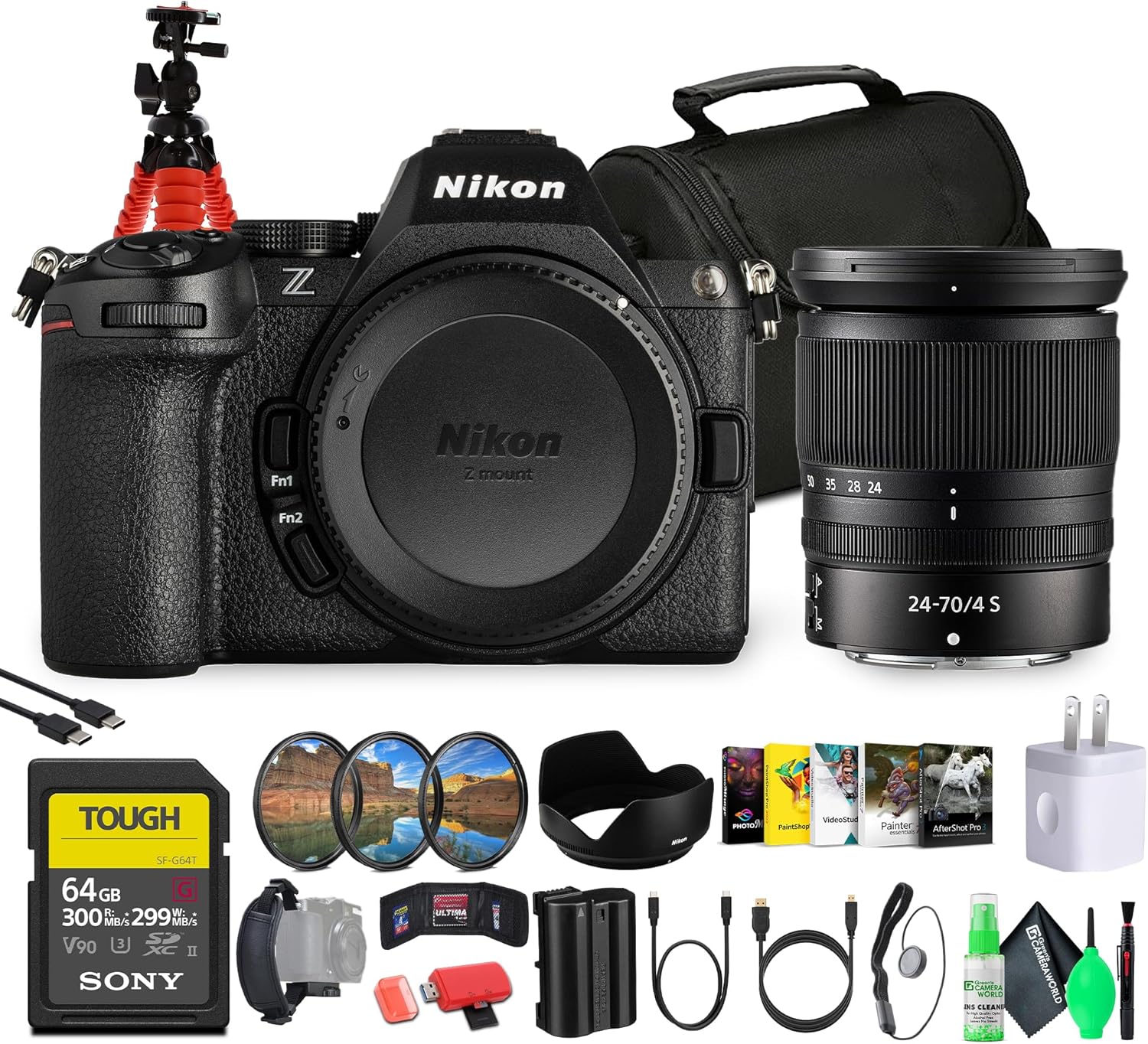
Nikon Z5 II Compared With Other Nikon Cameras
The best Nikon camera depends on what limits your current setup. The Z5 II is not automatically the right choice for every photographer.
| Camera | Best fit | Key advantage over the Z5 II | Main trade-off |
|---|---|---|---|
| Nikon Z5 II | Travel, portraits, family, general full-frame work | Balanced features and two card slots | 4K/60p crop and modest lens kit |
| Nikon Z6 III | Action, hybrid work, advanced video | Faster sensor and stronger performance | Higher price |
| Nikon Z8 | High-resolution photo and professional video | 45.7MP and advanced recording | Larger files and higher cost |
| Nikon Zf | Retro-style controls and creative photography | Distinct design and full-frame sensor | Ergonomics may not suit every user |
| Nikon Z50 II | Smaller, lower-cost system | Lighter body and APS-C reach | Smaller sensor and fewer full-frame benefits |
Choose the Z5 II if you value balance
The Z5 II is a sensible choice when you want a single camera for many tasks. It has enough speed for family and travel photography, two card slots for extra flexibility, and stabilization for handheld stills.
Choose a different model if speed is your priority
A sports photographer, wildlife shooter, or advanced video creator may benefit from a faster and more specialized Nikon body. The Z5 II can photograph action, but its overall design prioritizes general use rather than maximum speed.

Nikon Z5 II Price, Kit Contents, and Buying Advice in the U.S.
Nikon’s U.S. launch pricing placed the Z5 II below the Z6 III and Z8. The camera was offered as a body-only model and in a kit with the NIKKOR Z 24-50mm lens. Retail prices and promotions can change, so check Nikon USA and authorized U.S. dealers before purchase.
A kit is usually the better starting point if you do not already own a compatible Nikon Z lens. The bundled lens costs less than buying a separate body and lens in many sales periods, and it gives you a usable everyday focal range immediately.
Check these items before ordering
- Confirm that the listing is for the Nikon Z5 II, not the older Nikon Z5.
- Check whether the kit includes the NIKKOR Z 24-50mm f/4-6.3.
- Confirm that the seller is authorized to provide Nikon U.S. warranty service.
- Check whether the listing is new, refurbished, or gray-market.
- Verify the included battery, charger, strap, and manuals.
- Add the cost of memory cards and a spare battery.
Gray-market equipment may have a lower price, but warranty service and regional support can differ. Read the seller’s warranty terms before paying.

Recommended Settings for New Z5 II Owners
Start with simple settings, then add features as you learn the camera.
Everyday photography
- Exposure mode: Aperture priority
- File type: RAW and JPEG if you want both editing flexibility and quick sharing
- Autofocus: AF-S for still subjects
- Focus-area mode: Wide-area AF or Auto-area AF
- Auto ISO: On
- Vibration reduction: On when shooting handheld
People and family photos
- Autofocus mode: AF-C for moving subjects
- Subject detection: People
- Focus-area mode: Auto-area AF or Wide-area AF
- Shutter speed: Around 1/250 second or faster for active people
- Aperture: Use the widest available aperture for more subject separation
The 24-50mm lens cannot create the same blur as a fast portrait lens. If background blur is a major goal, consider a 50mm f/1.8 or 85mm prime lens later.
Travel and landscapes
- Use 24mm for broad scenes
- Use a tripod for long exposures
- Lower ISO when the camera is stable
- Check highlights in the histogram
- Use electronic front-curtain or electronic shutter modes when appropriate
A tripod does not prevent subject movement. Water, leaves, people, and traffic may still blur during a long exposure.
Video
- Set shutter speed based on your frame rate
- Use a microphone for clearer dialogue
- Check the crop at 4K/60p
- Watch exposure changes when zooming
- Keep spare batteries available for long sessions

Common Nikon Z5 II Mistakes to Avoid
Mistake 1: Expecting the 24-50mm lens to replace every lens
The kit lens is a general-purpose zoom. It is not designed for wildlife, distant sports, or strong low-light performance.
Mistake 2: Using stabilization to freeze movement
Image stabilization reduces camera movement. It does not freeze a moving subject. Raise the shutter speed when people or animals move.
Mistake 3: Ignoring the lens aperture at 50mm
At 50mm, the lens reaches f/6.3. That may require higher ISO or slower shutter speeds indoors.
Mistake 4: Choosing 4K/60p without checking the crop
The camera’s 4K/60p mode narrows the view. Test your framing before an important recording.
Mistake 5: Buying the wrong memory cards
Use compatible, fast UHS-II SD cards from a reliable brand. Slow or unreliable cards can reduce recording options and increase the risk of file problems.
Mistake 6: Judging autofocus from one poor image
Missed focus can result from low contrast, subject movement, poor shutter speed, an incorrect focus mode, or a blocked subject. Review several frames and check the settings before blaming the camera.

Who Should Buy the Nikon Z5 II With the 24-50mm Lens?
The kit is a strong match for U.S. photographers who want:
- A full-frame camera for travel and daily use
- A compact kit that fits in a small bag
- Good autofocus for people and common subjects
- Two memory-card slots
- Handheld image stabilization
- A camera that can grow with additional Z lenses
- Better low-light flexibility than many small-sensor cameras
It may not be the best choice for someone who needs:
- Long telephoto reach
- A bright zoom lens
- Full-width 4K/60p
- The smallest possible camera
- The fastest camera for professional action
- Strong background blur from the kit lens alone
The central trade-off is clear: the 24-50mm kit is easy to carry, but its compact size comes with a short range and a slow variable aperture.

Frequently Asked Questions
Is the Nikon Z5 II a professional camera?
The Z5 II is a capable full-frame camera, but it is positioned as a general-purpose model rather than Nikon’s top professional body. It has features such as dual card slots, stabilization, and advanced autofocus, but the Z6 III and Z8 offer stronger options for demanding sports, video, and commercial work.
Is the 24-50mm lens good for portraits?
It can produce attractive environmental portraits, especially around 50mm. However, its f/6.3 aperture at 50mm provides less background blur and low-light ability than a 50mm f/1.8 or 85mm prime lens.
Can the Nikon Z5 II photograph sports?
Yes, but its suitability depends on the sport, distance, and light. The camera can focus on moving subjects, but the 24-50mm lens is too short for many field sports and wildlife situations. A telephoto lens is usually more important than the camera body.
Does the Nikon Z5 II have a crop in 4K/60p?
Yes. The 4K/60p mode uses a crop, which gives you a narrower view than full-width video modes. This matters when filming in small rooms or using a wide lens.
Is the Nikon Z5 II good for travel?
Yes, especially with the 24-50mm lens. The kit covers common travel focal lengths and is smaller than many professional full-frame combinations. Travelers who need distant subjects may want to add a telephoto zoom.
Final Recommendation
The Nikon Z5 II with the NIKKOR Z 24-50mm f/4-6.3 is a balanced full-frame mirrorless kit for U.S. buyers who want strong image quality without carrying a large lens. The camera offers modern autofocus, in-body stabilization, two card slots, and useful video features.
Its main limitation is the lightweight zoom lens. The 24-50mm range is practical, but the slow f/4-6.3 aperture is not ideal for dark interiors, fast action, or strong background blur.
Choose this kit when portability and general photography matter most. Plan to add a fast prime or telephoto lens later if your interests expand into portraits, low-light work, sports, or wildlife.

