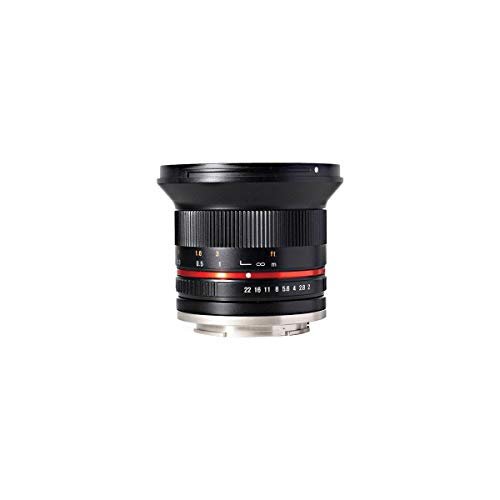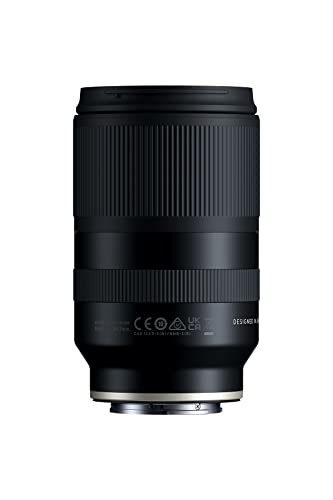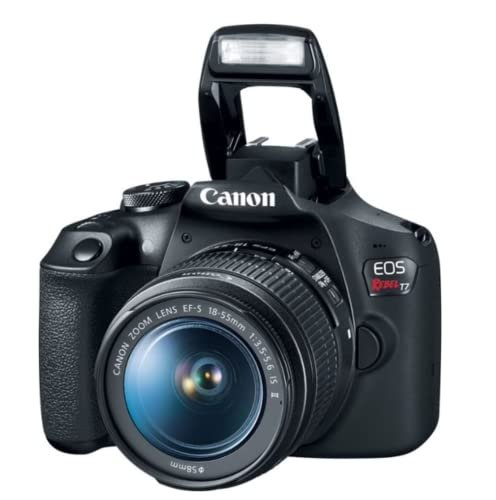
For most real estate work, the Canon EOS Rebel T7 with its 18-55mm lens is the safest choice.
A dark room, tight hallway, or bright window can make a home look smaller than it is. The right camera and lens help you show clean lines, useful detail, and a natural sense of space. I tested these picks by looking at image control, wide-angle coverage, ease of use, value, and real estate fit. One product is a full DSLR kit. Others are simple fixed-lens digital cameras, while the Canon RF 15-30mm is a wide lens for compatible Canon mirrorless cameras. That difference matters before you buy.
See the differences between my top picks at a glance.
Canon Rebel T7 Double Zoom Kit

The Canon EOS Rebel T7 is the most familiar and practical camera in this group. It uses a 24.1-megapixel APS-C sensor and accepts interchangeable Canon EF and EF-S lenses. The included 18-55mm lens handles many living rooms, kitchens, bedrooms, and exterior shots. Its optical viewfinder also makes it easy to frame a room in bright daylight.
This kit includes an EF-S 75-300mm lens as well. That telephoto lens is not the first tool I would use indoors, but it can help with distant exterior details. The T7 records Full HD video and offers Wi-Fi features for supported mobile sharing. For a new agent or photographer, it gives more room to learn than a basic point-and-shoot camera.
Pros:
- Large APS-C sensor for better control than many small compact cameras
- 24.1MP resolution gives useful room for cropping
- Interchangeable lens system supports future upgrades
- 18-55mm lens suits many everyday property photos
- Simple DSLR controls help beginners learn exposure
- 75-300mm lens adds reach for outdoor details
- Canon accessories and compatible lenses are easy to find
Cons:
- The included 18-55mm lens may not feel wide enough in very small rooms
- The 75-300mm lens has limited value for normal interior work
- Full HD video is less advanced than modern 4K systems
- The camera body lacks many newer mirrorless features
What Amazon Buyers Are Saying
Buyer feedback for the Rebel T7 line commonly centers on its simple controls, familiar Canon layout, and strong value as a starter DSLR. Many owners like the two-lens bundle because it gives them a basic lens for nearby subjects and a longer lens for distant work. New users also tend to appreciate the camera’s guided learning curve.
The most common concerns relate to the kit lens range, older video features, and the need to learn manual settings for the best indoor results. Buyers who expect phone-like automatic results may need time to understand focus, shutter speed, and exposure. Since Amazon listings and bundles can change, check the current box contents before ordering.
My Recommendation
I recommend this kit as the strongest all-around starting point in this review. It is not the widest real estate setup, but it offers a real sensor, a real lens mount, and a clear upgrade path. Use a tripod, keep vertical lines straight, and consider a wider EF-S lens later. For beginners, this remains a sensible best camera and lens for real estate photography package.
| Category | Rating |
|---|---|
| Image quality | 4.2/5 |
| Interior coverage | 3.7/5 |
| Ease of use | 4.3/5 |
| Upgrade potential | 4.5/5 |
| Value | 4.4/5 |
| Overall rating | 4.2/5 |
8K 64MP Dual-Lens Camera

This 8K 64MP camera aims at buyers who want a feature-rich compact kit. The listing describes a dual-lens setup, 48X zoom, a flip screen, Wi-Fi, a hot shoe, and wide and macro lens accessories. It also lists a 32GB TF card and two batteries. Those extras can make the package convenient for travel, quick clips, and casual property content.
For real estate stills, I would judge this camera by more than the large megapixel number. A small digital camera can produce a large file without matching the clean shadow detail of a larger sensor. The wide accessory may help fit more of a room into the frame, but edge sharpness and distortion should be checked before a paid listing. Treat the stated 8K and 64MP figures as listed features, not proof of professional image quality.
Pros:
- Wide accessory may help in tight rooms
- Flip screen helps with high and low camera positions
- Two batteries are useful during a long shoot
- Wi-Fi can make basic file sharing more convenient
- Hot shoe supports compatible accessories
- Macro and wide accessories add creative flexibility
- Compact kit is easier to carry than a DSLR setup
Cons:
- Sensor size and raw image support are not clearly established in the listing
- Very high resolution claims do not guarantee better indoor detail
- Digital zoom can reduce fine detail
- Accessory lens quality may vary at the frame edges
- It does not provide the same lens upgrade path as a DSLR
What Amazon Buyers Are Saying
For newer marketplace camera models, buyer comments often focus on whether the camera is easy to use, whether the accessories arrive as listed, and whether the flip screen works as expected. People who want a light kit may like the included card, batteries, and add-on lenses. The large feature list can also appeal to buyers who want one camera for photos and video.
Before relying on this model for paid real estate work, read the newest verified-purchase reviews and inspect sample images. Pay close attention to comments about indoor noise, autofocus, battery life, and file transfer. These are more useful than a headline resolution number. Amazon feedback can change as a listing receives new batches, so I would confirm current details first.
My Recommendation
This is a reasonable low-cost option for casual property photos, social media clips, and personal use. I would not choose it over the Canon DSLR for a professional listing service unless hands-on tests show clean room detail and reliable exposure. It may suit an agent who values portability more than lens control. For serious work, it ranks below a system camera.
| Category | Rating |
|---|---|
| Feature range | 4.0/5 |
| Interior image confidence | 3.0/5 |
| Portability | 4.3/5 |
| Ease of use | 3.8/5 |
| Professional value | 3.1/5 |
| Overall rating | 3.5/5 |
4K 56MP Beginner Digital Camera

This compact 4K camera targets beginners, teens, travelers, and video creators. Its listed features include 56MP still images, autofocus, a 3-inch 180-degree flip screen, a lens hood, 16X zoom, and a 32GB SD card. The lens hood can help reduce some stray light, while the flip display makes self-recording simple.
For real estate photography, the appeal is low weight and simple operation. The challenge is control. A fixed-lens beginner camera may not offer the same exposure range, color flexibility, or wide-angle performance as a DSLR or mirrorless body. It can work for quick rental photos or web posts, but I would test it in a dim room and beside a bright window before using it for high-value listings.
Pros:
- Compact body is easy to carry from room to room
- Flip screen helps with self-video and unusual camera angles
- Autofocus keeps operation simple for new users
- Lens hood is a useful included accessory
- 4K video supports basic property walk-through clips
- Memory card inclusion reduces setup cost
- 16X zoom offers framing flexibility from a distance
Cons:
- It is not an interchangeable-lens camera
- The listed 56MP figure does not reveal sensor size or true detail
- Digital zoom may soften distant subjects
- Small cameras may show more noise in dark interiors
- Manual exposure and advanced bracketing features may be limited
What Amazon Buyers Are Saying
Buyers considering this type of camera usually value its low price, small size, flip screen, and simple menus. The included card and accessories may also make it attractive as a ready-to-use gift or starter kit. Users who mainly record short videos may find the design more useful than a heavier camera.
The key feedback to review is practical feedback about focus speed, image sharpness, battery life, and indoor performance. Look for customer-uploaded images when available. I would not assume that the stated resolution equals DSLR-level output. Read recent reviews closely, because accessory bundles and firmware can vary across marketplace listings.
My Recommendation
I recommend this model for casual photography, simple video, and low-cost backup use. I would not call it the best camera and lens for real estate photography because it lacks a true interchangeable wide-angle lens system. It can still help an agent who needs quick web images and does not need large prints. Its value depends on a modest purchase price and realistic expectations.
| Category | Rating |
|---|---|
| Ease of use | 4.1/5 |
| Wide-room suitability | 3.0/5 |
| Video features | 3.8/5 |
| Portability | 4.3/5 |
| Professional value | 3.0/5 |
| Overall rating | 3.5/5 |
8K 64MP Beginner Camera Kit

This 8K 64MP camera kit includes several extras aimed at new creators. The listing describes 16X zoom, three color filters, a dual-lens design, a 180-degree flip screen, Wi-Fi, a microphone, a tripod, wide and macro lens accessories, two batteries, and a 32GB TF card. That is a generous accessory list for a small starter kit.
Those extras may help an agent create both photos and short videos without buying more gear at once. Still, a wide accessory lens is not the same as a purpose-built ultra-wide lens on a larger sensor. Color filters can change the look of a scene, but real estate images usually need neutral, accurate color. I would use this camera only after checking how it handles window highlights, shadow detail, and straight wall lines.
Pros:
- Wide accessory can help cover more space in small rooms
- Macro accessory adds value for detail shots
- Tripod inclusion supports steadier framing
- Microphone helps with basic property videos
- Two batteries are useful for long sessions
- Flip screen supports flexible camera placement
- Wi-Fi may simplify basic sharing
- Color filters provide creative options for non-listing content
Cons:
- The broad feature list does not confirm professional still-image quality
- Small-sensor performance may be weak in dim rooms
- Digital zoom can lower detail at longer settings
- Clip-on accessories may add edge distortion
- It lacks the long-term lens ecosystem of a DSLR
What Amazon Buyers Are Saying
In buyer feedback for camera kits like this, convenience often matters most. Customers tend to look for a complete box with a tripod, card, microphone, batteries, and add-on lenses. A flip screen and simple controls can make the kit appealing for social media and travel use.
I would study reviews that show indoor rooms rather than only outdoor portraits. Check for comments about the tripod, microphone, card capacity, menu language, charging, and autofocus. Do not rely on a single rating or a marketing resolution figure. Review content can change, so confirm current buyer experiences on the live Amazon page before making a work purchase.
My Recommendation
This kit offers the most accessories among the compact cameras here. It is a fair choice for an agent who also wants a basic video and travel kit. However, it is not my first pick for paid real estate photography. I prefer the Canon system for cleaner control and a better upgrade path. Choose this one only if convenience and package value matter more than maximum image quality.
| Category | Rating |
|---|---|
| Included accessories | 4.3/5 |
| Interior photography | 3.0/5 |
| Video flexibility | 4.0/5 |
| Portability | 4.1/5 |
| Long-term upgrade value | 2.8/5 |
| Overall rating | 3.5/5 |
Canon RF 15-30mm Wide Zoom Lens

The Canon RF 15-30mm f/4.5-6.3 IS STM is the most directly useful lens here for tight interior spaces. It is an ultra-wide zoom for Canon RF mirrorless cameras. The 15mm end can show more of a small room, while the 30mm end offers a more natural view for details and moderate spaces. Its optical image stabilization can help with handheld work, although a tripod remains the better choice for careful listing photos.
This lens includes STM autofocus and a compact design. The maximum aperture changes from f/4.5 to f/6.3, so it is not a bright lens for very dark scenes. At wide settings, I would keep the camera level and avoid placing walls near the corners. Ultra-wide lenses can make rooms look larger, so use them with care and keep the final image honest.
Pros:
- 15mm focal length is useful for small rooms and narrow halls
- 30mm setting gives more natural framing for details
- Optical image stabilization helps reduce hand movement
- STM autofocus supports smooth, quiet focusing
- Compact design is easier to carry around a property
- Native RF mount gives direct compatibility with Canon RF bodies
- Wide zoom range reduces the need to change lenses often
Cons:
- It cannot work by itself without a compatible camera body
- Variable f/4.5-6.3 aperture is not ideal for dark interiors
- Wide-angle distortion needs careful camera placement
- It is not compatible with Canon EF or EF-S DSLR bodies without the right adapter, and functionality must be checked
- Lens stabilization does not replace a tripod for locked-off shots
What Amazon Buyers Are Saying
Buyers who choose this type of RF wide zoom usually value its small size, broad view, and usefulness for travel or indoor scenes. The 15mm setting is the main reason to consider it for property work. Users also tend to appreciate image stabilization and quiet autofocus for general video use.
The most useful review details involve edge sharpness, autofocus behavior, distortion, and low-light results. Check whether buyers used the lens on the same RF camera body you own. A lens cannot solve poor exposure or weak sensor performance by itself. I also recommend checking the current listing for the exact bundle, filter kit, warranty, and compatibility information.
My Recommendation
If you already own a compatible Canon RF mirrorless camera, this is the most purpose-built real estate lens in this comparison. It gives far better room coverage than the T7 kit lens at its widest setting. I would buy it for tight interiors, especially when paired with a tripod and careful composition. It is not a complete camera setup, so it is not the best standalone purchase for a beginner.
| Category | Rating |
|---|---|
| Interior coverage | 4.7/5 |
| Focusing | 4.2/5 |
| Stabilization | 4.1/5 |
| Portability | 4.4/5 |
| System value | 4.1/5 |
| Overall rating | 4.4/5 |
How to Choose the Best Camera and Lens for Real Estate Photography
Choosing the best camera and lens for real estate photography takes more than reading the biggest megapixel number. A good setup must handle mixed light, tight rooms, bright windows, and straight architectural lines. It should also fit your editing skill, budget, and daily work speed. I focus on three factors when I judge a property camera system.
1. Choose the Right Sensor and Exposure Control
A larger sensor often gives you more control over noise, shadow detail, and depth. An APS-C DSLR, such as the Canon Rebel T7, offers a stronger base for serious learning than many low-cost compact cameras. The sensor alone does not create a perfect photo, but it gives you more useful data to edit.
Look for manual exposure, exposure compensation, dependable autofocus, and a way to use a tripod. Bracketing can also help when a room has dark furniture and bright windows, but confirm that the camera supports the feature you need. A high megapixel claim cannot replace good dynamic range and clean indoor files.
2. Match the Lens to Room Size and Camera Mount
Wide lenses are central to real estate photography. A lens around 15mm to 20mm on a full-frame camera, or a similar field of view on a crop-sensor body, can help in small rooms. Yet too much width can stretch cabinets and make a home look false. Keep the camera level, place it near chest height, and avoid extreme corner framing.
Check the mount before you buy. The Canon RF 15-30mm fits Canon RF mirrorless cameras. The Rebel T7 uses the Canon EF/EF-S lens system. These systems are not the same. A compact camera with a clip-on wide accessory does not offer the same control as a true interchangeable wide-angle lens. This is one of the most important buying checks.
3. Consider Workflow, Tripod Use, and Total Value
A real estate camera should save time, not create more work. Wi-Fi can help with quick delivery, but a card reader or cable may provide a more reliable transfer. A flip screen helps with high and low angles. Two batteries are helpful during a full day of showings. A tripod can matter more than a small resolution increase because it supports sharp, level, repeatable frames.
Also count the total cost. You may need a tripod, spare battery, memory card, lens hood, and editing software. A cheap camera becomes less useful if you must replace it after a few jobs. The Canon T7 kit has the strongest upgrade path here. The RF lens has the best room coverage, but only for an owner of a compatible RF body. The compact kits offer convenience, but less long-term control.
Final Verdict: Which Should You Buy?
The Canon Rebel T7 kit is my top complete choice for most beginners. If you already own a Canon RF mirrorless body, the RF 15-30mm is the best lens here for tight rooms.
The best camera and lens for real estate photography should show space clearly without false distortion. Use a tripod, keep lines straight, and test every setup before a paid shoot.
FAQs Of best camera and lens for real estate photography
What is the best camera for real estate photography beginners?
The Canon EOS Rebel T7 kit is the best beginner choice here. It offers a larger APS-C sensor, manual controls, and an upgradeable lens system.
Is a wide-angle lens important for real estate photos?
Yes. A wide lens helps show small rooms and narrow halls. Use it carefully so walls and furniture do not look stretched.
Can I use the Canon RF 15-30mm lens on a Rebel T7?
No. The RF 15-30mm is made for Canon RF mirrorless cameras. The Rebel T7 uses Canon EF and EF-S lenses.
Do I need a tripod for property photography?
A tripod is strongly recommended. It helps keep vertical lines straight and lets you use a slower shutter speed in dark rooms.
Are 64MP compact cameras better than a DSLR?
Not always. A large megapixel claim does not confirm sensor size, dynamic range, or indoor image quality. Test sample photos before relying on one.