Cheap GFX lenses can deliver strong image quality when you match the focal length, focus system, and shooting style.
A Fujifilm GFX camera offers a large sensor, but native lenses can cost a lot. That can make portraits, macro work, and creative wide-angle shots feel out of reach. I reviewed several lower-cost options for the Fuji G mount, including manual-focus lenses, one autofocus portrait lens, and a fixed-lens GFX camera alternative. The goal is simple: help you find a cheap GFX lens that fits your work without wasting money on features you do not need.
See the differences between my top picks at a glance.
AstrHori 8mm F2.4 GFX Fisheye Lens

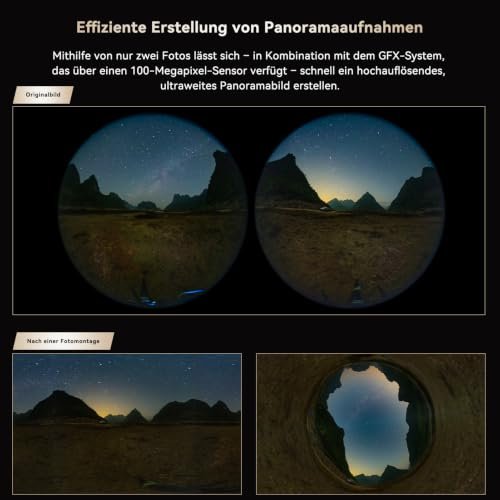
The AstrHori 8mm F2.4 takes a very different approach to GFX photography. It creates an extremely wide circular fisheye image, with a stated 220-degree view. That look can show the full curve of a room, sky, or large scene. It suits photographers who want a special effect rather than a normal wide-angle view.
This lens uses manual focus and a clicked aperture ring. Its 0.1-meter closest focusing distance also lets you place a subject close to the front of the lens. The F2.4 aperture gives useful light for indoor creative work, but this remains a specialty lens. I would not choose it as a first or only GFX lens.
Pros:
- Very wide 220-degree circular view
- Distinctive fisheye effect for creative images
- F2.4 aperture helps in lower light
- Close 0.1-meter focusing distance
- Manual controls feel direct and simple
- Useful for interiors, landscapes, and experimental work
Cons:
- Manual focus needs care and practice
- Circular fisheye images have limited everyday use
- Strong distortion may not suit architecture or portraits
- Small objects or bright lights may show edge artifacts
What Amazon Buyers Are Saying
Buyer feedback for specialty lenses often focuses on the unusual image style, build feel, and fit on the camera body. I recommend checking the latest Amazon reviews for current comments about focusing, image circles, and handling. Because this lens has a very specific purpose, buyers who understand fisheye imaging tend to be better matched than buyers seeking a normal wide lens.
My Recommendation
I recommend the AstrHori 8mm F2.4 for an experienced GFX owner who wants a low-cost creative lens. It offers a view that standard lenses cannot copy. It is not the best value for general photography, but it can be an exciting addition to a small kit.
Meike GF 85mm F1.8 AF Portrait Lens

The Meike GF 85mm F1.8 AF is the most practical option here for many portrait photographers. Its 85mm focal length gives a natural portrait view on a medium-format GFX body. The F1.8 aperture can separate a person from the background and help keep shutter speeds higher. It also offers autofocus, which makes it easier to use at events and during moving portraits.
Meike lists an STM motor for smoother focus movement. The lens is designed for Fujifilm G Mount cameras, including several GFX100 and GFX50 models listed by the manufacturer. I like this balance of price, speed, and convenience because it removes the main drawback of many cheap GFX lens choices: manual focusing.
Pros:
- Autofocus supports faster portrait shooting
- F1.8 aperture creates a soft background effect
- 85mm focal length works well for headshots
- STM motor aims for smooth focus movement
- Good fit for portraits, weddings, and family sessions
- More approachable for users moving from smaller formats
Cons:
- Autofocus performance can vary by camera and firmware
- F1.8 depth of field needs careful eye focus
- It may feel large on smaller GFX bodies
- It lacks the extreme reach of a telephoto lens
What Amazon Buyers Are Saying
When reading Amazon feedback for an autofocus lens, I would focus on repeated comments about focus speed, eye detection, sharpness, and communication with the camera. Individual reports can differ by GFX body and firmware. Buyers should also look for recent reviews that confirm mount fit and autofocus behavior on their exact camera.
My Recommendation
The Meike 85mm F1.8 AF is my top pick for most people who want an affordable GFX portrait lens. Autofocus gives it a major advantage over the manual options in this guide. If you shoot portraits, people, or small events, this is the cheap GFX lens I would consider first.
TTArtisan 100mm F2.8 2X Macro Lens

The TTArtisan 100mm F2.8 2X Macro is built for close-up work. It offers up to 2X macro magnification and a stated close focus distance of 9.8 inches. That makes it useful for small products, insects, textures, jewelry, and detail studies. The 100mm focal length also gives you more working distance than a short macro lens.
This is a manual-focus lens with an all-metal design and a 12-blade aperture. Its six high-index elements and multilayer coating support the lens design, but the final image still depends on careful technique. Macro depth of field is very thin, so a tripod, focus rail, or focus stacking may help when you need more detail in focus.
Pros:
- 2X magnification reaches very small subjects
- 100mm focal length gives useful working distance
- Manual focus allows precise control for macro work
- All-metal body feels solid in the hand
- 12-blade aperture can create smooth out-of-focus areas
- Useful for products, nature, craft, and studio detail shots
Cons:
- No autofocus for fast or moving subjects
- Macro focusing takes time and patience
- High magnification makes camera shake more visible
- Very shallow depth of field can frustrate new users
What Amazon Buyers Are Saying
For this type of macro lens, useful buyer comments usually cover focus-ring control, close-up sharpness, body weight, and the learning curve at 2X magnification. I would read recent reviews with sample images when possible. Pay close attention to whether reviewers used a tripod and which GFX body they owned, since technique strongly affects macro results.
My Recommendation
I recommend this TTArtisan lens to photographers who want serious close-up reach at a lower cost. It can offer strong value if you accept manual focus. It is less suitable for casual snapshots, but it is one of the most specialized and useful options in this cheap GFX lens group.
TTArtisan 90mm F1.25 Portrait Lens
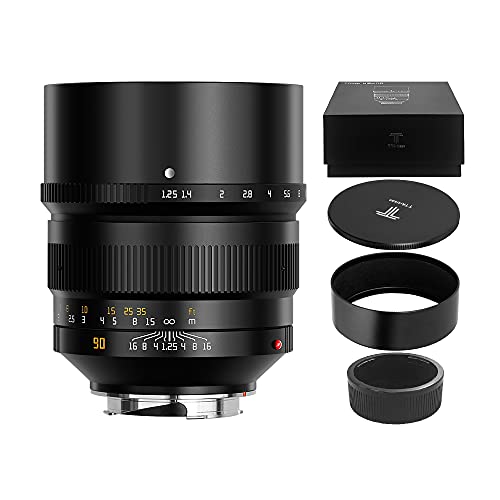
The TTArtisan 90mm F1.25 is made for photographers who value a very bright aperture and a strong portrait look. Its F1.25 setting can create a very thin focus plane and bold background blur. The 90mm focal length fits portraits well on a GFX system. It can also help in dim light when you can focus with care.
This lens uses manual focus and has a clicky aperture ring from F1.25 to F16. The maker lists four sets of achromatic doublets and a 27-degree field of view. A slight vignette may appear on GFX cameras, and the lens can be demanding at its widest aperture. Those traits can add character, but they also require a photographer who likes hands-on control.
Pros:
- Very bright F1.25 maximum aperture
- Strong background blur for portrait images
- 90mm view works well for head-and-shoulder portraits
- Clicky aperture ring gives clear setting feedback
- Manual design supports deliberate composition
- Useful for low-light portrait sessions
Cons:
- Manual focus is difficult at F1.25
- Large aperture creates an extremely thin focus area
- Slight GFX vignette may need correction
- Heavy lens designs can tire the hand
- Not the best choice for fast action
What Amazon Buyers Are Saying
Buyers considering a fast manual portrait lens should compare comments about the focus ring, image character, weight, and wide-open sharpness. Some photographers seek the soft, artistic look that can appear at F1.25. Others want cleaner detail and easier focus. Read current Amazon feedback and sample images before deciding which style matches your work.
My Recommendation
This TTArtisan 90mm F1.25 is worth buying for an enthusiast who enjoys manual portrait photography. It offers a special look that many slower lenses cannot provide. I would not suggest it for beginners who need reliable autofocus, but it is a compelling cheap GFX lens for controlled portraits.
Fujifilm GFX100RF Fixed-Lens Camera

The Fujifilm GFX100RF is not a cheap GFX lens. It is a complete medium-format camera with a fixed 35mm lens. I include it because some shoppers do not need interchangeable lenses at all. A fixed-lens system removes lens changes, adapter questions, and the need to build a kit.
The listed design combines a GFX sensor with a precision-engineered 35mm lens and a body weight of about 735 grams. This setup may suit street, travel, documentary, and daily photography. It costs more than the budget lens options above, so it should be viewed as a simple all-in-one alternative rather than a low-cost lens purchase.
Pros:
- Complete camera and lens system in one body
- 35mm lens suits travel and everyday scenes
- GFX sensor provides a large imaging area
- About 735 grams makes it easier to carry than some larger kits
- No need to buy or change separate lenses
- Useful for photographers who value a simple setup
Cons:
- It is not an interchangeable GFX lens
- Fixed focal length limits framing choices
- Higher purchase cost than the other products here
- Not ideal for close macro or long telephoto work
What Amazon Buyers Are Saying
For a new camera, I would check current buyer reviews for battery life, menu use, autofocus, lens handling, and portability. Reviews may also compare the fixed 35mm view with the buyer’s former camera. Since user needs vary widely, look for feedback from photographers who shoot the same subjects you do.
My Recommendation
I recommend the GFX100RF only if you want a complete fixed-lens camera. It is not the right answer for someone searching for an inexpensive lens for an existing GFX body. However, it may deliver better long-term value for a photographer who prefers one compact, high-resolution setup.
How to Choose a Cheap GFX Lens
Choosing a cheap GFX lens takes more care than choosing a low-cost lens for a smaller camera. GFX bodies use a large sensor and the Fuji G mount. The lens must cover that sensor and fit your exact camera. Before buying, check the product listing, mount name, camera compatibility, return policy, and current buyer feedback.
1. Match the Focal Length to Your Subject
Start with the kind of photos you make most often. An 8mm fisheye lens creates a strong circular effect. It works for art, interiors, and bold landscapes, but it does not replace a normal wide lens. An 85mm or 90mm lens suits portraits. A 100mm macro lens suits small subjects and detail work.
Think about working distance, too. A portrait lens lets you stand farther from a person than a wide lens. A macro lens lets you fill the frame with a small object. If you buy the wrong focal length, even a sharp lens may stay in your camera bag.
2. Decide Between Autofocus and Manual Focus
Autofocus saves time. It helps with children, events, moving people, and street scenes. The Meike 85mm F1.8 AF stands out because it adds autofocus to an affordable GFX portrait option. Still, autofocus behavior can differ between camera models, so check current compatibility details before ordering.
Manual focus can work very well for portraits, landscapes, and macro shots. It gives direct control and often lowers the price. Use focus peaking, magnified view, and a stable stance when possible. A tripod helps with macro work. If you dislike slow, careful focusing, choose an autofocus lens instead.
3. Check Aperture, Coverage, and Real Value
A wide aperture such as F1.25 or F1.8 can blur the background and help in dim light. Yet wide apertures also create a thin focus area. You may need to stop down for sharper edges or a larger area of focus. Do not pay for a very wide aperture if you mainly shoot at F5.6 or F8.
Also check whether the lens covers the full GFX sensor. Look for notes about vignetting, image circles, and edge performance. The AstrHori fisheye is designed for a special circular effect, while the TTArtisan 90mm may show slight vignette on GFX. Those traits are not always defects, but you should know about them before buying.
Finally, compare the complete cost. Add a filter, hood, tripod collar, case, or adapter only when needed. Read the warranty and return terms. A cheap GFX lens becomes poor value if it does not fit your camera or does not suit your normal work.
Final Verdict: Which Should You Buy?
For most buyers, the Meike GF 85mm F1.8 AF is the best choice. It combines portrait-friendly reach, a bright aperture, and autofocus at a more approachable price.
Choose TTArtisan for macro or artistic manual portraits, and AstrHori for fisheye effects. This guide makes finding a cheap GFX lens easier without ignoring fit, focus, or real-world use.
FAQs Of cheap gfx lens
What is the best cheap GFX lens for portraits?
The Meike GF 85mm F1.8 AF is the strongest general choice here. It offers an 85mm view, F1.8 aperture, and autofocus for easier portrait shooting.
Are cheap GFX lenses compatible with all Fujifilm GFX cameras?
No. Check the product listing and your camera model before buying. Confirm that the lens uses the Fujifilm G Mount and supports your body.
Is a manual-focus GFX lens hard to use?
It can take practice, especially at a wide aperture or high macro magnification. Focus peaking, magnified view, and a tripod can make manual focus much easier.
Which affordable GFX lens is best for macro photography?
The TTArtisan 100mm F2.8 2X Macro is the best match in this guide. Its 2X magnification and close focusing design suit detailed close-up work.
Is the Fujifilm GFX100RF a cheap GFX lens?
No. The GFX100RF is a complete fixed-lens medium-format camera. It may suit buyers who want an all-in-one system, but it is not a replacement lens for an existing GFX body.