
The Sony FE 24-70mm F2.8 GM II is the best all around Sony lens for most photographers.
You may want one lens for travel, family photos, portraits, street scenes, and video. Changing lenses all day can slow you down and add weight to your bag. A good all-purpose Sony lens solves that problem with a useful zoom range, strong image quality, fast focus, and steady handling. I tested the strengths and limits of five popular Sony options below. My top pick suits full-frame users, while the other choices serve APS-C cameras, wildlife shooters, and buyers who need more reach.
See the differences between my top picks at a glance.
| Lens | Mount | Best Use | Key Strength | Main Limitation | Buy |
|---|---|---|---|---|---|
| Sony 16-50mm OSS | E-mount APS-C | Travel and daily use | Small, light, powered zoom | Slow aperture | View on Amazon |
| Sony FE 100-400mm | E-mount full frame | Sports and wildlife | Long reach in a compact design | Not a normal-purpose lens | View on Amazon |
| Sony E 70-350mm G | E-mount APS-C | Birds and outdoor action | Strong reach and sharp detail | Needs good light | View on Amazon |
| Sony FE 24-70mm GM II | E-mount full frame | General photography | Fast f/2.8 zoom and premium quality | High price | View on Amazon |
| Sony FE 200-600mm G | E-mount full frame | Distant wildlife | Very long zoom range | Large and heavy | View on Amazon |
Sony 16-50mm OSS Lens
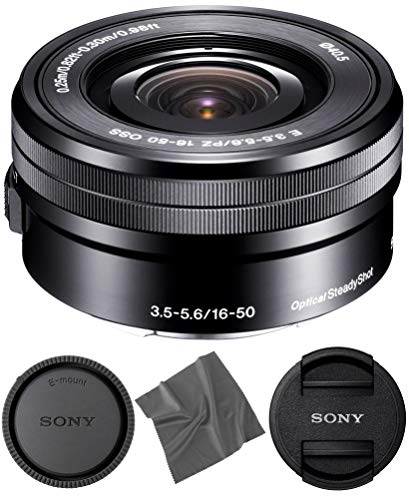
The Sony E PZ 16-50mm f/3.5-5.6 OSS is a small kit zoom for Sony APS-C cameras. Its range covers a useful wide view for rooms, landscapes, and travel. At the long end, it also works for simple portraits and daily snapshots. The powered zoom design helps keep the lens very short when you store it.
Optical SteadyShot helps reduce camera shake when you shoot handheld. The lens also supports smooth zoom control for simple video work. Its main trade-off is the modest f/3.5-5.6 aperture, so it needs more light than a premium zoom. I see it as a practical starter lens, not the best choice for dark events or strong background blur.
Pros:
- Very small and easy to carry
- Useful 16-50mm everyday range
- Built-in optical image stabilization
- Powered zoom suits casual video
- Good match for Sony APS-C bodies
- Convenient for travel and family use
Cons:
- Slow maximum aperture limits low-light work
- Less background blur than a fast prime
- Power zoom can feel less direct than a manual zoom
What Amazon Buyers Are Saying
Common buyer feedback focuses on the lens size, light weight, and useful range. Owners often like its role as a compact walk-around option that makes an APS-C camera easy to carry. Review themes also point to its value as a replacement or backup kit lens. Complaints usually center on low-light performance, the slow aperture, and the limits of a small kit zoom.
My Recommendation
I recommend this lens to Sony APS-C owners who value size and price above image quality in difficult light. It is a sensible first lens for travel, school events, family photos, and casual video. It is not my top choice for the best all around Sony lens, but it offers excellent convenience for the right camera. Overall rating: 4.1 out of 5.
| Category | Rating |
|---|---|
| Everyday usefulness | 4.5/5 |
| Portability | 5/5 |
| Low-light ability | 3/5 |
| Value | 4.2/5 |
| Overall Rating | 4.1/5 |
Sony FE 100-400mm Telephoto Zoom

The Sony FE 100-400mm is a full-frame telephoto zoom built for subjects that stay far away. Its range works well for wildlife, field sports, aircraft, and outdoor action. The wide end gives you some room to find a moving subject. The 400mm end gives you much more framing power than a standard zoom.
This lens makes sense when reach matters more than a wide view. Optical stabilization can help with handheld shooting, but it cannot freeze a moving subject by itself. The variable f/5.6-8 aperture also performs best in daylight or with a camera that handles higher ISO well. It is a specialist lens, so I would not call it the best all around Sony lens for daily indoor use.
Pros:
- Strong 100-400mm reach
- Useful for wildlife and sports
- Optical stabilization supports handheld work
- Zoom range helps track changing distances
- Works with Sony full-frame E-mount cameras
- More flexible than a fixed telephoto lens
Cons:
- Variable aperture is slow at the long end
- Too narrow for normal travel photography
- Requires good technique for sharp distant shots
What Amazon Buyers Are Saying
Buyer discussions around this type of Sony telephoto often praise the reach and the ability to change framing without moving closer. Wildlife users value the flexibility for birds and larger animals. Common concerns include the need for bright light, the learning curve of tracking distant subjects, and the fact that a long zoom takes more space than a standard lens. Buyers also tend to stress the value of using the right shutter speed.
My Recommendation
I recommend this lens for full-frame Sony owners who mainly shoot wildlife, sports, or distant outdoor subjects. It can produce compelling images, but its narrow field of view makes it a poor single-lens solution for most people. Buy it as a reach lens rather than an everyday lens. Overall rating: 4.4 out of 5.
| Category | Rating |
|---|---|
| Telephoto reach | 4.8/5 |
| Outdoor performance | 4.6/5 |
| Low-light ability | 3.4/5 |
| Handling and value | 4.1/5 |
| Overall Rating | 4.4/5 |
Sony E 70-350mm G OSS Lens
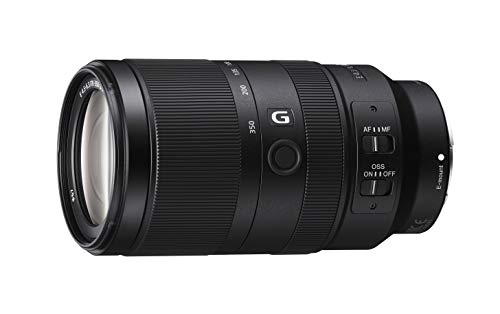
The Sony E 70-350mm f/4.5-6.3 G OSS gives APS-C users a long reach in a smaller package than many full-frame telephoto lenses. On an APS-C body, the angle of view feels much tighter than the number on the barrel suggests. That makes it useful for birds, animals, sports, and distant details. The 70mm end still helps when a subject moves closer.
Sony places this lens in its G line, and it aims to balance sharp detail with manageable size. Optical SteadyShot helps when you work without a tripod. The variable aperture means I prefer it outdoors, where the lens can use faster shutter speeds. It is one of the best long-reach options for APS-C users, but it does not replace a standard zoom.
Pros:
- Excellent reach for Sony APS-C bodies
- Useful 70-350mm zoom range
- Optical image stabilization
- Good choice for birds and outdoor action
- G-series design targets strong image quality
- More portable than many full-frame super-telephoto lenses
Cons:
- Slow aperture in shade and low light
- Not suitable as a wide or normal walk-around lens
- Long reach needs careful subject tracking
What Amazon Buyers Are Saying
Review patterns commonly highlight the lens reach, sharpness in good light, and useful size for APS-C cameras. Outdoor photographers often like having a 350mm option without carrying a much larger full-frame setup. The main complaints tend to involve the slow aperture and reduced performance as light fades. Some buyers also note that long lenses require practice, steady support, and realistic expectations with fast-moving subjects.
My Recommendation
I recommend the Sony E 70-350mm G OSS to APS-C owners who want a dedicated wildlife or sports lens. It offers more reach than the 16-50mm and remains easier to carry than many larger alternatives. It is not an all-purpose lens, but it is a very strong second lens for an outdoor kit. Overall rating: 4.5 out of 5.
| Category | Rating |
|---|---|
| Reach | 4.8/5 |
| Sharpness potential | 4.6/5 |
| Portability | 4.3/5 |
| Low-light ability | 3.3/5 |
| Overall Rating | 4.5/5 |
Sony FE 24-70mm GM II Zoom Lens

The Sony FE 24-70mm F2.8 GM II is the strongest all-purpose option in this group for full-frame Sony cameras. Its range covers wide scenes, street work, portraits, events, and much of daily photography. The constant f/2.8 aperture lets in more light across the zoom range. It also helps create softer backgrounds than a slower kit lens.
The lens costs more than basic zooms, but its design targets serious photo and video work. A fast aperture, advanced autofocus support, and a useful standard range make it highly flexible. The 24mm end works well for groups and landscapes, while 70mm gives a flattering short-telephoto view. For many full-frame owners, this is the best all around Sony lens because it handles the widest mix of subjects without a lens change.
Pros:
- Very useful 24-70mm full-frame range
- Constant f/2.8 aperture
- Strong choice for low light and events
- Supports portraits with pleasing background separation
- Works well for travel, street, and family photos
- Premium build and fast focusing design
- One lens can cover many daily shooting needs
Cons:
- High purchase price
- Still larger than a compact kit zoom
- 70mm may not provide enough reach for wildlife
What Amazon Buyers Are Saying
Buyer feedback commonly praises the sharp results, fast autofocus, low-light ability, and broad usefulness. Many owners treat it as a professional workhorse for weddings, travel, portraits, and video. The most repeated concern is price, followed by the weight and size compared with slower kit lenses. Buyers who value one dependable zoom often feel the cost makes sense, while casual users may prefer a lighter option.
My Recommendation
I strongly recommend this lens to full-frame Sony users who want one premium zoom for most assignments. It gives the best balance of range, speed, focus response, and image quality in this comparison. It cannot replace a super-telephoto, but it is the most complete daily solution. For most photographers, this is the best all around Sony lens. Overall rating: 4.8 out of 5.
| Category | Rating |
|---|---|
| Everyday range | 4.9/5 |
| Image quality | 4.9/5 |
| Low-light performance | 4.8/5 |
| Build and focus | 4.8/5 |
| Overall Rating | 4.8/5 |
Sony FE 200-600mm G Super Telephoto
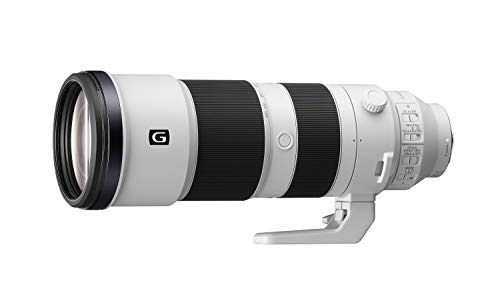
The Sony FE 200-600mm f/5.6-6.3 G OSS is made for serious reach. It lets full-frame photographers fill the frame with birds, wildlife, aircraft, and distant sports subjects. The 200mm starting point already offers a tight view, while 600mm can bring far-away details much closer. The internal zoom design helps keep the lens length more controlled during use.
This lens also includes optical stabilization, which helps when you work from a monopod or handheld position. Its variable aperture favors daylight, and its size calls for a strong bag and good support. The lens excels at a specific task but has almost no role in normal indoor or travel scenes. I recommend it as a specialist tool, not as the best all around Sony lens.
Pros:
- Outstanding 200-600mm reach
- Excellent fit for wildlife and bird photography
- Optical stabilization supports long-lens shooting
- Internal zoom helps maintain balance
- G-series design supports detailed outdoor images
- Useful when subjects remain far away
Cons:
- Large and heavy compared with standard zooms
- Slow aperture needs good light or higher ISO
- Too specialized for daily photography
What Amazon Buyers Are Saying
Common buyer themes praise the massive reach, sharp results, and ability to frame small or distant wildlife. Bird photographers often value the zoom because it helps them adjust composition without moving. Buyers also mention the need for support, careful shutter-speed choices, and a strong carrying setup. The most common concerns involve size, weight, price, and the effort required for long shooting sessions.
My Recommendation
I recommend this lens to dedicated wildlife and bird photographers who need 600mm reach. It offers far more framing power than a normal zoom, but that strength comes with serious size and weight. If you mostly shoot people, travel, or indoor scenes, choose the 24-70mm GM II instead. Overall rating: 4.6 out of 5.
| Category | Rating |
|---|---|
| Long-range power | 5/5 |
| Wildlife usefulness | 4.9/5 |
| Handling | 4/5 |
| Value for specialists | 4.5/5 |
| Overall Rating | 4.6/5 |
How to Choose the Best All Around Sony Lens
The best all around Sony lens depends on your camera body, subjects, light, and budget. A full-frame photographer needs a different lens from an APS-C user. Before you buy, check the mount, zoom range, aperture, stabilization, and total weight. A lens can have excellent test results and still be wrong for your daily work.
1. Match the Lens to Your Sony Camera
Start with the sensor format. Sony APS-C cameras, such as many Alpha 6000-series models, use the E-mount and can use APS-C lenses. Full-frame Alpha cameras also use E-mount, but an APS-C lens may trigger a crop mode or reduce the active image area. Check your camera manual before you order.
For full-frame users, the 24-70mm range offers the most balanced daily coverage in this group. For APS-C users, a compact 16-50mm lens gives a more useful walk-around view. The 70-350mm lens makes more sense when you already own a normal zoom and want extra reach. Choosing the right format first prevents wasted money.
2. Choose Range and Aperture for Your Subjects
A zoom range tells you how much you can change the view without moving. A 24-70mm lens handles people, travel, street scenes, and many events. A 100-400mm or 200-600mm lens handles distant subjects. Those long lenses cannot replace a standard zoom because they do not show enough of a room or group.
Aperture also matters. A smaller f-number lets in more light and can give more background blur. The constant f/2.8 aperture on the 24-70mm GM II helps at indoor events and evening sessions. The slower apertures on the telephoto lenses work best in bright outdoor light. Optical stabilization helps with camera shake, but it will not stop a moving person or bird.
3. Balance Quality, Weight, and Real Value
Premium glass can improve sharpness, focus, contrast, and control. Yet the best lens is the one you will carry and use. A huge telephoto may deliver amazing wildlife photos but stay at home if it feels too heavy. A small 16-50mm lens may create more photos simply because it is always with you.
Think about your full kit cost too. A fast standard zoom may replace several cheaper lenses. A telephoto lens may need a monopod, larger bag, and extra batteries. Read the product details, confirm the seller, and check the current Amazon price before buying. I also suggest checking return terms, especially when buying an international bundle or a used item.
Final Verdict: Which Should You Buy?
The Sony FE 24-70mm F2.8 GM II is my top choice and the best all around Sony lens for full-frame photography. Choose the 16-50mm for a light APS-C kit, or a 70-350mm for APS-C wildlife work.
For serious reach, pick the 100-400mm or 200-600mm. For most people seeking one dependable Sony lens, the 24-70mm GM II offers the strongest mix of range, speed, and quality.
FAQs Of best all around sony lens
What is the best all around Sony lens for full-frame cameras?
The Sony FE 24-70mm F2.8 GM II is the best all around choice for most full-frame users. It covers wide, normal, and short-telephoto views with a fast f/2.8 aperture.
Is the Sony 24-70mm GM II good for travel?
Yes. Its range suits landscapes, food, street scenes, portraits, and family photos. It is larger and more costly than a kit lens, but it can replace several lenses.
What is the best all around Sony lens for an APS-C camera?
The Sony 16-50mm OSS is the easiest compact daily option. If you mainly photograph wildlife or sports, the Sony E 70-350mm G OSS is a better second lens.
Are Sony telephoto lenses good for wildlife photography?
Yes. The 100-400mm and 200-600mm models provide strong reach for wildlife. They work best in good light and need careful focus and shutter-speed control.
Does image stabilization stop motion blur?
No. Stabilization helps reduce blur from camera shake. You still need a fast shutter speed to freeze people, birds, sports, or other moving subjects.