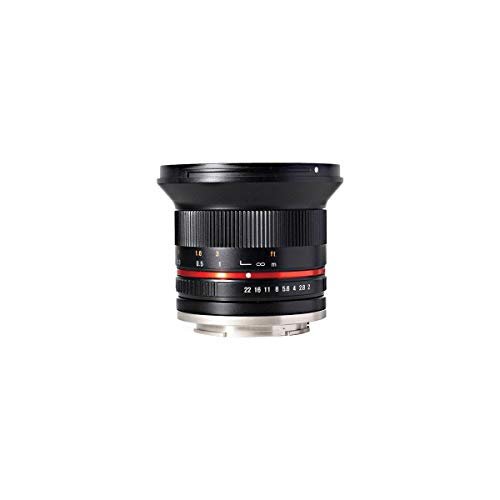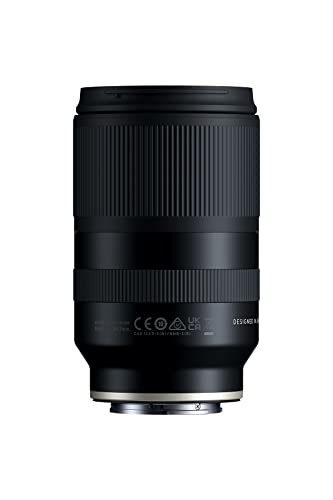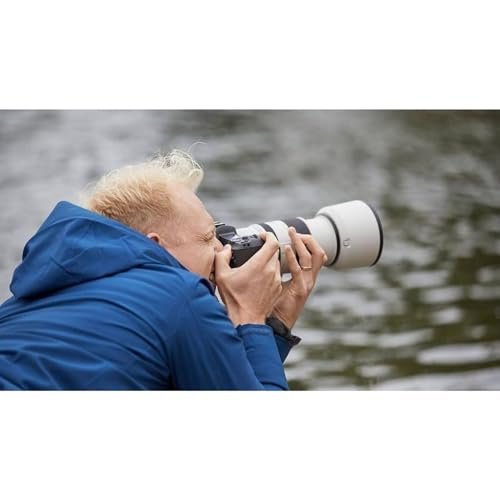
The Canon RF70-200mm F2.8 L IS USM is the best Canon RF lens for sports photographers who need speed, reach, and sharp results.
Shooting sports can feel frustrating when your lens misses focus, loses light, or cannot reach the action. A good Canon RF sports lens solves these problems with fast autofocus, useful zoom range, strong image quality, and image stabilization. I compared five popular RF-mount lenses for field sports, indoor games, wildlife events, and family action. My top pick is the RF70-200mm F2.8 L, but each lens below suits a different budget and shooting style.
See the differences between my top picks at a glance.
| Lens | Best Use | Zoom Range | Aperture | Main Strength | Buy |
|---|---|---|---|---|---|
| RF70-200mm F2.8 L | Indoor and field sports | 70-200mm | F2.8 | Fast, bright, sharp | View on Amazon |
| RF24-70mm F2.8 L | Close action and team scenes | 24-70mm | F2.8 | Wide view and low-light speed | View on Amazon |
| RF100-500mm F4.5-7.1 L | Outdoor field sports | 100-500mm | F4.5-7.1 | Flexible long reach | View on Amazon |
| RF200-800mm F6.3-9 | Distant outdoor action | 200-800mm | F6.3-9 | Maximum reach | View on Amazon |
| RF75-300mm F4-5.6 | Budget sports photography | 75-300mm | F4-5.6 | Low-cost telephoto reach | View on Amazon |
Canon RF70-200mm F2.8 L IS USM

The Canon RF70-200mm F2.8 L IS USM is my top choice for most serious sports photographers. Its constant F2.8 aperture lets in much more light than a slower telephoto lens. That matters in gyms, arenas, stadiums, and late-day games. The 70-200mm range also covers useful views, from half-body player shots to tight action near the sidelines.
Canon built this lens for its EOS R full-frame mirrorless cameras. Its fast USM autofocus system works well with the subject tracking found on newer EOS R bodies. Optical image stabilization helps reduce camera shake when you pause between bursts, although it cannot freeze a moving athlete by itself. For sharp sports images, use a fast shutter speed and let the wide aperture help keep ISO under control.
Pros:
- Bright constant F2.8 aperture for indoor sports
- Fast autofocus for players and moving subjects
- Excellent sharpness across the useful zoom range
- Image stabilization helps with handheld shooting
- Strong L-series build for demanding use
- Good background blur for player portraits
Cons:
- Costs more than slower RF telephoto lenses
- 200mm may feel short from far back in a large stadium
- F2.8 construction can still feel heavy during long events
What Amazon Buyers Are Saying
Amazon buyers commonly praise this lens for its sharp images, quick focus, compact handling compared with many older DSLR designs, and strong low-light performance. Sports and wedding photographers often value the constant aperture because exposure stays steady while they zoom. Some buyers also mention the premium price and the need for more reach at large outdoor venues. Current listings and buyer reviews should be checked for the latest package details and seller information.
My Recommendation
I recommend this lens for photographers who shoot indoor games, youth sports, basketball, volleyball, soccer, and portraits from the sideline. It offers the best balance of speed, focus, reach, and image quality in this group. If I had to choose one general-purpose sports lens for an EOS R camera, this would be it.
| Category | Rating |
|---|---|
| Sports Autofocus | 4.8/5 |
| Low-Light Performance | 4.9/5 |
| Image Quality | 4.9/5 |
| Reach and Handling | 4.6/5 |
| Value for Money | 4.2/5 |
| Overall Rating | 4.8/5 |
Canon RF24-70mm F2.8 L IS USM

The Canon RF24-70mm F2.8 L IS USM works best when the action comes close. It gives you a wide 24mm view for team scenes, bench moments, and courtside action. At 70mm, it creates a tighter view of nearby players without forcing you to step back. The constant F2.8 aperture makes it a strong choice for indoor venues with poor or uneven light.
This lens also suits sports photographers who cover more than the game. You can move from a wide opening shot to a close player portrait without changing lenses. Its stabilization supports handheld work, while the fast aperture helps create subject separation. It does not provide the long reach needed for a distant soccer field or track, so I see it as a close-action lens rather than a full sports kit.
Pros:
- Constant F2.8 aperture for dim indoor venues
- Wide field of view for team and event images
- Useful close range for courtside sports
- Fast and quiet autofocus operation
- High-quality L-series optical design
- Works well for sports, portraits, travel, and events
Cons:
- 70mm is too short for distant field action
- Premium price for a standard zoom
- Can be large for casual everyday carry
What Amazon Buyers Are Saying
Common buyer feedback focuses on sharpness, reliable autofocus, low-light results, and the flexible range. Many owners like using one lens for events, portraits, travel, and indoor action. The most common limitation is not image quality but reach; buyers who expected a sports telephoto may find 70mm too short. Review details can vary by camera body, shooting skill, and seller bundle, so I suggest reading recent listing feedback before purchase.
My Recommendation
Choose this lens if you shoot from close positions or need one fast lens for sports and general event work. It is a smart second lens beside a 70-200mm, not a replacement for a long telephoto. I especially recommend it for basketball, wrestling, dance, martial arts, and team coverage near the action.
| Category | Rating |
|---|---|
| Close-Action Autofocus | 4.7/5 |
| Indoor Sports | 4.8/5 |
| Image Quality | 4.8/5 |
| Sports Reach | 3.5/5 |
| Versatility | 4.9/5 |
| Overall Rating | 4.5/5 |
Canon RF100-500mm F4.5-7.1 L IS USM

The Canon RF100-500mm F4.5-7.1 L IS USM is a strong pick for outdoor sports photographers who need flexible reach. Its 100-500mm range lets you frame a nearby player at 100mm and isolate distant action at 500mm. That range reduces lens changes during a game. It works well for soccer, baseball, football, track, motorsports, and outdoor school events.
The trade-off is the variable aperture. The lens is brightest at F4.5 and becomes slower as you zoom toward 500mm. Bright daylight makes this less of a problem, but night games may require a higher ISO or a faster shutter strategy. The built-in stabilization helps reduce shake, and the L-series build gives it the protection and feel many working photographers want.
Pros:
- Very useful 100-500mm outdoor sports range
- Excellent reach for distant players and action
- Image stabilization supports handheld shooting
- Strong L-series construction
- Good choice for sports and wildlife together
- Reduces the need to change lenses during a game
Cons:
- Slow F7.1 maximum aperture at the long end
- Less suitable for poorly lit indoor sports
- Premium price and larger size than standard zooms
What Amazon Buyers Are Saying
Buyer feedback often highlights the broad focal range, strong image quality, manageable handling, and useful stabilization. Outdoor photographers tend to like the ability to move from medium telephoto to super-telephoto without switching lenses. Common concerns include the slower aperture and the cost of an L-series lens. Some buyers also note that performance depends on light, camera settings, and how well the photographer supports the lens at long focal lengths.
My Recommendation
I recommend this lens for outdoor sports in daylight. It is more flexible than a 70-200mm when you shoot from the stands or across a large field. If you mainly cover night games or indoor sports, choose the RF70-200mm F2.8 L instead. For daylight field sports, this lens offers one of the best reach-to-flexibility balances in the RF system.
| Category | Rating |
|---|---|
| Outdoor Sports Reach | 4.9/5 |
| Autofocus | 4.7/5 |
| Daylight Performance | 4.8/5 |
| Low-Light Performance | 3.7/5 |
| Versatility | 4.9/5 |
| Overall Rating | 4.6/5 |
Canon RF200-800mm F6.3-9 IS USM
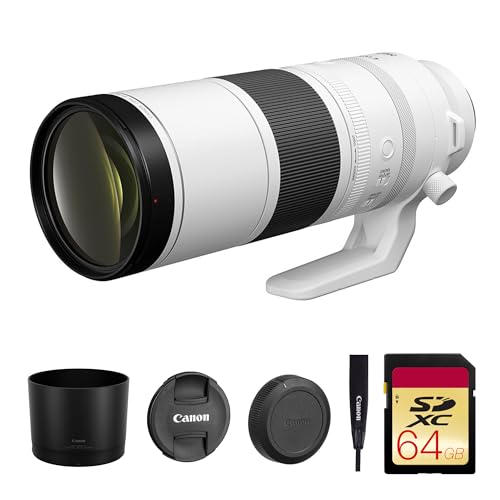
The Canon RF200-800mm F6.3-9 IS USM gives you the longest reach in this comparison. It suits photographers who stand far from the action or need to fill the frame with distant subjects. The 200mm starting point works well for far-away players, while 800mm can bring small subjects much closer. It is also a practical option for wildlife, birding, and field sports.
This lens needs good light and careful camera settings. Its F6.3-9 aperture is much slower than the F2.8 aperture of the RF70-200mm. On bright days, that trade-off can be worthwhile because the extra reach is hard to match. Image stabilization helps reduce camera shake, but it does not replace a fast shutter speed when athletes move quickly.
Pros:
- Exceptional 800mm maximum reach
- Useful for distant sports and wildlife
- Image stabilization helps at long focal lengths
- USM autofocus supports moving subjects
- Strong choice for outdoor daylight events
- One lens covers a very large viewing distance
Cons:
- Slow F6.3-9 aperture limits low-light use
- 200mm may be too long for nearby action
- Requires good technique at extreme focal lengths
- Less suited to indoor sports and night games
What Amazon Buyers Are Saying
Buyers commonly focus on the impressive reach and the value of having an 800mm option in the RF system. Outdoor users often appreciate the lens for birding, wildlife, and distant subjects. The main concerns in buyer discussions center on the slow aperture, size, and the need for bright light. Results can also vary with atmospheric haze, support technique, and the tracking performance of the camera body.
My Recommendation
Buy this lens when distance is your main problem. It is not my first choice for indoor sports or evening games, but it is compelling for daylight soccer, baseball, motorsports, and outdoor events viewed from far away. The included bundle may add useful accessories, but check the listing carefully to confirm the current contents and seller terms.
| Category | Rating |
|---|---|
| Long-Range Sports Reach | 5/5 |
| Daylight Performance | 4.7/5 |
| Indoor Sports | 3.1/5 |
| Stabilization | 4.5/5 |
| Versatility for Wildlife | 4.9/5 |
| Overall Rating | 4.3/5 |
Canon RF75-300mm F4-5.6
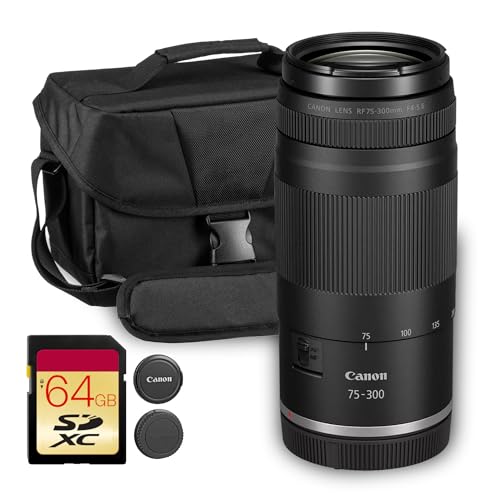
The Canon RF75-300mm F4-5.6 is the budget-friendly choice in this group. It gives new EOS R users a simple way to gain telephoto reach for school sports, outdoor games, travel, and family events. The 75mm end works for nearby action, while 300mm can frame players across a small or medium field. Its compact design also makes it easier to carry than larger professional lenses.
This lens does not offer the bright aperture or advanced low-light strength of the RF70-200mm F2.8 L. That means it works best in daylight or with a camera body that handles higher ISO settings well. It is a sensible starting point for beginners who want to learn sports framing before investing in a more costly lens. The bundle can also help new photographers get basic accessories in one purchase.
Pros:
- Lower-cost path to RF telephoto photography
- Useful 75-300mm range for outdoor sports
- Compact design for travel and school events
- Simple choice for new mirrorless photographers
- Helpful range for youth sports and family action
- Bundle may include practical starter accessories
Cons:
- Slower F4-5.6 aperture than premium sports lenses
- Less suited to dark gyms and night games
- May not provide the speed needed for professional work
- Bundle contents can vary by listing
What Amazon Buyers Are Saying
Budget buyers tend to value the reach, simple operation, and lower entry cost. This type of lens often appeals to families, students, and new EOS R owners who shoot outdoor games. The most likely concerns involve low-light limits and the difference between a basic telephoto lens and a professional sports zoom. Before ordering, review current Amazon feedback and confirm whether the listed memory card, bag, or other accessories come from the seller or the manufacturer.
My Recommendation
I recommend this lens for beginners and casual outdoor sports photographers. It can produce useful action photos in good light without the cost of an L-series lens. Choose a faster lens if you cover paid events, indoor games, or night sports where every stop of light matters.
| Category | Rating |
|---|---|
| Beginner Friendliness | 4.6/5 |
| Outdoor Sports | 4.1/5 |
| Low-Light Performance | 3.2/5 |
| Portability | 4.4/5 |
| Value for Money | 4.5/5 |
| Overall Rating | 4.0/5 |
How to Choose the Best Canon RF Lens for Sports
Choosing the best Canon RF lens for sports depends on the venue, subject distance, available light, and camera position. A lens that works well for basketball may fail at a football field. Use the points below before you buy.
1. Match the Focal Length to Your Seat
Think about how far you will stand from the action. A 24-70mm lens works well near a court or on the sideline. A 70-200mm lens gives a strong balance for nearby and mid-distance action. For soccer, football, baseball, and track, 100-500mm offers more useful reach. The RF200-800mm makes sense when you must shoot from the stands or across a very large field.
Long lenses also make small framing errors more obvious. Practice tracking before the event. Keep both eyes open when possible. This helps you follow players as they enter the frame.
2. Prioritize Aperture for Indoor and Night Sports
A wide aperture lets in more light. The F2.8 aperture on the RF70-200mm and RF24-70mm can help you use faster shutter speeds in dark gyms. A fast shutter speed matters because it freezes hands, feet, balls, and faces. Image stabilization helps with camera movement, but it cannot stop a player from moving.
Slower lenses can still work in bright sunlight. The RF100-500mm, RF200-800mm, and RF75-300mm become more useful when the venue has strong light. Check your camera’s ISO performance and test the lens before an important event.
3. Compare Autofocus, Handling, and Total Value
Sports photography needs more than reach. The lens should focus quickly, track well with your EOS R camera, and feel steady in your hands. A large lens may offer more reach but can tire your arms during a full game. A smaller lens may help you react faster.
Also check the complete cost. Include a camera bag, monopod, protective filter if needed, and spare batteries. Read the exact Amazon listing before checkout, especially for bundle items. Canon RF lenses work best when the lens and camera body support the focus modes you plan to use.
Final Verdict: Which Should You Buy?
The Canon RF70-200mm F2.8 L IS USM is the best Canon RF lens for sports overall. Its F2.8 aperture, strong autofocus, sharp images, and useful range suit both indoor and outdoor action.
Choose the RF100-500mm for daylight field sports, the RF200-800mm for extreme distance, or the RF75-300mm for a lower-cost start. The RF24-70mm is best for close action and team scenes.
FAQs Of best canon rf lens for sports
What is the best Canon RF lens for indoor sports?
The Canon RF70-200mm F2.8 L IS USM is the strongest choice for indoor sports. Its constant F2.8 aperture helps in dim venues, and its 70-200mm range suits many courts and sidelines.
Is a 70-200mm lens good for soccer and football?
Yes. A 70-200mm lens works well near the sideline. If you shoot from far away, a 100-500mm or 200-800mm lens can provide more reach.
Which Canon RF sports lens is best for low light?
The RF70-200mm F2.8 L and RF24-70mm F2.8 L are the best options here because their F2.8 aperture lets in more light than the slower telephoto lenses.
Is the Canon RF100-500mm good for sports photography?
Yes. It is excellent for outdoor sports in daylight. Its 100-500mm range gives you flexible reach, but its slower aperture makes it less ideal for dark gyms and night games.
Should beginners buy the Canon RF75-300mm for sports?
It is a reasonable beginner choice for outdoor sports in good light. It costs less than the professional options, but it cannot match their low-light performance or autofocus speed.