
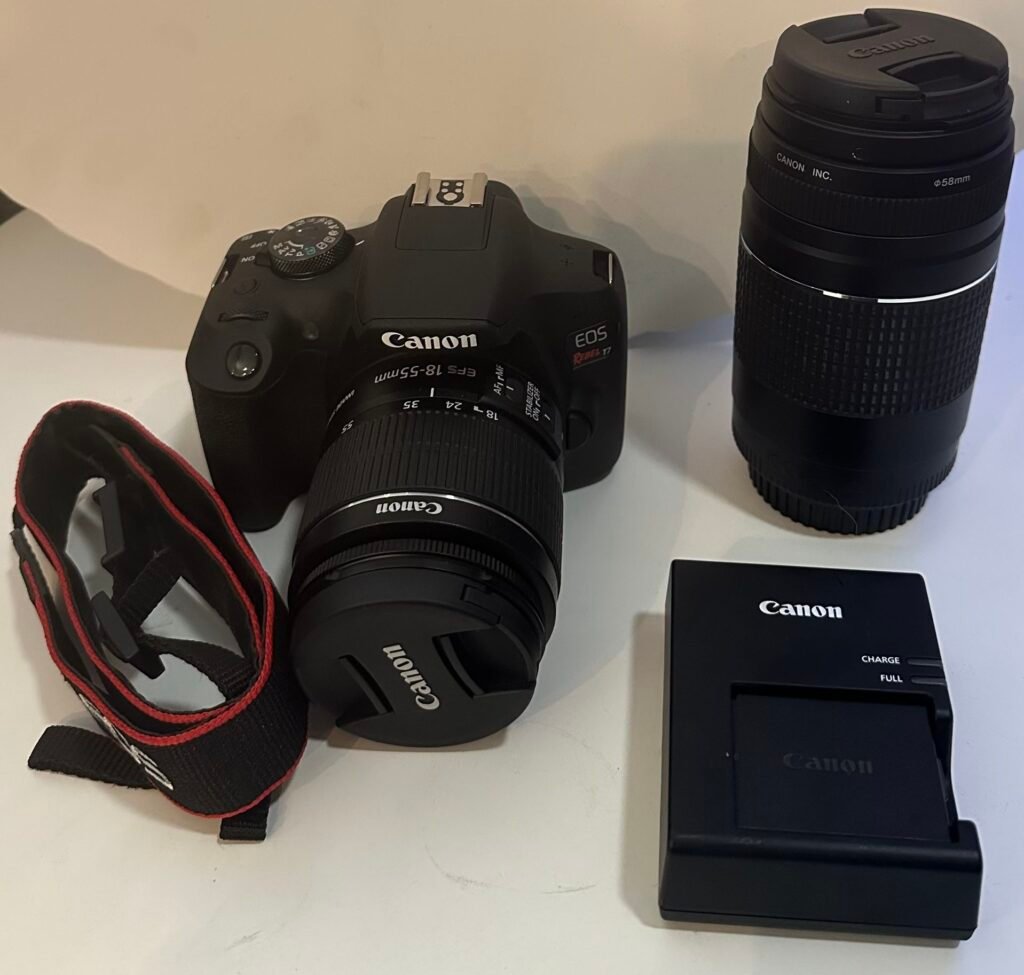
The Canon EOS Rebel T7 DSLR camera 2-lens kit is an entry-level camera package commonly sold in the United States with an EF-S 18-55mm zoom lens and an EF 75-300mm telephoto lens. The camera has a 24.1-megapixel APS-C sensor, an optical viewfinder, built-in Wi-Fi, and full HD video recording.
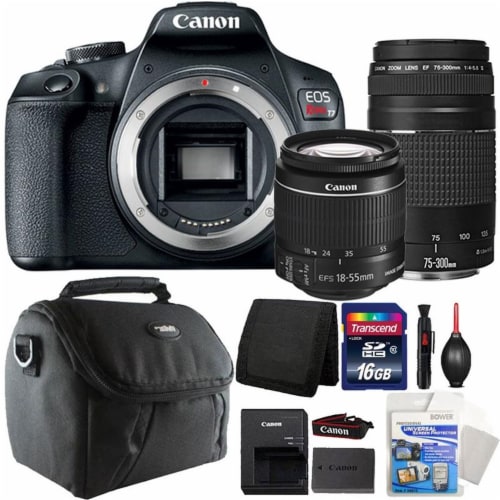
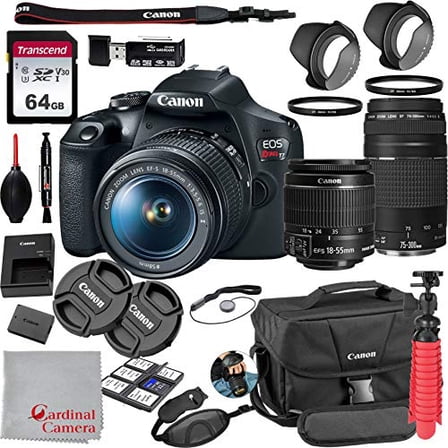
The exact bundle can vary by seller. Some packages include the Canon EF-S 18-55mm lens, while others add the EF 75-300mm lens, a memory card, a bag, a tripod, or third-party accessories. Check the box contents before buying, especially because the 75-300mm lens is not included with every Rebel T7 kit.
The Rebel T7 is a good fit for U.S. buyers who want a low-cost camera for family photos, school events, travel, portraits, and outdoor subjects. Its two lenses cover a wide range, but the camera lacks newer features such as 4K video, a touchscreen, and fast modern autofocus.
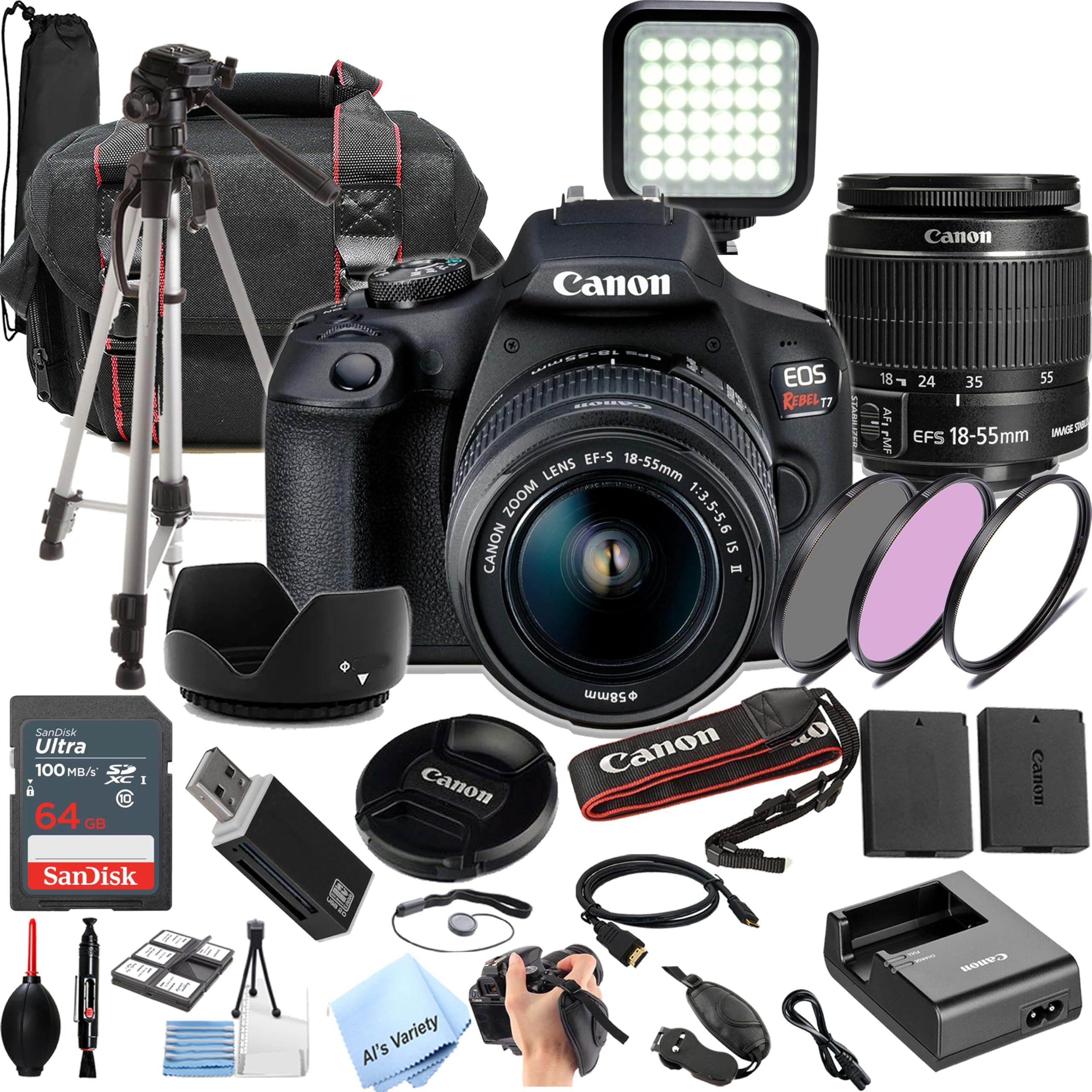
What the Canon EOS Rebel T7 Two-Lens Kit Includes
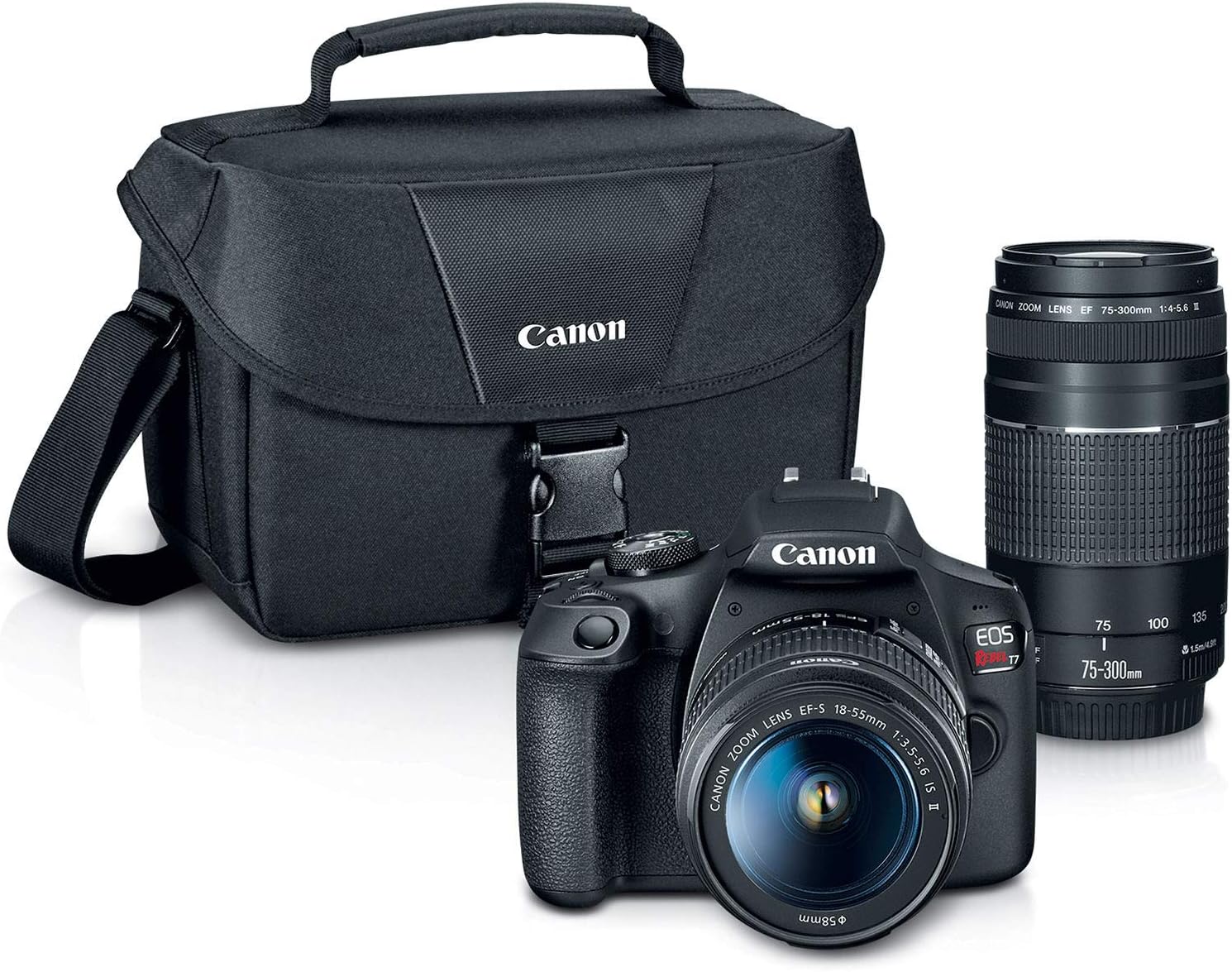
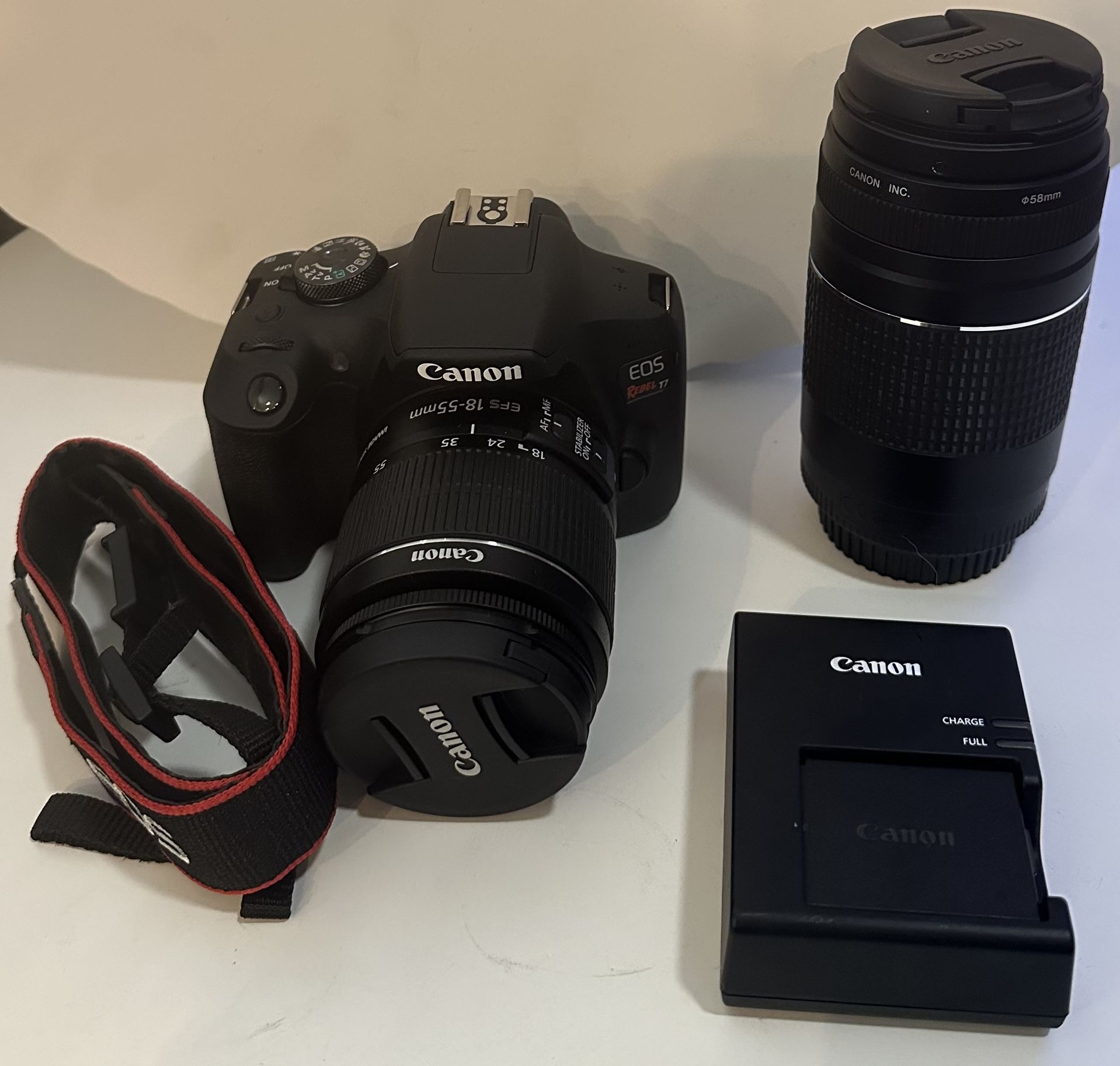
The standard two-lens package usually combines the Rebel T7 camera body with two zoom lenses:
| Component | Main use | Key limitation |
|---|---|---|
| Canon EOS Rebel T7 body | Photos and Full HD video | Basic autofocus and modest burst speed |
| EF-S 18-55mm lens | Everyday photos, travel, groups, and portraits | Limited reach for distant subjects |
| EF 75-300mm lens | Sports, wildlife, school events, and distant details | Often lacks image stabilization |
| Battery and charger | Camera power | Extra batteries help during long events |
| Strap and cables | Carrying and file transfer | Contents vary by seller |
| Memory card and bag | Common bundle extras | May be third-party equipment |
The wording “camera 2 lens kit” does not always identify a single official Canon package. Retailers may create their own bundles around the same camera body. The safest approach is to confirm the exact lens names and model numbers in the product listing.
Check the lens names before purchase
The first lens is usually the Canon EF-S 18-55mm f/3.5-5.6 zoom lens. It is designed for Canon APS-C cameras and covers useful everyday focal lengths.
The second lens is often the Canon EF 75-300mm f/4-5.6 III. This lens gives more reach, but many versions do not have built-in image stabilization. Some sellers may list a different 75-300mm version, so read the full specification.
Avoid assuming that a large accessory bundle offers better image quality. A low-cost tripod, bag, or memory card may be usable, but the two lenses and the camera body matter most.
Canon EOS Rebel T7 Specifications That Matter
The Rebel T7 uses a 24.1-megapixel APS-C CMOS sensor. Its sensor is much larger than the sensors found in most phones and basic compact cameras, which can help produce cleaner images in good light and give more control over background blur.
Key documented specifications include:
- Sensor: 24.1MP APS-C CMOS
- Image processor: DIGIC 4+
- Lens mount: Canon EF and EF-S
- Viewfinder: Optical pentamirror viewfinder
- Autofocus: 9-point phase-detection system through the viewfinder
- Continuous shooting: About 3 frames per second
- ISO range: ISO 100–6400, expandable to ISO 12800
- Video: Full HD 1920 × 1080 recording, up to 30 frames per second
- Screen: 3-inch LCD monitor
- Wireless: Built-in Wi-Fi and NFC on the U.S. model
- Battery: Canon LP-E10 rechargeable battery
- Storage: SD, SDHC, and SDXC memory cards
These specifications make the T7 a capable starter DSLR. They also show its age. The camera is not designed to compete with current mirrorless models for tracking speed, video features, or live-view autofocus.
What the 24.1MP sensor means
A 24.1MP sensor gives you enough resolution for normal prints, online sharing, and moderate cropping. It does not guarantee sharp photos by itself. Focus, shutter speed, light, lens quality, and camera technique still control the final result.
The APS-C sensor creates a narrower field of view than a full-frame sensor. Canon’s APS-C crop factor is about 1.6×. A 50mm lens gives a view similar to an 80mm lens on a full-frame camera, although the lens remains physically 50mm.
What the 3 fps speed means
The Rebel T7 can shoot short action bursts at about three frames per second under suitable conditions. That works for casual movement, children playing, and some outdoor activity.
It is less suitable for fast sports, birds in flight, or unpredictable action. A newer mirrorless camera will usually provide faster bursts and better subject tracking.
How the EF-S 18-55mm Lens Performs for Everyday Photos
The EF-S 18-55mm lens is the practical starting lens in this kit. On the Rebel T7, it covers a useful range from a fairly wide view to a short telephoto view.
Use it for:
- Family gatherings
- Travel and street photos
- Landscapes
- Indoor groups
- Food and product photos
- Casual portraits
- School and community events
At 18mm, the lens can fit more of a room or landscape into the frame. At 55mm, it can frame a person more closely. The lens is small and light, which makes it useful for daily carrying.
Its main limit is the narrow maximum aperture. In simple terms, the lens does not let in as much light as a bright prime lens. Indoor photos may need a higher ISO, a slower shutter speed, or an external flash.
Tips for using the 18-55mm lens
For a person indoors, place the subject near a window when possible. Use the 18mm end for groups, but avoid placing faces close to the frame edges because wide-angle distortion can stretch them.
For portraits, try 35mm to 55mm and move a few steps away. This can create a more natural look than placing the camera very close at 18mm.
The built-in optical image stabilization found on many 18-55mm kit lens versions can help reduce blur from camera shake. It cannot freeze a moving person. A fast shutter speed is still needed for motion.
How the EF 75-300mm Lens Performs for Distant Subjects
The EF 75-300mm lens is the long lens in many Rebel T7 two-lens bundles. It can make distant subjects appear larger in the frame.
It can help with:
- Outdoor sports
- Wildlife in parks
- Children’s events
- Air shows
- Outdoor portraits
- Details on buildings
- Landscapes with compressed perspective
On the Rebel T7, the lens gives a field of view similar to roughly 120-480mm on a full-frame camera because of the 1.6× APS-C crop factor. This is useful reach, but the long end is harder to hold steady.
Many EF 75-300mm versions commonly sold in these bundles do not include image stabilization. Confirm the exact model before buying. If stabilization is absent, use a faster shutter speed, brace the camera, or use a tripod when practical.
Suggested starting settings
For outdoor sports in daylight, start with:
- Shutter speed: around 1/500 second or faster
- Aperture: the widest available setting
- ISO: Auto ISO or a suitable manual value
- Autofocus: AI Servo for moving subjects
- Drive mode: continuous shooting
These are starting points, not fixed rules. Cloudy weather, shade, subject speed, and lens position may require changes.
At 300mm, heat haze can reduce detail even when focus is correct. Atmospheric distortion is common over pavement, fields, and rooftops. Moving closer often improves the image more than increasing sharpness later.

Is the Canon Rebel T7 Two-Lens Kit Good for Beginners?
Yes. The Rebel T7 is a sensible beginner DSLR when the buyer wants a simple camera with an optical viewfinder, interchangeable lenses, and a low entry cost.
It is especially suitable for someone who:
- Wants to learn shutter speed, aperture, and ISO
- Prefers a traditional optical viewfinder
- Takes mostly still photos
- Already owns Canon EF or EF-S lenses
- Wants both everyday and telephoto coverage
- Does not need advanced video features
The T7 is less suitable for someone who needs fast action tracking, 4K video, a flip-out screen, silent shooting, or strong autofocus in live view.
DSLR versus phone camera
A phone is often faster for casual sharing. It may also produce pleasing images in difficult light through computational processing.
The Rebel T7 offers more direct control and a larger physical lens system. Its long 75-300mm lens can reach subjects that a basic phone camera cannot. It also teaches photographic skills more clearly because the user controls the main exposure settings.
The trade-off is size. The T7 and two lenses take more room, require charging, and need more care than a phone.
How to Set Up the Canon EOS Rebel T7
Set up the camera in this order:
- Charge the LP-E10 battery with the supplied Canon charger.
- Insert a compatible SD, SDHC, or SDXC memory card.
- Attach the lens with the camera turned off.
- Remove the front and rear lens caps.
- Turn the mode dial to Auto for a simple first test.
- Set the date, time, and time zone.
- Format the memory card in the camera after confirming that it contains no needed files.
- Set the lens switch to autofocus if you want the camera to focus automatically.
- Take several test photos in bright outdoor light.
- Review focus and exposure on the LCD.
Formatting deletes existing files from the card. Save important photos to a computer or other storage first.
A simple first photography exercise
Take the same subject at 18mm, 55mm, 75mm, and 300mm. Keep your position where possible. Compare how the field of view changes.
Then switch to aperture-priority mode, marked Av on the Canon mode dial. Try a lower f-number and a higher f-number. Watch how the background and shutter speed change.
This exercise teaches more than changing settings at random. It shows how focal length and aperture affect the image.
Recommended Settings for Common U.S. Shooting Situations
The following settings are practical starting points for the Rebel T7:
| Situation | Mode | Starting shutter speed | Useful advice |
|---|---|---|---|
| Outdoor travel | Av or Auto | 1/250 sec or faster | Use 18-35mm for buildings and views |
| Indoor family photos | Av or P | 1/125 sec or faster | Raise ISO if photos are dark |
| Portraits | Av | 1/125 sec or faster | Use 35-55mm and focus on the eyes |
| Outdoor sports | Tv or Manual | 1/500 sec or faster | Use AI Servo and continuous shooting |
| Wildlife | Tv or Manual | 1/500 sec or faster | Use the 75-300mm lens and support it |
| Night scenes | Manual or Av | Depends on subject | Use a tripod for static scenes |
| Video | Movie mode | 1/60 sec for 30 fps | Use a stable support and good sound |
These settings are not guarantees. A moving subject needs a faster shutter speed than a still subject. A dark room needs more light, a higher ISO, a wider aperture, or a slower shutter speed.
For video, the T7 records Full HD rather than 4K. The built-in microphone can record basic sound, but it is sensitive to handling noise and nearby wind. A quiet shooting position improves results.
Common Problems and Practical Fixes
Photos look blurry
First, check whether the subject moved or the camera moved. A slow shutter speed can cause either type of blur.
Use a faster shutter speed for people and action. Hold the camera with both hands, keep your elbows close to your body, and support the 75-300mm lens from below.
The telephoto lens produces dark photos
The 75-300mm lens has a smaller maximum aperture at the long end. In shade or indoors, the camera may need a higher ISO or a slower shutter speed.
Move outdoors, raise ISO, or use a faster lens if low-light work is a regular need. A tripod helps with a still subject, but it does not stop subject movement.
Autofocus does not work
Check the lens switch. Set it to AF rather than MF. Make sure the subject has enough contrast and light.
If autofocus still fails, remove and reattach the lens with the camera switched off. Clean the electronic contacts only with proper camera-care materials. Do not use liquid on the contacts.
Wi-Fi connection fails
The T7 uses Canon’s compatible mobile connection process rather than modern Bluetooth-only pairing. Confirm that the Canon camera app and phone operating system support the camera model.
Turn Wi-Fi off and on, restart both devices, and follow the camera’s connection instructions. A phone may not connect if it is already using another camera or wireless network connection.
The camera will not record video
Check that the card has free space and is compatible. Very slow or damaged cards can cause recording problems. Back up files, format the card in the camera, and test again.
If the camera becomes hot during extended recording, stop and allow it to cool. Do not cover the camera vents or leave it in a hot vehicle.
What Accessories Are Worth Buying?
The most useful first accessories are a reliable memory card, a spare battery, and a protective bag.
Priority accessories
- SD memory card: Choose a reputable card from a trusted retailer. A 32GB or 64GB card is practical for many users, but photo and video needs vary.
- Spare LP-E10 battery: Useful for weddings, trips, sports days, and long outdoor sessions.
- Lens hood: Helps reduce stray light and protects the front of the lens.
- Basic camera bag: Protects the body and both lenses during transport.
- Rocket-style air blower: Helps remove loose dust without touching the sensor.
A cheap kit tripod may be unstable with the camera and 75-300mm lens. If you need long-exposure work or a secure telephoto setup, choose a tripod with a suitable load rating and a firm head.
Avoid buying a UV filter only because a bundle includes one. A poor filter can reduce contrast or create flare. If you use a filter, buy one that matches the lens diameter and comes from a reputable maker.
Canon Rebel T7 Versus a Modern Mirrorless Camera
The Rebel T7 remains useful, but newer mirrorless cameras offer several technical advantages.
| Feature | Rebel T7 | Modern entry-level mirrorless models |
|---|---|---|
| Viewfinder | Optical | Usually electronic |
| Video | Full HD | Often 4K |
| Live-view autofocus | Basic | Often much faster |
| Body size | Larger DSLR shape | Often smaller and lighter |
| Lens ecosystem | Canon EF and EF-S | Depends on mount |
| Battery use | Often efficient through viewfinder | Electronic viewfinder uses more power |
| Used-market price | Often low | Varies by model and condition |
Choose the Rebel T7 when price, simplicity, and an optical viewfinder matter most. Choose a newer mirrorless camera when video, subject tracking, portability, or long-term system growth matters more.
The lens bundle can change the decision. A T7 with two useful Canon lenses may offer more immediate range than a newer body sold with only a basic lens. Compare the total system cost, not just the camera price.

How to Check a Used or Open-Box Rebel T7 Kit
If buying from a U.S. marketplace or used-camera dealer, inspect the full kit before keeping it.
Check these items:
- The camera powers on and saves images.
- The battery compartment has no corrosion.
- The sensor area has no obvious damage.
- The LCD has no major cracks.
- The lens mount locks firmly.
- Autofocus works on both lenses.
- Zoom rings turn without grinding.
- The lens glass has no deep scratches or fungus.
- The memory-card door closes securely.
- The flash pops up and fires.
- The shutter count is available if the seller provides it.
- The serial number and seller records are consistent.
Dust on the outside of a lens is usually less serious than fungus, haze, or deep scratches inside the lens. Do not open the camera body to clean the sensor unless you understand the risk. Sensor damage can cost more to repair than the camera is worth.
Pros and Cons of the Canon EOS Rebel T7 Two-Lens Kit
Advantages
- 24.1MP APS-C image sensor
- Simple controls for beginners
- Optical viewfinder
- Interchangeable Canon EF and EF-S lens support
- Useful 18-55mm everyday range
- Long 75-300mm reach in common bundles
- Built-in Wi-Fi and NFC on the U.S. model
- Often affordable on the used market
- Good battery efficiency when using the optical viewfinder
Limitations
- No 4K video
- No touchscreen
- Slow live-view autofocus compared with newer cameras
- About 3 fps continuous shooting
- Basic 9-point viewfinder autofocus system
- The 75-300mm lens may lack image stabilization
- The long lens can be difficult to use in low light
- DSLR body and lenses are larger than many mirrorless kits
The key trade-off is simple: the two-lens kit gives broad focal-length coverage at a low cost, but it does not provide the speed or video features of newer systems.
Frequently Asked Questions
Does the Canon Rebel T7 kit always include two lenses?
No. The camera is sold in several configurations. A package called a two-lens kit usually includes the EF-S 18-55mm lens and an EF 75-300mm lens, but retailers may change the contents. Confirm the exact lens names before ordering.
Can the Canon Rebel T7 use other Canon lenses?
Yes. The Rebel T7 accepts Canon EF and EF-S lenses. It does not directly accept Canon RF lenses designed for the newer RF mirrorless mount.
Third-party lenses may also work when they are made for the Canon EF mount. Check the manufacturer’s compatibility details before purchase.
Is the EF 75-300mm lens good for wildlife?
It can work for wildlife in bright daylight, especially when the subject is fairly large or not too far away. It is less effective in dim light and may be difficult to handhold at 300mm.
For frequent wildlife work, a lens with image stabilization, better autofocus, and a wider maximum aperture may be a stronger long-term choice.
Does the Rebel T7 have image stabilization?
The camera body does not provide sensor-shift image stabilization. Stabilization depends on the lens. Many EF-S 18-55mm versions include optical stabilization, while common EF 75-300mm III versions do not.
Check the letters in the lens name. IS indicates image stabilization on Canon lenses.
Can the Rebel T7 take professional photos?
Yes, the camera can produce high-quality still images when used with good light, careful focus, and suitable lenses. Professional results depend on the photographer, lighting, lens choice, editing, and the needs of the assignment.
The T7 may be limiting for demanding sports, high-speed events, advanced video, or work that requires fast professional autofocus.
Final Buying Advice
The Canon EOS Rebel T7 DSLR camera two-lens kit is worth considering when you want an affordable Canon system for learning photography and covering both everyday and distant subjects. The EF-S 18-55mm lens handles general use, while the EF 75-300mm lens adds useful reach for outdoor subjects.
Before buying, verify three things: the exact second lens, whether the telephoto lens has image stabilization, and which accessories are actually included. If you need 4K video, fast tracking, a touchscreen, or a smaller body, compare the kit with a newer Canon mirrorless camera instead.
For most beginners, start with the 18-55mm lens, learn shutter speed and focus, and add the 75-300mm lens when you have a clear need for more reach.

