
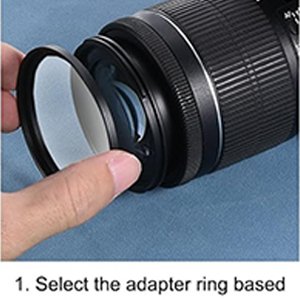
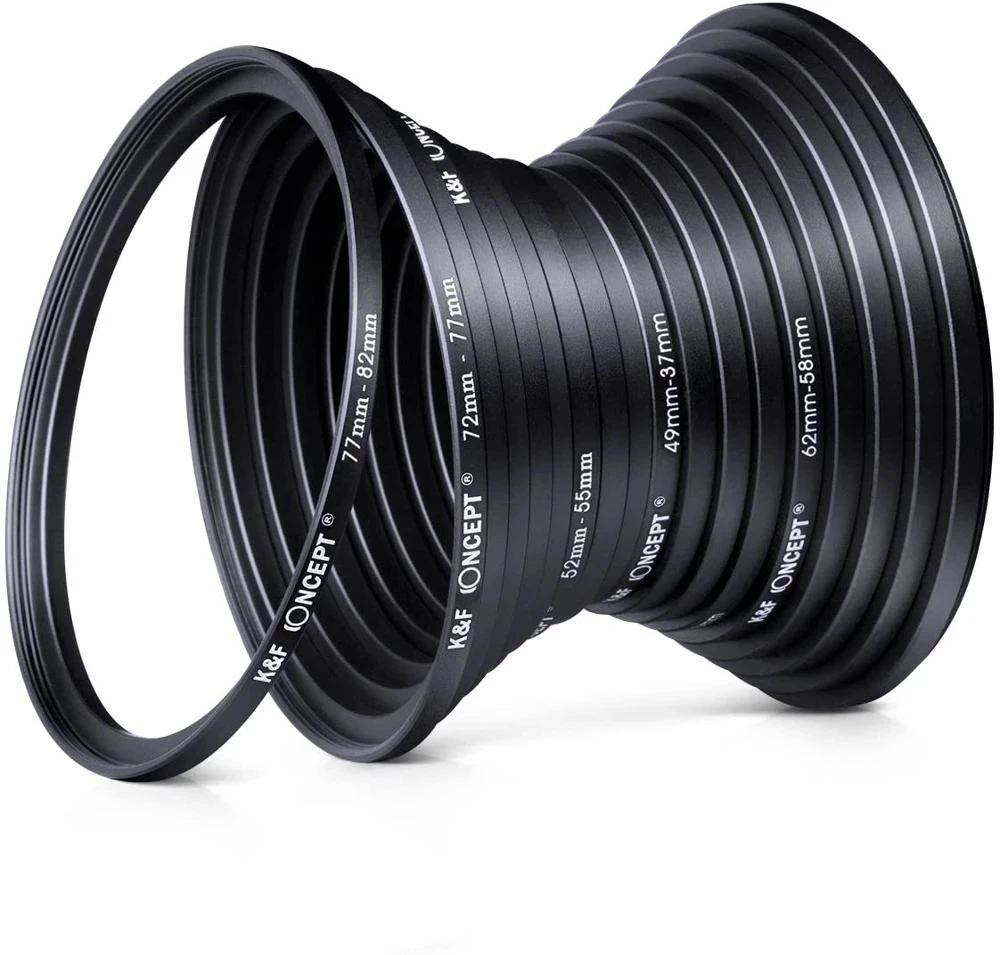
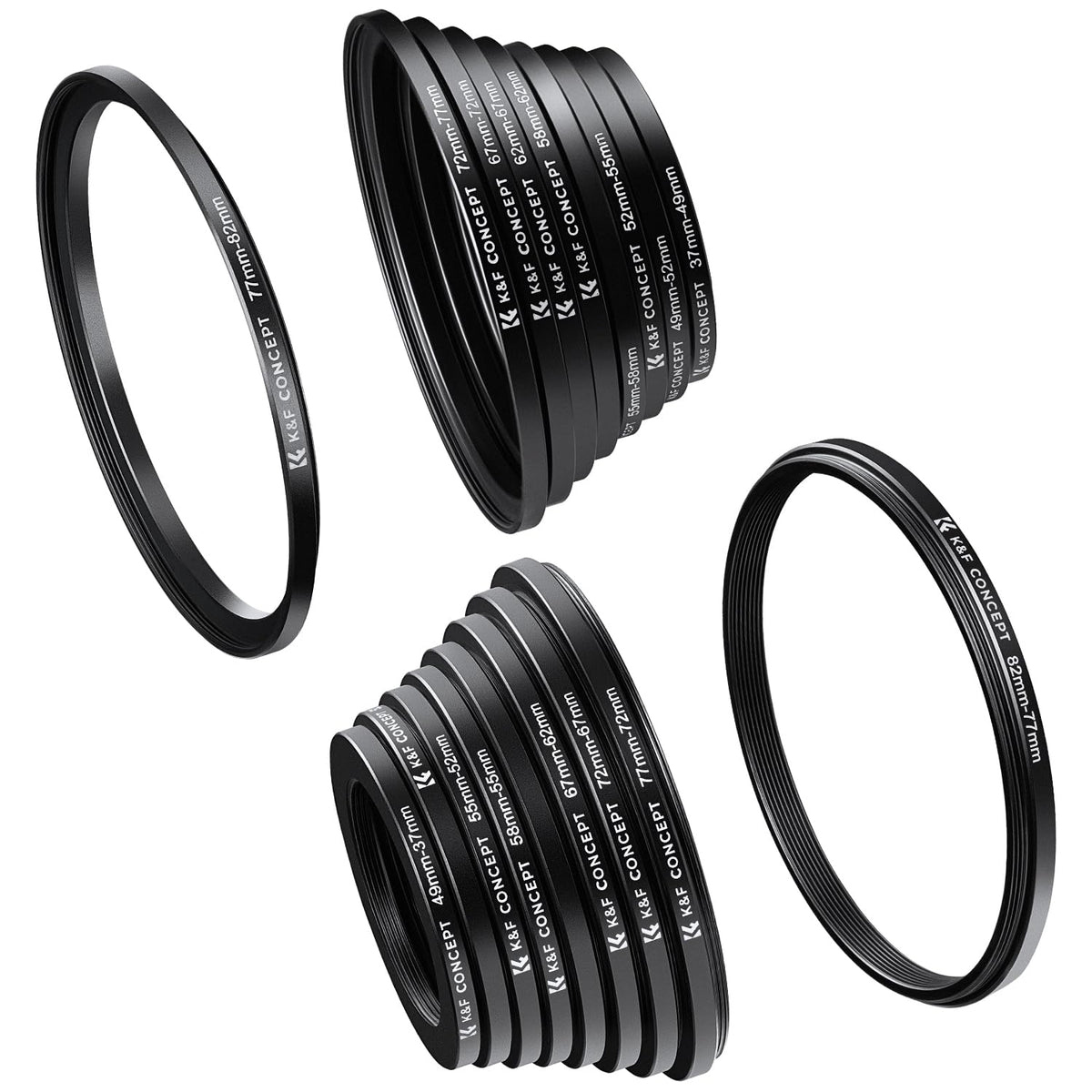
The Tookie 18Pcs Filter Ring Adapter Set is a camera accessory for joining filters, hoods, and other threaded lens tools with different sizes. Its stated range runs from 37mm to 82mm. The set is useful when a filter does not match a lens thread, but buyers should confirm the exact ring combinations before purchase.
This guide explains how metal step rings work, how to choose the right size, how to install them, and how to avoid common thread and vignetting problems.

What the Tookie 18Pcs Filter Ring Adapter Set Does
A filter ring adapter changes one filter thread size into another. It does not change the filter’s optical effect. It only helps the filter fit a lens with a different front thread.
For example, a camera lens may have a 52mm filter thread while your polarizer has a 67mm thread. A step-up ring can connect the 52mm lens to the 67mm filter.
The Tookie set is described as:
- An 18-piece filter ring adapter set
- Made from metal
- Covering thread sizes from 37mm to 82mm
- Intended for camera lenses and threaded accessories
- Designed for step-up or step-down use, depending on the ring
The product title alone does not confirm every included size or ring combination. Check the seller’s current contents list before ordering. Product packages can vary by seller, region, or production batch.
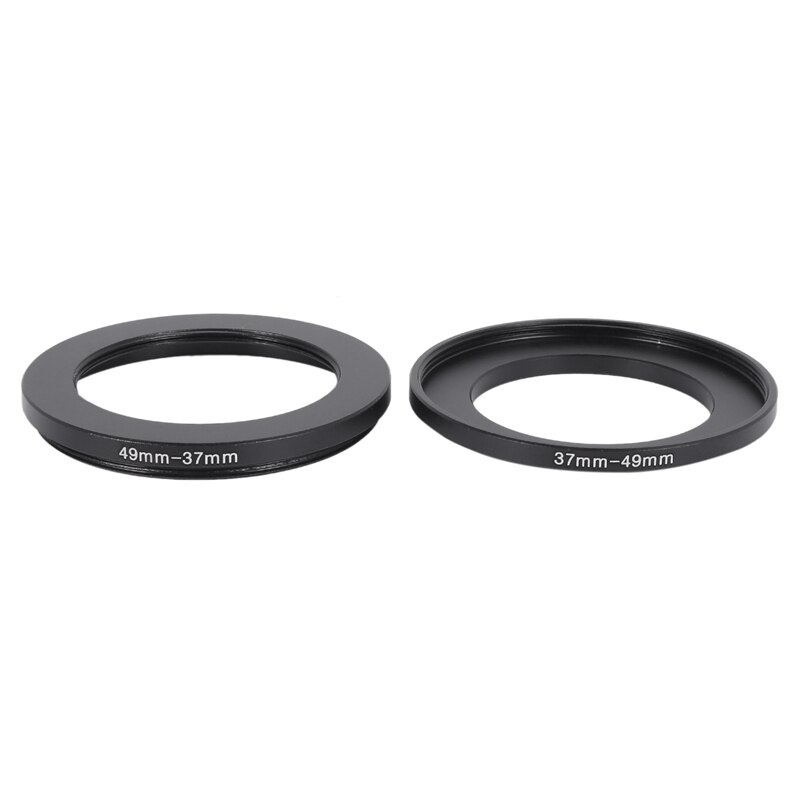
Step-up rings and step-down rings
A step-up ring connects a smaller lens thread to a larger filter.
Example:
52mm lens thread → 67mm filter
A step-down ring connects a larger lens thread to a smaller filter.
Example:
67mm lens thread → 52mm filter
Step-up rings are usually the safer choice. They allow you to use one large filter across several lenses. Step-down rings can cause dark corners, especially with wide-angle lenses.

How to Read Camera Filter Sizes
Camera filter sizes are measured by the diameter of the lens’s front thread. The size is usually printed on the lens or shown by a symbol that looks like a circle with a line through it.
Common markings include:
Ø5252mmØ6767mm
The number is the thread diameter in millimeters. It is not the focal length of the lens.
For example:
50mmon a lens may refer to focal length.52mmnear the front of the lens may refer to filter thread size.
These are different measurements.
How to find your lens thread size
Use this order:
- Check the front of the lens cap.
- Look around the front rim of the lens.
- Read the lens manual or manufacturer specification.
- Measure the thread only if no marking or manual is available.
Do not measure the outside of the lens barrel and assume that number is the filter size. The filter thread is a specific inner or outer threaded part.
How to identify the filter size
Look for a number on the filter’s outer rim. The size may appear as 58mm, 77mm, or a similar marking.
If the lens and filter have the same size, no adapter is needed. If the sizes differ, select a ring that matches both threads.

How to Choose the Correct Tookie Ring
Choose the ring by matching the lens thread to the filter thread. Write both sizes down before installing anything.
| Lens thread | Filter thread | Correct ring type |
|---|---|---|
| 37mm | 52mm | 37–52mm step-up |
| 49mm | 67mm | 49–67mm step-up |
| 52mm | 77mm | 52–77mm step-up |
| 67mm | 52mm | 67–52mm step-down |
| 72mm | 82mm | 72–82mm step-up |
The first number usually refers to the lens side. The second number refers to the filter side. However, product listings may format ring names in different ways. Check the printed arrows, product diagram, or seller description if the direction is unclear.
A simple selection rule
Use this formula:
Lens thread size → filter thread size
If the second number is larger, it is a step-up ring. If the second number is smaller, it is a step-down ring.
Why larger filters can be useful
A larger filter can serve several lenses when you use step-up rings. For example, one 77mm filter may fit lenses with 52mm, 58mm, and 67mm threads when the correct rings are available.
This can reduce duplicate filter purchases. It can also make a camera bag easier to manage.
The trade-off is size. A large filter may be heavier and more costly. It may also require a larger lens cap or filter pouch.
How to Install a Metal Step Ring
Install the ring slowly. Cross-threading is the most common avoidable problem.
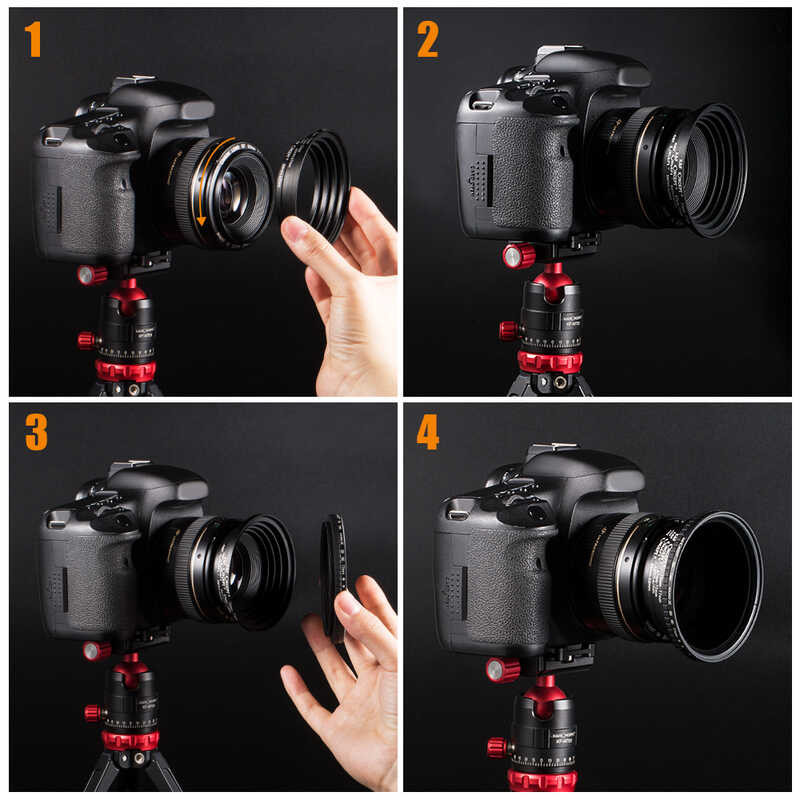
- Remove the lens cap.
- Clean dust from the lens thread and adapter.
- Confirm the ring size.
- Place the ring flat against the lens thread.
- Turn the ring counterclockwise first until the threads drop into place.
- Turn it clockwise by hand.
- Stop when the ring is secure.
- Attach the filter without force.
- Check that the filter moves freely and sits level.
The counterclockwise step helps align the first thread. When you feel a small drop, turn clockwise. This method can reduce the chance of starting the threads at an angle.
Do not use pliers or tools for normal installation. Hand pressure is enough. Excess force can damage the lens, adapter, or filter.
Signs of a correct fit
A properly fitted ring should:
- Turn smoothly
- Sit level with the lens
- Stop without excessive force
- Hold the filter firmly
- Remove by hand
- Show no visible gap or tilt
If the ring feels rough, stop and remove it. Inspect both sets of threads for dirt, damage, or a size mismatch.

When to Use Step-Up Rings
Step-up rings are useful for owners who want to share filters across several lenses.
They work well for:
- Circular polarizers
- Neutral density filters
- UV or clear protective filters
- Close-up filters
- Filter holders with threaded mounts
- Lens hoods made for larger filter threads
A common setup is to buy one large filter size and use step-up rings for smaller lenses. For example, a photographer may use a 77mm neutral density filter on lenses with 52mm and 67mm threads.
This approach is most practical when the larger filter does not block the lens’s view.
Step-up rings and lens hoods
A step-up ring changes the outside diameter at the front of the lens. Your original lens hood may no longer fit.
You may need:
- A larger threaded hood
- A hood that attaches to the filter
- No hood, if flare is not a concern
Check the hood design before stacking a ring, filter, and hood.

When Step-Down Rings Can Cause Problems
Step-down rings can reduce the opening in front of the lens. On wide-angle lenses, this may create dark areas in the corners. This effect is called vignetting.
The risk depends on:
- Lens focal length
- Sensor size
- Filter diameter
- Ring thickness
- Number of stacked rings
- Filter frame thickness
- Aperture and image crop
A step-down ring may work at a narrow angle of view but fail at the lens’s widest setting. Test the full setup before an important shoot.
How to check for vignetting
- Attach the ring and filter.
- Set the lens to its widest focal length.
- Photograph an evenly lit wall or sky.
- Check all four corners.
- Repeat at the aperture and focal length you plan to use.
If dark corners appear, try a larger filter and a step-up ring. Remove extra rings if possible.
Can You Stack Several Rings?
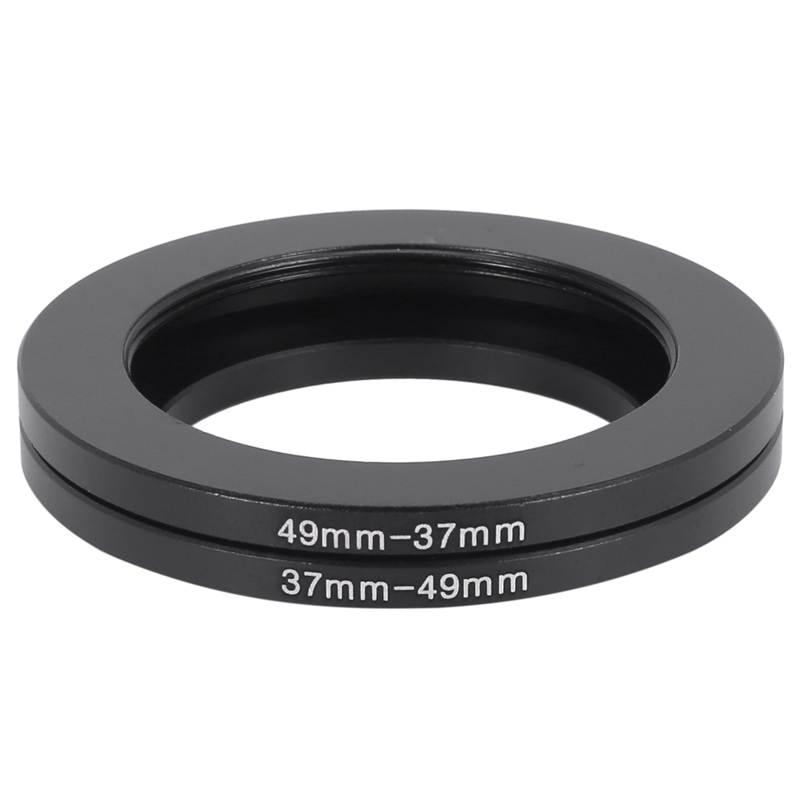
You can sometimes stack rings, but fewer connections are better.
Each added ring increases the chance of:
- Vignetting
- Cross-threading
- Loosening
- Reflections between surfaces
- A stuck filter assembly
- Reduced clearance near the lens barrel
Use one ring when it provides the needed size change. Use two only when the correct single adapter is not available.
Avoid building a long stack on a wide-angle lens. The added depth may enter the lens’s field of view.
Filter stacking
Stacking filters has similar risks. Two or more filters can increase the chance of corner darkening and flare. They can also make the assembly harder to remove.
For the clearest setup, use the fewest rings and filters that meet the photographic goal.
Metal Construction: Benefits and Limits
A metal ring can provide a firm connection and may resist wear better than a low-cost plastic ring. It can also feel more stable when supporting a larger filter.
Metal does not make a ring immune to damage. Fine threads can still bend, cross, or seize. Hard metal contact can also mark a lens or filter if the parts are forced together.
Keep the threads clean and dry. Do not apply household oil. Oil can spread onto the lens or filter surface.
Some metal rings may have a black finish. A dark finish can help reduce stray reflections, but the product title does not establish the ring’s exact alloy, coating, or optical performance. Treat those details as unconfirmed unless the seller provides a full specification.
Cleaning and Storage
Clean the adapter rings before storage and after use in dusty or wet conditions.
Use these steps:
- Blow away loose dust with a camera air blower.
- Brush the threads gently with a clean lens brush.
- Wipe the outer surface with a dry microfiber cloth.
- Store rings in a case or divided pouch.
- Keep them away from loose sand and metal debris.
Do not place a dirty ring on a clean lens. Small particles can scratch threads or sit between the ring and filter.
If a ring becomes stuck, do not twist the lens barrel. Hold the filter ring or adapter with a rubber grip and apply even hand pressure. If it will not release, a camera repair shop can remove it with less risk than improvised tools.

Common Problems and Fixes
The ring will not start
Likely causes:
- Wrong size
- Threads are not aligned
- Dirt or damage
- The ring is being held at an angle
Fix: Remove the ring, inspect both threads, and start again with light pressure. Turn counterclockwise first to find the thread start.
The ring feels tight
A snug fit is normal. A sudden stop is not.
Remove the ring if it becomes tight after only part of a turn. Continuing may cross-thread the lens or adapter.
The filter is stuck
Filters can bind when tightened too much. Try a rubber jar grip or filter wrench made for camera filters. Apply even pressure around the filter ring.
Do not squeeze one side only. Uneven pressure can make the filter harder to remove.
Dark corners appear
Use a larger filter with a step-up ring. Remove unnecessary rings and check whether the filter frame is too thick.
Test at the widest focal length. Some cameras may also show vignetting because of the lens design rather than the adapter alone.
The adapter does not fit the lens
Confirm that you are using the filter thread size, not the lens focal length. A 50mm lens may use a 52mm filter thread, but that is not universal.
Check the lens manual or manufacturer specification before forcing any part.

Is the Tookie 18-Piece Set Right for You?
This type of adapter set may suit you if you:
- Own lenses with several filter thread sizes
- Want to share filters across lenses
- Need common step-up or step-down combinations
- Prefer metal adapters
- Are willing to verify each ring before use
It may not suit you if you:
- Need a single adapter only
- Use a wide-angle lens with a large filter stack
- Require a specific ring combination not included in the package
- Need a locking, bayonet, or magnetic filter system
- Expect the set to include filters, caps, or a case without confirmation
The key buying decision is not the number of pieces alone. It is whether the included ring sizes match your lenses and filters.

Buying Checklist
Before ordering the Tookie 18Pcs Filter Ring Adapter Set, check:
- Your lens thread sizes
- Your filter thread sizes
- The exact included ring combinations
- Whether the rings are step-up, step-down, or both
- The stated material and finish
- Whether the rings are compatible with your filter system
- The seller’s return policy
- Whether the product listing is current
- Whether your wide-angle lens needs a larger filter to avoid vignetting
If the listing shows only a size range but not the full contents list, ask the seller for a complete size chart. A range from 37mm to 82mm does not, by itself, prove that every size or every combination is included.
Key Takeaways
- The Tookie set is a group of threaded camera filter adapters.
- Its stated size range is 37mm to 82mm.
- Match the lens thread to the filter thread before ordering.
- Step-up rings are usually more flexible than step-down rings.
- Step-down rings may cause dark corners on wide-angle lenses.
- Start every ring by hand and never force a cross-threaded connection.
- Confirm the exact 18-piece contents with the current seller listing.
- Use the fewest rings and filters needed for the shot.
FAQs
What does 37–82mm mean on this adapter set?
It describes the stated range of thread sizes covered by the set. It does not necessarily mean that every size or combination from 37mm through 82mm is included.
Can these rings fit any camera lens?
They can fit lenses that use standard threaded filter mounts within the supported sizes. They will not fit bayonet-only, magnetic, or proprietary mounts unless a separate compatible adapter is used.
Are step-up rings better than step-down rings?
Step-up rings are often more practical because they let smaller lenses use larger filters. Step-down rings can work, but they have a greater risk of vignetting on wide-angle lenses.
Will a filter hood still fit after adding a ring?
Not always. The adapter changes the front diameter and may prevent the original hood from attaching. A larger hood or filter-mounted hood may be needed.
How can I prevent the ring from getting stuck?
Keep the threads clean, start the ring by turning counterclockwise, tighten only by hand, and avoid stacking more rings than necessary.
Conclusion
The Tookie 18Pcs Filter Ring Adapter Set 37–82mm Metal Step is designed to solve a common camera problem: connecting filters and accessories with different thread sizes. Its value depends on the exact included combinations, not only the stated size range.
Measure your lens and filter threads first. Prefer a step-up ring when possible, test for vignetting on wide-angle lenses, and install every ring with gentle hand pressure. That simple process helps protect the lens, filter, and adapter while giving you more flexibility in your camera kit.

