
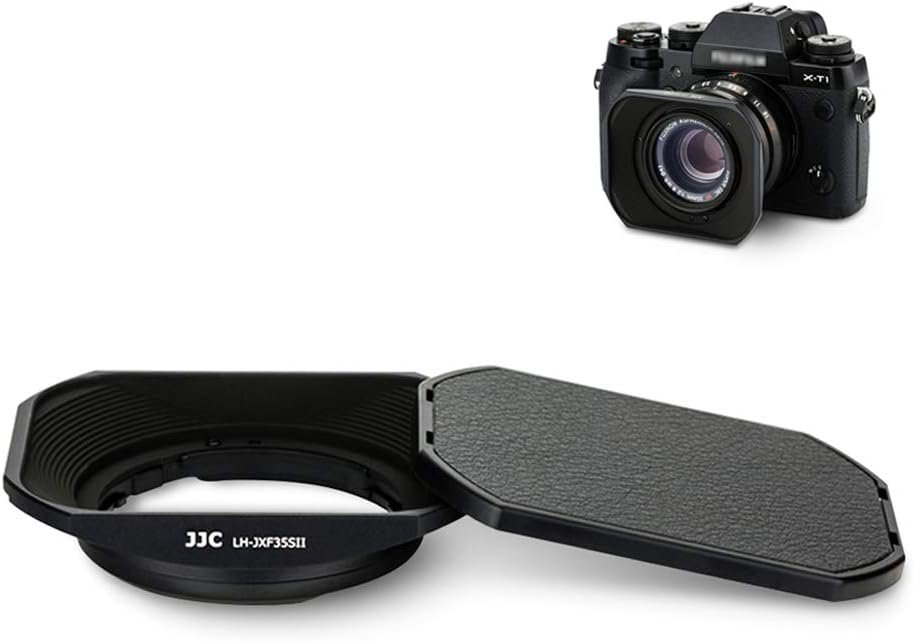
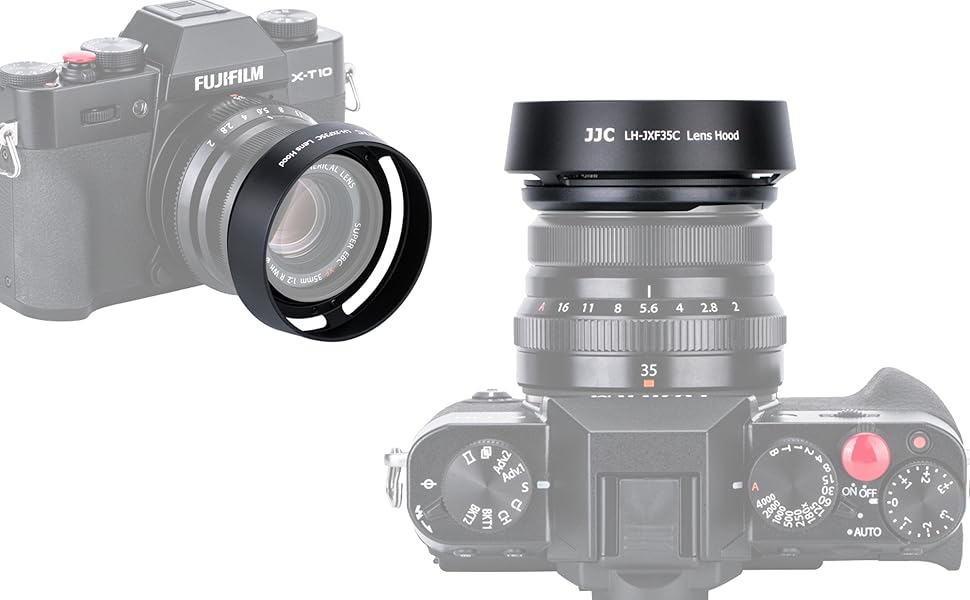
For photographers in the United States, the JJC Bayonet Lens Hood Shade for the Fujifilm XF 35mm F2 R WR is a third-party hood made to reduce stray light and help protect the front of the lens. It fits the lens through a bayonet mount rather than a filter thread.
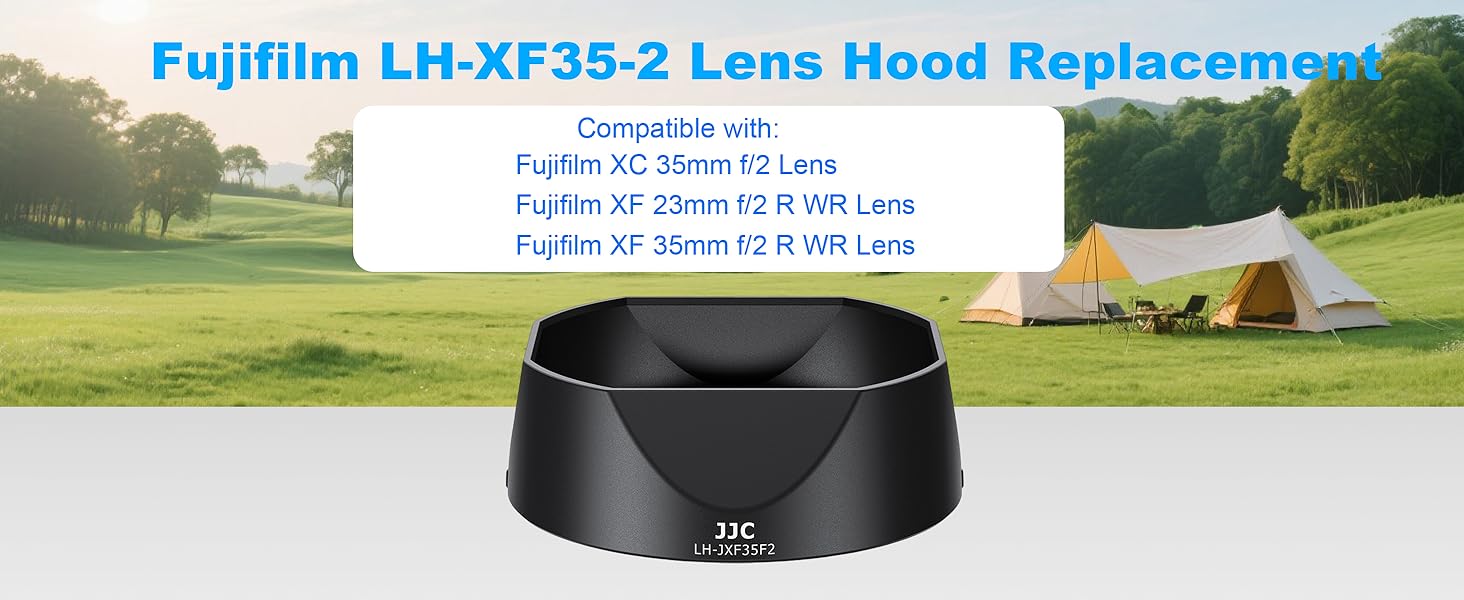
The key point is compatibility. This hood is intended for the Fujifilm XF 35mm F2 R WR, not every Fujifilm 35mm lens. Check the exact JJC model number and lens designation before buying, because the XF 35mm F1.4 R and XF 33mm F1.4 R LM WR use different optical designs and different hood fittings.
What the JJC Bayonet Lens Hood Does
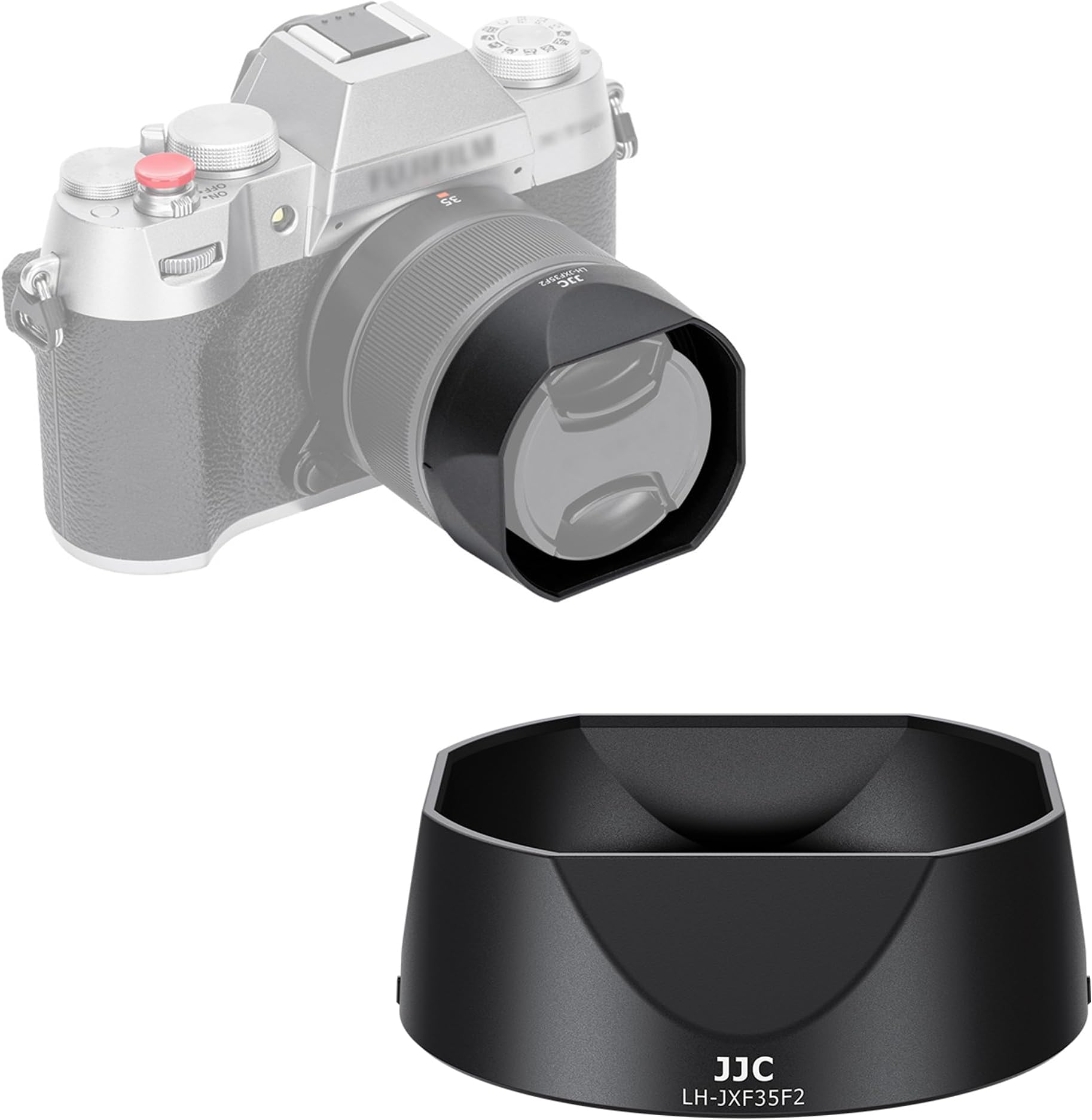
The JJC lens hood blocks light that enters the lens from outside the image area. This can help reduce flare, ghosting, and a washed-out look when the sun or a bright lamp is near the frame.
A hood also adds a small layer of physical protection. It may help shield the front element from light rain, fingerprints, dust, or a minor bump. It is not a replacement for a lens cap, protective filter, or padded camera bag.
The hood is designed for the Fujifilm XF 35mm F2 R WR, a compact prime lens with a 43mm filter thread. The hood itself attaches to the lens barrel by bayonet connection. That means the hood locks into place using matching tabs rather than screwing into the filter thread.
Main benefits
- Helps block off-axis light.
- May improve contrast in difficult lighting.
- Adds a buffer around the front of the lens.
- Can reduce the chance of touching the front glass.
- Preserves the compact size of the XF 35mm F2 lens better than some deep universal hoods.
The result depends on the scene. A hood cannot remove flare caused by a bright light source inside the frame, and it cannot correct reflections caused by dirty glass or poor filter coatings.

JJC Hood Compatibility With Fujifilm Lenses
The correct match is the Fujifilm XF 35mm F2 R WR. Some JJC listings use a product code such as LH-JXF35F2, but model codes can vary by seller or revision. Confirm the code on the current product page before placing an order.
Compatibility checklist
| Lens or accessory | Expected fit | Reason |
|---|---|---|
| Fujifilm XF 35mm F2 R WR | Yes, when the JJC model is listed for this lens | Intended bayonet mount |
| Fujifilm XF 35mm F1.4 R | No | Different lens body and hood mount |
| Fujifilm XF 33mm F1.4 R LM WR | No | Different front design and optical coverage |
| Fujifilm XC 35mm F2 | Do not assume | Similar focal length does not guarantee the same mount |
| Fujifilm XF 50mm F2 R WR | Do not assume | A hood may look similar but still use a different fitting |
| 43mm screw-in hood | Different product type | Attaches to the filter thread, not the bayonet mount |
The most common mistake is matching by focal length alone. A 35mm lens from one series may need a different hood from another 35mm lens. The barrel shape, mount tabs, front diameter, and image coverage all matter.
Check the lens name on the barrel
Look for the exact marking:
FUJINON ASPHERICAL LENS XF35mmF2 R WR
The “XF,” “35mm F2,” and “R WR” markings are useful checks. If your lens says XF35mmF1.4 R, it is not the same lens.

How to Install the JJC Bayonet Lens Hood
Installation is simple, but the hood should never be forced. A bayonet hood uses alignment marks and small mounting tabs. If it does not turn smoothly, remove it and check the alignment.
Installation steps
- Turn off the camera if the lens is mounted. This is not required for the hood, but it reduces the chance of accidental camera movement.
- Remove the front lens cap.
- Inspect the hood and lens mount. Check for dust, sand, or damaged tabs.
- Find the alignment mark on the JJC hood.
- Match the mark with the hood position mark on the XF 35mm F2 lens.
- Press the hood onto the lens gently.
- Turn the hood in the locking direction until it stops.
- Check the fit by hand. The hood should not wobble or rotate freely after it locks.
To remove it, press the release area if the hood has one, then turn it in the opposite direction. Do not twist the hood by gripping only one side. Even pressure helps protect the plastic or metal mount.
Signs of a correct installation
A properly installed hood should:
- Sit level with the lens.
- Lock without excessive force.
- Stay in place when the camera is moved.
- Leave the focus and aperture rings free to turn.
- Avoid contact with the front element.
- Avoid blocking the view through the optical path.
If the hood feels loose, remove it and check for a damaged mount or incorrect model. A loose hood can rotate into the frame or fall off during use.

Using Filters With the JJC Lens Hood
The XF 35mm F2 R WR uses a 43mm front filter thread. A bayonet hood normally attaches around the front of the lens, while a filter attaches to the lens’s filter thread.
This can allow both accessories to be used, but the exact arrangement depends on the JJC hood design. Some hoods leave the filter thread accessible. Others may cover part of the front area or make filter changes less convenient.
Before using a filter
Check these points:
- Confirm that the filter is a standard 43mm filter.
- Install the filter without cross-threading it.
- Attach the hood according to the JJC instructions.
- Look through the viewfinder or screen at the widest focus distance.
- Check all four corners for darkening.
- Rotate a circular polarizer while watching the image.
A slim filter is often the safer choice if you plan to stack filters. Thick filters, step-up rings, and multiple accessories increase the chance of vignetting or mechanical interference.
A hood does not replace a polarizing filter. A polarizer controls reflections and sky contrast, while a lens hood blocks stray light. They solve different problems.

Image Quality and Flare Control
The JJC hood can help when bright light strikes the front element from outside the frame. This often happens during:
- Outdoor portraits near the sun.
- Street photography beside bright windows.
- Backlit travel scenes.
- Indoor photos near lamps.
- Landscapes with low sun near the frame edge.
The hood is less useful when the bright source is inside the image. If the sun, a stage light, or a bare bulb is visible in the frame, the hood cannot block that light without also blocking part of the scene.
A hood also cannot fix flare from:
- Fingerprints on the front element.
- Dust or moisture on the glass.
- Scratched filters.
- Reflections between stacked filters.
- Strong internal reflections caused by the scene.
For best results, clean the front element with a suitable blower and lens cloth. If a filter is installed, test the lens with and without it when flare appears.
A practical way to test the hood
You can compare two similar images:
- Photograph a scene with a bright light just outside the frame.
- Take one image without the hood.
- Attach the hood and repeat from the same position.
- Keep the exposure, focus, and focal length the same.
- Compare contrast and ghost reflections.
This is a simple field comparison, not a laboratory measurement. Results change with the light source, angle, lens condition, and camera settings.

Bayonet Hood vs. Screw-In Hood
The JJC bayonet design is convenient for photographers who want a hood made for the lens body. A screw-in hood uses the 43mm filter thread and may be easier to replace with another filter-mounted accessory.
| Feature | Bayonet hood | Screw-in hood |
|---|---|---|
| Mounting | Lens-specific bayonet | Filter thread |
| Installation | Quick twist-lock | Screw on and off |
| Compatibility | Depends on exact lens model | Depends on thread size and hood depth |
| Filter use | Depends on hood design | May require front or rear filter access |
| Risk of cross-threading | Low during normal use | Possible if misaligned |
| Storage | May reverse onto the lens, depending on design | Often stores separately |
A bayonet hood is usually the better fit when you want a dedicated accessory for the XF 35mm F2. A screw-in hood may make sense if you already use several 43mm accessories and want a shared mounting system.
The deciding factor is not the brand alone. It is the combination of lens compatibility, hood depth, filter access, storage, and the possibility of corner shading.

Common Problems and Fixes
The hood will not attach
Check the model number first. If the hood is made for the XF 35mm F1.4, XF 33mm F1.4, or another lens, it may not fit the XF 35mm F2.
Next, inspect the alignment marks. Bayonet hoods often require the tabs to line up before the hood can turn. Remove grit before trying again.
The hood feels loose
A loose fit can result from:
- The hood not being fully locked.
- A damaged mounting tab.
- A manufacturing defect.
- An incorrect hood model.
- Dirt between the mating surfaces.
Do not use tape or adhesive to secure the hood. Adhesive can enter the lens mount or make later removal difficult.
Dark corners appear in photos
Corner shading may occur when the hood is too deep or when a filter, step-up ring, or stacked accessory changes the optical path.
Remove the filter and test again. If the dark corners remain, remove the hood and repeat the shot. If the problem disappears without the hood, verify the hood model and contact the seller or JJC for support.
The lens cap does not fit
Lens-cap compatibility depends on the hood’s front design. Some hoods accept the original Fujifilm cap; others may require a cap supplied with the hood or a cap of a different size.
Do not press a cap into place if it does not seat properly. Confirm the hood listing and measure the front opening only if the manufacturer does not provide clear information.
The hood blocks a flash
A built-in flash may cast a shadow when a hood is installed. This is more likely at short subject distances. Test the flash at the distances you use most often.
An external flash placed farther from the lens may reduce this problem, but the hood can still affect the light path depending on the setup.
What to Check Before Buying
Use this short checklist before ordering the JJC hood:
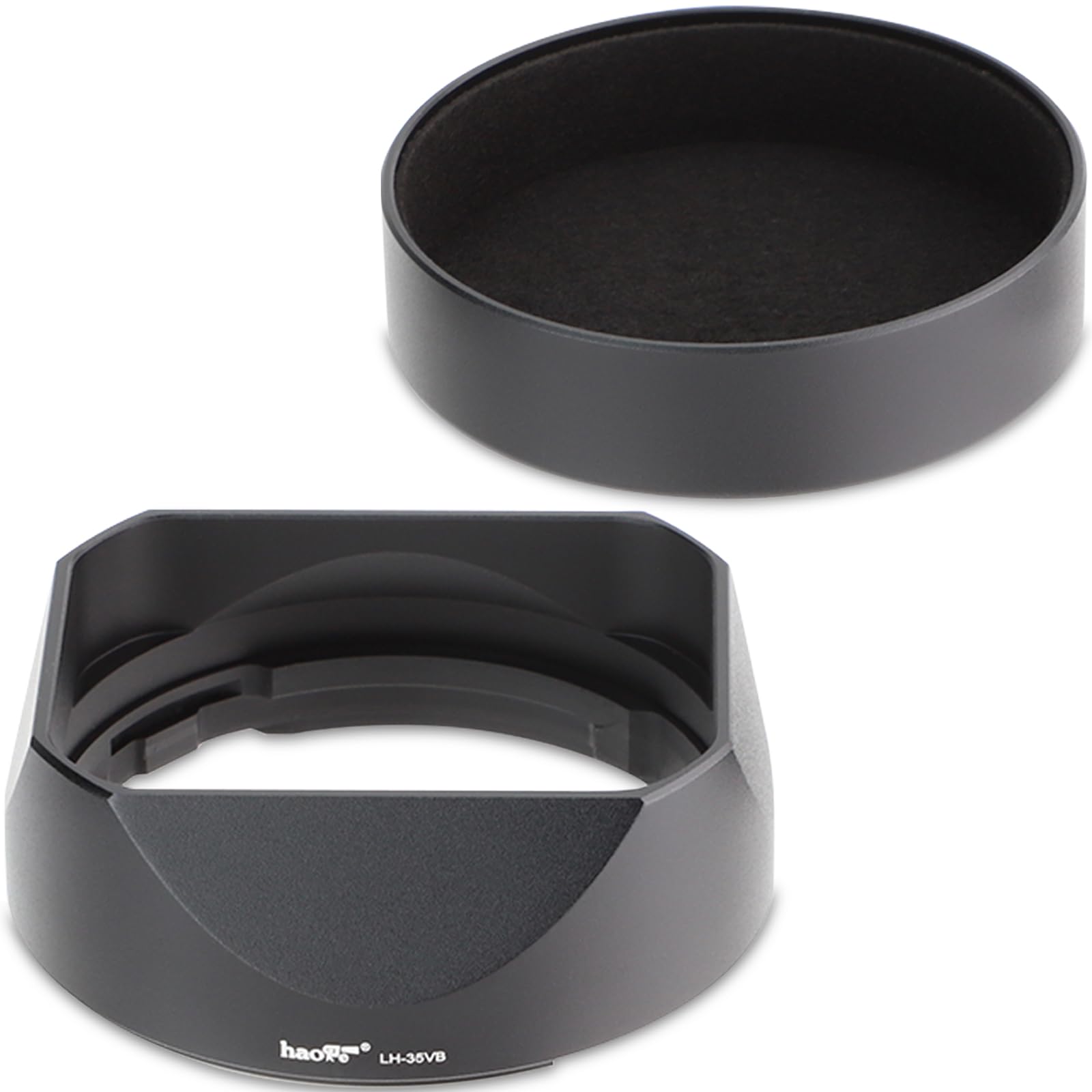
- The listing names Fujifilm XF 35mm F2 R WR.
- The product photo shows a bayonet mount made for that lens.
- The model code matches the seller’s compatibility list.
- The hood does not rely only on the phrase “for Fujifilm 35mm.”
- Filter access is clear if you use a 43mm polarizer or other filter.
- The return policy covers fit problems.
- The package includes any needed cap or adapter.
- The seller identifies the exact product revision.
Listings can use different names, such as “lens hood,” “lens shade,” or “hood cover.” Those terms usually describe the same accessory category, but they do not prove compatibility.
The safest choice is to compare the listing with the exact lens name and the manufacturer’s stated model code. Product photos alone are not enough.
JJC Bayonet Lens Hood: Pros and Limitations
Advantages
- Made for a specific Fujifilm lens model.
- Attaches quickly through a bayonet mount.
- Can reduce stray light in some backlit scenes.
- Adds a measure of front-element protection.
- Usually looks more integrated than a large universal hood.
Limitations
- It cannot eliminate all flare.
- Compatibility is limited to the correct lens design.
- Filter and cap use may depend on the hood version.
- A deep or incorrectly fitted hood can cause corner shading.
- It may interfere with a built-in flash at close range.
- Third-party fit and finish can vary between product revisions.
The hood is most useful for owners of the XF 35mm F2 who often shoot outdoors, near windows, or in strong side light. It is less essential for photographers who work mainly in controlled light and keep the lens capped between shots.
Frequently Asked Questions
Is the JJC hood compatible with the Fujifilm XF 35mm F2 R WR?
Yes, a JJC hood specifically listed for the Fujifilm XF 35mm F2 R WR is designed for that lens. Verify the product code because JJC sells separate hoods for other Fujifilm lenses.
Does the hood fit the Fujifilm XF 35mm F1.4 R?
No. The XF 35mm F1.4 R has a different lens body and hood mount. Buy a hood listed specifically for the XF 35mm F1.4 R.
Will the hood cause vignetting?
It should not cause vignetting when correctly designed and installed for the XF 35mm F2. However, filters, step-up rings, stacked accessories, or an incorrect hood can create dark corners. Test the complete setup at the widest usable aperture and focus distance.
Can I use a 43mm filter with the hood?
The lens has a 43mm filter thread, but filter access depends on the JJC hood design. Check the current product description and test for corner shading after installing the filter and hood together.
Does a lens hood improve sharpness?
A hood does not increase the lens’s optical resolution. It can reduce stray light and flare, which may preserve contrast and make an image appear clearer in bright or backlit conditions.
Can I leave the hood on while storing the camera?
Often, yes, if the hood reverses onto the lens or fits safely in the camera bag. Make sure the hood does not press against the lens, camera controls, or bag walls. Use the lens cap when the camera is not in use.
Is the JJC hood better than the Fujifilm hood?
“Better” depends on the comparison. The Fujifilm hood is the original accessory for the lens. The JJC hood may offer a lower-cost alternative or a different shape, but fit, finish, cap compatibility, and filter access should be checked for the specific version.
Final Recommendation
The JJC Bayonet Lens Hood Shade for the Fujifilm XF 35mm F2 R WR is a practical accessory when you want a dedicated hood for outdoor and backlit photography. Its main value is stray-light control and added front-lens protection, not increased sharpness or complete flare removal.
Before buying, match the hood to the exact XF 35mm F2 R WR model. Then confirm the bayonet fit, filter access, cap compatibility, and return policy. If the hood installs smoothly, locks firmly, and produces no dark corners, it should serve as a useful everyday accessory for this compact Fujifilm prime lens.

