
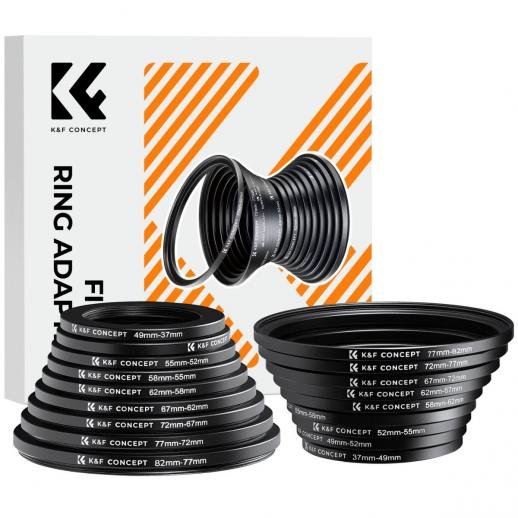
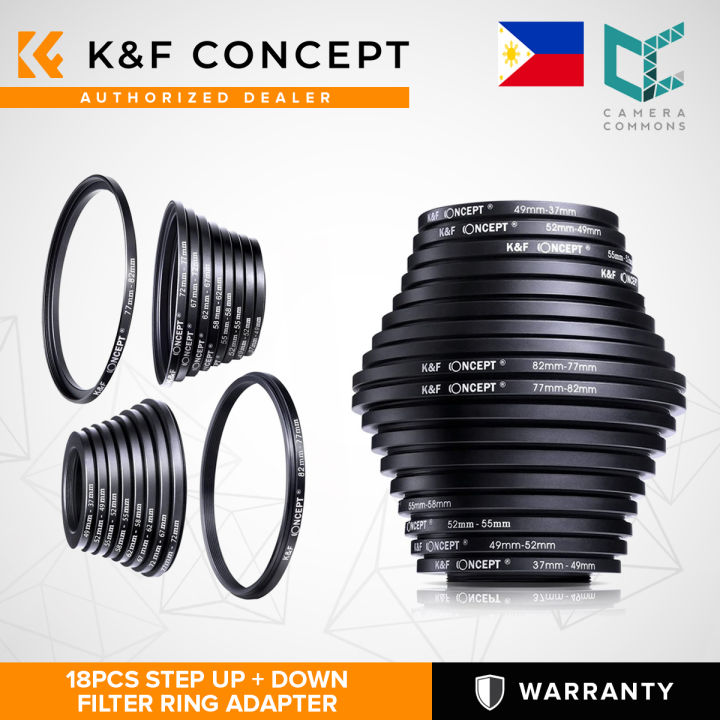
If you use several camera lenses with different filter thread sizes, the K&F CONCEPT 18 Pieces Filter Ring Adapter Set can help you share filters across your gear. The set uses screw-in metal rings to connect a filter with one thread size to a lens with another.
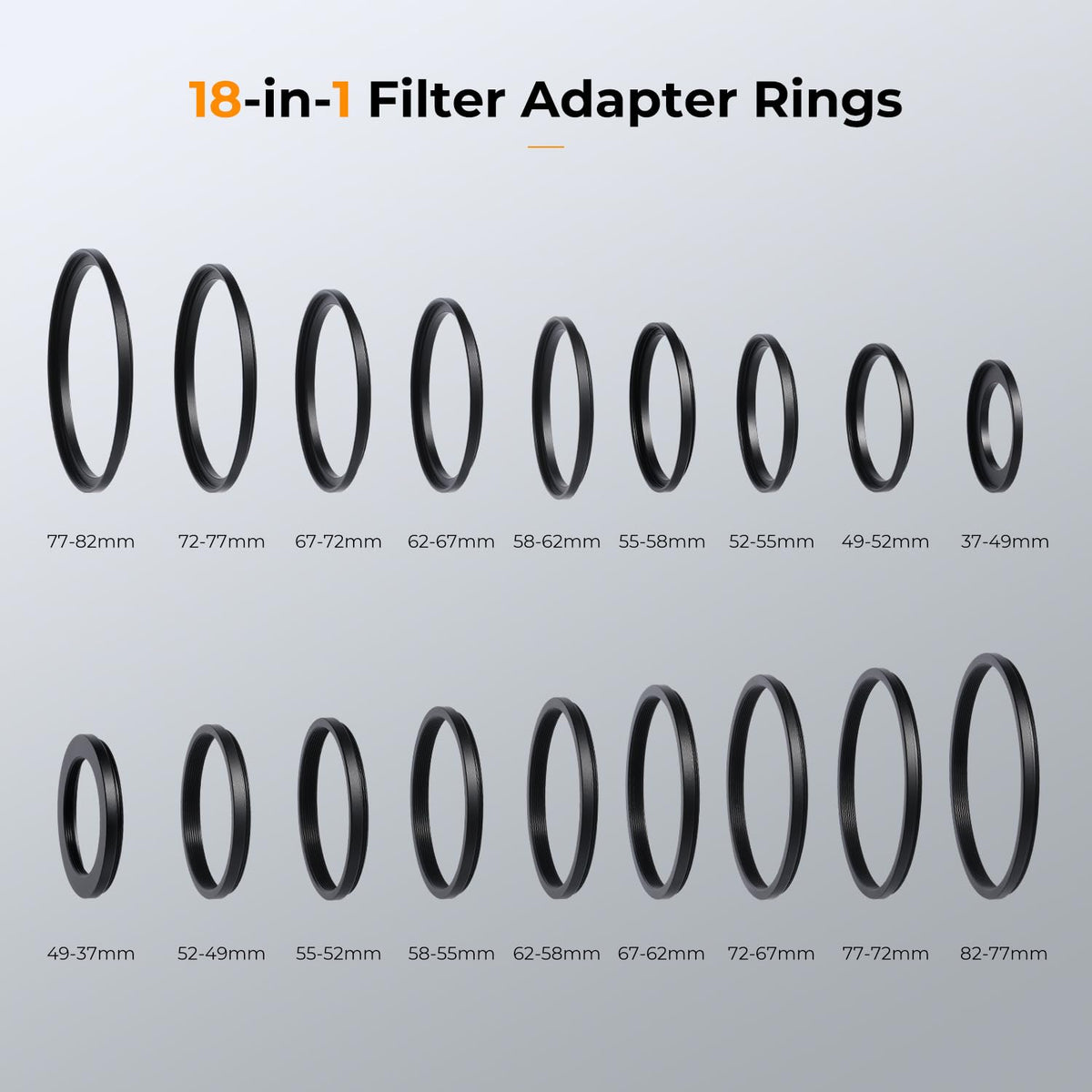
For photographers in the United States, the key step is simple: check the filter-thread symbol on each lens before buying or installing an adapter. The size is usually printed on the front of the lens and looks like Ø58mm, Ø67mm, or Ø77mm. The exact ring sizes in K&F CONCEPT kits can vary by listing, so confirm the package contents on the US product page or box before ordering.
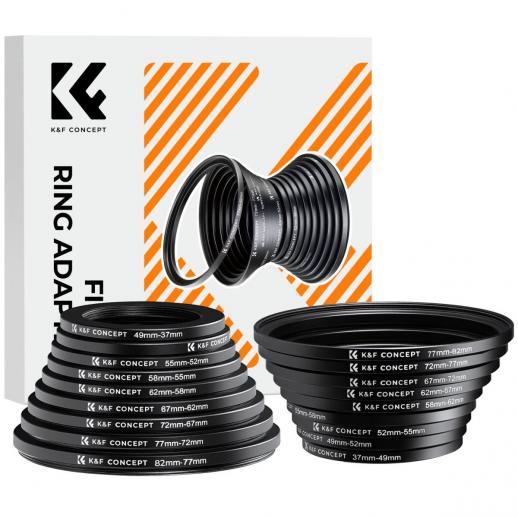
What Is the K&F CONCEPT 18-Piece Filter Ring Adapter Set?
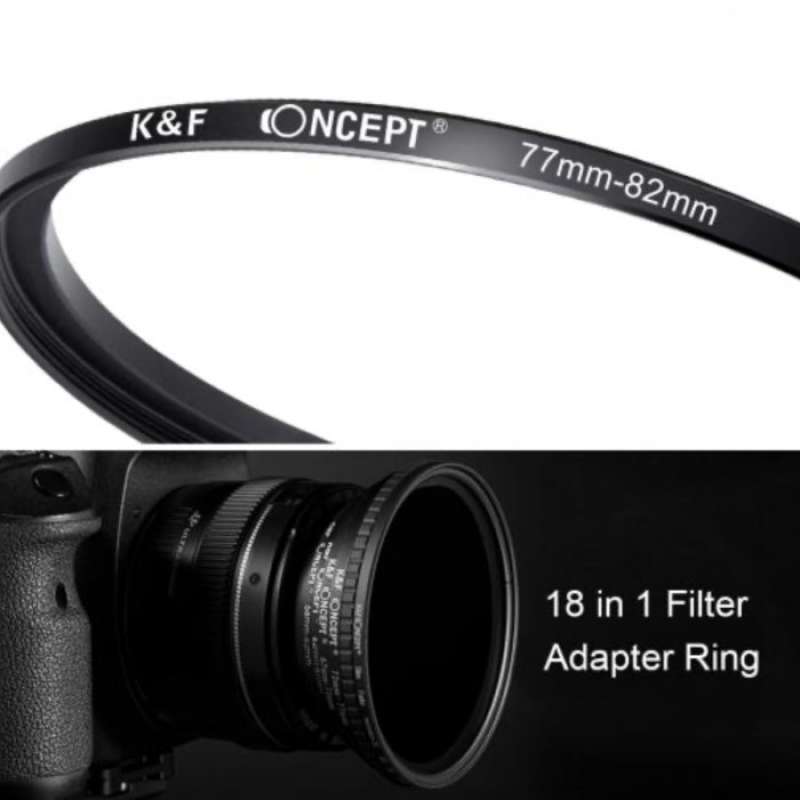
The K&F CONCEPT 18-piece set is a group of threaded rings designed to connect camera lenses and screw-in filters with different diameters. It does not replace a polarizing, neutral-density, UV, or special-effects filter. Instead, it changes the thread size so one filter may fit another lens.
For example, a step-up ring can let you use a 77mm filter on a lens with a 67mm thread. The ring moves from the smaller lens thread to the larger filter thread.
A step-down ring does the opposite. It lets a smaller filter attach to a lens with a larger thread. This can work, but it may block part of the lens’s viewing angle, especially with wide-angle lenses.
The “18 pieces” label describes the number of adapter rings in the package. It does not necessarily mean that the set fits every lens from 37mm to 82mm. Always compare the printed sizes in the listing with your own equipment.
How Filter Adapter Rings Work
Camera lenses and filters use standard screw threads measured in millimeters. The number refers to the diameter of the front filter thread, not the focal length of the lens.
A ring has two sides:
- The lens side matches the thread on the lens.
- The filter side matches the thread on the filter.
A ring marked 58-67mm is normally a step-up ring. It connects a 58mm lens thread to a 67mm filter. A ring marked 67-58mm is a step-down ring, connecting a 67mm lens to a 58mm filter.
The direction matters. A 58mm filter cannot attach directly to a 67mm lens unless the ring has a 67mm lens side and a 58mm filter side.
Step-up rings versus step-down rings
| Ring type | Example | Main use | Main concern |
|---|---|---|---|
| Step-up | 58mm to 67mm | Use a larger filter on a smaller lens | Usually the safer choice |
| Step-down | 67mm to 58mm | Use a smaller filter on a larger lens | May cause dark corners |
| Same-size adapter | 67mm to 67mm | Usually unnecessary | Adds no useful size change |
Step-up rings are often more practical because they allow photographers to standardize on one larger filter size. A larger filter can cover the front of a smaller lens without narrowing the optical path.
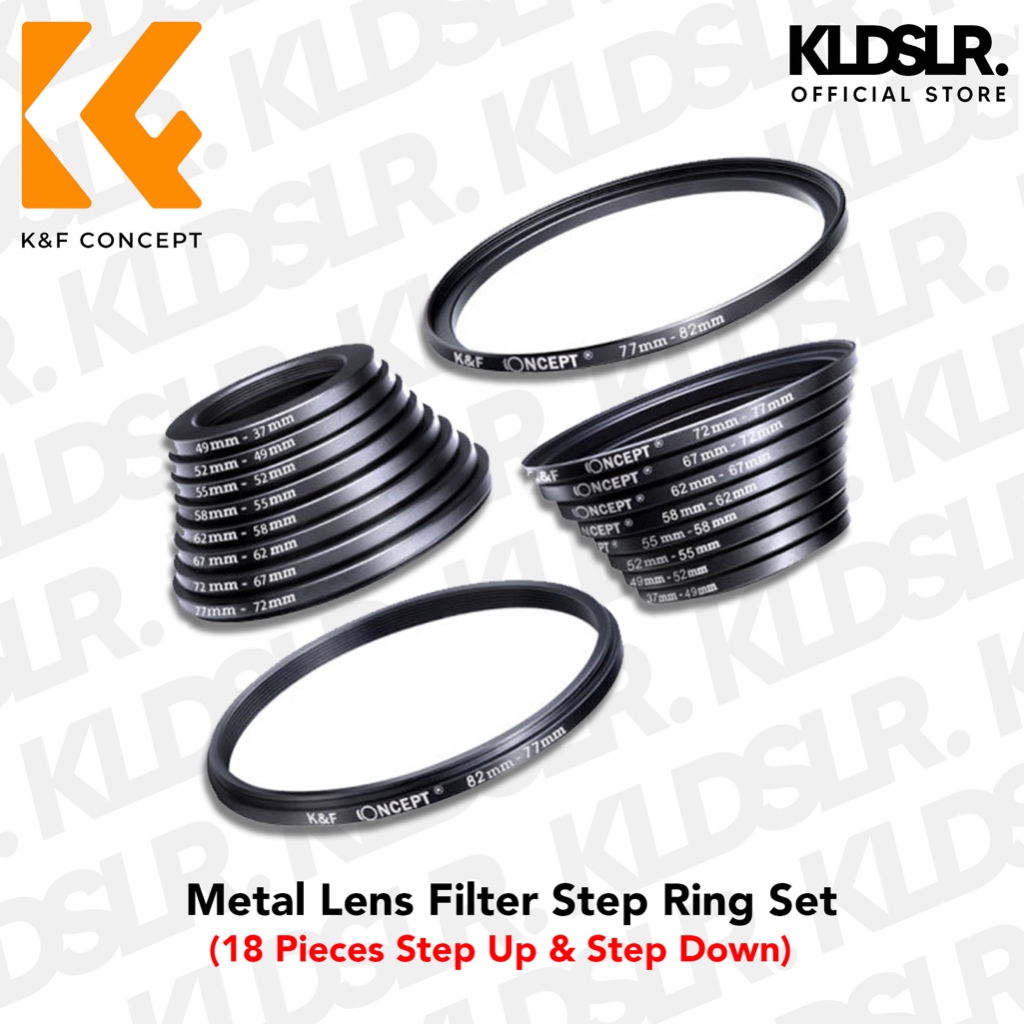
How to Check Whether the Set Fits Your Camera lens
check each lens, filter, and adapter separately. Camera mount size and filter-thread size are different measurements.
1. Find the lens filter-thread size
Look at the front rim of the lens for the diameter symbol, Ø. Common examples include:
- Ø49mm
- Ø52mm
- Ø58mm
- Ø62mm
- Ø67mm
- Ø72mm
- Ø77mm
- Ø82mm
The marking may appear beneath the lens cap or around the front element. If it is not visible, check the lens manual or the manufacturer’s specification page.
2. Find the filter size
Read the size engraved on the filter ring or printed on its case. Do not assume that the filter size matches the lens focal length.
For example, a 24mm lens may use a 77mm filter thread, while a 50mm lens may use a 58mm thread. Focal length and filter diameter describe different parts of the lens.
3. Compare both sizes with the K&F set
The required adapter must have:
- A lens-side thread that matches the lens.
- A filter-side thread that matches the filter.
If your lens is 67mm and your filter is 77mm, you need a 67mm-to-77mm step-up ring.
Compatibility example
Suppose a photographer in Texas owns:
- A lens with a 58mm filter thread
- A lens with a 67mm filter thread
- A 77mm circular polarizer
The photographer would need:
- A 58mm-to-77mm step-up ring
- A 67mm-to-77mm step-up ring
If both rings are included in the set, the same 77mm filter can be used on both lenses. The adapter does not change the filter’s strength or color effect.
How to Install a K&F CONCEPT Filter Adapter Ring
Install the ring slowly and keep the threads straight. Most problems come from cross-threading or forcing a ring that does not match.
- Remove the front lens cap.
- Clean the lens and ring threads with a soft blower or clean brush.
- Check the sizes and direction. Confirm that the lens-side thread matches the lens.
- Place the ring against the lens thread.
- Turn the ring counterclockwise first until the threads lightly drop into alignment.
- Turn clockwise by hand. It should rotate smoothly.
- Stop when it is snug. Do not use pliers or excessive force.
- Attach the filter to the outer thread of the adapter.
- Check the image at the widest focal length for dark corners.
- Remove the filter first, then the adapter when taking the system apart.
The counterclockwise alignment step can help prevent cross-threading. If the ring does not start smoothly, remove it and inspect the threads rather than applying pressure.
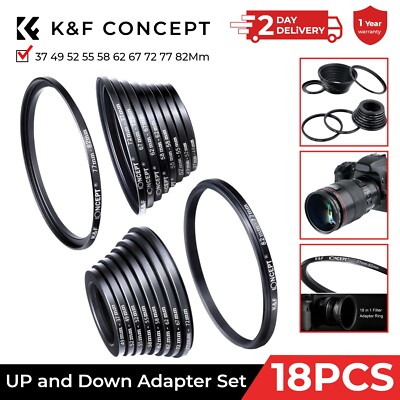
Step-Up Rings Are Usually the Better Choice
For most photographers, step-up rings offer the best long-term value. A single large filter size can serve several lenses, which reduces duplicate purchases and makes a camera bag easier to manage.
A common strategy is to choose one filter size equal to the largest lens thread in the kit. For example, if lenses use 52mm, 58mm, and 67mm threads, a photographer might standardize on 67mm filters and use:
- 52mm-to-67mm step-up ring
- 58mm-to-67mm step-up ring
- Direct 67mm filter mounting on the largest lens
This approach works well for circular polarizers and many neutral-density filters. It also avoids buying the same filter in several sizes.
However, the largest size is not always the best choice. A filter system may become bulky on small lenses. A photographer who owns several lenses around 58mm may prefer 58mm filters instead.
Step-Down Rings Can Cause Vignetting
A step-down ring can create vignetting, which appears as dark corners or dark edges in the image. The risk increases when:
- The lens has a wide field of view.
- The filter or adapter has a thick outer rim.
- Several rings are stacked.
- The filter is much smaller than the lens thread.
- The lens is used at its widest focal length.
For instance, attaching a small 52mm filter to a 77mm wide-angle lens may block part of the light path. The image may look normal at a longer focal length but show dark corners at the wide end.
Test the full setup before an important shoot. Photograph a bright, even surface such as a clear sky or plain wall at the lens’s widest setting. Inspect the corners at 100% magnification.
A small amount of corner shading may be removable in software, but severe blockage cannot always be corrected without cropping.

Filter Stacking and Adapter Ring Limits
The K&F CONCEPT set may allow several rings to be connected, but stacking should be used with care. Each added ring increases the distance between the lens and filter and adds another edge that may enter the image.
Stacking can also make the assembly harder to remove. Rings may tighten against each other, especially after changes in temperature or extended use.
Use this order when possible:
- One adapter ring.
- One filter.
- A larger filter size that covers the lens.
- No extra spacer rings unless the setup has been tested.
Stacking several filters creates additional optical surfaces. This can increase flare, reflections, and loss of contrast in strong light. A lens hood may also stop fitting once a ring and filter are installed.
Common Uses for the Adapter Set
The set is most useful when a photographer already owns filters but has lenses with different front-thread sizes.
Sharing a polarizing filter
A circular polarizer can often be shared across lenses with step-up rings. Before use, check that the ring and filter leave enough room to rotate the polarizer.
Sharing neutral-density filters
Neutral-density filters reduce the amount of light entering the lens. A single larger filter can serve several lenses when the correct step-up rings are available.
Using a protection filter
A clear or UV filter may be moved between lenses, but each lens needs the correct adapter. A ring does not protect the lens by itself.
Using square-filter holders
Some filter-holder systems use their own adapter rings. A standard screw-in ring may not fit that holder unless the thread standards match. Do not assume that a circular filter adapter can replace a dedicated holder adapter.
What the 18-Piece Set Does Not Do
A filter ring adapter is a mechanical accessory. It does not:
- Improve image sharpness by itself.
- Change the lens focal length.
- Increase the strength of a polarizer or ND filter.
- Convert one camera lens mount to another.
- Make a filter optically larger.
- Prevent all vignetting.
- Guarantee compatibility with every filter brand.
The set also cannot fix a damaged lens thread. If the lens thread is bent, dirty, or cross-threaded, forcing an adapter may cause further damage.
The actual contents are another limitation. Product listings can differ by market, seller, revision, or bundle. Before purchase, compare the complete ring-size list with the sizes on your lenses and filters.
Troubleshooting K&F CONCEPT Adapter Rings
The ring will not start
Likely causes:
- The ring size is wrong.
- The ring is reversed.
- The threads are not aligned.
- Dirt or damage is present.
What to do:
Remove the ring. Check both size markings. Start again with light pressure and turn counterclockwise before turning clockwise. Never force the ring.
The ring is stuck
Likely causes:
- It was overtightened.
- Multiple rings are locked together.
- The threads contain dust or grit.
What to do:
Remove the filter first. Hold the ring with a clean rubber grip or filter wrench made for camera filters. Apply even hand pressure. Avoid metal tools, pliers, oils, and heat near the lens.
If the ring still will not move, a camera repair shop may be safer than risking damage to the lens barrel.
Dark corners appear
Likely causes:
- The ring is a step-down design.
- The filter rim is too thick.
- Several rings are stacked.
- The lens is at its widest setting.
What to do:
Remove one ring or filter at a time. Test at different focal lengths. Use a larger filter and a step-up ring when possible.
The filter wobbles
Likely causes:
- The filter thread does not match.
- The ring is cross-threaded.
- The adapter is damaged.
- The filter is not fully seated.
Remove the filter and inspect both sets of threads. A filter should sit evenly and turn smoothly. Replace any ring with bent or crushed threads.
Advantages and Limitations
Advantages
- Can reduce the need to buy duplicate filters.
- Helps standardize a camera bag around one filter size.
- Useful for photographers with several lenses.
- Simple to install by hand.
- Step-up rings can be a cost-effective way to share larger filters.
Limitations
- Exact ring sizes vary by product listing.
- Step-down rings may cause vignetting.
- Thick rings can prevent some lens hoods from fitting.
- Stacked rings can flare or become difficult to remove.
- The adapter adds another mechanical connection.
- It does not guarantee compatibility with every wide-angle lens or filter.
The best use case is a photographer who has several lenses and wants to share filters. It is less useful for someone with one lens and one filter size.
Buying Checklist for the K&F CONCEPT 18-Piece Set
Before buying, confirm these points:
- Complete size list: Do the included rings match your lens and filter threads?
- Ring direction: Are the needed rings step-up, step-down, or both?
- Largest filter size: Does the set support your largest filter?
- Wide-angle use: Will the adapter or filter cause corner shading?
- Filter type: Is the filter thin, standard, or unusually thick?
- Lens hood: Can the hood still attach after installation?
- Thread material: Are the rings metal or another material?
- Seller and region: Is the listing intended for the United States?
- Returns: Can you return the set if the sizes do not match?
- Package revision: Does the current listing show the same contents as the title?
The package title alone is not enough. A clear size chart is the most useful evidence for compatibility.
K&F CONCEPT 18-Piece Filter Ring Adapter Set: Is It Worth Buying?
The set can be worthwhile if you own multiple lenses with different filter-thread sizes and the included rings match your equipment. Its main benefit is flexibility: one larger filter may work across several lenses when paired with the correct step-up rings.
It may not be the right choice if you need only one adapter, use a very wide-angle lens, or require a thin, low-profile setup. In those cases, one carefully selected adapter may be better than a large mixed set.
The deciding factor is not the number of pieces. It is whether the set contains the exact sizes you need and whether the rings preserve clear, unobstructed image corners.
FAQs
Can I use a 67mm filter on a 58mm lens?
Yes, if you have a 58mm-to-67mm step-up ring. The 58mm side attaches to the lens, and the 67mm side accepts the filter.
Can I use a 58mm filter on a 67mm lens?
Yes, with a 67mm-to-58mm step-down ring. However, test for vignetting, especially with a wide-angle lens or a thick filter rim.
Do filter adapter rings affect image quality?
The ring itself should not alter exposure or focal length. Poorly made, dirty, damaged, or stacked rings can contribute to flare, reflections, or vignetting.
Can I leave the adapter ring on the lens?
You can, provided it does not interfere with the lens cap, hood, storage case, or camera bag. Remove it if it makes the lens difficult to protect or if dust collects on the exposed outer thread.
Are all 18-piece K&F CONCEPT sets the same?
Not necessarily. Product listings and bundle versions can differ. Check the current US listing for the exact included sizes before ordering.
Conclusion
The K&F CONCEPT 18 Pieces Filter Ring Adapter Set Camera Lens is a practical accessory for sharing screw-in filters between lenses with different thread diameters. Step-up rings are generally the most useful option because they let smaller lenses use larger filters with a lower risk of vignetting.
Before using the set, read the Ø marking on each lens and filter, match the thread directions, and install every ring by hand. Test wide-angle combinations for dark corners, avoid force, and verify the exact package contents before purchase.

