
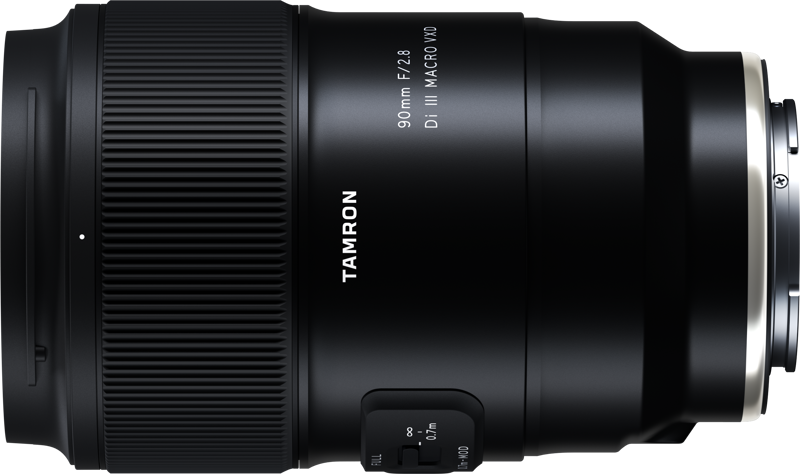
For photographers in the United States, the Tamron 90mm f/2.8 Di III VXD Macro is a full-frame Sony E-mount macro lens made for close-up work, portraits, product photos, food, nature, and everyday detail shots. Its key feature is true 1:1 life-size magnification, while the f/2.8 aperture also supports soft backgrounds and low-light shooting.
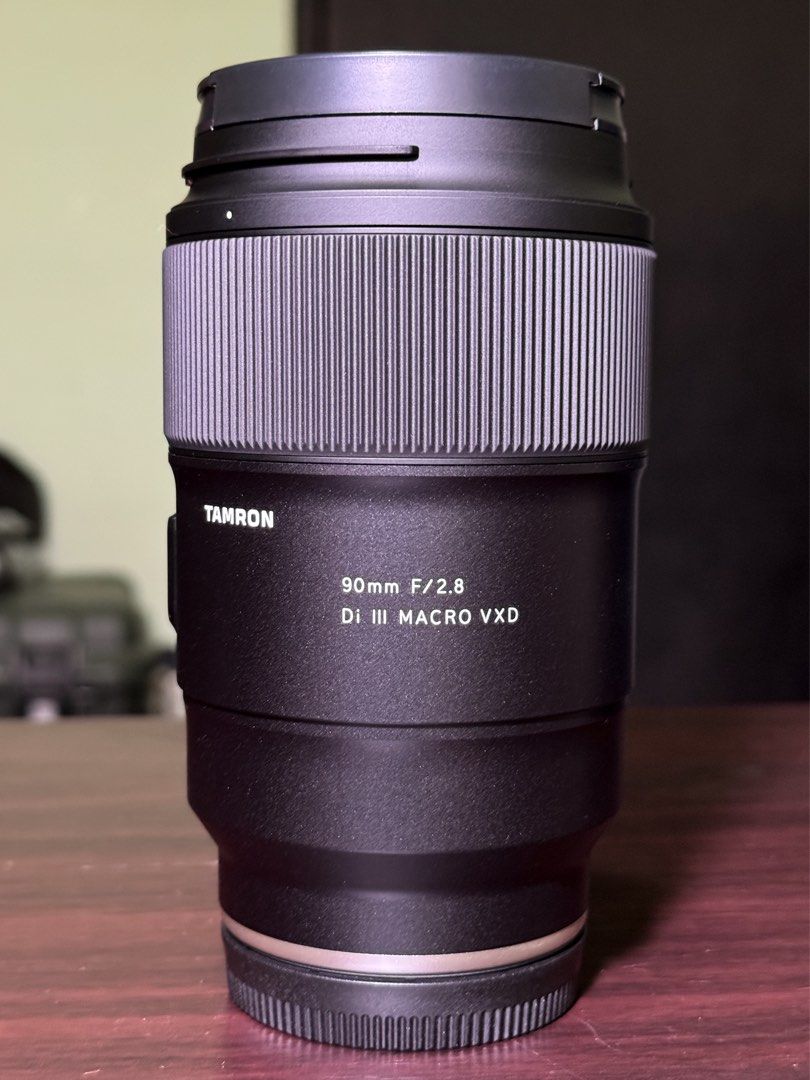
The model is sometimes written incorrectly as “Tamron 90mm f28 Di III VXD 11 Macro.” The correct name is Tamron 90mm F/2.8 Di III Macro VXD, and “1:1” refers to its maximum magnification ratio.

Tamron 90mm f/2.8 Di III VXD Macro specifications
The Tamron 90mm f/2.8 Macro is designed for Sony full-frame mirrorless cameras with an E mount. It also works on Sony APS-C bodies, where its angle of view becomes similar to a 135mm lens because of the 1.5x crop factor.
| Feature | Specification |
|---|---|
| Lens type | Full-frame macro prime |
| Mount | Sony E |
| Focal length | 90mm |
| Maximum aperture | f/2.8 |
| Minimum aperture | f/16 |
| Maximum magnification | 1:1 |
| Minimum object distance | 0.23m / 9.1in |
| Optical design | 15 elements in 12 groups |
| Diaphragm | 12 rounded blades |
| Filter size | 67mm |
| Autofocus motor | VXD linear motor focus mechanism |
| Focus range | 0.23m to infinity |
| Body size | Approximately 79.2mm diameter and 128.5mm long |
| Weight | Approximately 703g for Sony E |
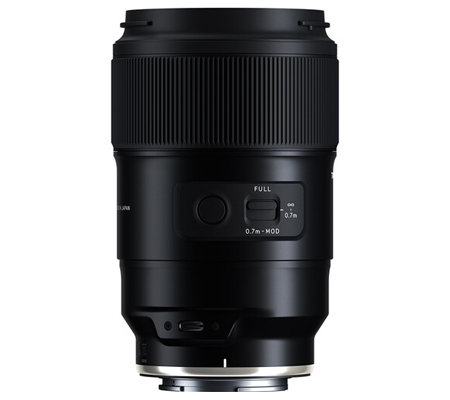
| Weather resistance | Moisture-resistant construction and protective seals |
| Compatible software | Tamron Lens Utility, subject to supported device and operating system |
These are manufacturer-published specifications. They describe the lens’s design and functions, not a guarantee of identical results in every camera, scene, or shooting method.
The 90mm focal length sits between common 85mm portrait lenses and longer 100mm or 105mm macro lenses. That makes it useful for close-up work without requiring the photographer to stand as far away as with a 180mm macro lens.

What does 1:1 macro magnification mean?
A 1:1 macro lens projects a subject onto the camera sensor at its actual size. For example, a 10mm-wide object can appear about 10mm wide on a full-frame sensor when the lens is focused at its closest working distance.
This differs from lenses marketed as “macro” that only provide moderate close-focus ability. A true 1:1 lens can record much finer detail in insects, jewelry, coins, textures, small products, and studio subjects.
The stated 0.23m minimum object distance is measured from the subject to the sensor plane, not from the front of the lens. The practical space between the front of the lens and the subject is therefore shorter. That distance is called the working distance.
Why working distance matters
Working distance affects both comfort and lighting:
- A short distance can make it harder to avoid casting a shadow on the subject.
- Living insects may move when the lens gets close.
- Small lights or reflectors may need careful placement.
- A macro flash or off-camera light can help maintain even illumination.
- The 90mm focal length gives more room than a short 50mm or 60mm macro lens.
For flowers, products, and controlled tabletop scenes, the working distance is usually manageable. For wary insects, a longer macro lens may offer more space.

Image quality and the f/2.8 aperture
The f/2.8 maximum aperture lets the Tamron 90mm Macro gather more light than a slower macro zoom. It can also create background blur for portraits and detail images.
At close focus, however, the usable depth of field becomes very thin. At 1:1 magnification, even a small change in camera position can move the point of focus. This is normal for macro photography and is not a fault unique to this lens.
Stopping down to f/8, f/11, or f/16 can increase apparent depth of field, but it also reduces light and may increase diffraction softness. Many macro photographers solve this with:
- A tripod or stable support.
- More light from a flash or LED source.
- Focus bracketing or focus stacking.
- A smaller aperture chosen for the subject, not simply the maximum sharpness.
The 12-blade rounded diaphragm is intended to help produce smooth out-of-focus areas. Background quality still depends on subject distance, background distance, aperture, and the shape of objects behind the subject.
Portrait use
The 90mm focal length is well suited to head-and-shoulder portraits on a full-frame Sony camera. It can compress perspective slightly compared with a wider lens while keeping a comfortable shooting distance.
The lens’s macro design also lets photographers focus much closer than a conventional portrait prime. That flexibility is useful for photographing makeup, eyes, jewelry, hands, or small product details during a portrait session.
The trade-off is size and weight. A dedicated 90mm macro lens may be heavier than a simple 85mm f/1.8 portrait lens, and f/2.8 gives less background blur than an f/1.4 or f/1.8 lens under the same framing.

Autofocus and VXD performance
Tamron uses its VXD, or Voice-coil eXtreme-torque Drive, linear motor focus system in this lens. The motor is designed to move the focusing elements quickly and with low mechanical noise.
Autofocus results depend on the Sony camera body, firmware, subject contrast, light level, and focus settings. Macro subjects create special challenges because the focus range is large and the depth of field is very narrow.
For general subjects, eye detection and continuous autofocus can be useful. For detailed macro work, manual focus or a controlled focus area may give more consistent results.
A practical focus method for macro photos
For a static subject:
- Set the camera to a single focus point or a small flexible spot.
- Focus on the most important detail.
- Check the image at high magnification.
- If the depth of field is too thin, stop down or move the camera slightly.
- Use a tripod and a remote release when the subject allows it.
For moving subjects, continuous autofocus and a faster shutter speed may matter more than maximum depth of field. There is no single best focus mode for every macro scene.
Tamron also provides a focus limiter and lens control functions through supported camera or software features. Check the current Tamron Lens Utility compatibility list before buying if custom buttons, focus settings, or firmware updates are important to your workflow.

Handling, controls, and Sony E compatibility
The Tamron 90mm f/2.8 Macro uses a Sony E-mount design for full-frame mirrorless cameras such as the Sony Alpha 7 and Alpha 9 families. It can also mount on APS-C Sony bodies, including models in the Alpha 6000 series.
On an APS-C body, the lens still provides 1:1 magnification, but the field of view becomes narrower. That can help when photographing distant details, although it does not turn the lens into a longer optical focal length.
The lens includes electronic communication with compatible Sony cameras. This supports autofocus, aperture control, EXIF data, and other camera functions. Actual features can vary by camera model and firmware version.
The 67mm filter thread is shared with several Tamron lenses. Photographers who already own 67mm circular polarizers, neutral-density filters, or protective filters may be able to reuse them.
A filter can be useful, but macro work requires care. A thick filter ring or stacked filters may increase the chance of vignetting on some setups. Keep the front element clean, especially when shooting at close range where dust and smudges can become visible.

Is the Tamron 90mm f/2.8 Macro good for video?
The lens can serve video users who need close focus, product detail, tabletop footage, or shallow-focus shots. Its linear motor system is designed for quiet operation, and Tamron states that the lens is designed to suppress focus breathing.
Still, video performance depends on the camera and recording setup. Autofocus noise, focus transitions, and breathing should be checked with the specific Sony body and microphone arrangement.
For repeatable video focus, manual focus may be preferable. The narrow depth of field at f/2.8 can make focus pulls demanding, especially at close distances. A smaller aperture and extra lighting may provide more practical results.
The lens is not a substitute for a dedicated cinema macro lens. It lacks many cinema-focused features such as built-in gear rings, a long mechanical focus throw, and a standardized cinema housing.

Tamron 90mm Macro compared with other options
The best choice depends on the subject, working distance, budget, and whether you need more than macro photography.
| Lens type | Main advantage | Main limitation |
|---|---|---|
| Tamron 90mm f/2.8 Macro | 1:1 macro, portrait use, modern Sony E design | f/2.8 is slower than many portrait primes |
| Sony 90mm f/2.8 Macro G OSS | 1:1 macro and built-in optical stabilization | Larger system choice may cost more depending on market |
| 85mm f/1.8 portrait lens | More light and stronger background blur | Usually lacks true 1:1 macro focus |
| 100mm or 105mm macro lens | More working distance | Often larger or heavier |
| 70–200mm telephoto zoom | Flexible framing and reach | Usually less convenient for true macro work |
| 50mm or 60mm macro lens | Smaller subject distance and often lower weight | Less working distance and wider perspective |
The Tamron is most compelling for photographers who want one lens for close-up detail and moderate telephoto portrait work. A dedicated portrait lens may be better for frequent low-light portraits. A longer macro lens may be better for insects that react to close approach.
Image stabilization is another deciding factor. The Tamron lens relies on the camera body and shooting technique rather than presenting itself as a stabilized lens in the same way as some competing macro options. Sony cameras with in-body image stabilization can reduce camera movement, but stabilization does not freeze a moving subject.

Best uses for the Tamron 90mm f/2.8 Macro
This lens is a strong fit for several types of photography:
Product photography
The 1:1 capability helps record small product details, labels, textures, hardware, watches, and jewelry. A tripod, controlled lighting, and a plain background will usually matter more than extreme aperture settings.
Food photography
The 90mm perspective can give food images a natural, compressed look. Close focusing helps isolate ingredients and surface details. The lens may be too long for very small kitchens or tight overhead setups, so camera space should be considered.
Flowers and nature
The focal length provides useful subject separation and close-focus ability. A faster shutter speed is helpful outdoors because flowers move in wind, even when the camera is on a tripod.
Portraits
The lens can handle headshots and detail portraits. Its f/2.8 aperture offers background separation, though not as much as a fast 85mm f/1.4 or 85mm f/1.8 lens.
Copy work and artwork
The lens can reproduce flat subjects well when the camera is kept parallel to the artwork. Use even lighting from both sides and check for reflections. For critical archival work, a copy stand and color target are better than a casual handheld setup.
Common mistakes when using this macro lens
The most common error is expecting every macro image to be sharp from front to back. At 1:1 magnification, depth of field is extremely limited, even at f/8 or f/11.
Other avoidable problems include:
- Handholding at slow shutter speeds in dim light.
- Focusing on the closest edge instead of the key detail.
- Moving the focus ring when the camera should move forward or backward.
- Using autofocus across the full focus range when the subject is static.
- Forgetting that wind can ruin a sharp flower image.
- Adding a clear filter without checking for flare or reflections.
- Assuming in-body stabilization will stop subject movement.
- Ignoring firmware updates when a compatibility or focus issue appears.
The safest workflow is to test the lens with the exact camera body, subject distance, and lighting setup that matter to you. Product specifications cannot predict every autofocus or handling result.

Pros and limitations
Advantages
- True 1:1 macro magnification.
- Useful 90mm focal length for full-frame Sony cameras.
- f/2.8 maximum aperture.
- VXD linear motor autofocus system.
- Close-focus ability for products, nature, food, and portraits.
- 67mm filter thread.
- Weather-resistant design features.
- Compatibility with Tamron Lens Utility on supported systems.
- Twelve-blade diaphragm for potentially smooth out-of-focus rendering.
Limitations
- No built-in optical stabilization.
- Macro depth of field remains very narrow.
- f/2.8 is slower than many dedicated portrait primes.
- The lens is relatively substantial for a 90mm prime.
- Working distance may be short for nervous insects.
- Video results vary with the Sony body and focus settings.
- A tripod, flash, or focus-stacking setup may be needed for maximum macro detail.

Who should buy the Tamron 90mm f/2.8 Di III Macro VXD?
Buy it if you use a Sony E-mount camera and want one lens for true macro photography, portraits, product details, and close-up nature work. It is especially practical for photographers who prefer a 90mm working distance over a shorter macro lens.
Consider another lens if your main need is:
- Very shallow portrait depth of field in low light.
- Long working distance for skittish insects.
- Optical stabilization in the lens.
- A compact walk-around prime.
- Cinema-style manual focus control.
Before purchasing, confirm the lens mount, camera compatibility, current firmware support, and return policy. Prices and stock can change in the U.S., so compare authorized dealers rather than relying on an old listing.
Frequently asked questions
Is the Tamron 90mm f/2.8 Macro full frame?
Yes. The Tamron 90mm f/2.8 Di III Macro VXD is designed for full-frame Sony E-mount cameras. It also works on Sony APS-C bodies with a narrower field of view.
Does it provide true 1:1 macro?
Yes. Its maximum magnification ratio is 1:1, which means the subject can be projected onto the sensor at life size at the closest focusing distance.
Can it be used for portraits?
Yes. The 90mm focal length works well for headshots and upper-body portraits. Its main trade-off is the f/2.8 aperture, which provides less background blur and low-light ability than many 85mm f/1.8 or f/1.4 lenses.
Does the lens have image stabilization?
The lens does not present built-in optical stabilization as one of its primary features. Camera-based stabilization may help with camera movement on compatible Sony bodies, but it cannot freeze a moving macro subject.
Is it suitable for insects?
It can photograph insects, but the short working distance may cause some subjects to move away. A longer 100mm, 105mm, or 150mm macro lens may be more comfortable for wary insects.
What is the correct product name?
The correct model name is Tamron 90mm F/2.8 Di III Macro VXD. “f28” is commonly used as shorthand for f/2.8, while “11 macro” generally refers to its 1:1 magnification.
Final verdict
The Tamron 90mm f/2.8 Di III VXD Macro for Sony E-mount is a versatile full-frame macro prime with true 1:1 magnification, a useful portrait focal length, and a modern VXD autofocus system. Its strongest value is flexibility: one lens can cover small products, flowers, food, portraits, and detailed close-ups.
Its limits are equally clear. The f/2.8 aperture is not as bright as a fast portrait prime, the depth of field is very thin at macro distances, and stabilization depends on the camera rather than a dedicated optical stabilizer in the lens. For Sony photographers who understand those trade-offs, it is a practical choice for detailed close-up work without giving up portrait usefulness.

