
Introduction
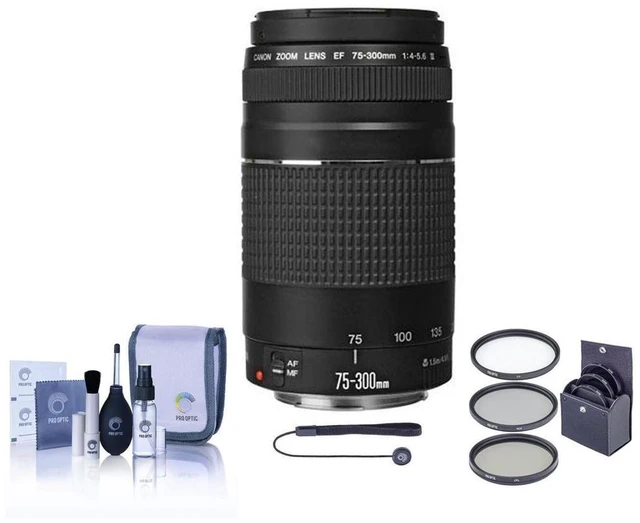
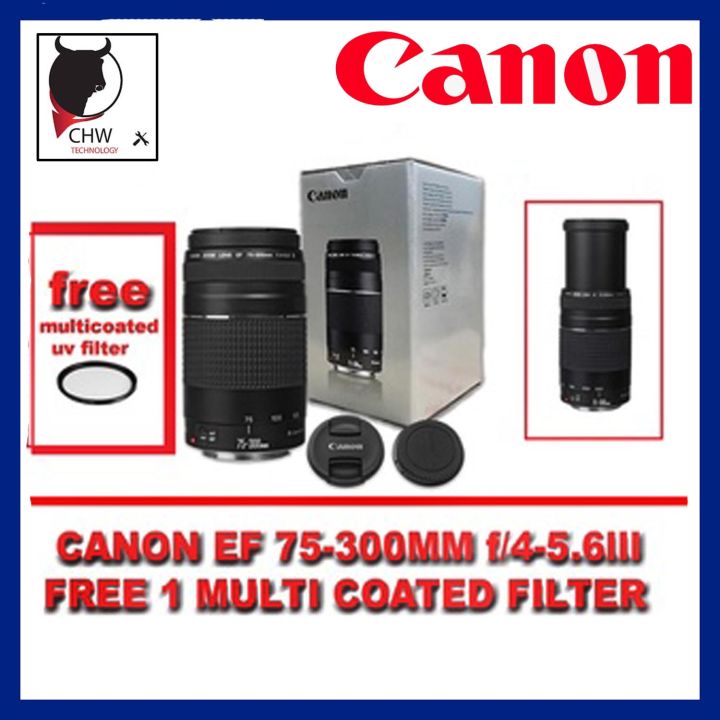
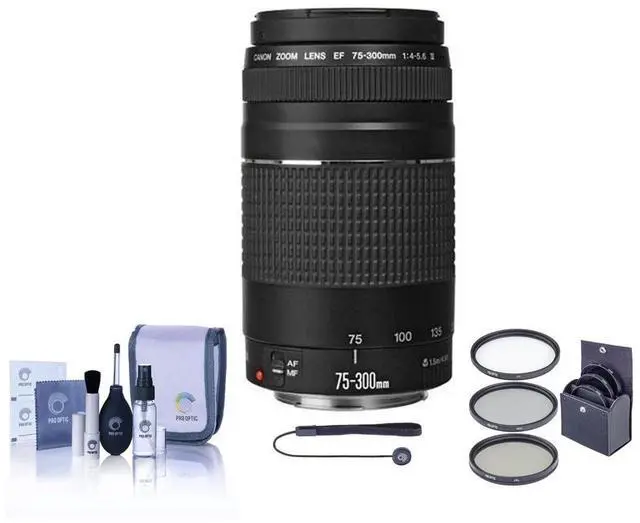
The Canon EF 75-300mm f/4-5.6 III is a budget telephoto zoom lens for Canon EOS cameras. In the United States, it is commonly sold as a used lens or as a new old-stock bundle with a 58mm UV filter. The lens works well for outdoor sports, wildlife in good light, school events, portraits, and distant subjects.
The 58mm UV filter is a screw-on accessory that fits the lens front. It may help shield the front glass from dust, fingerprints, and light scratches. It does not improve zoom reach, autofocus speed, low-light ability, or image stabilization. The filter’s quality also depends on the brand included by the seller.
The key point is simple: this lens offers a long 300mm reach at a low cost, but it has no image stabilization, no ultrasonic motor, and limited low-light performance.

Canon EF 75-300mm f/4-5.6 III Specifications
The Canon EF 75-300mm f/4-5.6 III is a full-frame EF-mount zoom lens. Canon designed it for EOS film and digital SLR cameras.
| Feature | Specification |
|---|---|
| Lens mount | Canon EF |
| Focal length | 75-300mm |
| Maximum aperture | f/4 at 75mm to f/5.6 at 300mm |
| Minimum aperture | f/32 at 75mm; f/45 at 300mm |
| Optical design | 13 elements in 9 groups |
| Minimum focus distance | 1.5 meters, or about 4.9 feet |
| Maximum magnification | Approximately 0.25x |
| Filter size | 58mm |
| Diaphragm | 7-blade design |
| Autofocus drive | Micromotor |
| Image stabilization | None |
| Weight | Approximately 480 grams |
| Lens length | Approximately 122mm |
| Hood compatibility | ET-60 lens hood |
The lens uses a variable maximum aperture. At 75mm, it can open to f/4. As you zoom toward 300mm, the maximum aperture becomes f/5.6. This change affects shutter speed and exposure.
The lens does not include Canon’s Image Stabilizer system. It also does not use Canon’s faster and quieter USM autofocus motor. These limits matter most when photographing moving subjects, dim scenes, or video.
What does “EF 75-300mm” mean?
“EF” identifies Canon’s electronic autofocus lens mount. EF lenses cover a full-frame image sensor, so they can be used on Canon full-frame DSLRs and Canon APS-C DSLRs.
On a Canon APS-C DSLR, the lens gives a narrower field of view than it does on a full-frame camera. The view is similar to what a 120-480mm lens would show on full frame, based on Canon’s 1.6x crop factor. This does not change the lens’s actual focal length, but it does change the framing.
The lens is not a native Canon RF lens. It cannot mount directly to Canon EOS R-series mirrorless cameras. An EF-to-RF adapter is required.
What the 58mm UV Filter Does
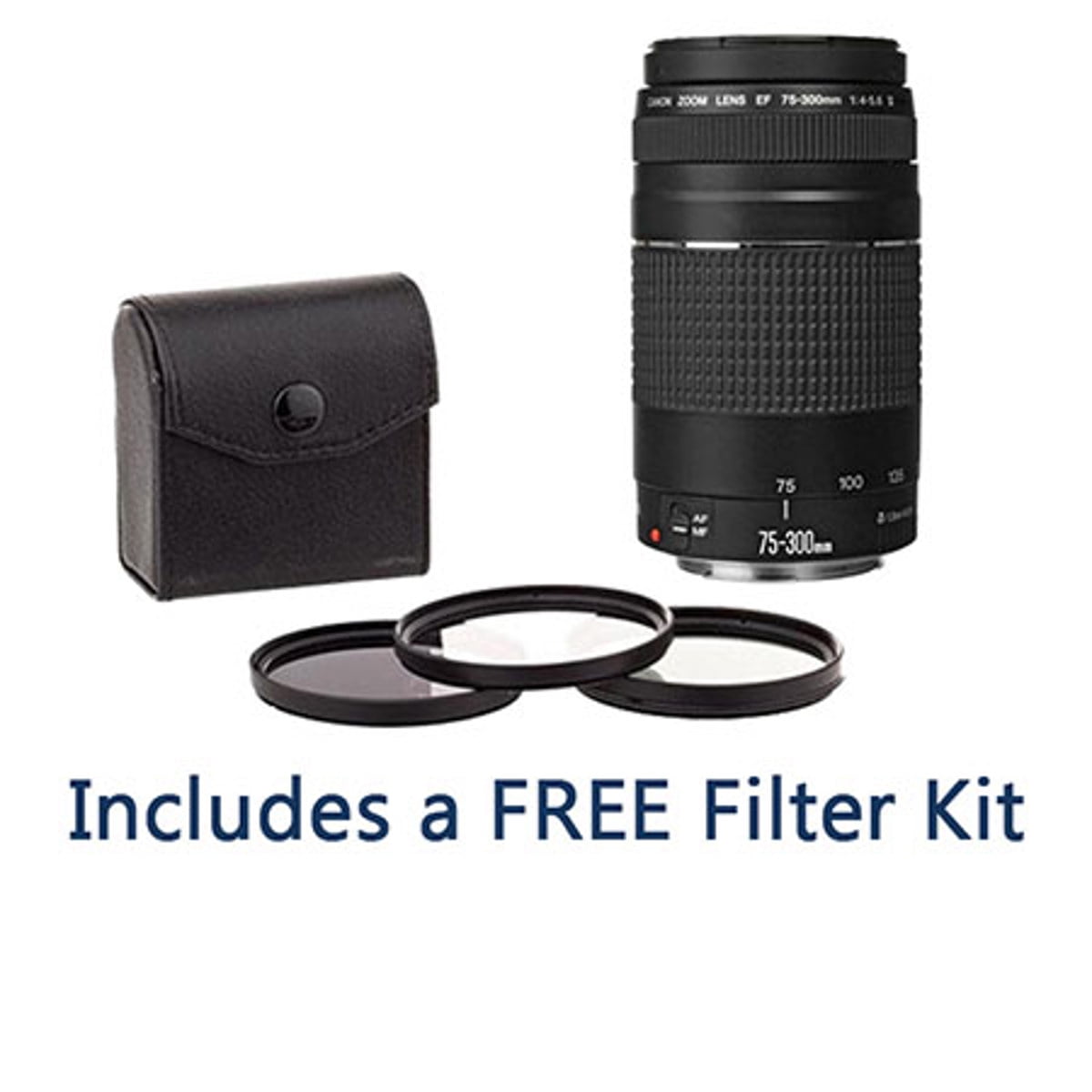
The bundled 58mm UV filter attaches to the front filter thread of the Canon EF 75-300mm f/4-5.6 III. Its main practical role today is front-element protection, not ultraviolet correction.
Digital camera sensors already reduce the visible effect of ultraviolet light. As a result, a UV filter usually has little or no visible effect on normal digital photographs. The filter can still act as a thin shield against dust, fingerprints, and minor contact.
A UV filter can also create problems. A low-quality filter may add flare, ghosting, or a faint loss of contrast, especially when a bright light source is near the frame. For the clearest image, remove the filter when shooting into strong light or when reflections appear.
How to check the included filter
Before using the bundle, inspect the filter for:
- Scratches across the glass
- Dust trapped between the glass and ring
- Loose or bent threads
- Haze or clouding
- Strong color tint
- Flare when shooting toward a bright light
The “58mm” measurement refers to the filter thread diameter. It does not describe the lens focal length. A 58mm UV filter is the correct size for this lens, but other 58mm accessories may also fit, such as circular polarizers and some close-up filters.
Do not stack several filters on the lens. Stacking can increase flare and may cause dark corners at the wider end.
Canon EF 75-300mm III Compatibility in the United States
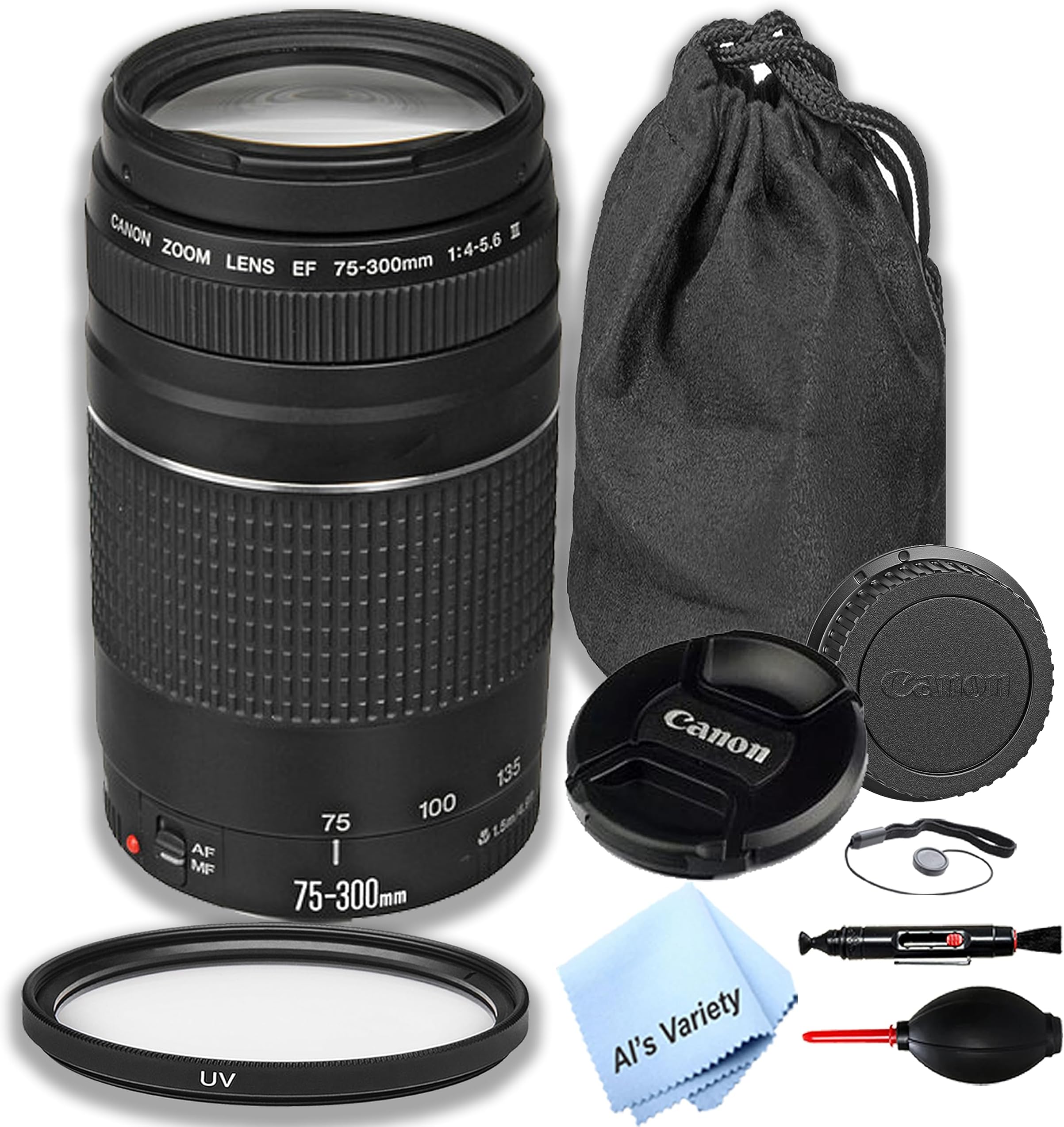
The lens is compatible with Canon EOS DSLR cameras that use an EF or EF-S mount.
Compatible camera groups
The lens can be used directly on:
- Canon full-frame EOS DSLRs, such as the EOS 5D and 6D families
- Canon APS-C EOS DSLRs, such as the EOS Rebel, 70D, 80D, 90D, 7D, and 90D families
- Older Canon EOS film SLR cameras with an EF mount
The exact autofocus behavior can depend on the camera body, battery condition, and lens condition. A used lens may focus more slowly than a newer Canon telephoto lens, even when the camera itself is modern.
Mirrorless camera compatibility
The lens can work on Canon EOS R-series cameras with a Canon EF-EOS R mount adapter. The adapter does not add image stabilization to the lens. Autofocus results can vary by camera model, adapter, subject, and lighting.
The lens can also be used on Canon EOS M cameras with a suitable EF-EOS M adapter. Third-party adapters may provide different levels of autofocus support. Check the adapter maker’s current compatibility list before buying.
The lens does not mount directly to:
- Canon RF cameras
- Canon EF-M cameras
- Canon PowerShot cameras
- Canon compact cameras
- Cameras using Nikon F, Sony E, Fujifilm X, or Micro Four Thirds mounts
A mechanical adapter alone may not provide electronic aperture control or autofocus. For reliable operation, use an adapter that supports Canon EF electronic communication.
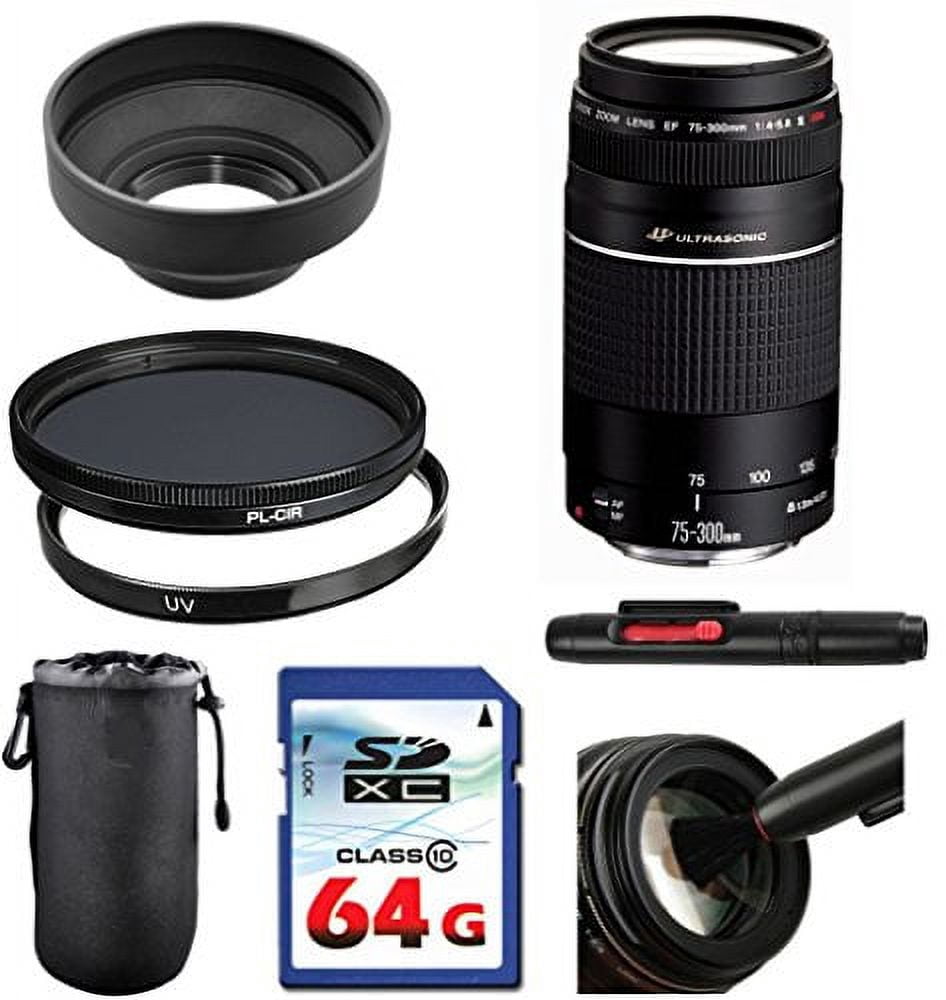
Image Quality and Real-World Performance
The Canon EF 75-300mm f/4-5.6 III can produce useful images in bright outdoor light. It is best treated as an affordable entry–level telephoto lens rather than a professional sports or wildlife lens.
Sharpness is usually more forgiving near the center of the frame than at the edges. Stopping the aperture down by about one stop may improve detail, but it also reduces the amount of light reaching the sensor. At 300mm, atmospheric haze, camera shake, and subject movement can reduce detail even when the lens is functioning correctly.
The long end can still be useful for:
- Outdoor sports
- Birds near a feeder
- Children at field events
- Wildlife in open areas
- Portraits from a distance
- Outdoor performances
- Boats, landmarks, and distant details
The lens is less suitable for:
- Indoor sports
- Night wildlife
- Concerts in dark venues
- Fast-moving subjects in poor light
- Handheld video
- Close-up macro work
- Professional action coverage
Why 300mm can look less sharp
At 300mm, small movements become more visible. If the camera moves slightly during exposure, the subject can look soft. Heat shimmer and atmospheric movement can also reduce clarity across long distances.
A useful starting point is a shutter speed near 1/300 second at 300mm on a full-frame camera. On a 1.6x APS-C body, photographers may prefer a faster speed, such as 1/500 second or more. These are starting points, not fixed rules.
Because the lens has no stabilization, raise the ISO or use a tripod when the shutter speed becomes too slow. A faster shutter often helps more than adding a UV filter.
How to Use the Lens Successfully
The best results come from controlling shutter speed, focus, and light.
1. Use a fast enough shutter speed
For handheld use, start with:
- About 1/125 second at 75mm
- About 1/250 second around 200mm
- About 1/500 second at 300mm
These values are practical starting points. A steady photographer may use slower speeds for still subjects. A moving subject may require a faster speed.
2. Select the right autofocus mode
Use One-Shot AF for still subjects. Use AI Servo AF on compatible Canon DSLRs for moving subjects. Select a single focus point when the background is busy.
The lens’s micromotor autofocus system may hunt in dim light or low-contrast scenes. If autofocus keeps moving back and forth, aim at a subject with stronger contrast, add light, or focus manually.
3. Keep the subject within the focus range
The minimum focus distance is about 1.5 meters. The lens will not focus on nearby subjects closer than that distance. Step back or use a different lens when the subject is too close.
This lens is not a macro lens. Its maximum magnification is about 0.25x, so small objects will not fill the frame like they would with a dedicated macro lens.
4. Support the camera correctly
Hold the lens with your left hand under the zoom barrel. Keep your elbows close to your body. Press the shutter smoothly.
A monopod or tripod can help during long sessions. However, support does not stop a moving subject. For action, shutter speed remains the main control.
5. Check the aperture
At 300mm, the lens reaches f/5.6. This may produce a slower shutter speed than expected. In bright daylight, this is often manageable. In shade or indoors, increase ISO and watch for motion blur.
Is the Canon EF 75-300mm III Good for Sports and Wildlife?
It can work for casual outdoor sports and wildlife in good light. It is not the strongest choice for serious action because it lacks image stabilization and uses a slower micromotor autofocus system.
For outdoor sports, stand where the subject will come toward you or move across a clear background. Use a fast shutter speed and continuous autofocus. Shoot short bursts rather than holding the shutter button for every moment.
For wildlife, the lens works best with subjects that are fairly close and well lit. A bird across a large lake may still appear small in the frame. A crop-sensor Canon DSLR can provide a narrower field of view, but cropping cannot replace lost detail caused by distance or haze.
A newer telephoto lens with image stabilization, a faster autofocus motor, or a brighter aperture may be worth the extra cost for frequent action photography. The older 75-300mm III makes more sense for occasional use, learning, or a low-cost first telephoto lens.

Canon EF 75-300mm III vs. Canon EF-S 55-250mm IS STM
The Canon EF-S 55-250mm f/4-5.6 IS STM is often a stronger choice for Canon APS-C DSLR owners who can spend more. It has a shorter maximum focal length, but it includes image stabilization and a quieter STM focus motor.
| Feature | EF 75-300mm III | EF-S 55-250mm IS STM |
|---|---|---|
| Mount | EF | EF-S |
| Full-frame use | Yes | No |
| APS-C field of view | About 120-480mm equivalent | About 88-400mm equivalent |
| Maximum reach | 300mm | 250mm |
| Image stabilization | No | Yes |
| Autofocus motor | Micromotor | STM |
| Filter size | 58mm | 58mm |
The 75-300mm III offers more reach and works on full-frame Canon DSLRs. The 55-250mm IS STM offers stabilization and generally better handling for everyday APS-C photography.
Choose the 75-300mm III when low price, full-frame DSLR compatibility, or 300mm reach matters most. Choose the 55-250mm IS STM when handheld shooting, video, and general image quality matter more than the extra 50mm.
Buying a Used or Bundled Lens in the U.S.
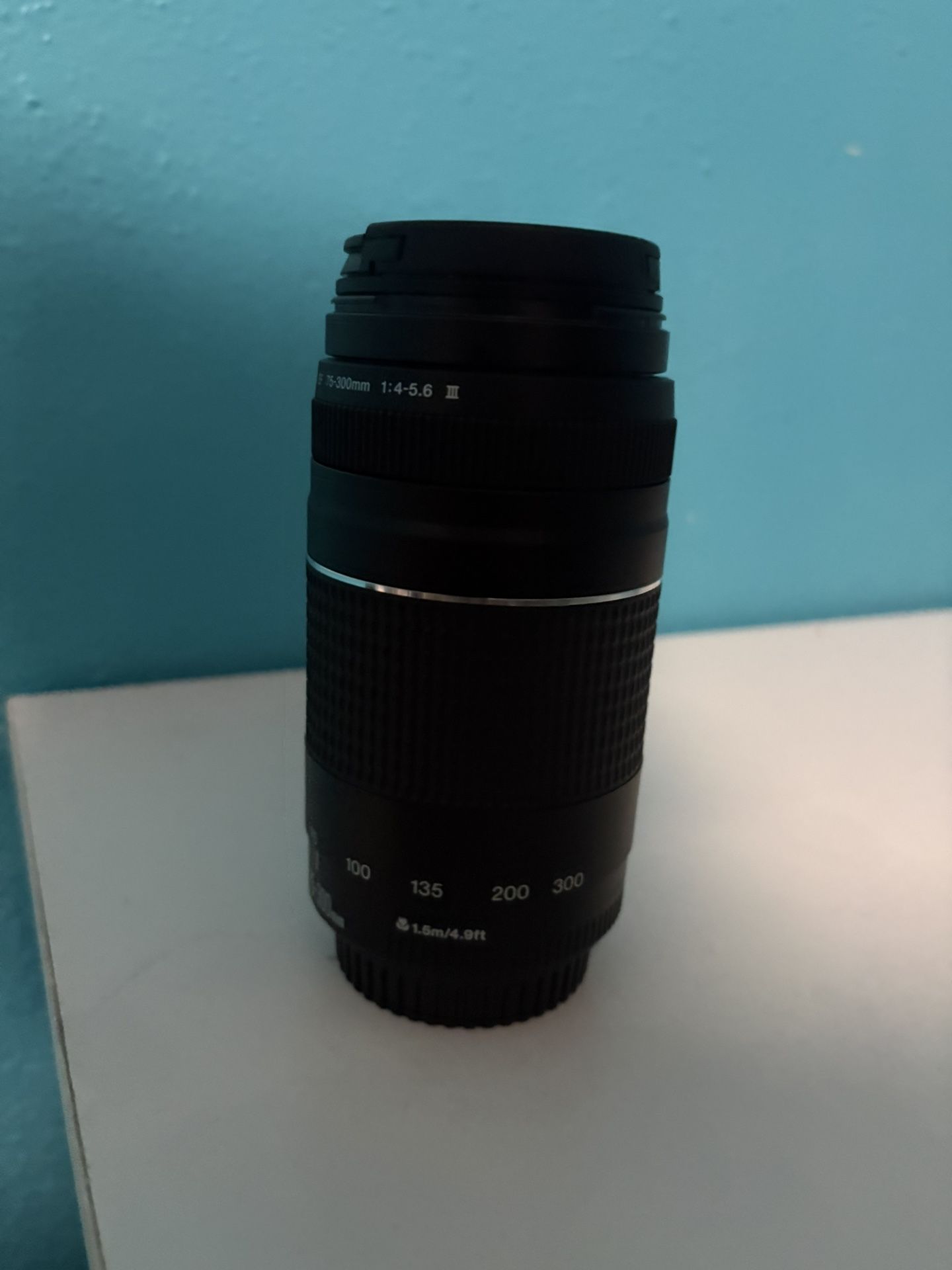
The condition of the lens may matter more than the included UV filter. A bundle can look attractive, but the filter is a low-cost accessory and should not justify a high price.
Before buying, ask the seller to confirm:
- The exact lens model is Canon EF 75-300mm f/4-5.6 III
- Autofocus works at both 75mm and 300mm
- The aperture changes correctly when zooming
- The zoom barrel is not unusually loose
- The focus ring turns smoothly
- The front and rear glass have no fungus or heavy haze
- The electronic contacts are clean
- The filter ring is not cross-threaded
- Both lens caps are included, if promised
- The return period covers testing
Simple inspection after delivery
- Remove the front and rear caps.
- Shine a small light through the lens from an angle.
- Look for fungus, haze, separation, and heavy dust.
- Mount the lens with the camera turned off.
- Test autofocus in bright light.
- Photograph a distant subject at 75mm and 300mm.
- Test several shutter speeds.
- Check the UV filter separately for flare and scratches.
A small amount of internal dust is common in older zoom lenses. Heavy haze, fungus, oil on the aperture blades, or grinding zoom movement is more serious.
Do not force the filter if it will not turn. Cross-threaded filters can damage the front filter ring and make future accessories difficult to attach.

Common Problems and Troubleshooting
The lens will not autofocus
Check that the lens is fully mounted and the camera is switched to autofocus. Clean the electronic contacts with a clean, dry microfiber cloth. Try a brighter subject with visible contrast.
If manual focus works but autofocus does not, the motor, contacts, camera settings, or lens electronics may be at fault. Test the lens on another compatible Canon body if possible.
The camera shows an error
Turn the camera off, remove the lens, and inspect the contacts. Reattach the lens firmly. If the error remains, test another lens on the camera.
Do not scrape the contacts or use liquid cleaners inside the mount. Persistent errors may require camera or lens service.
Photos look blurry
Blur may come from camera shake, subject movement, missed focus, haze, or a damaged optical element. Increase the shutter speed first. Then check focus and remove the UV filter for a test frame.
A tripod can reduce camera movement, but it cannot freeze a moving person or animal.
The image has glare or low contrast
Remove the UV filter and repeat the photograph. If the result improves, the filter may be causing flare. A lens hood can also reduce stray light from outside the frame.
A UV filter is not always helpful in difficult light. Use it when protection is useful, not as a permanent requirement.
The zoom or focus ring feels stiff
Do not force the ring. Older lenses may develop mechanical wear, dried lubricant, impact damage, or internal contamination. A repair shop can assess whether service is practical.

Key Takeaways
- The Canon EF 75-300mm f/4-5.6 III is an affordable telephoto zoom for Canon EOS cameras.
- It covers 75-300mm and uses a 58mm front filter thread.
- The included UV filter mainly protects the front element.
- The lens has no image stabilization and no USM autofocus motor.
- It works directly on Canon EF and EF-S DSLRs.
- Canon EOS R-series mirrorless cameras require an EF-to-RF adapter.
- It is best for bright outdoor scenes and occasional telephoto work.
- Shutter speed, light, and lens condition have a larger effect on results than the bundled filter.
Frequently Asked Questions
Does the Canon EF 75-300mm f/4-5.6 III include image stabilization?
No. This version does not include Canon Image Stabilizer technology. Use a faster shutter speed, higher ISO, monopod, or tripod when needed.
Does the 58mm UV filter fit this lens?
Yes. The lens has a 58mm front filter thread, so a correctly made 58mm UV filter should attach. Inspect the filter for scratches, haze, and flare before use.
Can I use this lens on a Canon EOS R camera?
Yes, but not directly. You need a compatible Canon EF-to-EOS R mount adapter. The adapter does not add stabilization to the lens.
Is this lens compatible with a Canon Rebel camera?
Yes. Canon Rebel DSLR cameras with an EF-S mount can use EF lenses, including the EF 75-300mm f/4-5.6 III.
Is the Canon EF 75-300mm III good for indoor sports?
Usually not. Its f/4-5.6 aperture and lack of stabilization make indoor action difficult. A lens with a wider aperture, faster autofocus, and suitable stabilization may perform better.
Can I use a circular polarizer instead of the UV filter?
Yes, if the circular polarizer has a 58mm thread. A polarizer can reduce reflections and darken blue skies in some conditions, but it also reduces incoming light and may slow shutter speeds.
Conclusion
The Canon EF 75-300mm f/4-5.6 III bundled with a 58mm UV filter is a practical low-cost way for U.S. Canon users to add telephoto reach. Its strongest features are the 75-300mm range, simple EF compatibility, light weight, and low purchase cost.
Its limits are just as clear: no image stabilization, modest low-light performance, slower autofocus, and older optical and motor design. The bundle is a sensible choice for bright outdoor photography, learning, and occasional use when the lens is priced fairly and passes a careful inspection.
Before buying, confirm the exact model, test autofocus and optics, and treat the UV filter as a protective accessory rather than a performance upgrade.

