
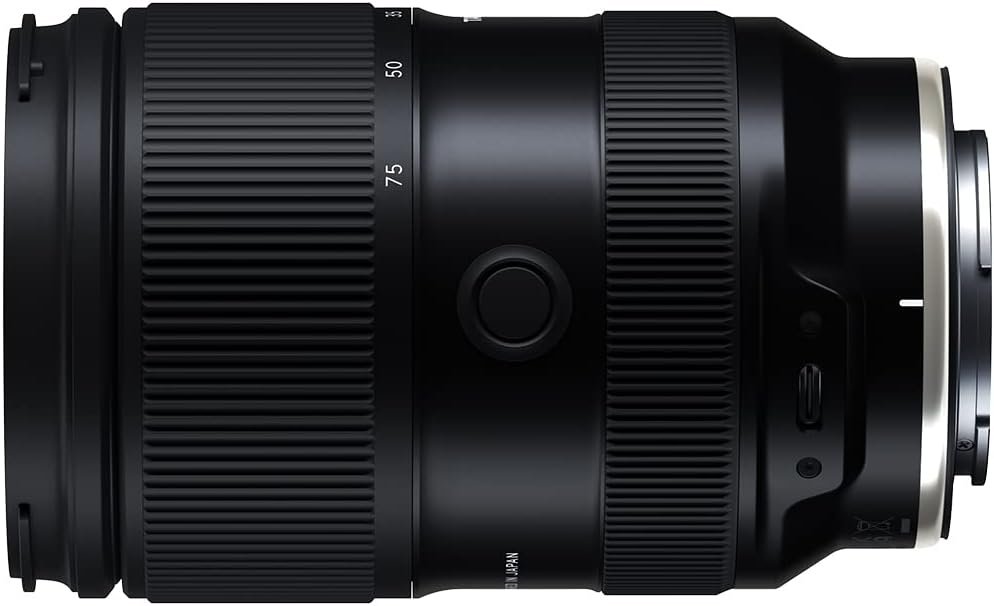
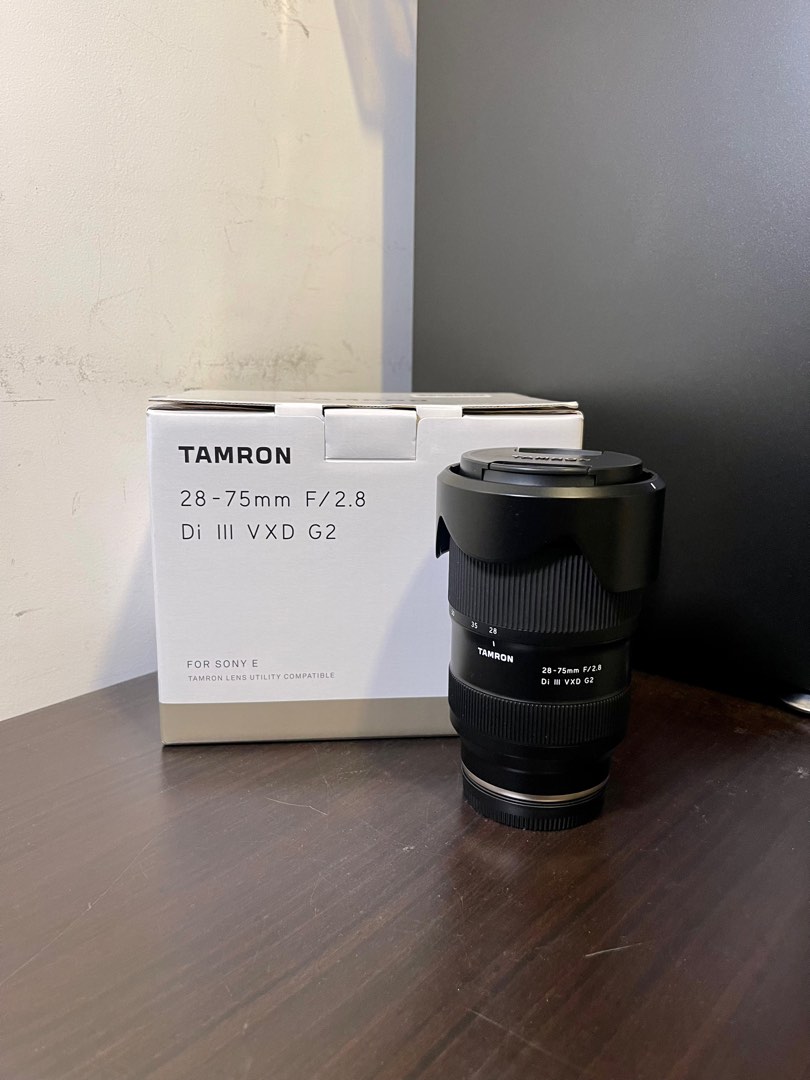
The Tamron 70-180mm F/2.8 Di III VC VXD G2 is a fast telephoto zoom for Sony E-mount full-frame cameras in the United States. The name is sometimes mistyped as “Tamron 2.8 75mm f28,” but the correct model is the Tamron 70-180mm F/2.8 Di III VC VXD G2, also known as Model A065.
It offers a constant f/2.8 aperture, optical image stabilization, fast autofocus, close-focus ability, and a lighter design than many 70-200mm f/2.8 lenses. It suits portraits, weddings, sports, events, travel, and outdoor work. Its main trade-off is the shorter 180mm reach and the lack of some advanced features found on higher-priced Sony G Master lenses.
What the Tamron 70-180mm F/2.8 G2 is
The Tamron 70-180mm G2 is a full-frame telephoto zoom lens made for Sony E-mount cameras. Its focal range covers common portrait lengths, short sports telephoto lengths, and moderate wildlife or event distances.
The lens uses a constant f/2.8 maximum aperture. This means the maximum aperture stays at f/2.8 throughout the zoom range. You do not lose light when moving from 70mm to 180mm.
The lens is designed for cameras such as:
- Sony Alpha 7 III
- Sony Alpha 7 IV
- Sony Alpha 7R III and Alpha 7R IV
- Sony Alpha 7R V
- Sony Alpha 7S III
- Sony Alpha 9, Alpha 9 II, and Alpha 9 III
- Sony Alpha 1
- Sony Alpha 7C and Alpha 7C II
- Sony Alpha 7CR
- Sony FX3 and FX30
Camera features can vary by body and firmware. Sony users should check the latest camera and lens firmware before relying on advanced autofocus or stabilization functions.
On an APS-C Sony camera, the lens provides a field of view similar to 105-270mm on full frame. The lens itself does not change focal length; the crop factor narrows the captured view.

Tamron 70-180mm G2 specifications
The following specifications are based on Tamron’s published product information for the Sony E-mount version. Dimensions and weight can vary slightly by mount or regional documentation.
| Feature | Tamron 70-180mm F/2.8 Di III VC VXD G2 |
|---|---|
| Lens type | Full-frame telephoto zoom |
| Mount | Sony E |
| Focal length | 70-180mm |
| Maximum aperture | f/2.8 |
| Minimum aperture | f/22 |
| Optical stabilization | Tamron VC |
| Autofocus motor | VXD linear motor focus mechanism |
| Minimum focus distance | About 0.3 m at 70mm; about 0.85 m at 180mm |
| Maximum magnification | About 1:2.6 at 70mm; about 1:4.7 at 180mm |
| Optical construction | 20 elements in 15 groups |
| Diaphragm | 9 rounded blades |
| Filter size | 67mm |
| Length | About 156.5mm |
| Weight | About 855g |
| Included accessory | Lens hood |
| Model number | A065 |
The close-focus figures are most useful at the 70mm setting. At 180mm, the minimum focus distance is longer, so the lens is less suited to tight close-ups from a fixed position.
The 67mm filter size is shared with several Tamron lenses, including some popular Sony E-mount zooms. This can reduce the need to buy several filter sizes if you already use compatible Tamron lenses.
Tamron describes the barrel as moisture-resistant. This does not mean the lens is waterproof. Avoid heavy rain, standing water, and rapid temperature changes that may cause condensation inside the lens.
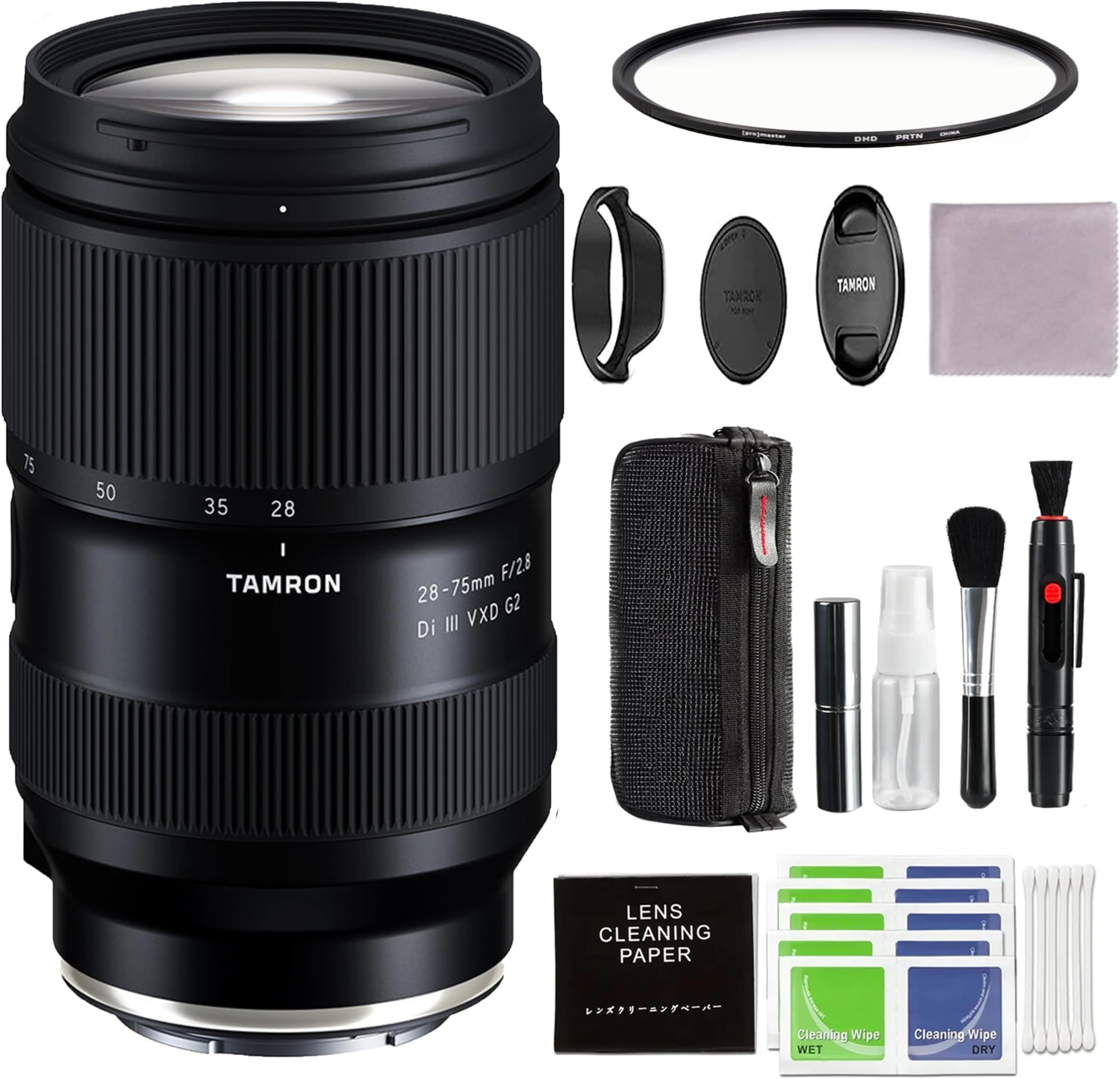
Image quality and f/2.8 performance
The constant f/2.8 aperture is the lens’s main creative advantage. It lets photographers use faster shutter speeds in dim indoor venues and create stronger background blur than many slower telephoto zooms.
At 70mm, the lens works well for:
- Half-body portraits
- Small group photos
- Wedding preparations
- Indoor events
- Product photos with some working distance
- Detail shots
At 135mm to 180mm, it becomes more useful for:
- Head-and-shoulder portraits
- Stage performances
- Field sports
- Outdoor ceremonies
- Wildlife that is not too distant
- Compressing the appearance of background elements
The lens uses several specialized optical elements and Tamron’s BBAR-G2 coating technology to help control aberrations, flare, and ghosting. These features support contrast and clarity, but results still depend on light direction, subject distance, aperture, and camera technique.
No zoom lens produces identical results at every focal length and focus distance. For critical work, photographers should test the lens on their own camera, especially at f/2.8 near the edges of the frame.
Background blur
An f/2.8 aperture can create soft background blur, but blur also depends on:
- Focal length
- Subject distance
- Distance between the subject and background
- Sensor size
- Framing
For example, a portrait taken at 180mm with the subject separated from the background will usually show more background compression and blur than a similar frame taken at 70mm from a much shorter distance.
The nine-blade diaphragm is designed to help keep out-of-focus highlights rounded when the aperture is stopped down. The appearance of bokeh can still change with bright points, foliage, and high-contrast backgrounds.

Autofocus, VXD, and Sony camera compatibility
The Tamron 70-180mm G2 uses Tamron’s VXD, or Voice-coil eXtreme-torque Drive, autofocus system. It is a linear motor design intended to provide fast and precise focus movement.
On supported Sony cameras, the lens can use functions such as:
- Eye AF
- Animal Eye AF
- Real-time Tracking
- Face detection
- Continuous autofocus
- High-speed burst shooting
Performance depends on the camera body, subject movement, lighting, focus settings, and firmware. A lens cannot guarantee the same tracking results on every Sony body.
For sports and moving subjects, use a suitable shutter speed and continuous autofocus mode. The lens may focus quickly, but the camera still needs enough contrast and light to track the subject.
Tamron includes a USB-C connection for Tamron Lens Utility. The software can support lens customization and firmware updates, depending on the function and operating system available at the time. Always follow Tamron’s instructions during firmware updates. Interrupting an update can create problems.
The lens does not provide the same level of integration as every Sony-branded lens. Some Sony-specific functions may be limited by camera model, firmware, or lens firmware. Check the official compatibility information before buying for professional work.

Vibration Compensation and handheld shooting
The Tamron 70-180mm G2 includes VC, Tamron’s optical image stabilization system. VC helps reduce the effect of camera movement when photographing still subjects.
This can help with:
- Indoor portraits
- Handheld event photography
- Travel scenes
- Static subjects at longer focal lengths
- Video clips where compatible stabilization is available
VC does not stop subject movement. If a person moves, the shutter speed must still be fast enough to freeze that movement.
A simple exposure example:
- A stationary subject at 180mm may benefit from VC at a slower shutter speed.
- A running athlete may still need around 1/500 second or faster.
- A bird in flight may require 1/1000 second or faster, depending on movement.
These are starting points, not fixed rules. Camera technique, subject speed, image stabilization mode, and desired sharpness all affect the result.
When a camera is mounted on a stable tripod, follow the lens and camera instructions about stabilization. Some systems detect tripod use, while others may perform better with stabilization disabled in specific situations.

Close-focus performance
The Tamron 70-180mm G2 focuses unusually close for a lens in this class, especially at the 70mm end. Tamron lists a minimum focus distance of about 0.3 meters, or roughly 11.8 inches, at 70mm.
This makes the lens useful for:
- Flowers
- Food photography
- Small products
- Tabletop scenes
- Detail images
- Portraits with environmental context
The close-focus capability is not the same as a dedicated macro lens. At high magnification, working space can be limited, lighting can become difficult, and edge performance may vary. The 70mm setting is the key point for close work.
At 180mm, the minimum focus distance is about 0.85 meters, or roughly 33.5 inches. This provides a different look, with more working distance and stronger subject isolation, but lower maximum magnification.
How to use the close-focus mode
- Set the lens near 70mm.
- Move the camera close to the subject without crossing the minimum focus distance.
- Select a single focus point or a small focus area.
- Use a narrow aperture if more of the subject must remain sharp.
- Check focus at 100% magnification before moving on.
Avoid placing the front element so close that it blocks light or causes the subject to move.

Size, weight, and handling
At about 855 grams, the Tamron 70-180mm G2 is not a small lens, but it is relatively light for a constant f/2.8 telephoto zoom. Its shorter 180mm maximum focal length helps reduce size compared with many 70-200mm f/2.8 designs.
The reduced weight can matter when:
- Carrying a camera for several hours
- Traveling by air
- Working at weddings
- Using a compact full-frame body
- Shooting handheld from changing positions
The lens has a 67mm filter thread and a removable tripod collar is not typically included as standard equipment. For long sessions, a monopod or tripod can improve comfort and reduce fatigue.
Balance depends on the camera body. It will feel different on a small Sony Alpha 7C body than on a larger Alpha 1 or Alpha 9 body with a battery grip.
The lens has controls for focus and zoom, plus a custom or function control arrangement that may vary by firmware and camera setup. Learn the button and switch layout before using the lens at a fast-moving event.
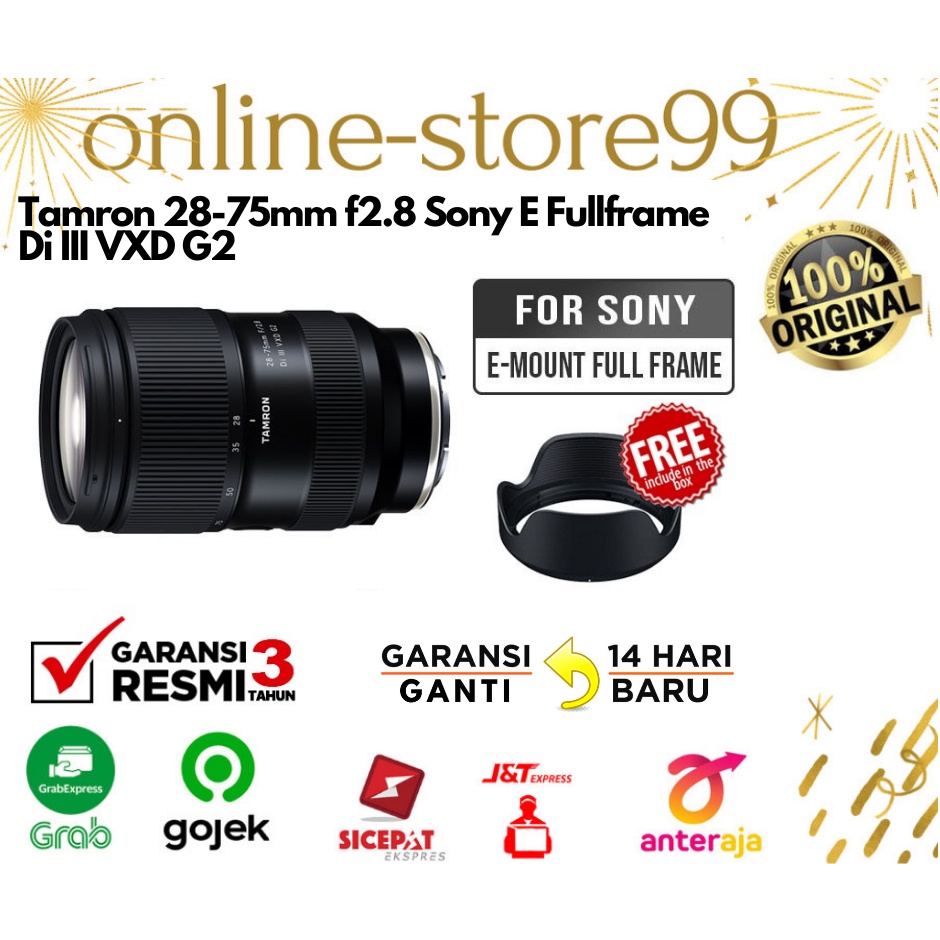
Tamron 70-180mm G2 compared with other lenses
The best alternative depends on whether you value reach, weight, stabilization, native Sony integration, or close focusing.
| Lens | Main strength | Main trade-off |
|---|---|---|
| Tamron 70-180mm F/2.8 G2 | Lower weight, f/2.8 aperture, close focus, VC | Stops at 180mm |
| Sony FE 70-200mm F/2.8 GM II | Native Sony integration, professional build, 200mm reach | Usually costs more |
| Tamron 70-300mm F/4.5-6.3 | Longer reach and lower weight | Much slower aperture |
| Tamron 50-300mm F/4.5-6.3 | Broad range and travel flexibility | Not f/2.8 |
| Tamron 28-75mm F/2.8 G2 | General-purpose range and compact size | Does not reach telephoto lengths |
| Sony FE 70-200mm F/4 G OSS II | Lower weight and 200mm reach | One stop slower than f/2.8 |
Tamron 70-180mm G2 vs. Sony 70-200mm f/2.8 GM II
The Sony lens offers a longer 200mm end and deeper integration with the Sony system. It may be preferable for photographers who depend on professional Sony autofocus behavior, in-camera corrections, or native Sony controls.
The Tamron is a strong alternative for users who want an f/2.8 telephoto zoom with lower weight and a more compact design. The 20mm difference at the long end is meaningful for distant subjects, but small for many portraits and events.
Tamron 70-180mm G2 vs. Tamron 28-75mm G2
These lenses serve different roles. The 28-75mm G2 is a standard zoom for travel, family photos, street work, and general events. The 70-180mm G2 starts where the 28-75mm ends, making the pair a practical two-lens kit.
There is some overlap between 70mm and 75mm. That overlap is useful because it avoids a gap when changing lenses.
Who should buy the Tamron 70-180mm G2?
The lens is a good fit for a Sony full-frame photographer who needs a bright telephoto zoom but wants to avoid the size or cost of a larger 70-200mm f/2.8 lens.
It is especially suitable for:
- Portrait photographers
- Wedding photographers
- Event photographers
- Indoor sports shooters
- Travel photographers
- Enthusiasts upgrading from a kit zoom
- APS-C Sony users who want a 105-270mm equivalent view
It may not be the best choice for:
- Wildlife photographers who need maximum reach
- Photographers who require a native Sony lens for every advanced feature
- Users who want the smallest possible travel lens
- Macro photographers who need true 1:1 magnification
- Video users who need a specific parfocal or cinema-style design
The decision is simple: choose the Tamron when f/2.8, lower weight, close focus, and value matter more than the final 20mm of reach or the broadest native Sony feature set.
How to set up the lens for common uses
Portraits
Use 85mm to 135mm for a natural portrait look. Use 180mm when you have enough working space and want stronger background compression.
Start with:
- Aperture: f/2.8 to f/4
- Autofocus: Eye AF
- Drive mode: Continuous shooting when expression changes quickly
- Shutter speed: At least 1/250 second for a still person, faster for movement
- Stabilization: VC on for handheld shooting
Weddings and events
The lens works well for ceremonies, speeches, and candid moments. Use 70mm for wider context and 135mm to 180mm for moments where you must stay farther away.
Keep shutter speed high enough to stop hand movement and subject movement. Stabilization helps with camera shake, but it cannot freeze a moving hand, facial expression, or walking subject.
Sports
Use continuous autofocus and a suitable tracking mode. Set a shutter speed based on the sport:
- About 1/500 second for slower action
- About 1/1000 second or faster for fast action
- Faster speeds for birds or rapid movement
The 180mm reach may be enough for court sports, field sidelines, and nearby action. It may be too short for distant field sports or wildlife.
Travel
The lens is useful when you want compressed views, distant details, and portraits. Its size is the main travel concern. A smaller f/4 or variable-aperture lens may be easier to carry if low-light work is not important.

Common problems and practical fixes
Autofocus feels slow
Check the following:
- Confirm the camera is in continuous autofocus when tracking movement.
- Clean the lens and camera contacts with a dry, clean cloth.
- Check whether the subject has enough contrast.
- Try a smaller focus area.
- Update the camera and lens firmware through official instructions.
- Test the lens in good light before judging performance.
Low light, low contrast, reflective surfaces, and subjects behind obstructions can slow autofocus.
Images look soft
Soft images can come from camera shake, subject movement, missed focus, atmospheric distortion, or an unsuitable shutter speed.
Test the lens with a stationary subject on a stable support. Use a single focus point, a moderate shutter speed, and good light. If the center is sharp but the edges are softer at wide apertures, stop down and compare.
If sharpness is inconsistent across the frame or changes after a fall, stop using the lens for critical work and contact Tamron or an authorized service center.
Stabilization seems ineffective
VC only helps with camera movement. It cannot correct subject motion. Confirm that VC is enabled and that the shutter speed is appropriate for the subject.
Some camera bodies may apply their own stabilization settings. Check the camera manual for how lens-based and in-body stabilization work together.
The lens fogs up
Fog can form when cold equipment enters warm, humid air. Put the camera and lens in a sealed bag before moving between temperature zones. Allow the equipment to warm slowly before opening the bag.
Do not wipe moisture from inside the lens or use direct heat. If internal condensation remains, seek service.
The lens will not update
Use the correct Tamron Lens Utility version and a reliable USB-C cable. Keep the camera powered as instructed and do not disconnect the lens during an update. If the process fails, follow Tamron’s recovery steps or contact support.
What is included and what to check before buying
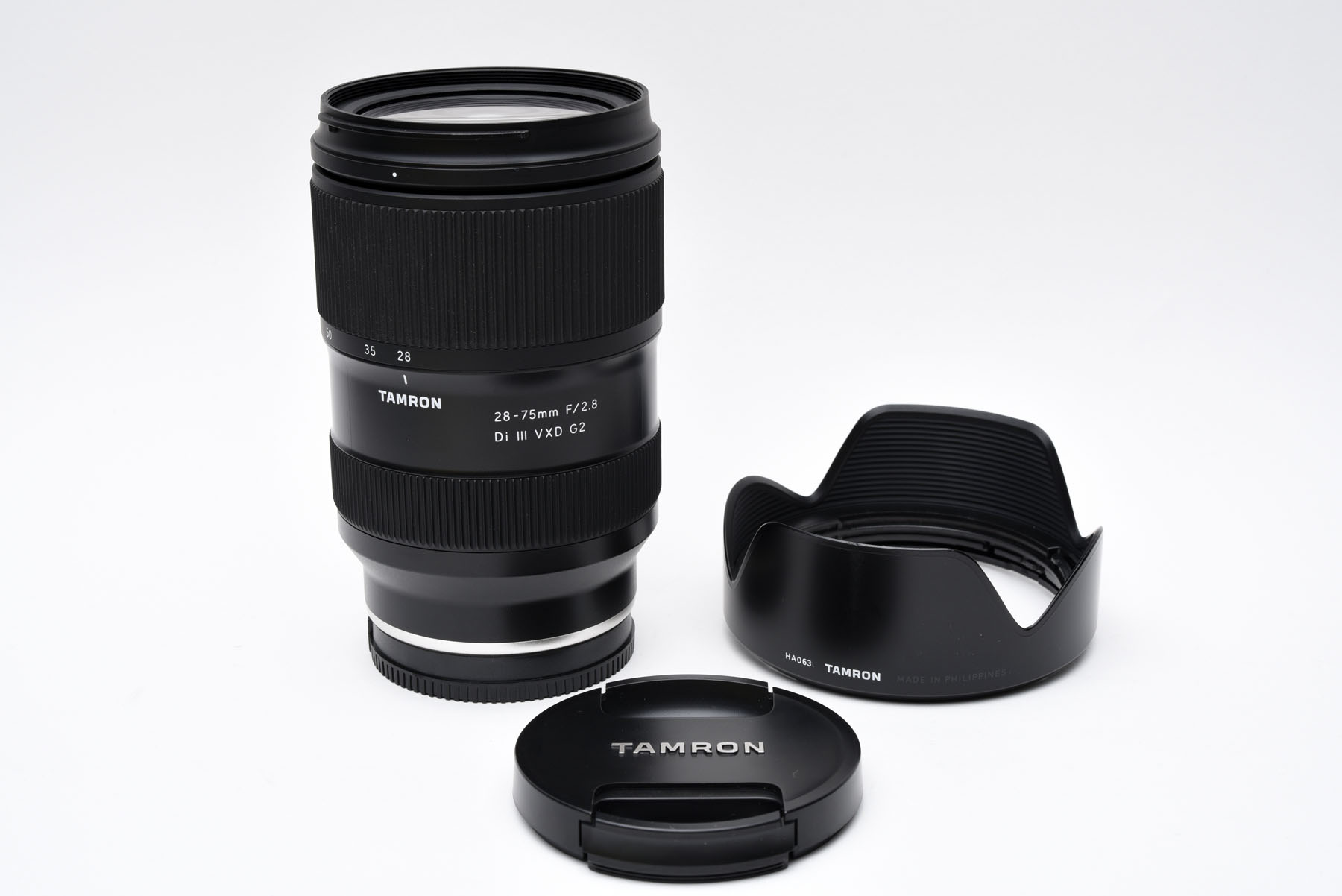
A new lens package normally includes the lens, front and rear caps, a lens hood, and documentation. Package contents can differ for used, refurbished, gray-market, or regional products.
Before buying in the United States, check:
- The exact model is A065
- The mount is Sony E
- The listing says full frame or Di III
- The lens includes the correct caps and hood
- The seller provides a valid US warranty, if warranty coverage matters
- The lens has no haze, fungus, deep scratches, or damaged filter threads
- The zoom and focus rings turn smoothly
- Autofocus works at both ends of the zoom range
- The USB-C port cover closes correctly
- The serial number and purchase documents are available for warranty service
Used buyers should test the lens at 70mm and 180mm, both wide open and stopped down. Take several images of a distant detailed subject and inspect focus accuracy on the camera screen and computer.
Prices and stock change often in the US. Check Tamron USA and authorized retailers for current pricing rather than relying on an old listing.

Frequently asked questions
Is the Tamron 70-180mm G2 compatible with Sony full-frame cameras?
Yes. The lens is made for Sony E-mount full-frame cameras. It can also mount on Sony APS-C bodies, where it provides a narrower field of view similar to 105-270mm on full frame.
Is the Tamron 70-180mm G2 weather-sealed?
Tamron describes the lens as moisture-resistant. That is not the same as waterproofing. Use care in rain, snow, dust, and humid conditions, and protect the camera system when conditions become severe.
Does the Tamron 70-180mm G2 have image stabilization?
Yes. It includes Tamron VC, or Vibration Compensation. VC reduces camera shake for still subjects, but it does not freeze subject movement.
Is 180mm enough for wildlife photography?
It can work for nearby wildlife, larger animals, and controlled environments. It may be too short for small or distant animals. A 300mm or 400mm lens may be more suitable when reach is the main priority.
Can the Tamron 70-180mm G2 replace a 70-200mm lens?
For many portraits, weddings, events, and sports situations, yes. It offers a similar role with a 20mm-shorter maximum focal length. Photographers who need native Sony integration, 200mm reach, or specific professional features may prefer a Sony 70-200mm lens.
Research basis and source limits
This guide is based primarily on Tamron’s published specifications and product documentation for the Sony E-mount 70-180mm F/2.8 Di III VC VXD G2, Model A065, plus general optical and camera-use analysis.
For current firmware support, warranty terms, US pricing, and compatibility changes, verify information with:
Manufacturer specifications document features and measurements. They do not replace independent testing under every camera, lighting condition, or subject type.
Conclusion
The Tamron 70-180mm F/2.8 Di III VC VXD G2 for Sony E-mount full frame is a versatile telephoto zoom for US Sony photographers. Its constant f/2.8 aperture, VXD autofocus, VC stabilization, close-focus ability, and relatively low weight make it well suited to portraits, weddings, events, travel, and nearby sports.
Choose it when you want strong telephoto performance without carrying a larger 70-200mm f/2.8 lens. Choose a longer lens when distant wildlife or field sports are the priority, and consider a Sony G Master model when maximum native integration and the last 20mm of reach matter most.

