
The Fotasy Metal 55mm Lens Hood is designed for camera lenses with a 55mm front filter thread. The “55mm” size refers to the thread diameter, not the lens focal length or camera mount. Before buying, check the marking on the front of the lens. If it reads Ø55, 55mm, or 55, the hood may fit, provided the lens has a standard front-facing filter thread and the hood’s thread design matches.
This guide explains how to check compatibility, install the hood, avoid corner shadows, and decide whether a metal 55mm lens hood suits your camera setup in the United States.

What Does “55mm Compatible” Mean?
A 55mm lens hood attaches to the lens through its front filter thread. It does not attach to the camera body, lens mount, or rear mount.
Look for a symbol like:
Ø5555mm55Filter size: 55mm
The symbol may appear on the front rim of the lens, beneath the lens cap, or in the lens manual.
A lens marked 55mm can usually accept accessories made for 55mm filter threads, such as:
- Screw-in lens hoods
- UV and clear filters
- Circular polarizers
- Neutral-density filters
- Step-up rings
- Some lens caps
However, the thread size alone does not prove that every hood will work well. The hood must also have a suitable depth and shape for the lens’s angle of view.
55mm is not the focal length
A common mistake is to confuse the filter size with the focal length. These are different measurements.
| Marking | What it means |
|---|---|
| 55mm or Ø55 | Front filter thread diameter |
| 50mm, 85mm, or 200mm | Lens focal length |
| Canon EF, Nikon F, Sony E, or Fujifilm X | Camera or lens mount |
| APS-C, full frame, or Micro Four Thirds | Sensor format |
For example, a lens may be a 50mm lens with a 55mm filter thread. A different lens may be a 35mm lens with a 58mm filter thread. The focal length does not determine the hood size.
The Fotasy hood is therefore compatible based on the lens’s front thread, not its focal length or camera brand.
How to Check if the Fotasy 55mm Hood Fits Your Lens
Check the lens itself before ordering. This is more reliable than choosing by camera model alone.
Step 1: Find the front thread size
Remove the lens cap and inspect the rim around the front glass. Look for a size mark such as Ø55.
If you cannot find a marking:
- Check the lens manual.
- Search the exact lens model on the manufacturer’s US website.
- Look for the specification called filter size, filter diameter, or front thread.
- Check a trusted retailer listing only after confirming the model number.
Do not measure the outside of the lens barrel with a ruler and assume that measurement is the thread size. The external barrel can be wider than the filter thread.
Step 2: Confirm that the thread is exposed
A screw-in hood needs a usable front thread. It may not fit if the lens has:
- A bayonet-only hood mount
- A fixed rubber surround
- A recessed or unusual accessory mount
- A proprietary front fitting
- A damaged or cross-threaded filter ring
Some lenses accept filters through a removable adapter. In that case, the adapter may need to stay installed for the hood to work.
Step 3: Check the lens’s angle of view
A hood that fits mechanically can still be optically unsuitable. Wide-angle lenses see a broader scene, so a deep or narrow hood may appear in the corners of the image.
The risk is higher with:
- Full-frame wide-angle lenses
- Short zoom lenses
- Lenses used at their widest focal length
- Cameras with larger sensors
- Stacked filters or step-up rings
A 55mm hood is generally easier to use on normal, short-telephoto, and telephoto lenses. It requires more care on wide-angle lenses.
Step 4: Confirm the hood’s thread direction
Most screw-in camera accessories use a standard filter thread. Still, inspect the product listing for wording such as:
- 55mm screw-in lens hood
- 55mm front filter thread
- Compatible with 55mm filter-size lenses
If the listing describes only a bayonet mount or a proprietary fitting, do not assume it will screw into a standard 55mm filter thread.
What Lenses Can Use a Fotasy 55mm Lens Hood?
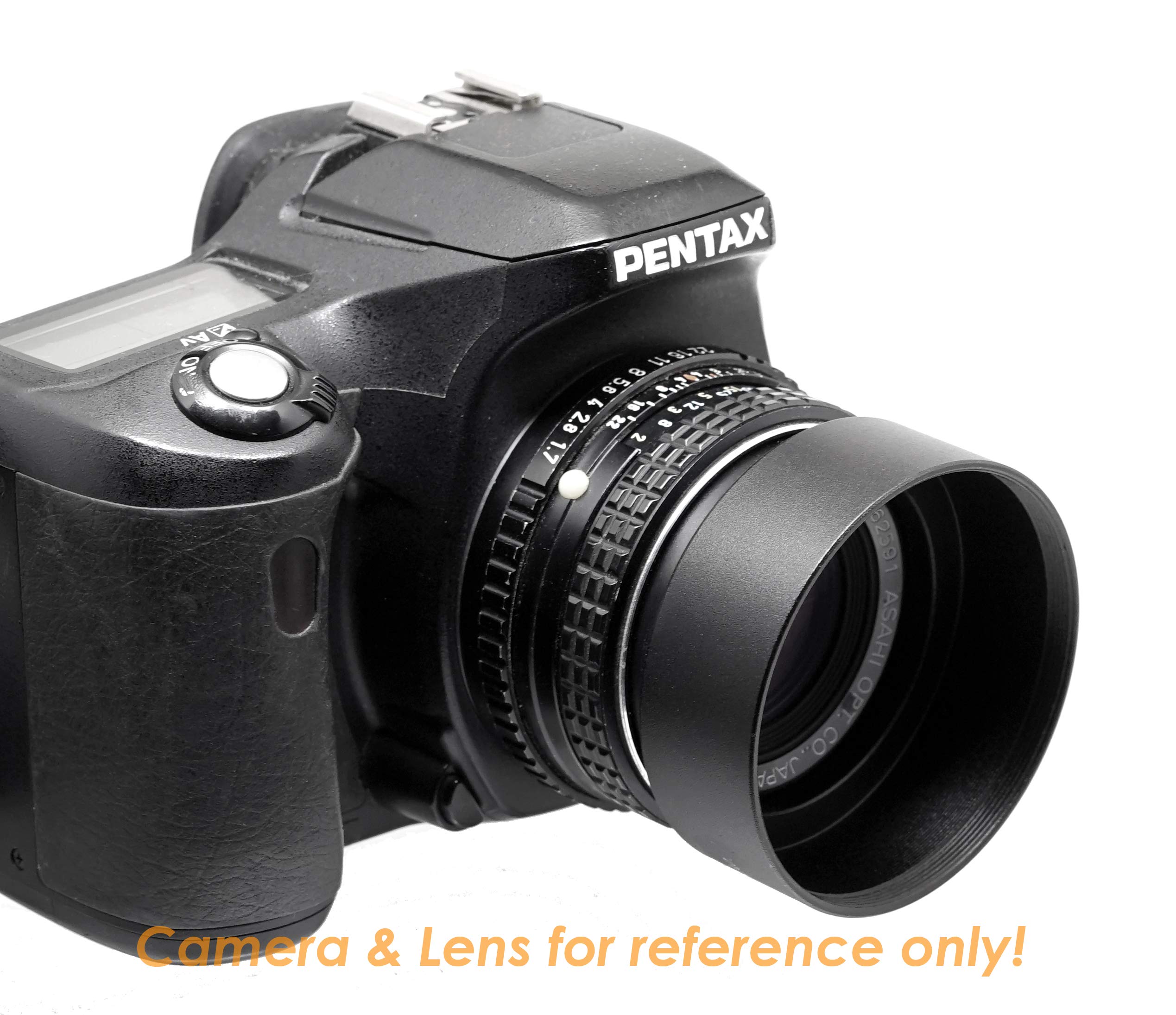
The Fotasy 55mm hood can be considered for lenses that meet three conditions:
- The lens has a standard 55mm front filter thread.
- The hood screws into that thread without an adapter.
- The hood does not block the image at the lens’s chosen focal length.
This may include certain lenses from Canon, Nikon, Sony, Fujifilm, Pentax, Olympus, Panasonic, Tamron, Sigma, and other brands. The camera brand alone does not establish compatibility.
Examples of possible matches
These are examples of lens types, not a list of guaranteed models:
- A 50mm prime lens with a 55mm filter thread
- A standard zoom with a 55mm filter thread
- A short telephoto lens with a 55mm filter thread
- A macro lens with a 55mm filter thread
The exact lens model still matters. Two lenses with the same focal length can use different filter sizes.
When the hood will not fit
The hood is not a direct fit for a lens with:
- A 49mm front thread
- A 52mm front thread
- A 58mm front thread
- A 67mm front thread
- No front filter thread
- A bayonet hood mount that does not accept screw-in accessories
A step-up ring can connect a smaller lens thread to a 55mm accessory, but it may add length and increase the chance of vignetting. A step-down ring is usually more problematic because it places a smaller opening in front of the lens.
How to Install the Fotasy Metal 55mm Hood
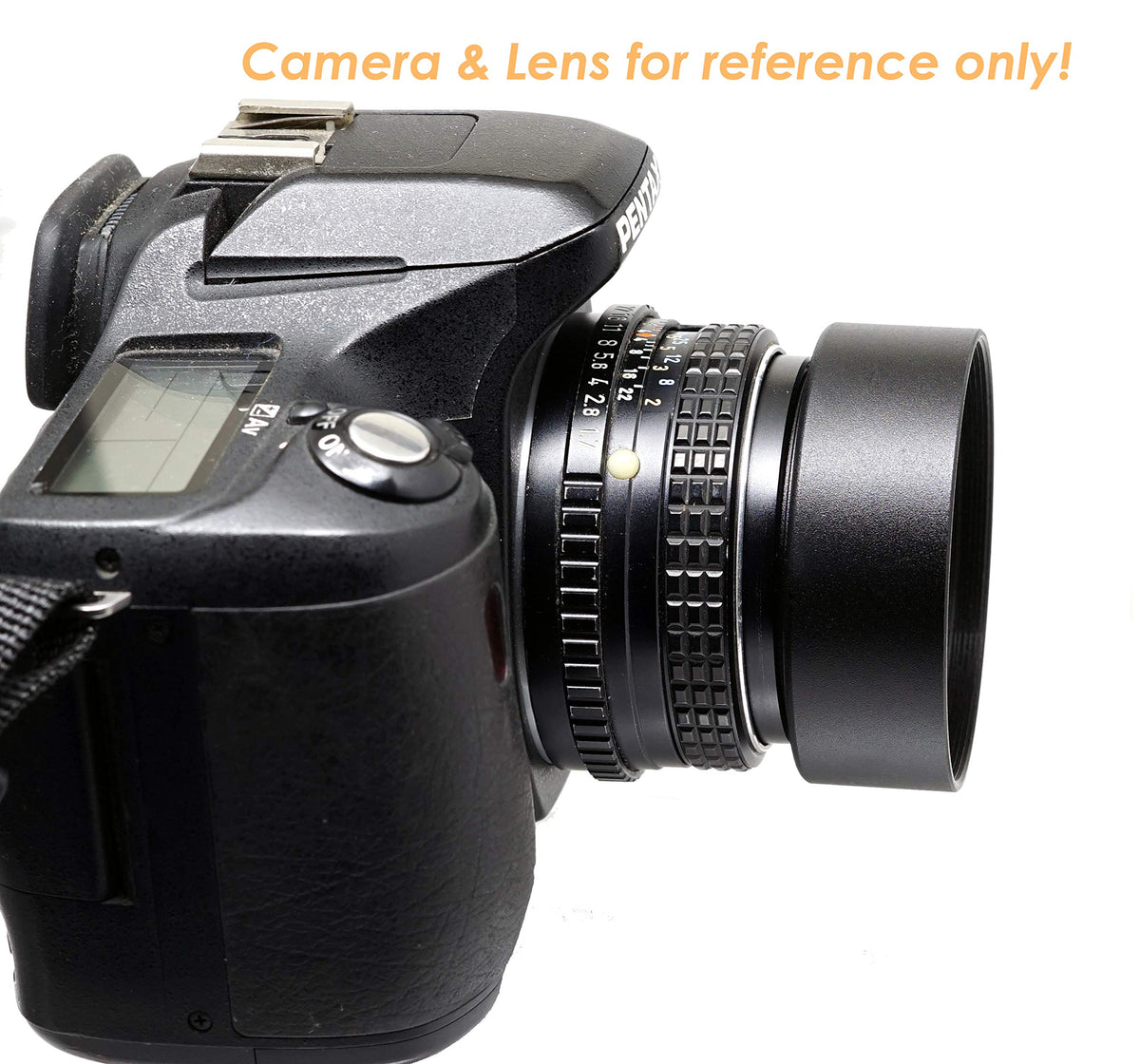
Install the hood slowly and keep the threads aligned. Metal threads can damage the lens if forced.
- Remove the front lens cap and any incompatible hood.
- Clean loose dust from the lens thread and hood thread.
- Place the hood squarely on the front thread.
- Turn it counterclockwise first until the threads gently drop into alignment.
- Turn it clockwise by hand.
- Stop when the hood is secure. Do not use excessive force.
- Look through the viewfinder or rear screen.
- Test the corners of the frame at the lens’s widest setting.
The hood should sit evenly. If it starts at an angle, feels gritty, or binds after a partial turn, remove it and try again.
Signs of correct installation
A properly installed hood should:
- Turn smoothly by hand
- Sit straight on the front of the lens
- Remain secure during normal use
- Leave the lens glass unobstructed
- Produce no dark corners in test images
If the hood is loose, do not add glue, tape, or tools. Check for dirt, damaged threads, or a mismatch in size.
Can a 55mm Hood Cause Vignetting?
Yes. A 55mm lens hood can cause vignetting if its inner opening or depth blocks the lens’s field of view.
Vignetting appears as darkening in one or more corners. It may be easier to see when photographing:
- A bright wall
- A clear sky
- A white sheet
- A flat studio background
It may be less obvious in a busy scene, but hidden vignetting is still a technical problem.
Test for corner shadows
Use this simple test:
- Set the lens to its widest focal length.
- Photograph an evenly lit surface.
- Use a small aperture, such as f/8 or f/11.
- Inspect all four corners at full image size.
- Repeat with and without the hood.
- If the hood creates dark corners, remove it or use a shorter hood.
A zoom lens may show no problem at 55mm but show vignetting at 18mm or 24mm. Test the entire focal-length range if you plan to use the hood on a zoom.
Other causes of dark corners
The hood may not be the only cause. Check for:
- Stacked filters
- A thick circular polarizer
- A step-up or step-down ring
- A filter adapter
- An improperly seated lens
- An in-camera crop or lens correction setting
- A hood that is not fully screwed in
The safest approach is to test the complete setup, not only the hood by itself.
Metal Lens Hood Benefits and Limits
A metal hood can help block stray light and protect the front of a lens from light contact. It also provides a firm accessory mount when installed correctly.
Potential benefits
A hood may:
- Reduce flare from light outside the frame
- Improve contrast in some backlit scenes
- Shield the front element from minor bumps
- Reduce fingerprints on the lens glass
- Provide a more rigid alternative to a soft rubber hood
A hood cannot replace careful handling. It does not make the lens impact-proof or weatherproof.
Practical limits
A screw-in metal hood may:
- Add weight to the front of the lens
- Make the lens longer
- Prevent use of the original lens cap
- Interfere with a built-in flash
- Cast a shadow when using a small on-camera flash
- Make filter rotation harder
- Cause vignetting on some wide-angle lenses
A circular polarizer may be difficult to adjust if the hood covers the filter’s outer ring. If filter control matters, install the filter first and confirm that the hood does not prevent access.
Using Filters With a Fotasy 55mm Hood
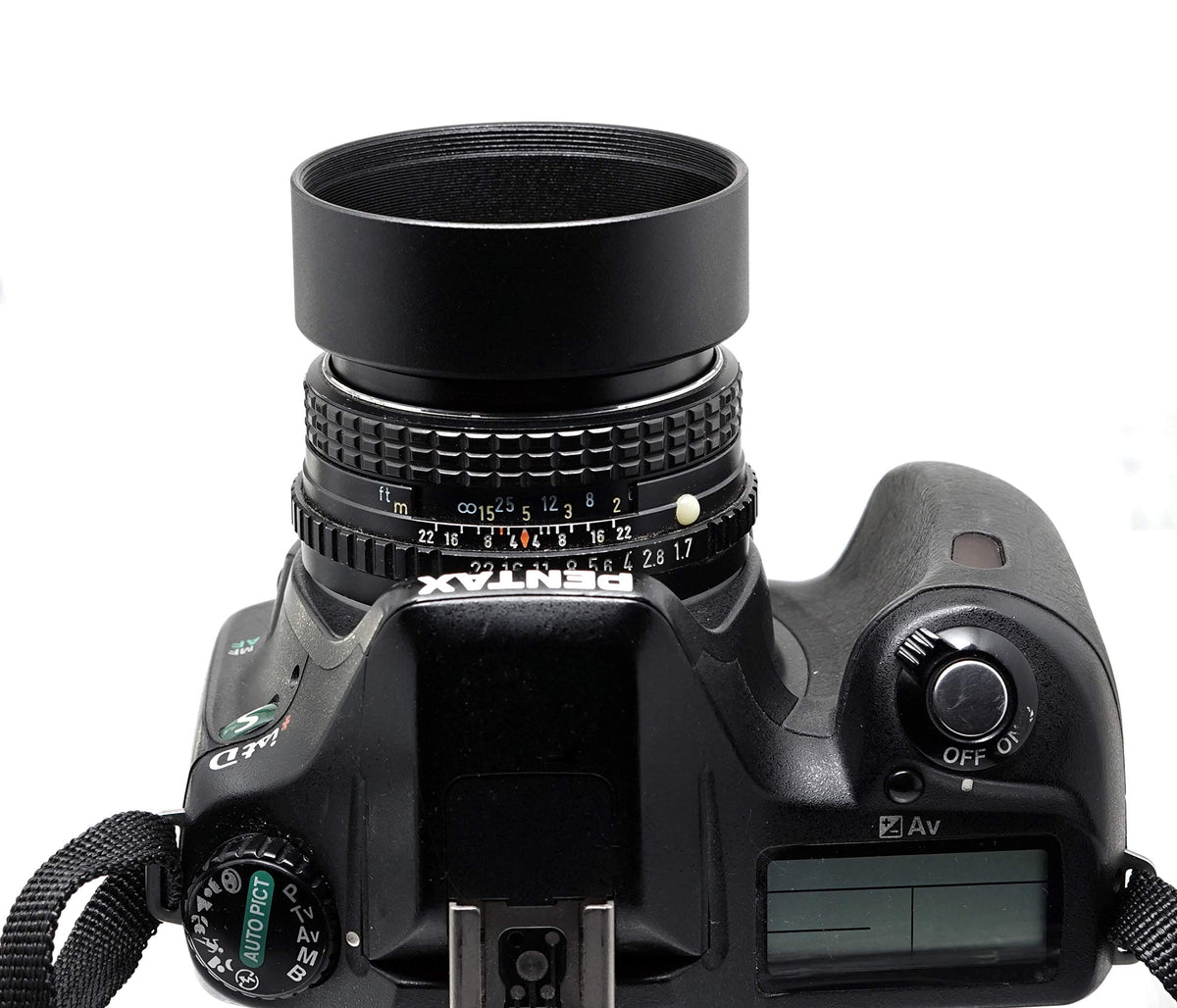
The order of the accessories matters. A 55mm screw-in hood may occupy the same front thread needed by a filter.
Before use, check whether the hood has its own front filter thread. Product listings can differ, so do not assume that every metal hood supports filter stacking.
Common setups
| Setup | What to check |
|---|---|
| Lens + hood | Confirm the lens has a 55mm front thread |
| Lens + filter | Confirm the filter is 55mm |
| Lens + filter + hood | Confirm the hood accepts a front filter |
| Lens + step-up ring + hood | Test for added vignetting |
| Lens + polarizer + hood | Ensure the polarizer remains adjustable |
| Lens + hood + built-in flash | Check for a shadow in the lower frame |
For a polarizer, the filter usually needs to be installed where you can rotate it. If the hood blocks access, the setup may be inconvenient even if it fits.
Avoid stacking several thick rings on a wide-angle lens. Each added ring increases the chance that the frame will show the accessory edge.
Common Compatibility Mistakes
The most common mistake is buying by camera body rather than by lens thread size. A Canon camera, for example, can use lenses with many different front filter sizes. The body brand does not identify the correct hood.
Other mistakes include:
- Treating 55mm as the lens focal length
- Measuring the outer barrel instead of checking the thread mark
- Assuming every 55mm hood has the same depth
- Using a deep hood on a wide-angle lens without testing
- Cross-threading the metal hood
- Leaving a filter ring stacked on the lens
- Forgetting to test the built-in flash
- Assuming the hood replaces a lens cap
- Buying a hood for a similar lens rather than the exact model
A good fit is both mechanical and optical. The hood must attach correctly and leave the image clear.
Fotasy 55mm Hood Troubleshooting
The hood will not screw on
Remove it and inspect both sets of threads. Make sure the hood is not tilted. Confirm that the lens is actually marked 55mm.
If the lens is 52mm or 58mm, the hood is the wrong size unless a suitable adapter is being used.
The hood feels rough or tight
Stop turning it. Dirt or damaged metal threads may be present. Clean only with a soft, dry cloth and inspect in good light. Do not force the hood with pliers or a wrench.
Dark corners appear
Remove the hood and take the same photo. If the corners clear, the hood depth or an accessory stack is causing vignetting. Try the hood at a longer focal length, remove extra rings, or choose a shorter hood.
The flash creates a dark band
The hood may block light from the camera’s built-in flash. Use an external flash, remove the hood, or check the flash and hood combination before an important shoot.
The hood is stuck
Do not apply excessive force. Hold the lens by its solid barrel, not by the focus or zoom ring. If the hood cannot be removed by gentle hand pressure, a camera repair shop can help without risking damage to the lens.
Is the Fotasy Metal 55mm Lens Hood Right for You?
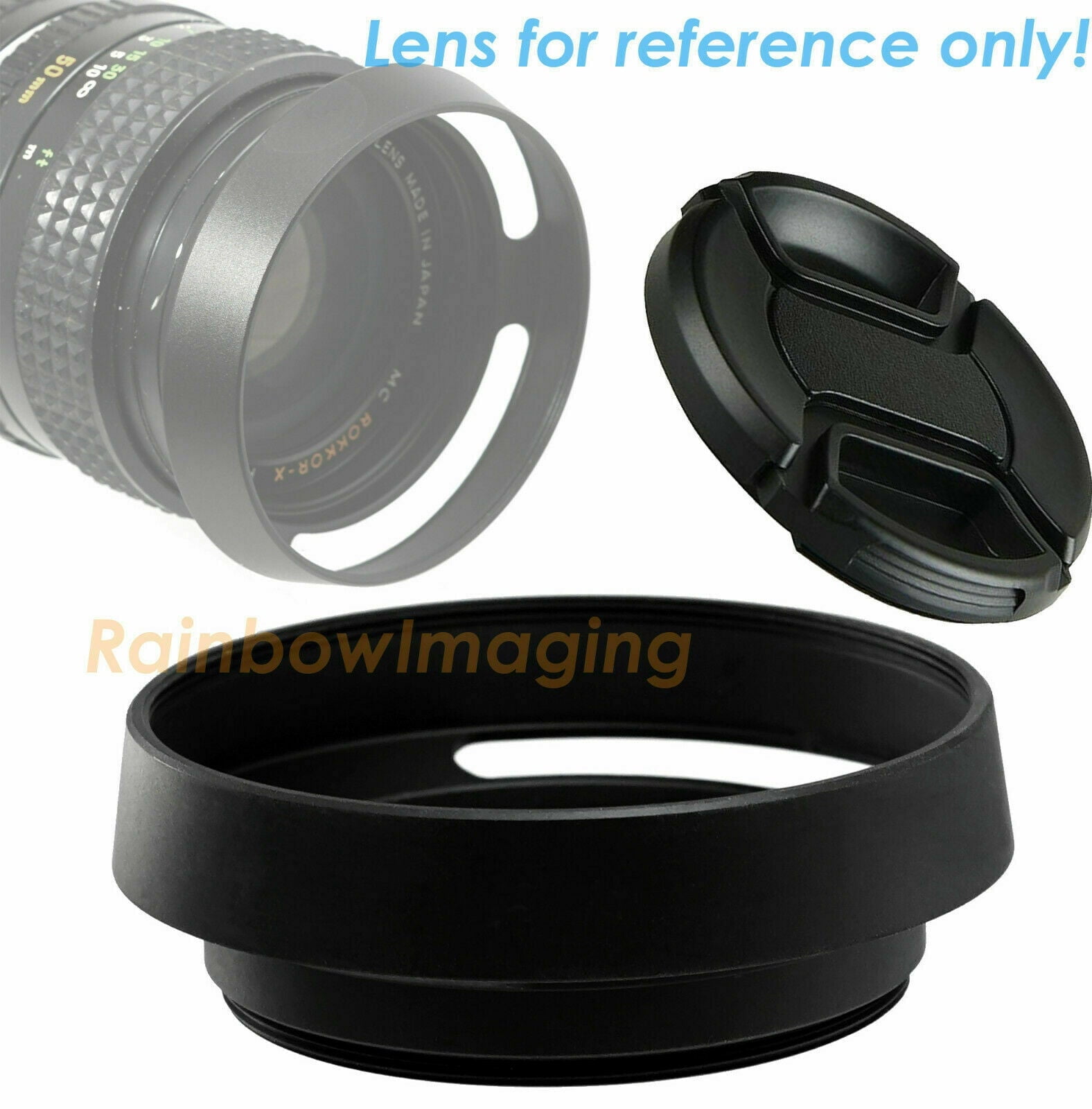
This hood is a reasonable option when your lens has a standard 55mm front filter thread and you want a screw-in shade for glare control or added front protection.
It may be less suitable when you use:
- Very wide-angle lenses
- A built-in pop-up flash
- Thick filters
- A lens with a proprietary hood mount
- A setup that requires fast polarizer adjustment
- A lens that already has a dedicated bayonet hood
The best choice depends on the lens model, focal length, filter stack, and shooting conditions. A hood that works well on a 50mm or 85mm lens may not work well on a wide zoom at its shortest setting.

Frequently Asked Questions
Does a 55mm lens hood fit any 55mm lens?
Not always. The lens must have a standard 55mm front filter thread, and the hood must have a suitable shape and depth. A hood can screw on correctly and still cause vignetting.
Is the Fotasy 55mm hood compatible with Canon, Nikon, or Sony lenses?
It may be compatible with lenses from those brands if the exact lens has a 55mm front filter thread. Compatibility depends on the lens, not the camera brand or lens mount.
Does a 55mm hood fit a 50mm lens?
It can if the 50mm lens uses a 55mm filter thread. The “50mm” value describes focal length, while “55mm” describes the front accessory thread.
Can I use a 55mm filter with the Fotasy 55mm hood?
Usually, a 55mm filter fits a 55mm lens thread, but the hood may use that same thread. Check whether the specific hood has a front filter thread and whether the combined setup causes vignetting.
Will the hood work on a wide-angle lens?
Possibly, but wide-angle lenses have a higher risk of corner shadows. Test the hood at the widest focal length and with the full filter setup installed.
Does a lens hood replace a UV filter?
No. A hood and a UV or clear filter serve different purposes. A hood blocks some off-axis light and provides physical protection. A filter covers the front element but can add reflections or vignetting in some setups.
Conclusion
The Fotasy Metal 55mm Lens Hood is intended for lenses with a 55mm front filter thread. Check the exact lens marking, confirm that the hood uses a standard screw-in connection, and test for vignetting at the widest focal length.
For the best result, install the hood by hand, avoid forcing the threads, test any filter combination, and check the built-in flash before use. If your lens does not show a 55mm thread marking, verify the manufacturer’s filter-size specification before ordering.

