
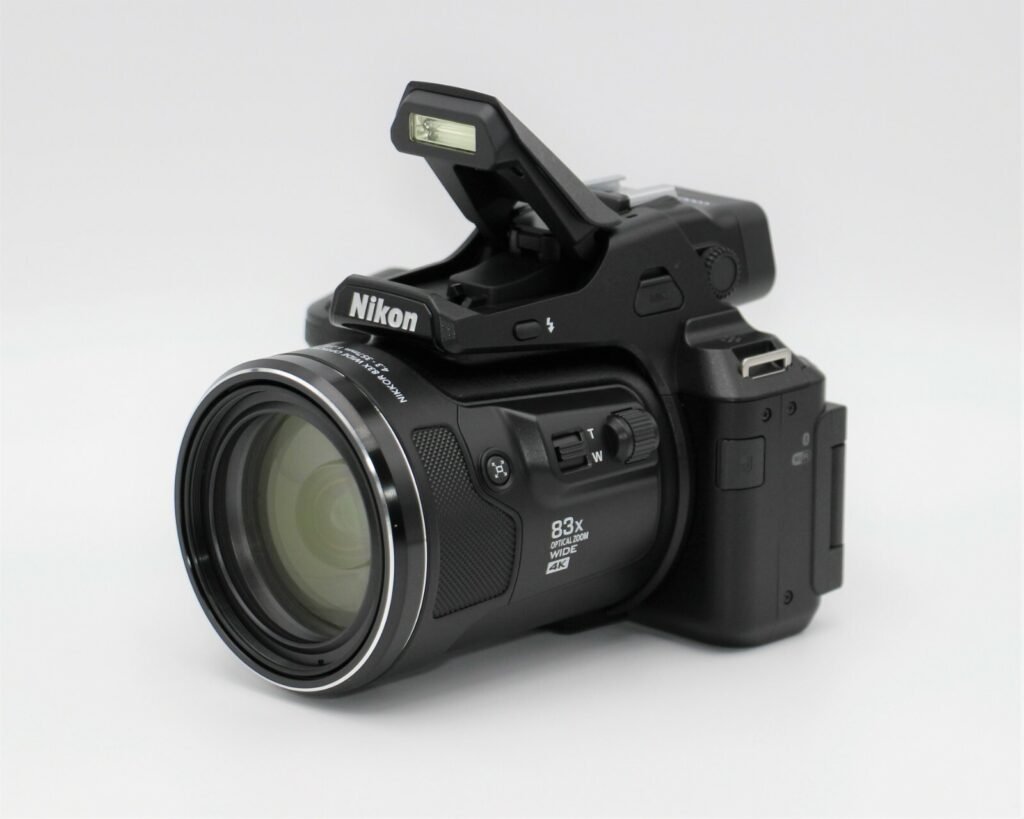
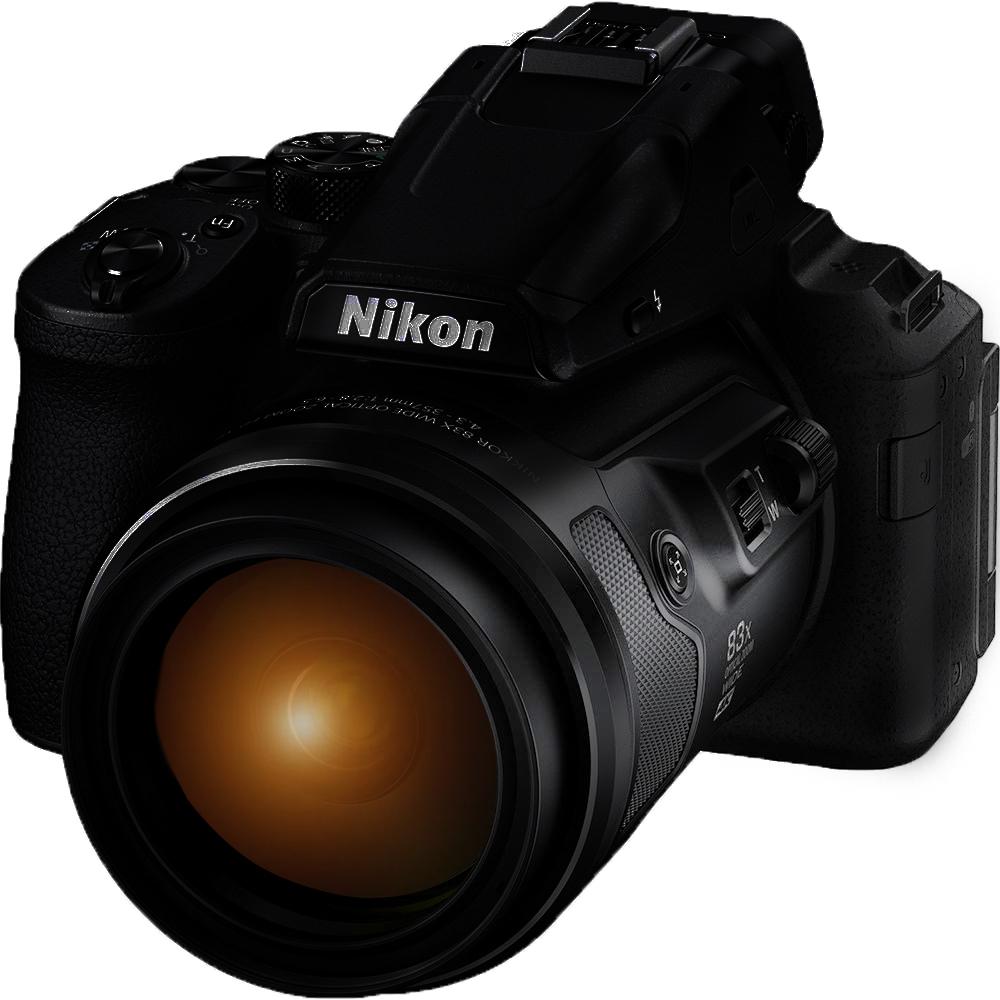
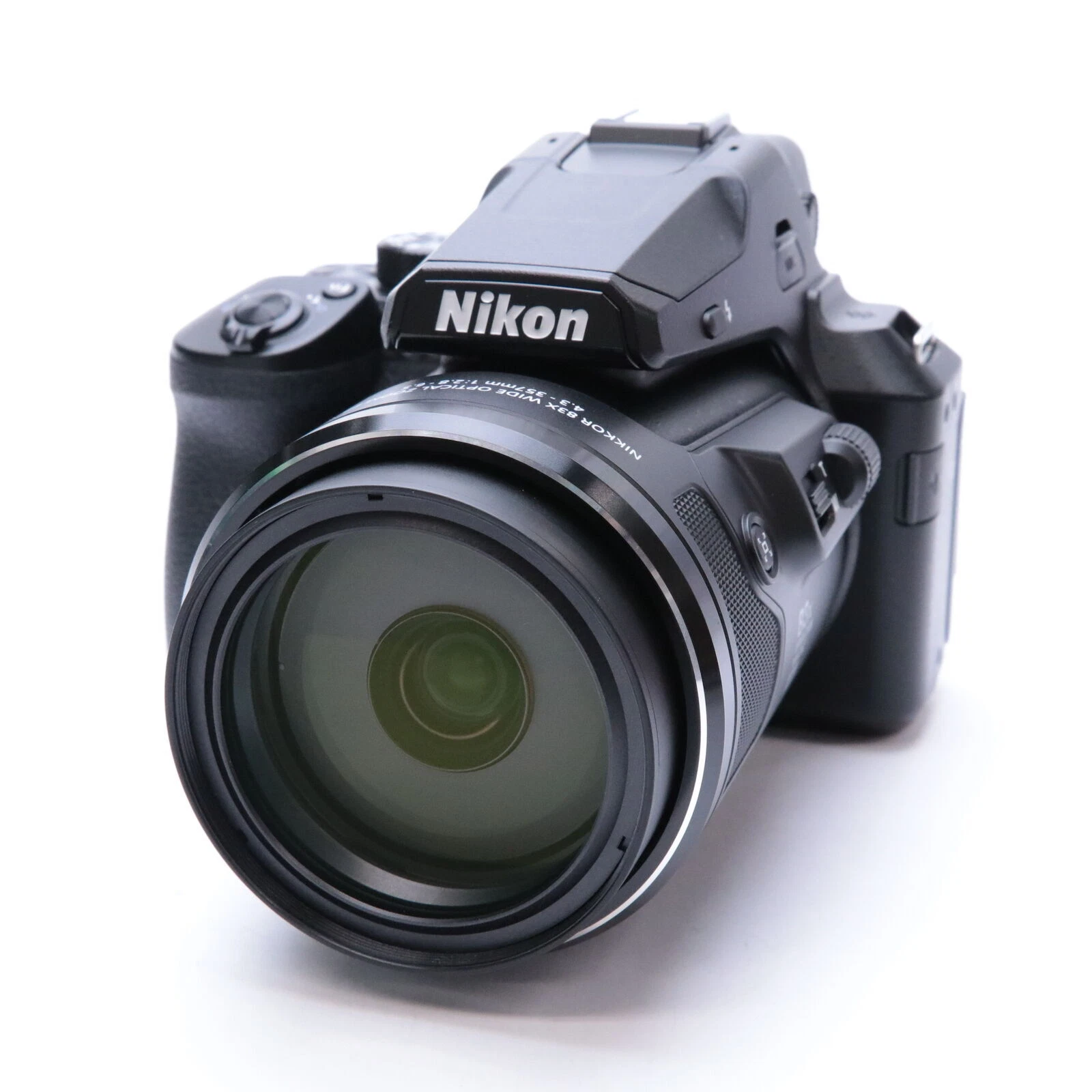
For photographers in the United States, the Nikon COOLPIX P950 is a bridge camera built around one main feature: its 83x optical zoom lens. The lens covers a 24–2000mm-equivalent range, so it can capture wide views, distant wildlife, aircraft, sports, and the moon without changing lenses.
The P950 is not a pocket camera. It is large and heavy for a fixed-lens model, and its 16-megapixel, 1/2.3-inch sensor cannot match the image quality of a modern mirrorless camera with a large sensor. Still, its long built-in lens gives it a reach that would require a very large and costly lens system on an interchangeable-lens camera.
This guide explains the Nikon P950’s zoom range, key specifications, real-world uses, limits, controls, accessories, and buying considerations for photographers in the U.S.
Nikon P950 83x Optical Zoom: What It Means
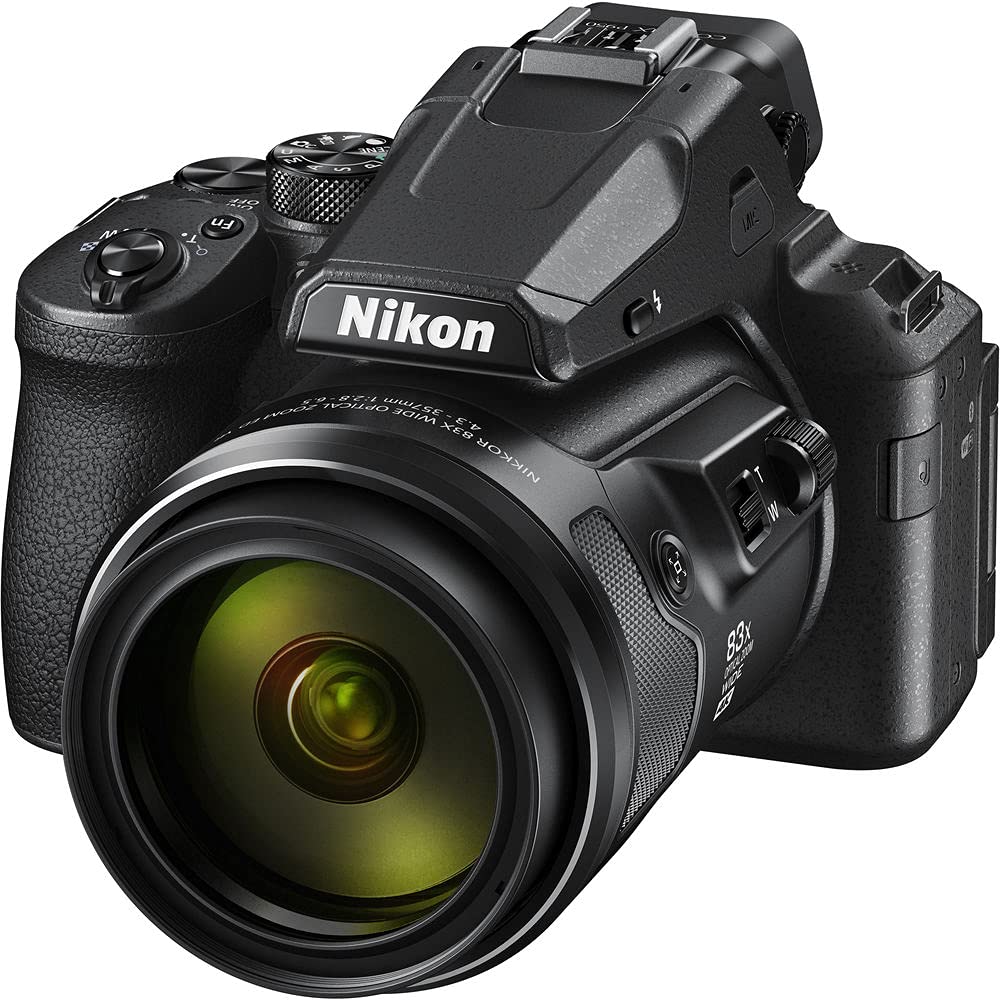
The Nikon COOLPIX P950 has an 83x optical zoom lens with a 24–2000mm-equivalent focal-length range. Optical zoom uses the lens itself to magnify the subject. This keeps more detail than digital enlargement because the camera is not simply cropping the image before capture.
The range works like this:
| Lens setting | 35mm-equivalent view | Useful for |
|---|---|---|
| Wide end | 24mm | Landscapes, buildings, travel, groups |
| Mid-range | About 200–500mm | Sports, pets, stage events |
| Long range | About 800–1200mm | Birds and distant wildlife |
| Maximum telephoto | 2000mm | Moon shots and very distant subjects |
At 24mm, the lens shows a broad view. At 2000mm, it shows a very narrow slice of the scene. That narrow view can make it hard to find a moving bird or aircraft. A useful technique is to zoom out, locate the subject, and then zoom in slowly.
The P950 also offers Dynamic Fine Zoom up to 166x, according to Nikon’s specifications. This is a digital extension of the optical range. It can help with record shots, but image detail and edge quality may drop as the camera moves beyond the optical zoom range.
The 83x figure is calculated from the lens range:
2000 ÷ 24 = 83.3
The number does not mean the camera has 83 separate zoom levels. It describes the ratio between the shortest and longest optical focal lengths.

Nikon COOLPIX P950 Key Specifications
The P950 combines a long lens with a small sensor, an electronic viewfinder, and manual exposure controls. Its main specifications are listed below.
| Feature | Nikon COOLPIX P950 specification |
|---|---|
| Camera type | Bridge-style digital camera |
| Sensor | 1/2.3-inch backside-illuminated CMOS |
| Resolution | 16 megapixels |
| Lens | 83x optical zoom |
| Focal-length range | 4.3–357mm, equivalent to 24–2000mm |
| Maximum aperture | f/2.8–6.5 |
| Image stabilization | Lens-shift vibration reduction |
| Still-image formats | JPEG and Nikon NRW RAW |
| Video | 4K UHD at up to 30p; Full HD options |
| Viewfinder | Electronic viewfinder |
| Rear screen | 3.2-inch vari-angle LCD |
| ISO range | ISO 100–6400 |
| Built-in flash | Yes |
| External microphone input | Yes |
| Wireless features | Wi-Fi and Bluetooth Low Energy through SnapBridge |
| Battery | EN-EL20a rechargeable lithium-ion battery |
| Weight | About 35.5 ounces, including battery and memory card |
| Storage | SD, SDHC, and SDXC memory cards |
The camera’s f/2.8–6.5 aperture range changes as you zoom. The lens is brightest at the wide end and darker at 2000mm. This matters because a smaller maximum aperture lets in less light. At full zoom, the camera may need a slower shutter speed, a higher ISO setting, or both.
The P950 uses a 1/2.3-inch sensor. This sensor size helps keep the lens compact compared with a full-frame 2000mm system, but it also limits low-light performance and background blur. In bright daylight, the camera can produce useful detail. In dim light, image noise and motion blur become more likely.
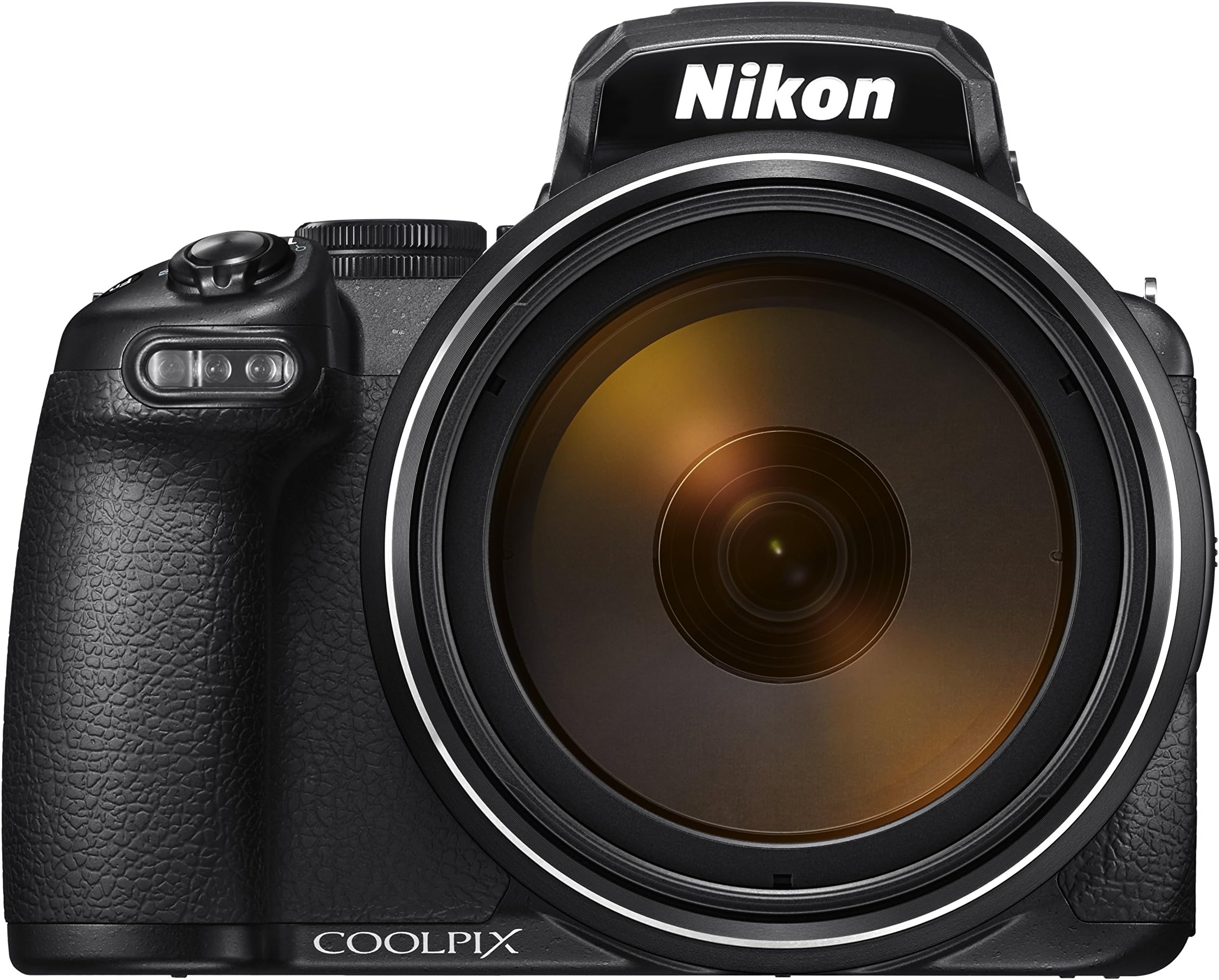
Image Quality and Performance in Real Use
The Nikon P950 can produce its best results in bright light, with a steady subject and careful framing. Its long lens is useful, but extreme focal lengths also magnify camera shake, heat shimmer, and subject movement.
The camera includes lens-shift vibration reduction, which helps reduce blur from hand movement. Stabilization cannot freeze a moving bird or runner. For moving subjects, shutter speed remains important.
A practical starting point for wildlife is:
- Shutter speed: about 1/1000 second or faster for active birds
- ISO: Auto ISO or a manually selected moderate value
- Focus mode: Continuous AF for moving subjects
- Drive mode: Continuous shooting when timing matters
- Stabilization: On for handheld work
These are starting points, not fixed rules. A perched bird may need less shutter speed. A bird in flight may need more. If the subject moves quickly, a sharp image often matters more than keeping ISO low.
The P950’s 16-megapixel resolution gives room for some cropping, but heavy crops reduce detail. Digital zoom adds another compromise. For the cleanest files, use the optical range, keep the camera steady, and expose the subject carefully.
RAW files and JPEG files
The P950 can save images as Nikon NRW RAW files as well as JPEG files.
- JPEG files are ready to share and take less storage space.
- RAW files retain more original image data for later editing.
- RAW files need compatible software.
- RAW shooting can slow the workflow and use more card space.
RAW does not create extra detail that the lens and sensor did not capture. It mainly gives more control over exposure, white balance, and tonal adjustments after capture.
Heat haze at long range
At 2000mm, the air between the camera and subject becomes part of the image. Warm pavement, rooftops, and open fields can create shimmering air. This may make a distant subject look soft even when the camera is focused correctly.
If distant images look blurry on a hot day, try shooting early in the morning, moving closer, or using a shorter focal length. Sharpening software cannot fully restore detail lost to atmospheric distortion.

Best Uses for the Nikon P950
The P950 is strongest when reach matters more than compact size or low-light performance. It works well for several types of photography.
Bird and wildlife photography
The 2000mm-equivalent maximum focal length can fill the frame with a distant bird without walking close to it. The lens also helps when the subject is across a lake, field, or wetland.
However, the camera is not a substitute for a professional interchangeable-lens wildlife setup. Its smaller sensor and modest autofocus performance can make fast action difficult. Good light, patient tracking, and support from a monopod or tripod can improve results.
Moon photography
The P950 is well suited to moon photos because the moon is bright and far away. Use a tripod, manual exposure, and the optical zoom. The moon often needs a faster shutter speed than beginners expect because it moves across the frame and reflects strong sunlight.
A starting point might be:
- ISO 100
- About 1/500 second
- An aperture near the telephoto setting
- Manual focus or focus confirmation on the moon
The best exposure depends on the phase, haze, and brightness of the sky. Review the image and adjust. A tripod helps with framing, but vibration reduction settings may need attention when the camera is firmly mounted.
Airshows and distant sports
The long lens can help capture aircraft, field sports, and outdoor events from a distant seat. The camera’s electronic viewfinder is useful because it blocks glare and gives a steadier contact point than holding the camera away from the face.
At an airshow, start at a wider focal length to find the aircraft. Then zoom in after the subject is centered. At a sports event, shutter speed is usually more important than the lowest possible ISO.
Travel and sightseeing
The wide 24mm-equivalent end works for city scenes and landscapes. One fixed lens also removes the need to carry and change several lenses.
The trade-off is size. The P950 weighs about 35.5 ounces with its battery and memory card, so it is easier to carry than a large telephoto kit but not as light as a small travel camera or phone.

Video Features and Audio Options
The Nikon P950 records 4K UHD video at up to 30 frames per second. It can also record Full HD video at higher frame rates, depending on the selected mode.
The long zoom is useful for recording wildlife, aircraft, and performances from a distance. Yet zooming at 2000mm during video can make even small movements look large. A tripod or other support can make footage much easier to watch.
The camera includes an external microphone input, which can improve audio compared with the built-in microphone. A microphone does not solve every sound problem. Wind protection, microphone placement, and distance from the subject still affect the result.
For stable video:
- Mount the camera on a tripod or sturdy support.
- Frame the subject at a moderate zoom.
- Start recording before making a slow zoom.
- Avoid sudden changes in focal length.
- Test audio levels before an important event.
The P950 is better suited to planned clips than to fast handheld documentary work at maximum zoom. Its lens reach is a strength, but that reach also magnifies shake.
Handling, Controls, and Setup
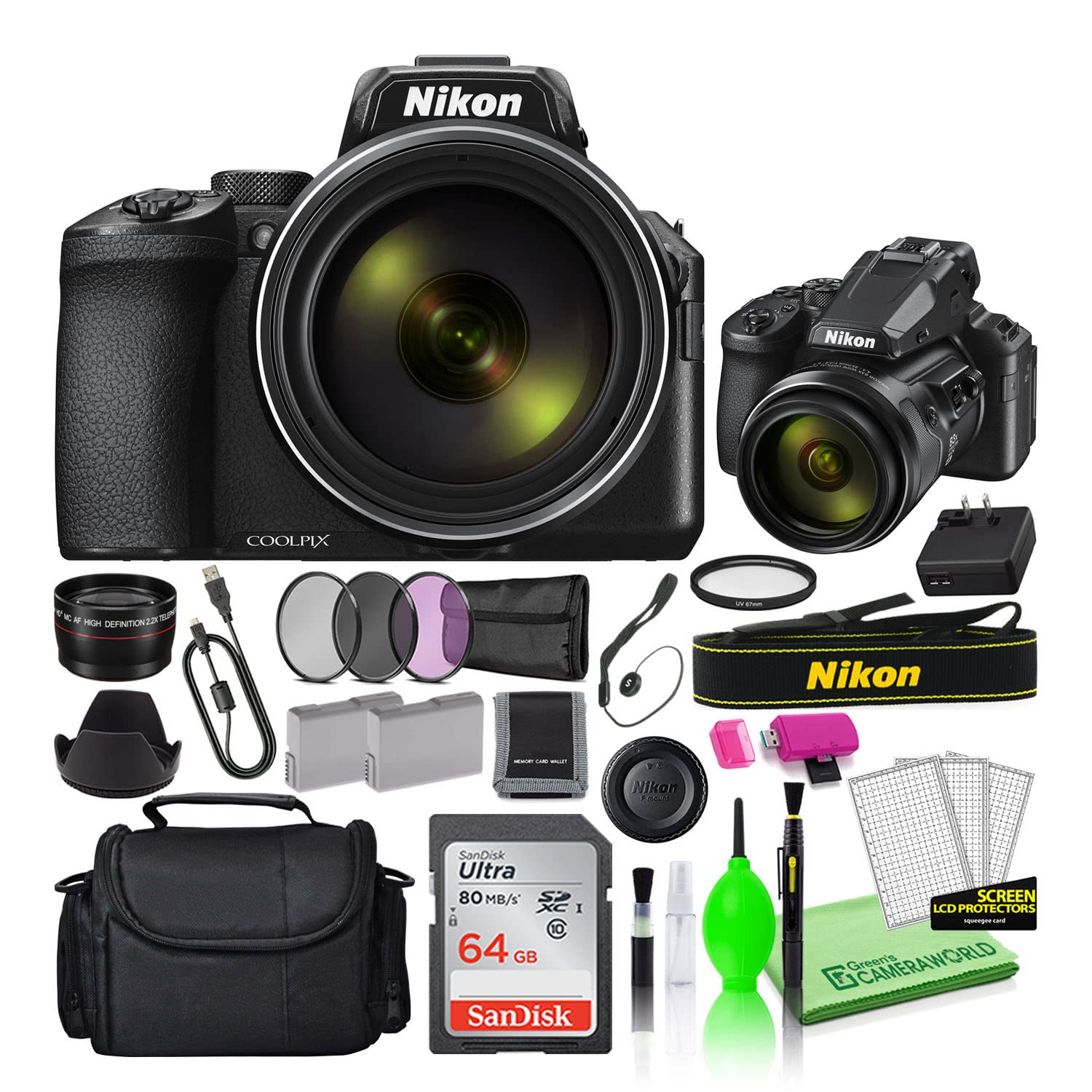
The P950 has a DSLR-style body with a deep grip, electronic viewfinder, control dial, zoom controls, and a vari-angle rear screen. Its design gives the user more control than a basic point-and-shoot camera.
A simple setup for a first outing is:
- Charge the EN-EL20a battery.
- Insert a compatible SD, SDHC, or SDXC card.
- Set image quality to Fine JPEG or RAW plus JPEG.
- Turn vibration reduction on for handheld shooting.
- Choose Auto ISO if light will change.
- Set continuous autofocus for moving subjects.
- Use the electronic viewfinder in bright sunlight.
- Begin at a moderate zoom before moving to 2000mm.
The vari-angle screen can tilt and rotate for low-angle, high-angle, or self-recorded shots. The screen is not a touchscreen, so settings are changed with physical controls.
Using SnapBridge
Nikon’s SnapBridge system can connect compatible Nikon cameras with a smartphone. Bluetooth Low Energy can help maintain a connection, while Wi-Fi may be used for image transfer or remote functions supported by the camera and app.
Connection steps can change as Nikon updates the app or smartphone operating systems. Before relying on wireless transfer during a trip, install the current SnapBridge app from the official U.S. app store, update the camera if needed, and test the connection at home.
Wireless transfer is convenient, but it does not replace a memory card backup. For important images, keep the original files on the card until they are copied to another location.
GPS and location data
The P950 can use a compatible smartphone connection for location information through SnapBridge. The camera does not provide the same built-in standalone GPS workflow found in some dedicated outdoor devices.
Location data can reveal where a photo was taken. Review privacy settings before sharing wildlife photos, travel images, or pictures made near your home.

Nikon P950 Limitations to Consider
The P950’s main limitation is the trade-off between extreme zoom reach and sensor performance. A smaller sensor makes the camera and lens easier to combine, but it does not perform like a large-sensor camera in poor light.
Consider these limits before buying:
- Low-light image quality: Noise increases as ISO rises.
- Maximum aperture: The lens reaches f/6.5 at the long end.
- Autofocus: Fast or erratic subjects can be difficult to track.
- Subject finding: A 2000mm view is narrow and hard to aim.
- Weight: The body is large for a fixed-lens camera.
- Digital zoom: Dynamic Fine Zoom may reduce visible detail.
- Background blur: The small sensor makes strong background separation harder.
- Battery life: Long zoom use, video, and wireless features can drain the battery faster.
- Weather protection: Do not assume the camera is waterproof or weather-sealed unless Nikon expressly states so for the specific product and use.
The P950 is also not the right tool for every subject. A smartphone may be better for quick social photos. A mirrorless or DSLR system may be better for weddings, indoor sports, portraits, or professional low-light work.
Nikon P950 vs. Other Camera Types
The P950 makes the most sense when one built-in lens is more valuable than interchangeable-lens flexibility.
| Camera type | Main advantage | Main drawback |
|---|---|---|
| Nikon P950 | Very long built-in optical zoom | Small sensor and large bridge body |
| Smartphone | Small size and easy sharing | Limited true optical reach |
| Entry-level mirrorless | Better sensor quality and lens choice | Long lenses add cost and weight |
| Superzoom compact | Easier to carry | Usually less reach than the P950 |
| Nikon P1000 | Even longer 125x optical zoom | Larger, heavier, and more expensive class |
The Nikon P1000 offers a longer 125x optical zoom, reaching a 3000mm-equivalent view. That does not automatically make it better. The P950 is smaller and lighter than the P1000, while still offering a 2000mm-equivalent maximum.
Choose the P950 if you want strong reach in a single camera and often shoot outdoors. Choose a mirrorless camera if you care more about low-light quality, lens choice, autofocus options, and background blur.
Accessories That Can Improve P950 Results
The most useful accessories depend on how the camera will be used.
Recommended accessories
- Extra EN-EL20a battery: Useful for long wildlife sessions or travel.
- Fast, reliable SD card: Needed for 4K video and continuous shooting.
- Sturdy tripod: Helps with moon photos, landscapes, and distant subjects.
- Monopod: Easier to carry for wildlife and outdoor events.
- External microphone: Useful for video with important sound.
- Lens hood or careful hand shading: Can reduce stray light in some conditions.
- Protective camera bag: Helps protect the large lens and body during transport.
- Rain cover: Better than assuming the camera can tolerate wet weather.
A tripod should be stable enough for the camera and lens position. A light travel tripod may shake in wind, especially at 2000mm. For moving wildlife, a monopod can offer a better balance between support and mobility.
Check that batteries, chargers, cards, microphones, and remotes are compatible with the P950 and the U.S. version you own. Product bundles can include third-party accessories that do not match Nikon’s specifications.

Is the Nikon COOLPIX P950 Worth Buying?
The Nikon COOLPIX P950 is worth considering if your main goal is to photograph distant subjects with one built-in lens. Its 83x optical zoom, 24–2000mm-equivalent range, RAW support, 4K video, viewfinder, and microphone input make it more capable than a basic compact camera.
It is a weaker choice if you mainly shoot indoors, want a small camera, need strong background blur, or expect professional autofocus and low-light performance. The camera’s reach is impressive, but reach alone does not guarantee sharp images.
Before buying in the United States, check:
- Current price and stock from an authorized retailer
- Nikon USA warranty terms
- Included battery, charger, strap, and lens cap
- Return policy
- Compatibility of memory cards and accessories
- Whether a newer model better fits your needs
The clearest buying rule is simple: choose the P950 for long-range convenience, not for the highest possible image quality.
Frequently Asked Questions
Does the Nikon P950 really have 83x optical zoom?
Yes. Its lens covers a 24–2000mm-equivalent range. The 2000mm maximum divided by the 24mm minimum gives an optical zoom ratio of about 83x.
Is the Nikon P950 good for bird photography?
It can be good for birds in daylight, especially when the subject is distant and relatively still. Fast birds in flight are more difficult because the long lens is hard to aim and the small sensor needs good light.
Can the Nikon P950 shoot RAW?
Yes. The camera supports Nikon NRW RAW files as well as JPEG files. RAW files require compatible editing software and take more storage space.
Is the Nikon P950 weather-sealed?
Do not treat the P950 as waterproof or fully weather-sealed. Use a rain cover in wet conditions, keep moisture away from the ports and battery compartment, and follow Nikon’s care instructions.
Can the P950 photograph the moon?
Yes. The long optical zoom makes the P950 useful for moon photography. A tripod, careful focus, and a fast enough shutter speed can help produce sharper results.
Does the P950 have a microphone input?
Yes. It includes an external microphone input for compatible microphones. This can improve recorded sound, especially when the camera is mounted away from the speaker.
Research Basis and Product Documentation
This article is based on Nikon’s documented specifications and product information for the U.S. Nikon COOLPIX P950. For the latest firmware, manuals, compatibility details, warranty terms, and availability, verify information on the official Nikon USA website before purchase.
Useful references include:
Conclusion
The Nikon COOLPIX P950 Superzoom Digital Camera is a specialized bridge camera. Its defining feature is the 83x optical zoom lens, which reaches a 2000mm-equivalent view without changing lenses.
That reach makes the P950 useful for birds, wildlife, aircraft, sports, travel details, and moon photography. Its main trade-offs are the small sensor, f/6.5 telephoto aperture, large body, and limits in low light and fast action.
For the best results, use the optical zoom, shoot in good light, support the camera when possible, and learn to frame distant subjects before zooming all the way in.

