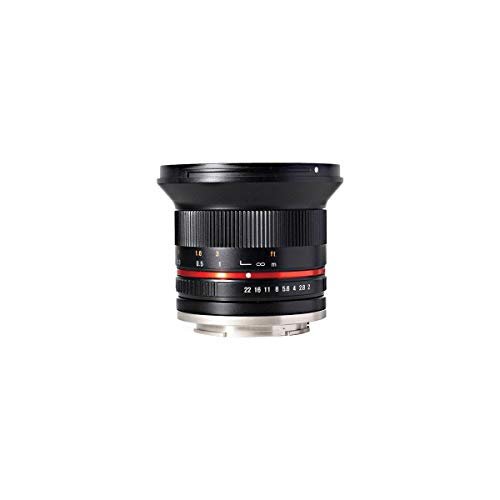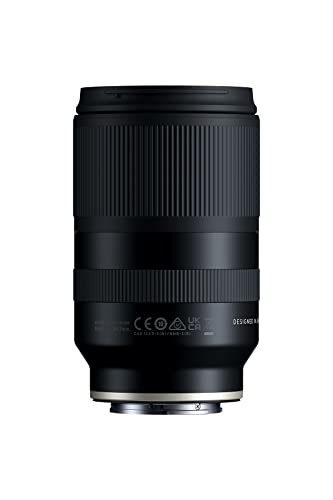
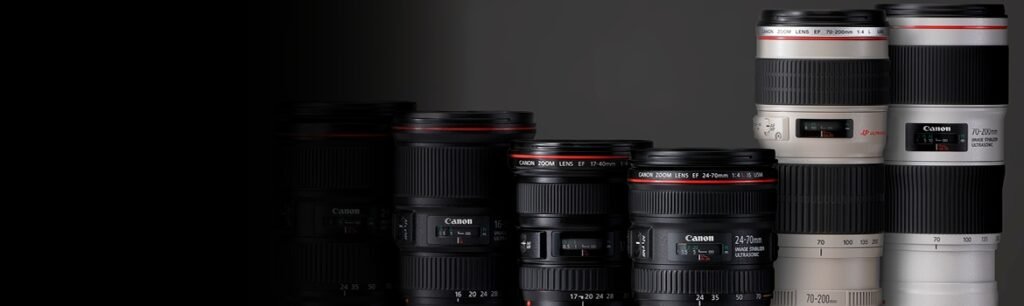
A camera uses a converging optical lens to gather light and focus it onto an image sensor or film. The exact lens depends on the camera and the subject. In the United States, a beginner may use a standard 18–55mm zoom lens, while a sports photographer may choose a 70–200mm telephoto lens and a landscape photographer may prefer a 16–35mm wide-angle lens.
There is no single lens that fits every camera or every type of photography. The best choice depends on the camera mount, sensor size, focal length, maximum aperture, and shooting goal.

What Is a Camera Lens?
A camera lens is a group of curved glass or plastic elements inside a housing. These elements bend light and direct it toward the camera sensor. The sensor then turns that light into a digital image.
A lens controls several key parts of a photo:
- Focal length: How wide or close the view looks
- Aperture: How much light enters the camera
- Focus: Which part of the scene looks sharp
- Depth of field: How much of the scene appears in focus
- Perspective: How near and far objects relate in the frame
Most modern camera lenses are made from several elements, not one piece of glass. Each element helps reduce blur, distortion, color errors, or light loss.
The Main Lens Parts
A typical interchangeable lens includes:
- Front element: The glass at the front of the lens
- Lens barrel: The outer body that holds the lens parts
- Focus ring: Used to adjust focus by hand
- Zoom ring: Used to change focal length on a zoom lens
- Aperture: An adjustable opening that controls light
- Mount: The connection between the lens and camera body
- Image stabilization system: Helps reduce blur from hand movement on some lenses
A camera lens does not create light. It gathers and focuses the light already present in the scene.
Which Lens Is Commonly Used in a Camera?
The most common general-purpose lens is a standard zoom lens. On many interchangeable-lens cameras, this is an 18–55mm lens for an APS-C sensor or a 24–70mm lens for a full-frame sensor.
A standard zoom lens is popular because it covers several common views:
- A wider view for rooms, streets, and groups
- A normal view for everyday photos
- A short telephoto view for portraits and details
For example, an 18–55mm lens on an APS-C camera can cover family events, travel, food, pets, and basic portraits. It may not provide the strongest low-light performance or the most background blur, but it is flexible and easy to use.
Common Camera Lens Types
| Lens type | Typical focal length | Best for |
|---|---|---|
| Ultra-wide angle | 10–20mm APS-C or 14–24mm full frame | Architecture, interiors, large landscapes |
| Wide angle | 16–35mm | Landscapes, travel, street scenes |
| Standard | About 35–50mm | Everyday photos and documentary work |
| Short telephoto | 50–105mm | Portraits, events, product photos |
| Telephoto | 70–300mm | Sports, wildlife, distant subjects |
| Super-telephoto | 400mm and longer | Birds, wildlife, distant action |
| Macro | Often 60–200mm | Close-up photos of small subjects |
| Fisheye | Often 8–16mm | Extreme wide views and creative effects |
These ranges are general. A lens with the same focal length can show a different field of view when used on cameras with different sensor sizes.
Prime Lens vs. Zoom Lens
A prime lens has one fixed focal length. A zoom lens covers a range of focal lengths.
A 50mm lens is a prime lens. A 24–70mm lens is a zoom lens.
Prime Lenses
Prime lenses can offer:
- A wide maximum aperture
- Strong performance in low light
- A small or light design
- Simple controls
- A consistent look at one focal length
A 50mm f/1.8 lens is a common low-cost prime lens in the United States. On a full-frame camera, it gives a natural-looking view. On many APS-C cameras, it acts more like a short telephoto lens, which can work well for portraits.
The main limit is that you cannot zoom with the lens. You must move closer or farther away to change the framing.
Zoom Lenses
Zoom lenses can offer:
- Several focal lengths in one lens
- Faster framing changes
- Less need to carry multiple lenses
- Better convenience for travel and events
A zoom lens may be slower than a prime lens at the same focal length. For example, an 18–55mm f/3.5–5.6 lens has a variable maximum aperture. It allows less light at the telephoto end than at the wide end.
Which One Should You Choose?
Choose a prime lens if you want a wide aperture, low-light ability, or a small lens.
Choose a zoom lens if you want flexibility and do not want to change lenses often.
Neither design is always better. The right choice depends on whether you value light, size, cost, speed, or convenience most.

Which Lens Should You Use for Different Subjects?
The best lens depends on the subject distance, available light, desired background, and amount of the scene you want to include.
Portrait Photography
A short telephoto lens is often a strong choice for portraits. Common options include:
- 50mm on a full-frame camera
- 85mm on a full-frame camera
- 50mm on an APS-C camera
- 56mm on an APS-C camera
These focal lengths can give a natural face shape when the photographer stands at a comfortable distance. A wide aperture, such as f/1.8 or f/2.8, can help separate the subject from the background.
Avoid standing very close with an ultra-wide lens for a face portrait. The close distance can make the nose look larger and the face look less natural.
Landscape Photography
Landscape photographers often use a wide-angle lens, such as a 16–35mm or 14–24mm lens on a full-frame camera.
A wide lens can include:
- Large skies
- Foreground rocks
- Broad mountain views
- Buildings and interiors
- Groups of people
Wide lenses can make nearby objects look much larger than distant objects. This can add depth, but it can also make a scene look stretched if used carelessly.
Sports and Wildlife Photography
Sports and wildlife usually require a telephoto lens because the subject may be far away. Common choices include:
- 70–200mm for field sports and events
- 100–400mm for wildlife and outdoor action
- 400mm, 500mm, or 600mm for distant birds and animals
A longer lens does not automatically produce a sharp photo. You also need enough shutter speed, accurate focus, and good technique. Long lenses can be heavy, so a monopod or tripod may help during long sessions.
Street Photography
Street photographers may use:
- 28mm for a wide environmental view
- 35mm for a natural documentary view
- 50mm for a tighter, simpler frame
A smaller prime lens can attract less attention than a large telephoto lens. The best focal length is often the one that lets you work comfortably and safely in public spaces.
Close-Up and Macro Photography
A macro lens is designed to focus at short distances. It can reproduce small subjects with high detail.
Macro lenses work well for:
- Insects
- Flowers
- Jewelry
- Coins
- Small products
- Textures
A macro lens may have a focal length from about 60mm to 200mm. A longer macro lens gives more working distance, which can help when photographing insects or delicate subjects.

How Focal Length Changes the Image
Focal length is measured in millimeters. It affects the angle of view and the amount of magnification.
- A short focal length shows more of the scene.
- A long focal length shows less of the scene but makes distant subjects appear larger.
For example:
- A 24mm lens shows a broad view.
- A 50mm lens gives a more moderate view.
- A 200mm lens gives a narrow, magnified view.
Focal length alone does not control perspective. Camera distance controls perspective. If you move closer to a person, near parts of the face appear larger. If you move farther away and use a longer lens to keep the same framing, the face may look flatter.
Crop Sensor and Full-Frame Cameras
The sensor size changes the field of view of a lens.
A lens on an APS-C camera shows a narrower view than the same lens on a full-frame camera. A common approximate conversion is:
- Canon APS-C: multiply by about 1.6
- Many other APS-C systems: multiply by about 1.5
- Micro Four Thirds: multiply by about 2
For example, a 50mm lens on a camera with a 1.5× crop factor gives a field of view similar to a 75mm lens on full frame.
This does not change the lens's actual focal length. It changes how much of the image the smaller sensor records.

What Is the Difference Between Lens Mounts?
A lens mount is the physical and electronic connection between a lens and a camera body. The lens and camera must use compatible mounts.
Examples include:
- Canon RF for many Canon mirrorless cameras
- Canon EF for Canon DSLR cameras
- Nikon Z for Nikon mirrorless cameras
- Nikon F for many Nikon DSLR cameras
- Sony E for Sony mirrorless cameras
- Fujifilm X for Fujifilm APS-C mirrorless cameras
- Micro Four Thirds for compatible cameras from several manufacturers
A lens may not attach directly to a camera with a different mount. An adapter may solve some compatibility problems, but it can affect autofocus, aperture control, stabilization, or image quality.
Before buying a lens, check:
- The exact camera model
- The lens mount
- The sensor format
- Whether autofocus works
- Whether the lens covers the full sensor
- Whether an adapter is required
Do not force a lens onto a camera. A wrong mount can damage the connection.
Full-Frame and Crop-Sensor Lens Coverage
Some lenses are made for smaller sensors. A lens designed only for APS-C may create dark corners on a full-frame camera.
A full-frame lens can often work on a crop-sensor camera, but the field of view becomes narrower. The camera may also use only part of the sensor if an automatic crop mode is enabled.

How Aperture Affects Lens Choice
Aperture is the opening inside a lens. It controls how much light reaches the sensor and affects depth of field.
A lens with a wide maximum aperture, such as f/1.4, f/1.8, or f/2.8, can help with:
- Dim indoor scenes
- Night photography
- Faster shutter speeds
- Blurred backgrounds
- Subject separation
A lens with a smaller maximum aperture, such as f/4–5.6, is often lighter and less expensive. It can work well in daylight or when the camera is mounted on a tripod.
A smaller f-number means a wider aperture. The difference between f/2 and f/2.8 is one stop, which means f/2 lets in about twice as much light as f/2.8 under the same conditions.
Image stabilization can reduce blur from camera movement, but it does not stop a moving person, animal, or vehicle. Moving subjects still need a fast shutter speed.

What Lens Is Used in a Phone Camera?
A smartphone camera may use several small fixed lenses instead of one interchangeable lens.
Common phone camera modules include:
- Main wide camera: Used for general photos
- Ultra-wide camera: Captures a larger scene
- Telephoto camera: Gives optical magnification
- Macro camera: Focuses on very close subjects
- Front-facing camera: Used for selfies and video calls
Phone lenses are usually built into the device and cannot be changed like a mirrorless or DSLR lens. The phone may combine optical lenses with digital cropping and software processing.
A phone's “2×” or “3×” label does not always mean the same thing across brands. Check whether the number refers to optical magnification, a crop from the main sensor, or a hybrid mode.

How to Choose the Right Camera Lens
Use this simple process before buying or renting a lens.
1. Check Camera Compatibility
Find the camera's exact mount and sensor size. This prevents the most serious buying mistake: choosing a lens that does not fit or does not work correctly.
2. Identify Your Main Subject
Choose the subject you photograph most often:
- People: standard or short telephoto
- Landscapes: wide angle
- Sports: telephoto
- Wildlife: long telephoto
- Small objects: macro
- Travel: standard zoom or compact prime
3. Consider the Working Distance
If you cannot move close to the subject, choose a longer lens. If you work in a small room, choose a wider lens.
4. Decide How Much Light You Need
For dark rooms, concerts, weddings, and night scenes, consider a wide-aperture lens. For bright outdoor work, a slower lens may be enough.
5. Balance Weight and Cost
Large telephoto lenses can be costly and heavy. A smaller lens may be easier to carry and more likely to be used often.
6. Consider Filters and Accessories
Wide lenses may need special filter holders. Long lenses may benefit from a tripod collar, monopod, or sturdy support. Check accessory compatibility before purchase.

Common Camera Lens Mistakes
Buying by Focal Length Alone
Two lenses with the same focal length can differ greatly in aperture, size, focus distance, stabilization, and optical design.
Ignoring the Sensor Size
A 35mm lens does not show the same view on every camera. Check the camera format before deciding whether a lens is wide, normal, or telephoto.
Assuming More Zoom Is Always Better
A long zoom range can be useful, but it may come with a smaller aperture, larger size, or lower performance in dim light.
Using a Wide Lens Too Close to a Face
The short distance can make facial features look exaggerated. Move back or use a longer focal length for a more natural portrait.
Relying on Image Stabilization for Action
Stabilization helps reduce camera shake. It does not freeze a moving subject. Use a suitable shutter speed for sports, animals, and active people.
Forgetting Autofocus Compatibility
Some older lenses may attach to newer cameras but lose autofocus or electronic aperture control. Confirm the functions supported by the exact lens and camera combination.
Frequently Asked Questions
Which lens is best for a beginner?
A standard zoom lens is usually the most practical starting point. An 18–55mm lens on an APS-C camera or a similar kit zoom can cover everyday subjects without requiring frequent lens changes.
Which lens is best for portraits?
A 50mm or 85mm lens on a full-frame camera is a common portrait choice. On an APS-C camera, a lens around 50mm to 56mm can provide a similar short-telephoto view.
Which lens is best for low-light photography?
A lens with a wide maximum aperture, such as f/1.4, f/1.8, or f/2.8, can help in low light. The best option also depends on the subject's movement and the camera's high-ISO performance.
Can any lens fit any camera?
No. Lenses use different mounts and may cover different sensor sizes. Always confirm the mount, electronic functions, and sensor compatibility before buying.
Is a prime lens sharper than a zoom lens?
A prime lens may have optical advantages because it is designed around one focal length, but sharpness varies by model. Many modern zoom lenses produce excellent results when used within their design limits.
Final Answer: Which Lens Is Used in a Camera?
A camera uses a converging lens system to focus light onto its sensor or film. In practical photography, the lens type depends on the subject:
- Use a standard zoom for general photography.
- Use a wide-angle lens for landscapes and interiors.
- Use a short telephoto lens for portraits.
- Use a telephoto lens for sports and wildlife.
- Use a macro lens for close-up subjects.
- Use a wide, telephoto, or main fixed lens on a smartphone, depending on the camera module.
Before choosing a lens, confirm the camera mount, sensor size, focal length, aperture, and intended use. For most beginners, a compatible standard zoom lens is the best first step.