
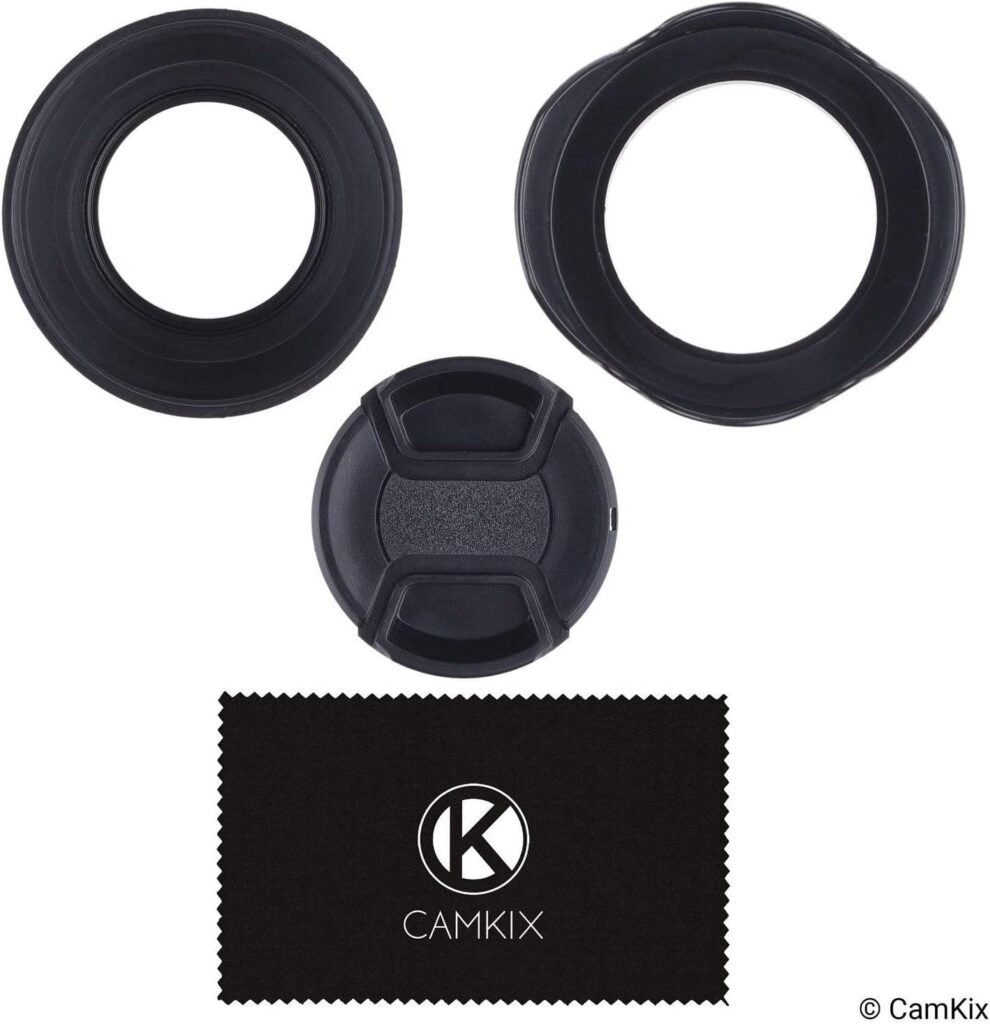
A 58mm set of two camera lens hoods and one rubber lens cap is an accessory kit for camera lenses with a matching 58mm front filter thread. The two hoods may help reduce stray light and protect the front lens element, while the rubber cap helps cover the lens during storage or transport.
The key point for U.S. buyers is simple: 58mm must match the lens’s front thread size, not the camera body or rear lens mount. Check the lens barrel, front cap, or manufacturer manual before ordering. A 58mm hood may not fit a lens with a 55mm, 52mm, 62mm, or other thread size.

What Is Included in a 58mm Lens Hood and Cap Set?
This type of kit normally includes three parts:
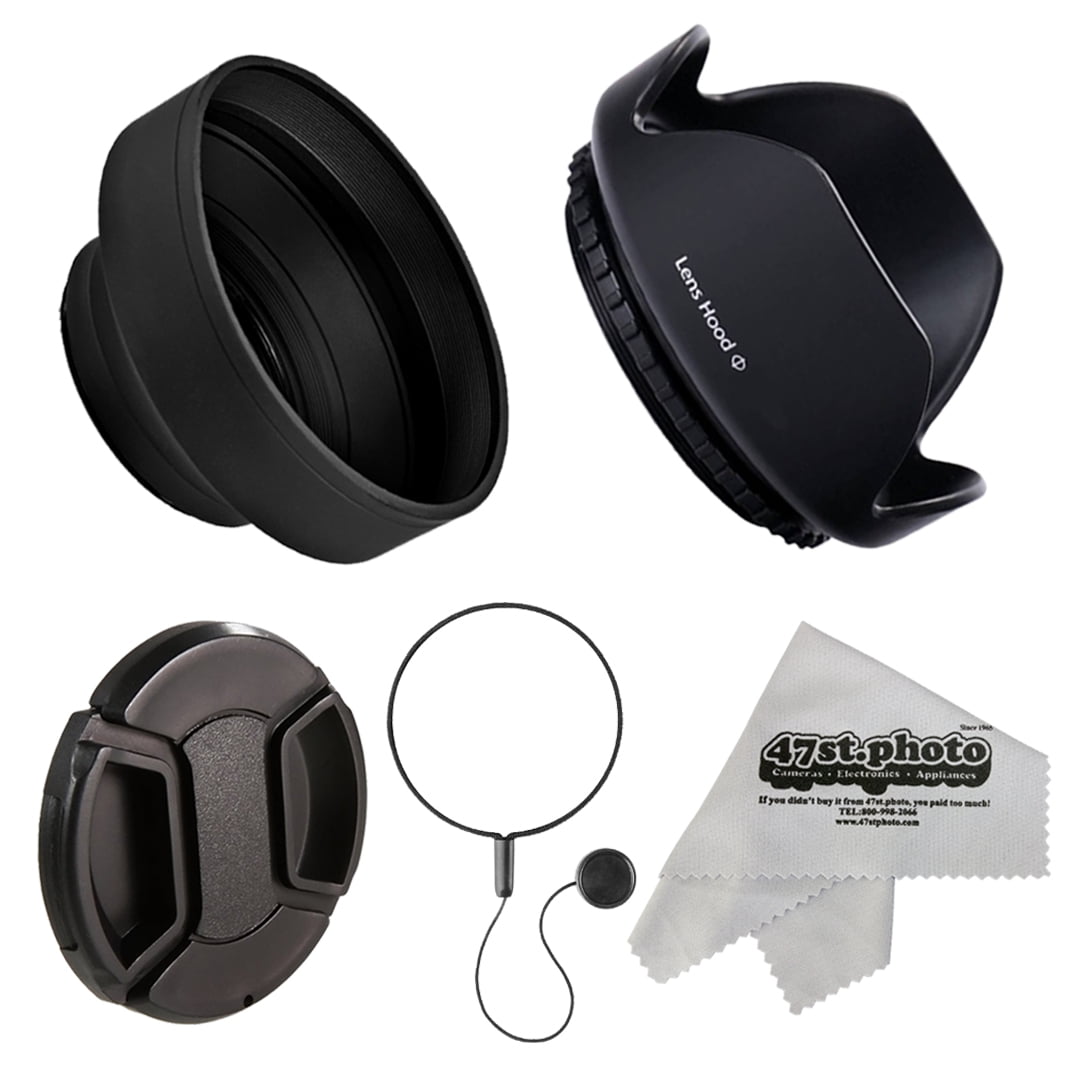
- Two 58mm lens hoods
- One rubber lens cap
- A mount or fitting designed for a lens with a 58mm front thread
The exact hood shape, material, and cap design can vary by seller. Product listings may use terms such as lens shade, sun hood, rubber hood, or collapsible lens hood. Read the listing details carefully because “58mm” can describe either a screw-in thread or a push-on fit.
What does “58mm” mean?
The 58mm measurement usually refers to the diameter of the lens’s front filter thread. It does not refer to:
- The focal length
- The camera sensor size
- The lens mount
- The outside diameter of the entire lens barrel
- The diameter of the rear mount
Look for a marking such as Ø58, 58mm, or 58 followed by a small circle symbol on the front of the lens. You may also find the size printed on the inside of the original lens cap.
Why are there two lens hoods?
A two-hood set may be useful when you own two compatible lenses or want a spare. It does not necessarily mean that both hoods should be stacked on one lens. Stacking hoods can block the corners of the image, especially with wide-angle lenses.
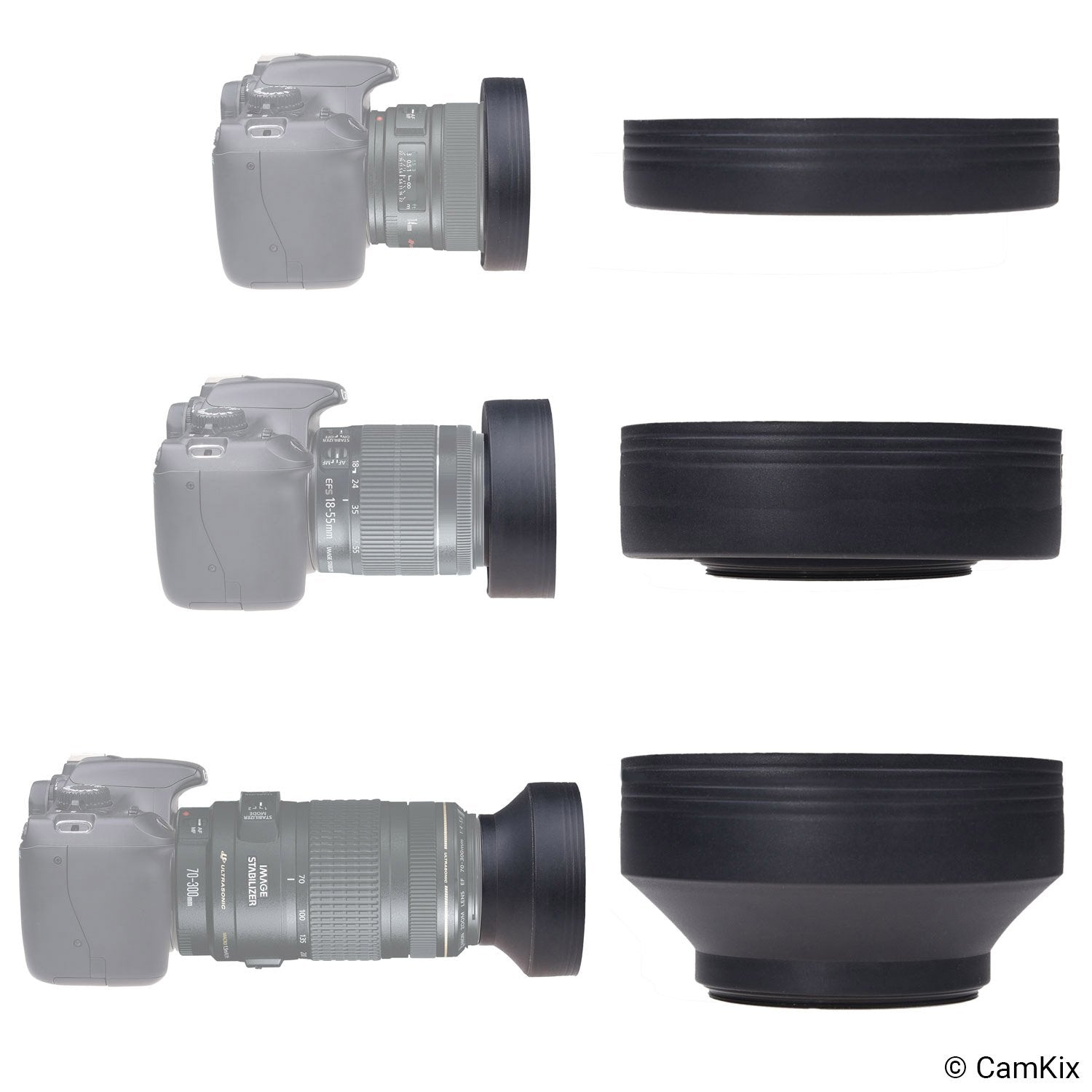
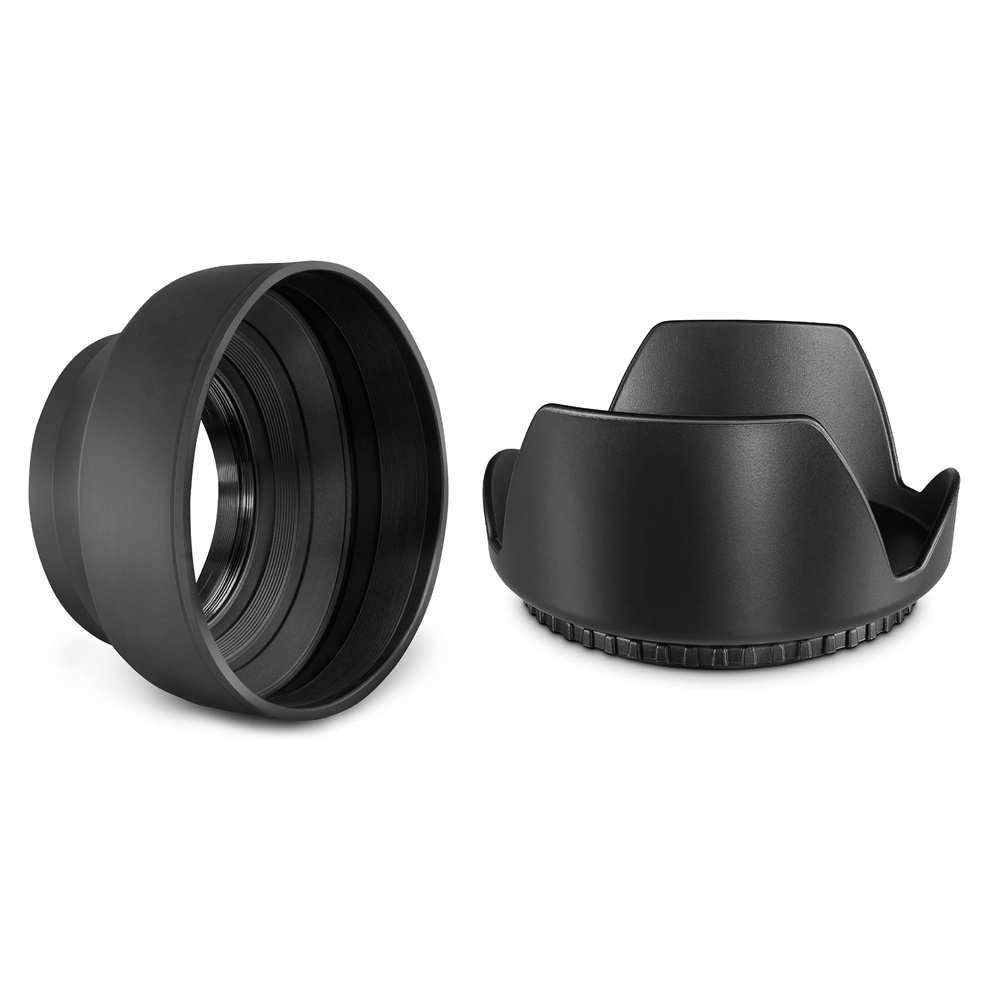
The two pieces may also differ in shape. One could be a standard round hood, while another could be a flexible rubber hood or a different depth. The product page should explain whether both hoods use the same 58mm fitting.
What is the rubber lens cap for?
A rubber lens cap is designed to cover the front of a lens when the camera is not in use. It can help keep dust, fingerprints, and light bumps away from the front glass.
However, a soft cap is not a guarantee against impact or crushing force. Place the camera in a padded bag when traveling, and do not treat the cap as a substitute for a protective case.
How to Check if a 58mm Hood Fits Your Lens
The safest way to confirm compatibility is to check the lens’s front thread size before installation. A camera body may accept many lenses, but the hood must match the individual lens.
Step 1: Inspect the front of the lens
Remove the front cap and look around the lens rim. Search for:
- 58mm
- Ø58
- A filter symbol followed by 58
- The original lens cap size
if you see another number, such as 52mm or 67mm, a standard 58mm screw-in hood is not the correct fit.
Step 2: Check the lens manual or manufacturer page
Use the exact lens model. Similar lenses can have different filter sizes, even when they share the same focal length or camera mount.
For example, two lenses made for the same camera system may use different front thread diameters. A 50mm lens is not automatically a 50mm accessory size, and a 58mm lens thread does not identify the focal length.
Step 3: Identify the mounting style
A 58mm hood may attach in one of several ways:
| Mounting style | How it attaches | Main benefit | Main limitation |
|---|---|---|---|
| Screw-in | Threads into the front filter thread | Firm fit when matched correctly | Can take longer to remove |
| Push-on | Fits over the outside of the lens barrel | Quick to install | May be loose or incompatible with the barrel |
| Bayonet | Locks into a dedicated lens hood mount | Often quick and secure | Must match the lens’s specific hood design |
| Rubber friction fit | Compresses against the lens front | Flexible and compact | May collapse or shift if poorly sized |
A listing that says only “58mm” may not explain the mounting style well enough. Confirm this detail before purchase.
Step 4: Test the fit without force
If the hood is a screw-in model, turn it gently by hand. It should engage smoothly and remain straight. Stop if it feels tight, crooked, or gritty.
Do not force a hood into place. Cross-threading can damage the filter thread and make future accessories difficult to attach.
Signs of a correct fit
A correctly fitted hood should:
- Sit straight on the lens
- Stay secure during normal handling
- Avoid contact with the front glass
- Leave the focus and zoom rings usable
- Avoid blocking the viewfinder or built-in flash
- Produce no dark corners in photographs

What a Lens Hood Does for Photos
A lens hood blocks light that comes from outside the image area. This stray light can bounce inside the lens and create flare or reduce contrast.
A hood may be most useful when:
- The sun is near the edge of the frame
- A bright lamp is just outside the composition
- You photograph through a window or near reflective surfaces
- You shoot outdoors in strong side light
- You want extra protection from light contact with the front element
A hood cannot remove all flare. Its effect depends on the lens design, the light source, the hood shape, and the camera angle.
Lens hood versus lens filter
A lens hood and a filter serve different purposes.
- A hood blocks some off-axis light and may shield the front element.
- A clear or protective filter adds a glass surface in front of the lens.
- A polarizing filter can reduce reflections and deepen some skies.
- A neutral density filter reduces the amount of light entering the lens.
A screw-in hood uses the same front filter thread as many filters. If you attach a filter first, check whether the hood still fits and whether the added thickness causes corner shading.
Can a hood improve image quality?
It can help maintain contrast when stray light reaches the lens. It does not increase sharpness by itself, repair a low-quality lens, or replace correct exposure.
The result also depends on the hood’s depth. A hood that is too short may block little stray light. One that is too deep may appear in the image, especially at wide focal lengths.

How to Use the Two Hoods Safely
Use one hood at a time unless the manufacturer specifically says that the parts are designed to stack.
Installation steps
- Turn off or stabilize the camera. This is not required for the hood itself, but it reduces the chance of dropping the camera while handling accessories.
- Remove the front cap.
- Check the hood and lens threads. Keep both free of sand, grit, and dirt.
- Align the hood carefully.
- Turn it clockwise by hand if it is a screw-in model.
- Stop when it is secure. Do not overtighten.
- Look through the viewfinder or screen and check the corners.
- Take a test photo against an evenly bright scene or sky.
If the hood causes dark corners
Dark corners are called vignetting. They may appear when:
- The hood is too deep
- The hood is mounted at an angle
- A filter and hood are used together
- The lens is used at a wide focal length
- Multiple hoods are stacked
- The hood is not designed for that lens
Remove the hood and take another photo. If the dark corners disappear, use a shorter hood or a lens-specific hood.
If the hood will not attach
Check these points in order:
- Confirm that the lens thread is 58mm.
- Confirm that the hood is a screw-in, push-on, or bayonet type.
- Inspect the threads for dirt or damage.
- Remove any incompatible step-up or step-down ring.
- Try the hood again without force.
A step-up ring can connect a smaller lens thread to a larger accessory. A step-down ring can do the reverse, but it may cause vignetting and does not guarantee that a hood will work correctly.

How to Use and Care for the Rubber Lens Cap
Fit the rubber cap over the front of the lens only after the lens surface is clean and the cap is free of grit. Dust trapped between the cap and lens can cause small scratches over time.
Good care practices
- Keep the cap in a clean pocket or pouch.
- Do not place it on a dusty table with the inside facing down.
- Wash it only as directed by the seller or material instructions.
- Let it dry fully before putting it on the lens.
- Replace it if it becomes loose, cracked, sticky, or misshapen.
- Store the camera with the lens hood reversed or removed if the cap does not fit securely.
A rubber cap may stretch with repeated use. A loose cap can fall off inside a camera bag, leaving the lens exposed.
Is a rubber cap better than a plastic cap?
Neither is always better. A rubber cap may be flexible and easy to fit, while a molded plastic cap may hold its shape more firmly. The better choice depends on fit, retention, and how the camera is stored.
For frequent travel, a cap that locks securely and stays attached to the lens may be more useful than one that is simply soft.

Key Buying Checks for U.S. Camera Owners
Before buying a 58mm set, compare the listing with your lens and shooting needs.
| Check | What to confirm |
|---|---|
| Thread size | The lens uses a 58mm front filter thread |
| Mount type | Screw-in, push-on, bayonet, or friction fit |
| Hood depth | Suitable for the lens’s focal length |
| Filter use | The hood still works with your regular filter |
| Cap fit | The rubber cap stays secure during storage |
| Flash clearance | The hood does not block a built-in flash |
| Build quality | Threads are clean and the rubber returns to shape |
| Quantity | The package contains two hoods and one cap |
| Return policy | The seller accepts returns if fit is wrong |
Do not rely only on a product title. Marketplace titles can combine several accessory terms without explaining the exact mount or lens compatibility.
When this type of kit makes sense
It may suit a photographer who:
- Owns one or more 58mm lenses
- Wants a spare hood
- Needs a low-cost front cover
- Uses the camera outdoors
- Wants to reduce stray light without buying a brand-specific hood
When to choose a different accessory
A lens-specific bayonet hood may be better when:
- The lens maker designed a dedicated hood
- You use a wide-angle lens
- You rely on a built-in flash
- You need a precise fit
- You use thick filters or filter holders
A different size is necessary when the lens does not have a 58mm front thread.
Common Mistakes to Avoid
Mistake 1: Matching the hood to the camera body
The camera body does not determine the front filter size. Match the hood to the lens.
Mistake 2: Assuming every 58mm hood fits every 58mm lens
The thread size may match while the hood depth or mounting design does not. A 58mm wide-angle lens and a 58mm telephoto lens may need different hood shapes.
Mistake 3: Tightening the hood too much
Hand-tighten only. Excess force can make a screw-in hood difficult to remove or damage the thread.
Mistake 4: Stacking both hoods
Two hoods can block the image. Use one unless the design specifically supports stacking.
Mistake 5: Leaving a flexible hood collapsed during shooting
Some rubber hoods have multiple positions. A partly collapsed hood may not shield the lens well and may enter the frame.
Mistake 6: Cleaning the lens with a dirty cap
The cap protects the lens only when it is clean. Inspect the inner surface before installation.
Frequently Asked Questions
Does a 58mm lens hood fit a 58mm filter?
Usually, a screw-in 58mm hood can attach to a matching 58mm filter thread. However, the filter’s thickness and the hood’s design may affect fit. Check for vignetting after installation.
Can I use this kit on any camera?
No. The relevant measurement is the front thread size of the lens. The camera body, brand, and sensor format do not prove compatibility.
Can I use both lens hoods at once?
Usually, you should use one hood at a time. Stacking can block the corners of the image and may place extra strain on the lens front.
Will a lens hood protect the lens from drops?
No. A hood may provide some protection from light contact, but it is not impact armor. Use a padded camera bag and a secure front cap for transport.
Can I use the rubber cap with a filter attached?
It depends on the cap’s inner diameter and design. Test the fit gently. The cap should stay secure without pressing hard against the filter glass.
Final Recommendation
A 58mm set of two camera lens hoods and one rubber lens cap can be a practical accessory kit when your lens has a true 58mm front thread and the mounting style matches the product listing. Confirm the thread size, hood type, depth, filter clearance, and cap fit before ordering.
Use one hood at a time, install it without force, and test for corner shading. For the most exact fit—especially on a wide-angle lens—a manufacturer-specific hood may be the safer choice.

