
For photographers in the United States, the Canon RF 70-200mm F2.8 L IS USM is a professional telephoto zoom for Canon EOS R-series mirrorless cameras. It combines a constant f/2.8 aperture, optical image stabilization, fast autofocus, and Canon’s L-series build quality in a smaller body than many older 70-200mm DSLR lenses.
This lens is a strong fit for weddings, sports, portraits, events, news, and wildlife in good light. Its main trade-offs are cost, weight, limited close-focus ability compared with a macro lens, and compatibility with Canon RF-mount cameras only.
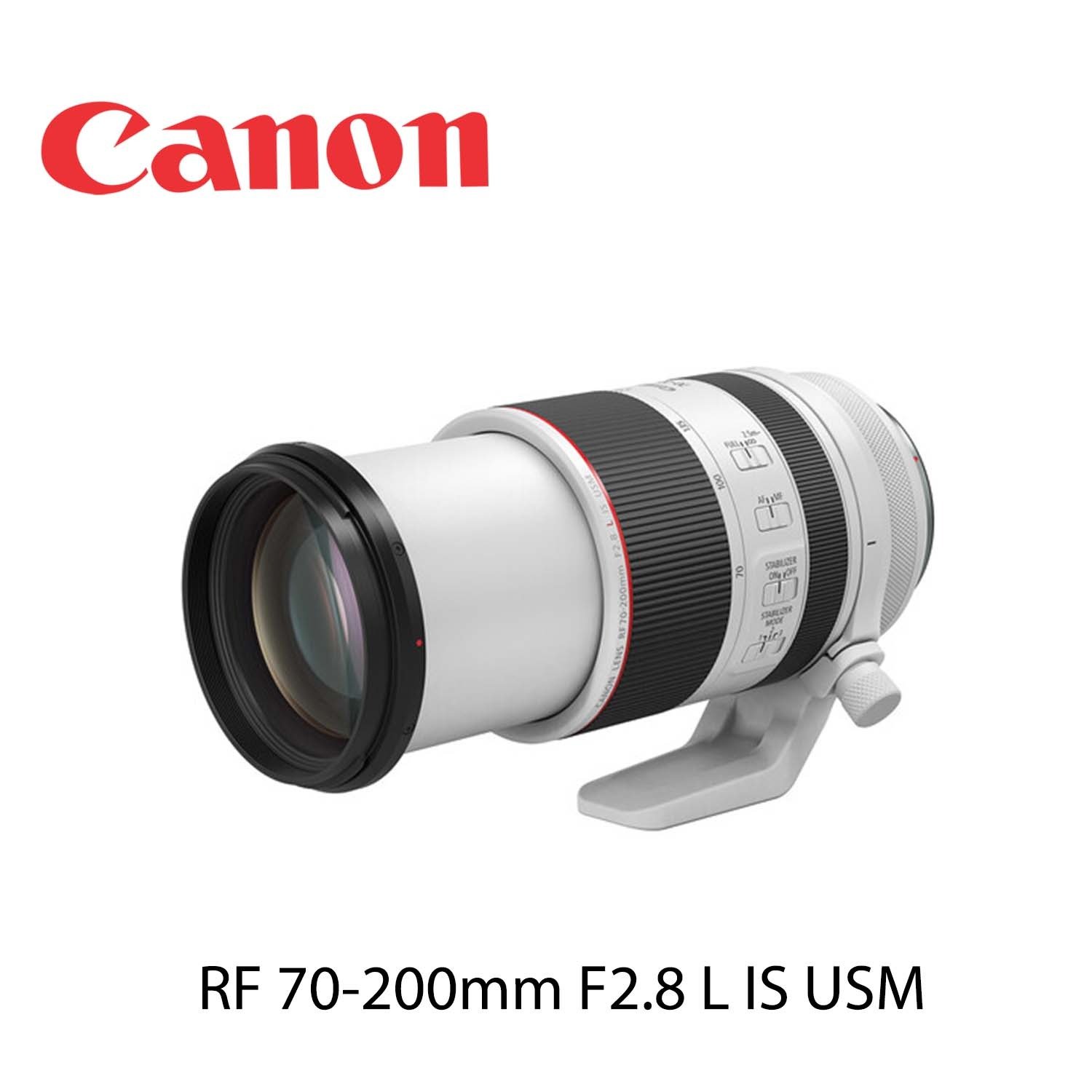
Canon RF 70-200mm F2.8 L IS USM: Key Specifications
The Canon RF 70-200mm F2.8 L IS USM is a full-frame RF-mount telephoto zoom. Its focal range covers short telephoto to medium telephoto views, while the constant f/2.8 aperture lets you keep the same exposure settings while zooming.
| Feature | Canon RF 70-200mm F2.8 L IS USM |
|---|---|
| Lens mount | Canon RF |
| Compatible cameras | Canon EOS R-series mirrorless cameras |
| Focal length | 70-200mm |
| Maximum aperture | f/2.8 throughout the zoom range |
| Minimum aperture | f/32 |
| Image stabilization | Optical IS, rated up to 5 stops under Canon test conditions |
| Autofocus motor | Dual Nano USM |
| Minimum focus distance | About 2.3 feet at 70mm; about 3.3 feet at 200mm |
| Maximum magnification | About 0.23x |
| Filter size | 77mm |
| Diaphragm | 9 rounded blades |
| Construction | 17 elements in 13 groups |
| Weight | About 2.36 pounds |
| Hood | ET-83G included |
| Camera mount | Canon RF; not compatible with EF DSLR cameras without an official RF-to-EF adapter, and RF lenses cannot be mounted on EF cameras |
Specifications can vary slightly by market documentation and measurement method. Always check the Canon USA manual and product page for the exact model before buying accessories.
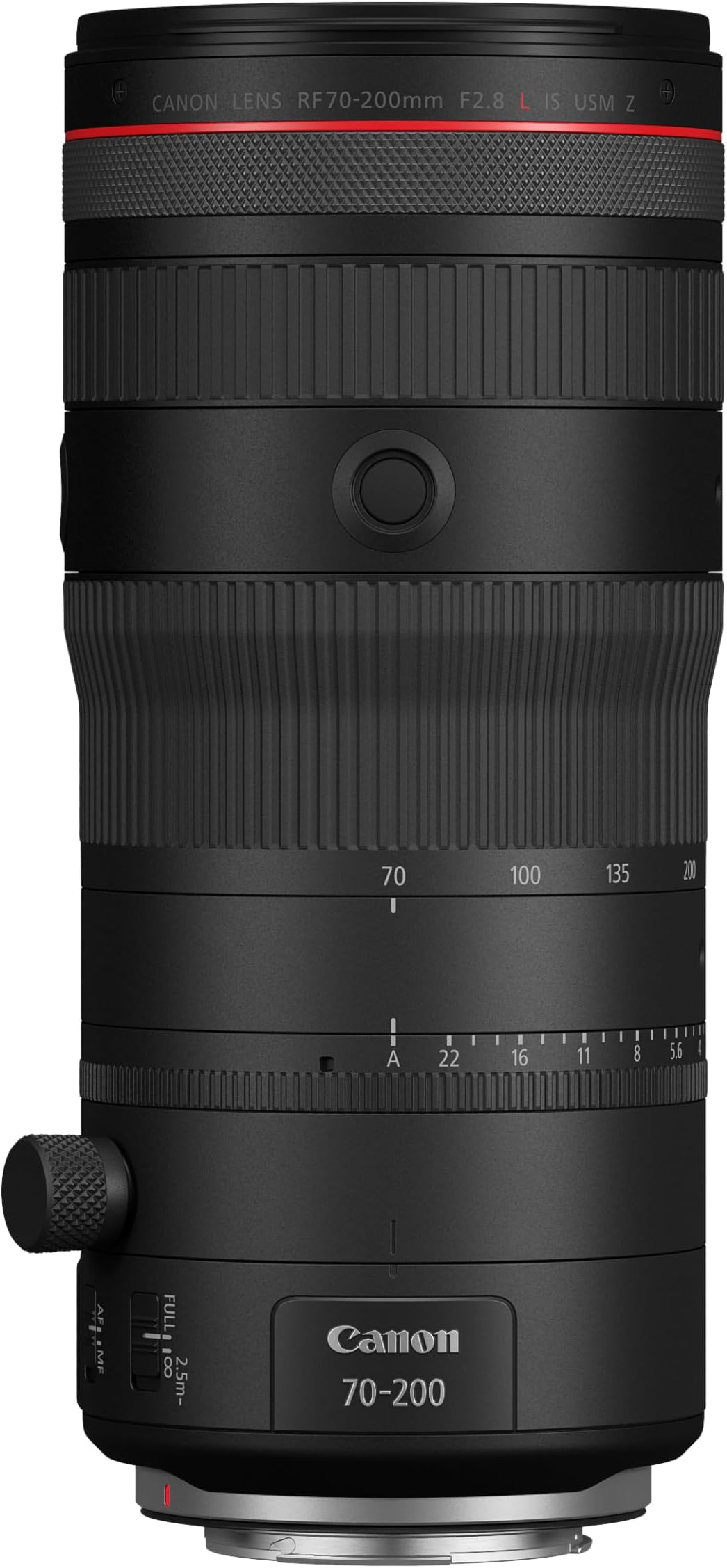
The lens is often confused with the newer Canon RF 70-200mm F2.8 L IS USM Z. The Z model is a separate lens with a different design and added video-oriented features. The standard RF 70-200mm F2.8 L IS USM is the compact retractable version discussed in this guide.

What the Canon RF 70-200mm F2.8 L IS USM Is Designed For
This lens is designed for subjects that are too far away for a standard zoom but do not require an extreme super-telephoto lens. On a full-frame EOS R camera, 70mm works well for portraits and events. At 200mm, the lens can isolate a player, speaker, performer, or distant detail.
On an APS-C Canon EOS R camera, the angle of view becomes narrower. Canon’s 1.6x crop factor gives the lens a field of view similar to approximately 112-320mm on a full-frame camera. This can help with field sports and wildlife, but it also makes it harder to frame large nearby subjects.
Typical uses include:
- Wedding ceremonies and receptions
- Indoor and outdoor portraits
- High school and college sports
- Theater and stage performances
- Photojournalism and event coverage
- Travel details and distant landmarks
- Wildlife in parks, zoos, and controlled settings
- Product and editorial photography where background blur matters
the 70-200mm range is popular because it changes framing without forcing the photographer to move. It is like carrying several portrait lenses in one compact tool.
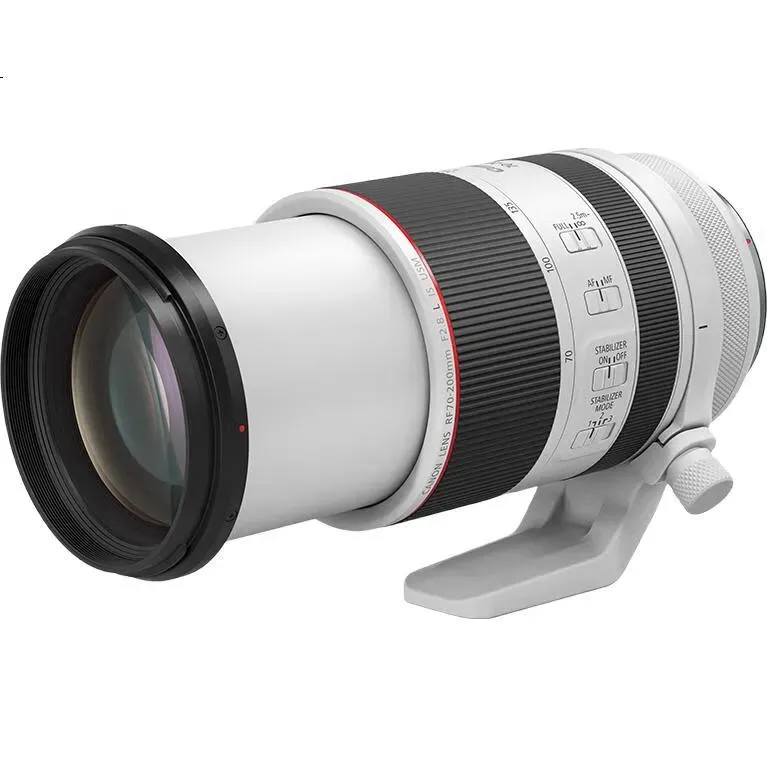
Image Quality and the Constant f/2.8 Aperture
The constant f/2.8 aperture is one of the lens’s main advantages. It allows the lens to admit more light than a slower f/4 or f/5.6 telephoto zoom. This can help maintain faster shutter speeds in dim venues and can create stronger background blur.
At 70mm, the lens can produce a wider portrait view. At 200mm, it compresses the scene and helps separate the subject from the background. Background blur depends on focal length, subject distance, background distance, and sensor size, so f/2.8 does not guarantee the same look in every scene.
Canon’s L-series designation indicates a professional lens class with advanced optical design and weather-resistant construction. The RF 70-200mm F2.8 L IS USM includes specialized glass and coatings intended to control color fringing, flare, and ghosting.
The lens should deliver its strongest results when:
- The subject is placed away from the background.
- The photographer uses an appropriate shutter speed.
- The focus point is placed on the subject’s eye or most important detail.
- The lens hood is used in strong side light.
- The photographer avoids expecting 200mm reach to replace a 400mm or 600mm lens.
No lens is equally sharp in every focus distance, aperture, and lighting condition. Real results also depend on the camera body, focus settings, atmospheric haze, and technique.
Autofocus Performance for Sports, Weddings, and Events
The RF 70-200mm F2.8 L IS USM uses Canon’s Dual Nano USM autofocus system. Nano USM motors are designed to provide fast and quiet focus movement for still photography and video.
Autofocus performance also depends heavily on the camera body. A newer EOS R camera with subject detection and tracking may perform differently from an older body. The lens cannot create tracking features that the camera does not support.
For moving subjects, start with these settings:
- Use Servo AF for continuous focus.
- Select a suitable subject-detection mode.
- Use a shutter speed that matches the subject’s movement.
- Keep the active focus area over the subject.
- Test eye-detection behavior before a paid event.
- Use a fast memory card and a suitable burst mode when timing matters.
For sports, 1/1000 second or faster may help freeze rapid action, but the correct setting depends on the sport, lens direction, and creative goal. For a speaker or wedding ceremony, 1/250 to 1/500 second may be enough in many situations, but movement and camera position change the result.
The autofocus motor is quiet, but “quiet” does not mean completely silent. For serious video work, confirm the sound level in your camera setup and consider an external microphone.

Image Stabilization: What the 5 Stops Means
The lens includes optical image stabilization, commonly rated by Canon at up to five stops. A stop represents a doubling or halving of exposure time. In theory, five stops can allow a much slower shutter speed than would normally be used for a handheld shot.
That rating applies mainly to camera shake with a stationary subject. Image stabilization does not freeze a moving athlete, child, dancer, or animal. If the subject moves, a fast shutter speed is still needed.
Use stabilization this way:
- Keep IS enabled for handheld still photography.
- Use a faster shutter speed when the subject moves.
- Turn IS off when the camera is firmly mounted and the camera or lens instructions recommend doing so.
- Test stabilization at the focal length you plan to use.
- Do not rely on IS to correct poor focus or motion blur.
Some Canon EOS R bodies can coordinate in-body stabilization with lens-based stabilization. The effective rating depends on the camera model, firmware, focal length, and Canon’s stated testing conditions. Treat the published number as a reference, not a guarantee for every photograph.
Size, Weight, and Handling
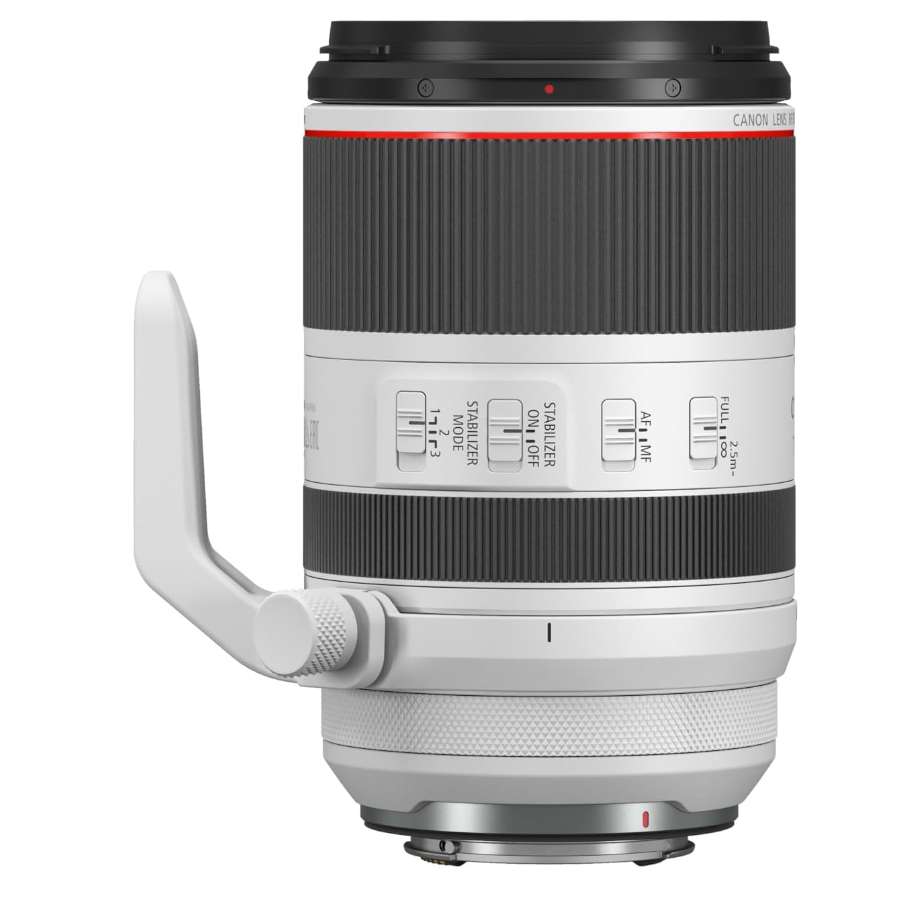
One unusual feature of the standard Canon RF 70-200mm F2.8 L IS USM is its retractable design. It becomes shorter for storage than many traditional internal-zoom 70-200mm f/2.8 lenses. That makes it easier to fit in a medium camera bag.
The trade-off is that the lens extends as you zoom. Some photographers prefer internal zooming because the physical length stays constant and the balance changes less. Others prefer the smaller packed size of the retractable RF design.
At about 2.36 pounds, the lens is still substantial. Add a full-frame EOS R camera, spare batteries, and a second lens, and the kit can become tiring during a long event.
A shoulder strap, monopod, or camera support may help during extended use. Avoid carrying the camera by the lens hood or zoom barrel. When transporting the lens, retract it fully and fit the front and rear caps.

Weather Resistance and Outdoor Use
The Canon RF 70-200mm F2.8 L IS USM has weather-resistant construction intended to help protect it from dust and moisture when used correctly. Weather resistance is not the same as waterproofing.
For outdoor work in the United States:
- Use a rain cover during steady rain.
- Keep the mount and contacts dry.
- Avoid changing lenses in blowing dust or rain.
- Wipe off moisture before storing the lens.
- Let a cold lens warm gradually in a sealed bag to reduce condensation.
- Inspect the rubber mount seal and caps regularly.
Protection depends on the camera body, lens condition, seals, and how long the equipment is exposed. A worn or damaged lens may not provide the same protection as a new one.

Canon RF 70-200mm F2.8 L IS USM vs. RF 70-200mm F2.8 L IS USM Z
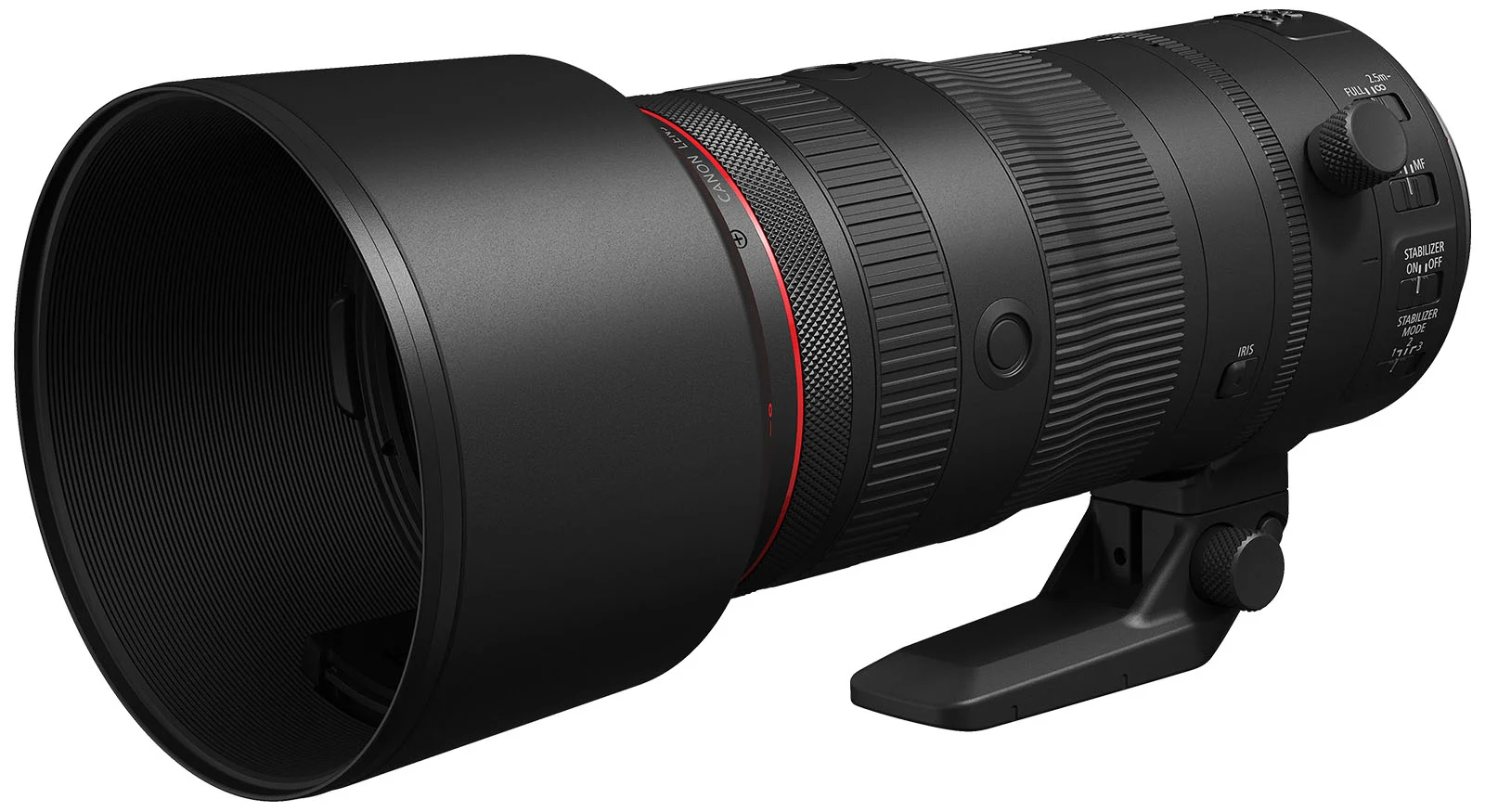
The original RF 70-200mm F2.8 L IS USM and the RF 70-200mm F2.8 L IS USM Z share the same basic focal range and maximum aperture, but they serve somewhat different priorities.
| Consideration | Standard RF 70-200mm F2.8 L IS USM | RF 70-200mm F2.8 L IS USM Z |
|---|---|---|
| Main strength | Smaller size and lower weight | Video-friendly design and professional controls |
| Zoom design | Retractable | Internal zoom |
| Typical buyer | Still photographer, event shooter, traveler | Hybrid creator and production user |
| Compatibility | Canon RF cameras | Canon RF cameras |
| Purchase decision | Prioritize portability | Prioritize video workflow and added controls |
Choose the standard model if bag size, travel weight, and still photography matter most. Consider the Z model if internal zooming, power-zoom support, or a more video-focused design is central to your work.
Do not assume accessories are interchangeable. Check the exact model number before purchasing a hood, tripod collar, lens control, filter, or case.
How to Choose the Right Camera Body
The lens works with Canon EOS R-series cameras that accept RF lenses. It is not a direct fit for Canon EF-mount DSLR cameras.
A full-frame body makes the most of the lens’s intended angle of view. An APS-C EOS R body gives extra apparent reach but produces a narrower view. That can be useful for sports, but it may feel tight indoors.
Consider these camera factors:
- Autofocus system: Newer bodies may offer better subject detection.
- High-ISO performance: Useful for indoor events and evening sports.
- In-body stabilization: May improve handheld stability when paired with lens IS.
- Burst performance: Important for action sequences.
- Video controls: Relevant if you plan to record video.
- Body weight and balance: A small body may feel front-heavy with this lens.
Before buying, confirm that your camera uses the RF mount. Canon EF lenses can be adapted to EOS R bodies with an EF-EOS R adapter, but an RF lens cannot be adapted for use on an EF DSLR body.

Recommended Accessories
The lens includes a compatible hood and caps, but several accessories can improve daily use.
Useful additions
- A high-quality 77mm protective or clear filter, if you accept the possible optical trade-offs
- A circular polarizer for selected outdoor scenes
- A padded lens case
- A monopod for long events or sports coverage
- A rain cover for outdoor work
- Spare camera batteries and memory cards
- A stable shoulder strap or camera harness
A polarizing filter reduces reflected light from some surfaces, but it also cuts incoming light. That can matter in dim conditions. Avoid stacking several filters unless necessary, since extra glass can increase flare and vignetting.
Do not buy a tripod collar based only on the words “RF 70-200mm.” The standard lens and the Z version are different products. Confirm the exact model and Canon accessory listing first.

Common Problems and Practical Fixes
The image is blurry
First determine whether the problem is camera shake, subject movement, missed focus, or poor atmospheric conditions.
- Raise the shutter speed for moving subjects.
- Confirm that Servo AF is active for action.
- Check whether the camera focused on the intended subject.
- Hold the lens with the left hand under the zoom barrel.
- Test the lens on a stationary subject in good light.
- Check the front and rear elements for dirt or condensation.
The lens does not autofocus
Check that the lens is fully mounted and the camera is powered on. Confirm that the focus switch is set to AF rather than MF. Clean dirty electronic contacts only with suitable equipment and avoid liquids inside the mount.
If autofocus fails across multiple camera bodies and lighting conditions, stop using the lens for paid work until Canon service or an authorized repair center can inspect it.
The image is too dark indoors
The f/2.8 aperture helps, but it cannot solve every low-light problem. Raise ISO, slow the shutter speed when the subject is still, add light when allowed, or use a faster prime lens. Image stabilization can reduce camera shake, but it cannot stop a moving person.
The lens shows flare
Use the supplied hood, change your angle slightly, and block direct light from striking the front element. Clean fingerprints from the glass with proper lens-cleaning materials. A filter can also create extra reflections, especially when it is dirty or of poor quality.
The zoom feels stiff or uneven
Temperature, dust, impact, or normal mechanical wear can affect operation. Do not force the zoom ring. If the barrel binds, makes unusual sounds, or fails to lock correctly, have the lens inspected.
Is the Canon RF 70-200mm F2.8 L IS USM Worth Buying?
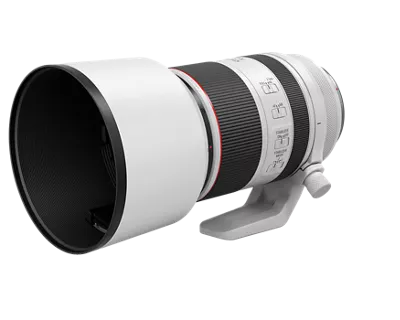
The lens is worth considering when you need a professional 70-200mm range, a bright constant aperture, strong autofocus support, and optical stabilization in a compact RF-mount design.
It is a sensible choice for:
- Full-time event and wedding photographers
- Sports photographers who work near the action
- Portrait photographers who want flexible framing
- EOS R users who need one high-quality telephoto zoom
- Travelers who want a smaller packed lens than a traditional 70-200mm f/2.8
It may not be the best choice for:
- Photographers who need very long reach
- Wildlife shooters who often work far from subjects
- Buyers on a strict budget
- Users of Canon EF DSLR cameras
- Video creators who need a dedicated internal-zoom production lens
- Photographers who prefer a lighter f/4 telephoto zoom
The key decision is not simply whether the lens is sharp or fast. It is whether the weight, price, focal range, and RF-mount restriction match your work.
Frequently Asked Questions
Is the Canon RF 70-200mm F2.8 L IS USM compatible with Canon DSLRs?
No. The lens uses Canon’s RF mount and is made for EOS R-series mirrorless cameras. It cannot be mounted on Canon EF or EF-S DSLR cameras.
Can I use an RF 70-200mm F2.8 lens on an APS-C EOS R camera?
Yes, if the camera has a compatible RF mount. The crop factor creates a narrower field of view, similar to about 112-320mm on full frame. This can help with distant subjects but makes wide framing more difficult.
Is the lens good for wildlife photography?
It can work well for nearby or medium-distance wildlife, especially on an APS-C EOS R body. However, 200mm may be too short for small or distant animals. A 400mm, 600mm, or longer lens may be more suitable for many wildlife situations.
Does image stabilization freeze moving subjects?
No. Optical stabilization mainly reduces blur from camera movement. Use a fast shutter speed to reduce blur caused by subject movement.
Is the RF 70-200mm F2.8 L IS USM good for video?
It can be useful for video because its autofocus system is designed for quiet operation. However, video performance depends on the camera body, focus settings, stabilization mode, handling, and microphone placement. The RF 70-200mm F2.8 L IS USM Z is the more video-focused model in Canon’s RF lineup.
What filter size does the lens use?
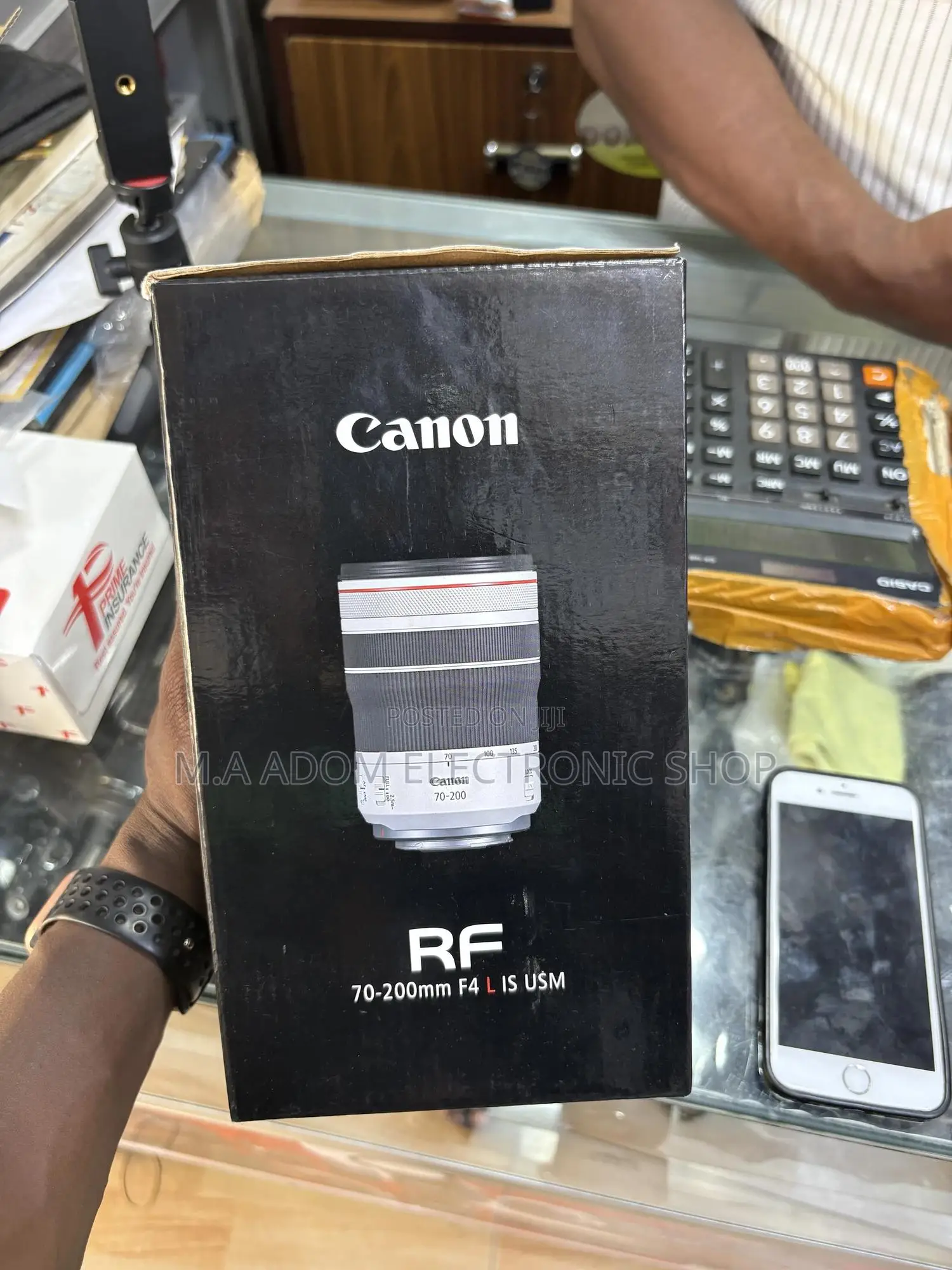
The standard Canon RF 70-200mm F2.8 L IS USM uses 77mm filters. Confirm the model before buying because related 70-200mm lenses may use different accessories.
Final Recommendation
The Canon RF 70-200mm F2.8 L IS USM is a versatile professional telephoto zoom for Canon EOS R photographers in the United States. Its constant f/2.8 aperture, optical stabilization, Dual Nano USM autofocus, and compact retractable design make it especially useful for weddings, sports, portraits, and events.
Buy it when you value low-light performance and flexible framing more than low weight or low cost. Choose another lens if you need extreme wildlife reach, a lighter f/4 design, or compatibility with a Canon DSLR. Before purchase, confirm that you are selecting the standard RF model rather than the newer RF 70-200mm F2.8 L IS USM Z.

