

Introduction
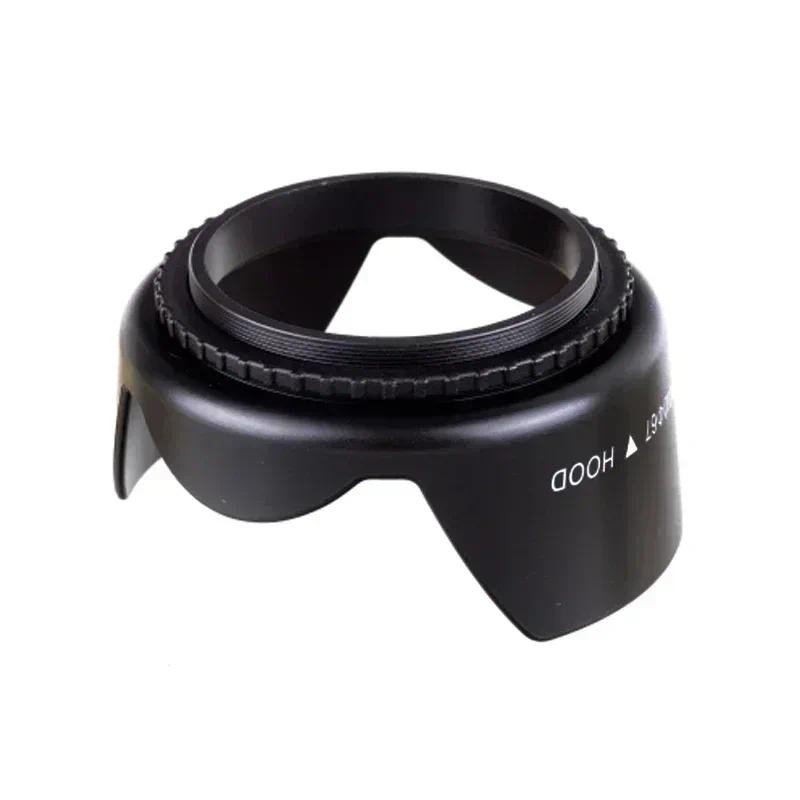
The K&F CONCEPT 67mm Tulip Flower Lens Hood is a screw-on lens accessory for camera lenses with a 67mm front filter thread. It may fit Canon, Sony, and other camera systems, but the camera brand alone does not confirm compatibility. The lens must have a matching 67mm thread.
For photographers in the United States, this hood can help reduce stray light, lower the risk of flare, and add a small amount of protection to the front of a lens. It is most useful outdoors, near bright windows, at sunrise, or whenever a strong light source sits just outside the frame.
The key buying check is simple: look for the “Ø67” or “67mm” mark on the front of your lens or in its manual. Do not confuse this number with the lens focal length.

Key Takeaways
- The K&F CONCEPT hood fits lenses with a 67mm front filter thread.
- It is not limited to Canon or Sony cameras.
- A 67mm hood will not fit a lens with a 58mm, 62mm, or 72mm thread without the correct step-up or step-down ring.
- The tulip shape helps block off-axis light while reducing the chance of blocking the image at wider viewing angles.
- A hood can reduce flare, but it cannot remove flare caused by light already inside the lens or directly in the frame.
- Check the lens manual before use, especially with wide-angle lenses, zoom lenses, filters, and built-in flashes.
What the K&F CONCEPT 67mm Tulip Lens Hood Does
The K&F CONCEPT 67mm Tulip Flower Lens Hood attaches to the front of a compatible lens. Its main job is to shade the front element from light that comes from outside the image area.
Bright light can bounce between the glass elements inside a lens. This may create:
- Washed-out contrast
- Ghost images
- Colored spots
- Pale streaks
- Loss of shadow detail
A hood works like a small shade over a window. It blocks some unwanted light before that light reaches the lens.
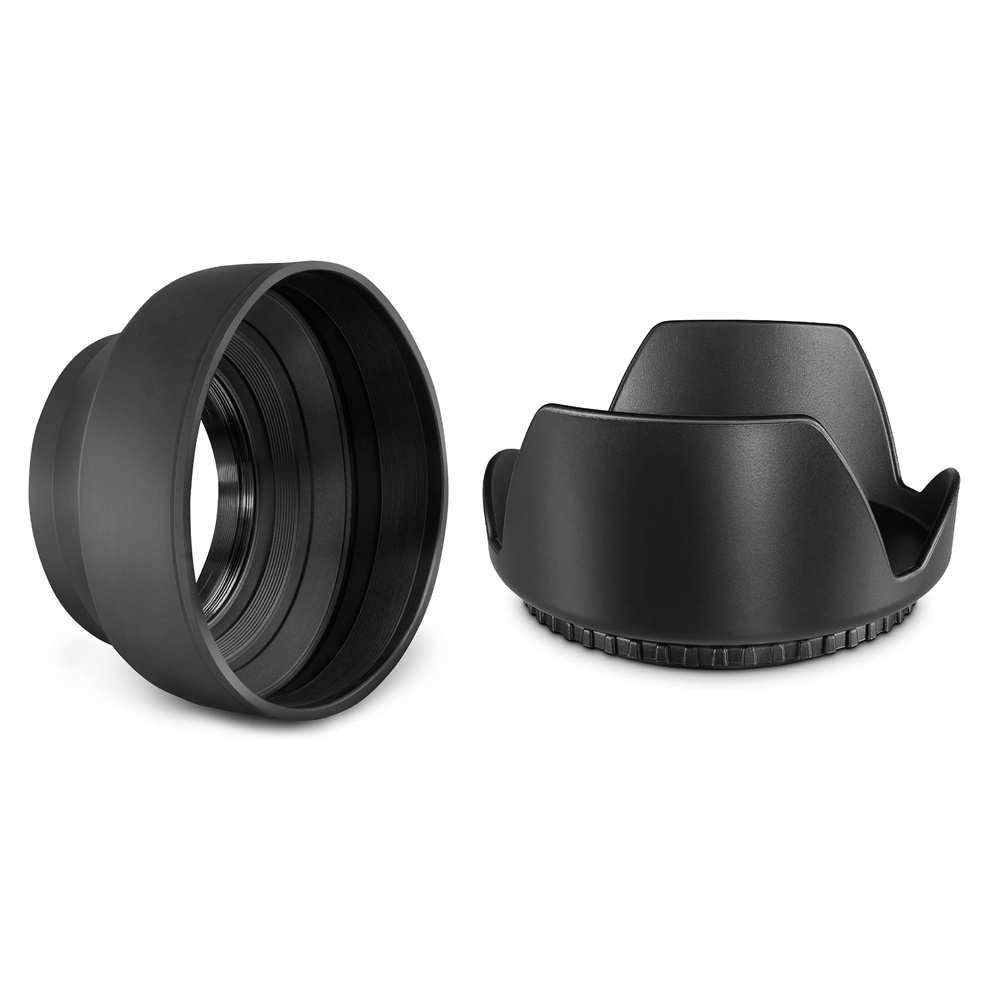
The flower, or tulip, shape is designed to remove more material from the corners. This can help the hood avoid blocking the frame when used with lenses that have a wide field of view. The exact result still depends on the lens design, focal length, sensor format, and hood depth.
A lens hood does not make a lens waterproof. It also does not replace a lens cap, filter, or careful handling.

Is This Hood Compatible With Canon and Sony Cameras?
Compatibility depends on the lens, not just the camera body. A Canon or Sony camera can use this hood if the attached lens has a 67mm front filter thread and the hood’s mounting design matches that thread.
How to check your lens
Look for one of these markings:
Ø6767mm67 mm
The marking is often printed around the front of the lens. You can also check the lens specifications in the manufacturer’s manual or product page.
Do not use the following numbers as a substitute:
- Focal length, such as 35mm or 85mm
- Maximum aperture, such as f/1.8
- Camera sensor size
- Lens mount type, such as Canon RF, Canon EF, Sony E, or Sony FE
For example, a Sony FE lens may use a 67mm filter thread, while another Sony lens may use a 72mm thread. The camera brand stays the same, but the hood size changes.
Basic compatibility table
| Lens marking | Will a 67mm hood fit directly? |
|---|---|
| Ø67 or 67mm | Yes, if the thread is undamaged |
| Ø62 or 62mm | No |
| Ø58 or 58mm | No |
| Ø72 or 72mm | No |
| No front thread | Not without a compatible adapter |
| Bayonet mount only | Not as a standard screw-on fit |
A step-up ring can connect a smaller lens thread to a larger 67mm accessory. A step-down ring may create more risk of corner shading, especially with wide-angle lenses. Use the correct adapter only after checking the full setup.

How to Install the K&F CONCEPT 67mm Lens Hood
Install the hood slowly and without force. A cross-threaded hood can damage the fine threads on the lens.
- Remove the lens cap.
- Check that the front lens thread is clean.
- Hold the hood by its outer edge.
- Place the hood straight onto the 67mm thread.
- Turn it counterclockwise first until the threads drop into place.
- Turn it clockwise by hand.
- Stop when the hood is secure and correctly aligned.
- Look through the viewfinder or screen for dark corners.
The counterclockwise step helps you find the start of the thread. Without it, the hood may begin at the wrong angle and cross-thread.
Do not tighten the hood with pliers or another tool. A lens hood should be firm enough to stay in place, but it should not require excessive force to remove.
Signs of correct installation
A properly installed hood should:
- Turn smoothly
- Sit evenly on the lens
- Remain stable during normal use
- Leave the lens glass and filter clear
- Avoid dark corners in the image
- Avoid contact with a rotating focus or zoom ring
If the hood stops after only a partial turn, remove it and try again. Do not continue tightening a hood that feels rough or crooked.
How to Use the Tulip Hood With Filters
A 67mm tulip hood may work with some screw-on filters, but the result depends on the hood design and the filter thickness.
A thin protective or polarizing filter may fit without a problem. A thick filter frame, variable neutral-density filter, or stacked filters can move the hood farther from the lens. That extra distance may increase the chance of dark corners.
Before an important shoot:
- Attach the filter to the lens.
- Install the hood over the filter if the design allows it.
- Photograph an evenly lit wall or sky at the widest focal length.
- Inspect all four corners at full image size.
- Repeat the check at different zoom positions.
A circular polarizer needs special care. If the filter must rotate, the hood should not prevent access to the filter control. If the hood blocks the filter ring, remove the hood while adjusting the polarizer, then reinstall it.
Avoid stacking several filters under a deep hood. This can cause vignetting and may make the front assembly more likely to loosen.

Does a Tulip Lens Hood Reduce Lens Flare?
It can reduce flare when the unwanted light comes from outside the frame and reaches the front element at an angle. This is the main condition in which a hood helps.
It may not solve flare when:
- The sun or a lamp is inside the frame
- A bright source reflects from a filter
- The front element is dirty
- The lens has strong internal reflections
- Light enters from another opening or reflective surface
- The hood is too short for the lens and shooting angle
A hood is not a guarantee of higher image quality in every scene. Its effect changes with the light position, lens construction, filter use, and camera angle.
You can improve results by combining the hood with simple shooting habits:
- Clean the front element with suitable lens-cleaning tools.
- Remove low-quality filters when they are not needed.
- Move the camera or change the composition.
- Shade the lens with a hand, while keeping the hand outside the frame.
- Place the light source behind the camera when possible.
Never allow a hand, flag, or accessory to touch the front glass during shooting.

Does the Hood Cause Vignetting?
Vignetting means the corners of an image look darker than the center. A hood can cause mechanical vignetting if it extends too far into the lens’s viewing angle.
The risk is higher with:
- Ultra-wide lenses
- Wide zoom settings
- Full-frame cameras
- Thick filters
- Filter stacks
- Incorrect step rings
- A hood that is not designed for the lens
A hood that works well at 70mm may show dark corners at 24mm. For this reason, test the hood at the shortest focal length you plan to use.
Quick vignetting test
Set the lens to its widest focal length. Photograph a plain, bright surface with even lighting. Use a moderate aperture and inspect the corners. Repeat with any filter or adapter that you plan to use.
If dark corners appear, remove the newest accessory first. Test the lens without the filter, then without the step ring, and then without the hood. This process helps identify the cause.
Software can sometimes correct natural lens vignetting. It cannot always restore detail hidden by a physical hood or filter obstruction.

Common Problems and Fixes
The hood will not screw on
Likely causes:
- The lens does not use a 67mm thread.
- The hood is tilted.
- The threads contain dust or grit.
- The hood has started cross-threading.
- A filter or adapter is already installed.
What to do:
Remove the hood and inspect both sets of threads. Confirm the size marking. Clean loose dust with a blower, then try again with light finger pressure. If the hood still will not start smoothly, stop using it until the fit is confirmed.
The hood is stuck
Do not use metal tools or excessive force. Hold the lens securely and try turning the hood by hand with a rubber grip. If a filter and hood are jammed together, avoid twisting the lens barrel.
A camera store or qualified repair technician can help if the threads are damaged or the accessory cannot be removed safely.
Dark corners appear
Check the setup in this order:
- Remove the hood.
- Remove any filter.
- Remove the step ring.
- Test the lens at its widest focal length.
- Confirm that the hood is the correct size and type.
If the corners clear after removing the hood, the hood is not suitable for that lens position or accessory combination.
The hood rotates out of position
A screw-on hood may rotate as it is attached or removed. If the tulip cutouts are not aligned as expected, remove and reinstall the hood. Do not assume that every screw-on hood has a locking alignment mechanism.
The lens cap no longer fits
Some lens caps fit over a hood, while others fit only onto the lens’s front rim. Check the cap and hood combination before storing the camera. If the cap cannot attach securely, remove the hood for transport or use a compatible cap.

K&F CONCEPT 67mm Hood Versus a Generic 67mm Hood
The most important feature is not the brand name. It is the fit between the hood and the lens.
When comparing the K&F CONCEPT model with another 67mm hood, check:
| Feature | Why it matters |
|---|---|
| Thread size | Confirms whether it fits the lens |
| Hood depth | Affects shading and vignetting |
| Tulip alignment | Affects corner clearance |
| Filter compatibility | Determines whether the full setup can be used |
| Front cap support | Changes storage convenience |
| Material and finish | Affects weight and handling |
| Return policy | Helps if the fit is poor |
A generic hood may work just as well if it has the correct thread, suitable depth, and a clean fit. The K&F CONCEPT hood may be a practical option for someone who already uses K&F accessories or wants a specific tulip-style design, but the lens and shooting angle should determine the final choice.
Product specifications can change between sellers or model revisions. Confirm the current listing for material, dimensions, included cap, and return terms before purchase.

Care and Storage
Keep the hood clean and dry. Dust on the hood can fall toward the front element when the accessory is removed.
Use these habits:
- Remove the hood before placing the lens in a tight case.
- Store it where the threads will not contact loose metal parts.
- Wipe the exterior with a soft, dry cloth.
- Do not use harsh solvents unless the manufacturer allows them.
- Inspect the thread before every installation.
- Replace the hood if it is cracked, badly bent, or no longer sits evenly.
A damaged hood can put pressure on the lens filter thread. It may also sit at an angle and cause image blockage.
For travel in the United States, keep the hood in a camera pouch rather than loose in a bag with keys, tools, or other hard objects. A small accessory can still damage a lens when it is forced against the filter thread.
Who Should Buy This Lens Hood?
The K&F CONCEPT 67mm Tulip Flower Lens Hood is worth considering if:
- Your lens has a 67mm front thread.
- You often shoot outside in strong or changing light.
- You want a screw-on hood rather than a bayonet-only design.
- You use a lens where a tulip profile is appropriate.
- You understand that flare control depends on the light position.
It may not be the right choice if:
- Your lens has a different filter size.
- You use an ultra-wide lens and cannot test for vignetting.
- Your filter system needs unrestricted rotation.
- You need a locking bayonet hood.
- The hood blocks the lens cap or filter controls.
The best next step is to identify the exact lens model, confirm its filter size, and test the complete hood-and-filter setup at the widest focal length.

Frequently Asked Questions
Can I use a 67mm hood on any Canon camera?
No. The hood does not attach to the camera body. It attaches to the lens. A Canon lens must have a compatible 67mm front thread for direct installation.
Can I use this hood on a Sony FE lens?
Yes, if the Sony FE lens has a 67mm front filter thread and the hood fits that thread correctly. Sony FE lenses do not all use the same filter size.
Is 67mm the same as a 67mm focal length?
No. The 67mm measurement refers to the diameter of the front filter thread. A lens can have a 67mm thread and a focal length such as 24mm, 50mm, or 85mm.
Can I leave the hood on while using a UV or protection filter?
Often, yes, but confirm that the filter and hood can be attached together. Test for dark corners, especially with a wide-angle lens or a thick filter frame.
Does the hood protect the lens from drops?
It may provide limited protection from light bumps, fingers, or contact with a surface. It is not impact armor. Use a lens cap, padded bag, and careful handling for real protection.
Conclusion
The K&F CONCEPT 67mm Tulip Flower Lens Hood is a front-lens accessory for photographers whose lens uses a 67mm filter thread. It can help shade the lens from off-axis light and may reduce some forms of flare while adding modest physical protection.
The deciding checks are fit, hood depth, filter use, and wide-angle performance. Confirm the lens marking, install the hood by hand, and test the corners before relying on it for paid work or an important trip.

