
Introduction
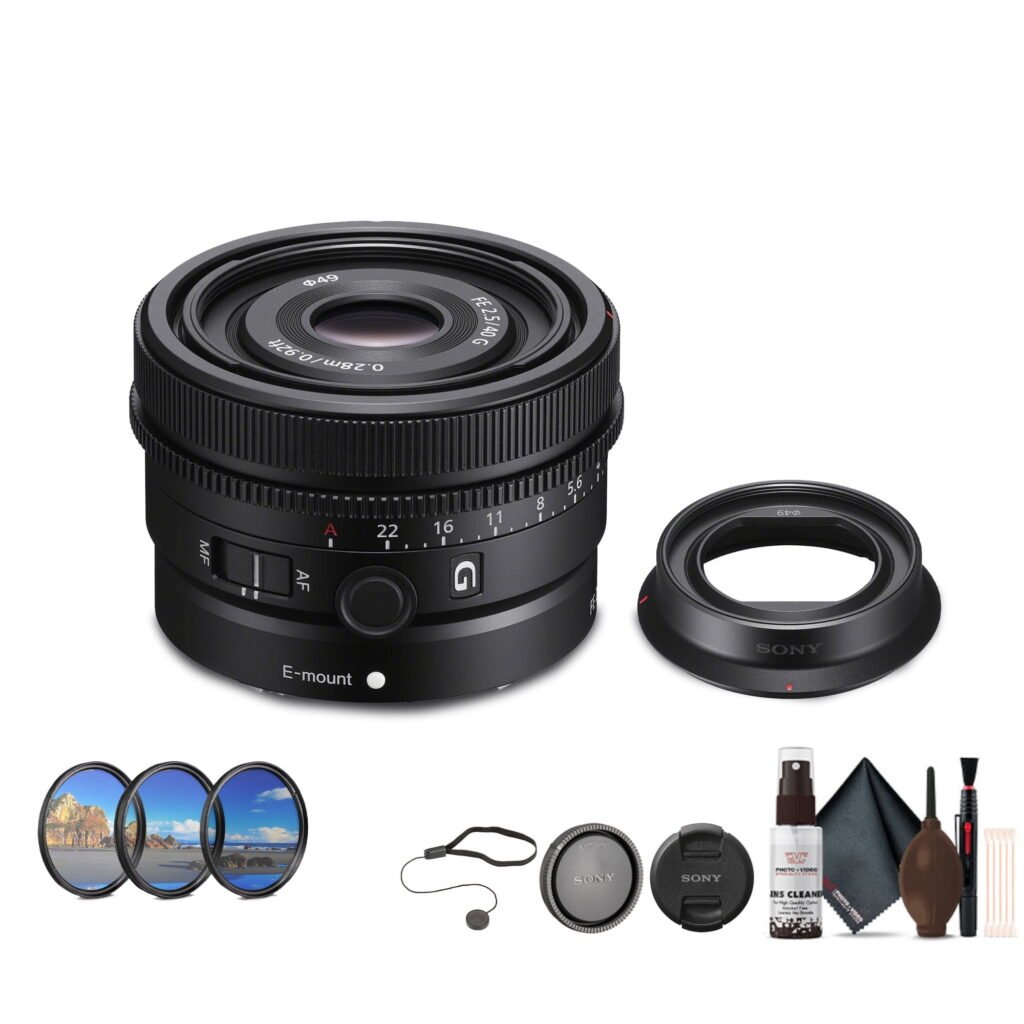
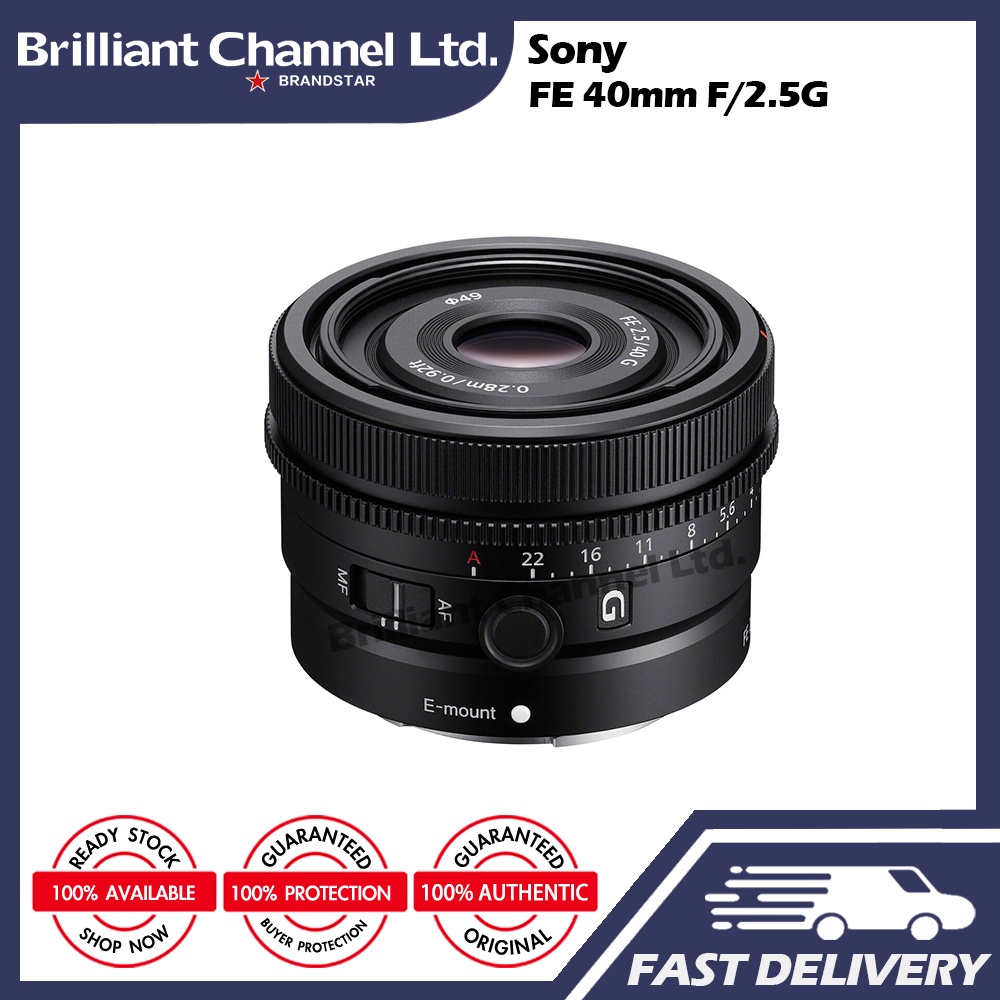
The Sony FE 40mm F2.5 G is one of the smallest full-frame lenses available for Sony Alpha cameras in the United States. It targets photographers who want a light setup for street photography, travel, family photos, events, and daily carry without giving up a physical aperture ring or fast autofocus.
The short answer: the Sony FE 40mm F2.5 G is an excellent compact lens for photographers who value size, build quality, close focus, and natural-looking perspective more than a very wide aperture. Its main limits are the modest f/2.5 maximum aperture, visible vignetting at wide apertures, and the lack of built-in optical stabilization.
Sony announced the lens in 2021 as part of a compact trio with the FE 24mm F2.8 G and FE 50mm F2.5 G. This review is based on Sony’s published specifications, product documentation, and technical analysis. It does not claim independent laboratory measurements or hands-on testing.

Key Takeaways
- The 40mm focal length sits between a traditional 35mm lens and a standard 50mm lens.
- At 173 grams, the lens is easy to carry on a full-frame Sony Alpha camera.
- The f/2.5 aperture is useful in low light but does not create as much background blur as an f/1.4 or f/1.8 lens.
- The lens uses two XD Linear Motors for fast, quiet autofocus.
- A physical aperture ring, focus hold button, and AF/MF switch improve handling.
- Close focusing is useful for food, small products, flowers, and detail shots.
- There is no optical image stabilization, so stabilization depends on the camera body.
- It is a strong choice for compact full-frame kits, but photographers seeking maximum subject separation may prefer a faster lens.
Sony FE 40mm F2.5 G Specifications
The table below gathers the main specifications listed by Sony for the US version of the lens.
| Feature | Sony FE 40mm F2.5 G |
|---|---|
| Lens mount | Sony E-mount |
| Format | Full-frame |
| Focal length | 40mm |
| Maximum aperture | f/2.5 |
| Minimum aperture | f/22 |
| Aperture blades | 7, circular design |
| Optical construction | 9 elements in 9 groups |
| Special elements | 3 aspherical elements, 1 ED glass element |
| Minimum focus distance | 0.28 m autofocus; 0.25 m manual focus |
| Maximum magnification | 0.18x autofocus; 0.21x manual focus |
| Filter size | 49mm |
| Image stabilization | No optical stabilization |
| Autofocus motors | 2 XD Linear Motors |
| Dimensions | Approximately 68 x 45mm |
| Weight | Approximately 173g |
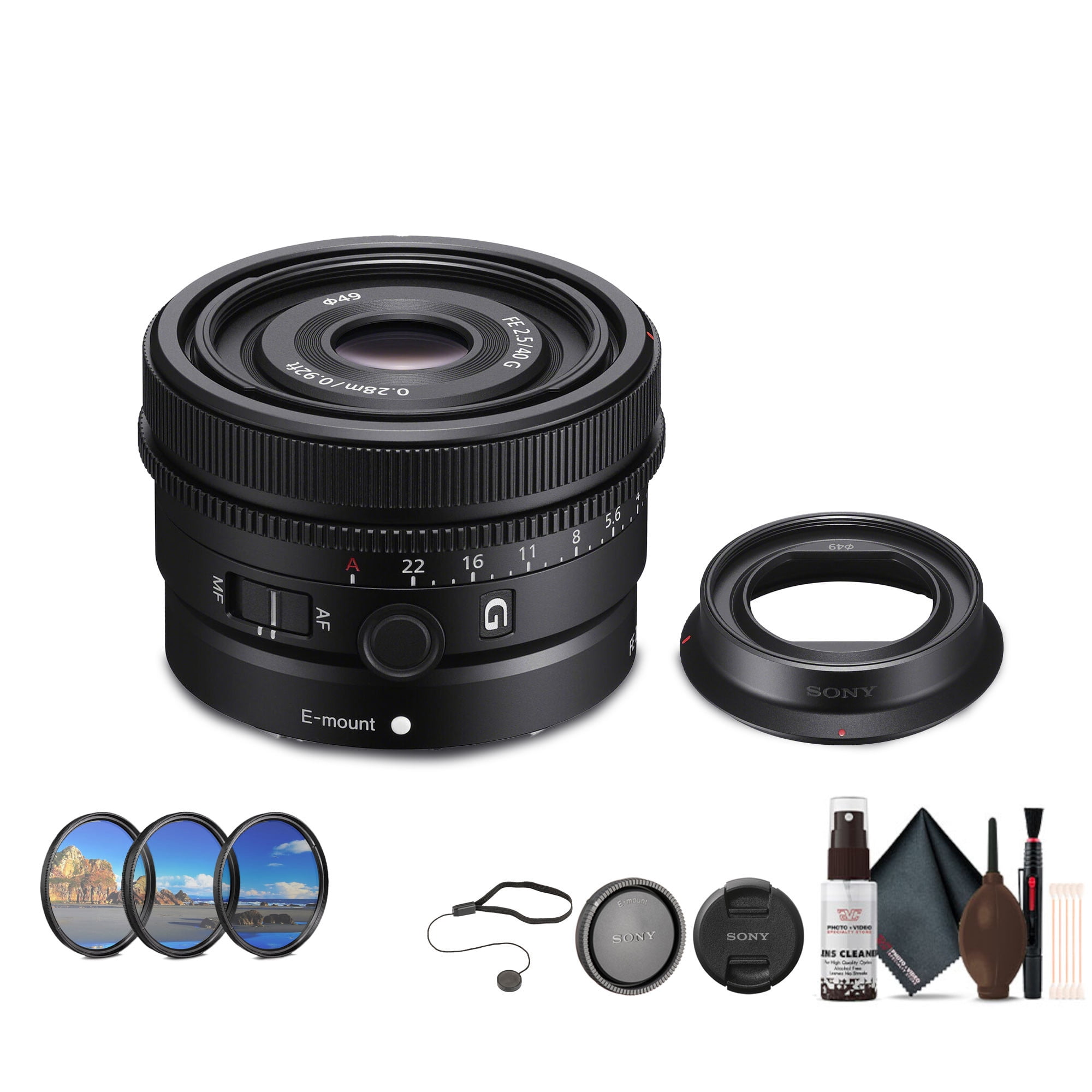
| Included hood | ALC-B49 lens cap and ALC-SH166 hood |
| Weather design | Dust- and moisture-resistant design |
| Mount | Sony E-mount |
The lens supports full-frame Sony cameras such as the Sony Alpha 7 IV, Alpha 7C II, Alpha 7R V, and Alpha 7S III. It also works on APS-C Sony cameras, where the angle of view becomes similar to a 60mm lens because of the 1.5x crop factor.
Sony’s official FE 40mm F2.5 G product page and instruction manual provide the documented specifications and operating details.

Design and Build Quality
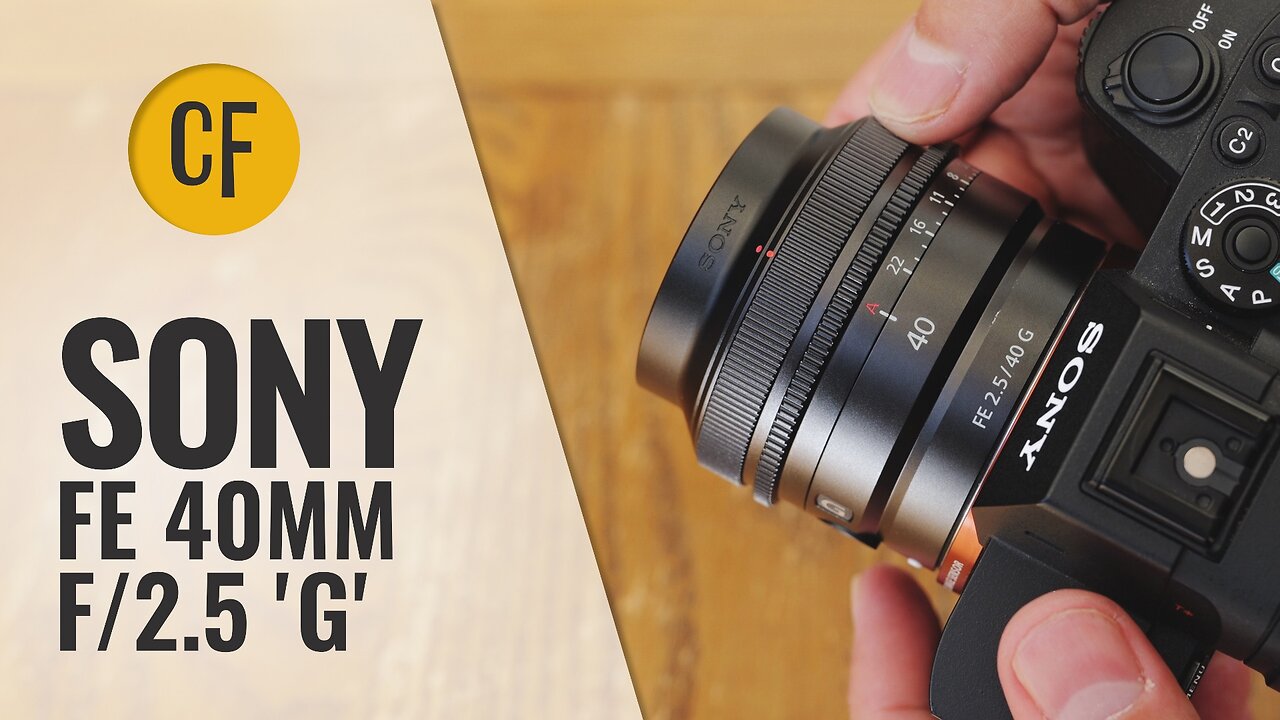
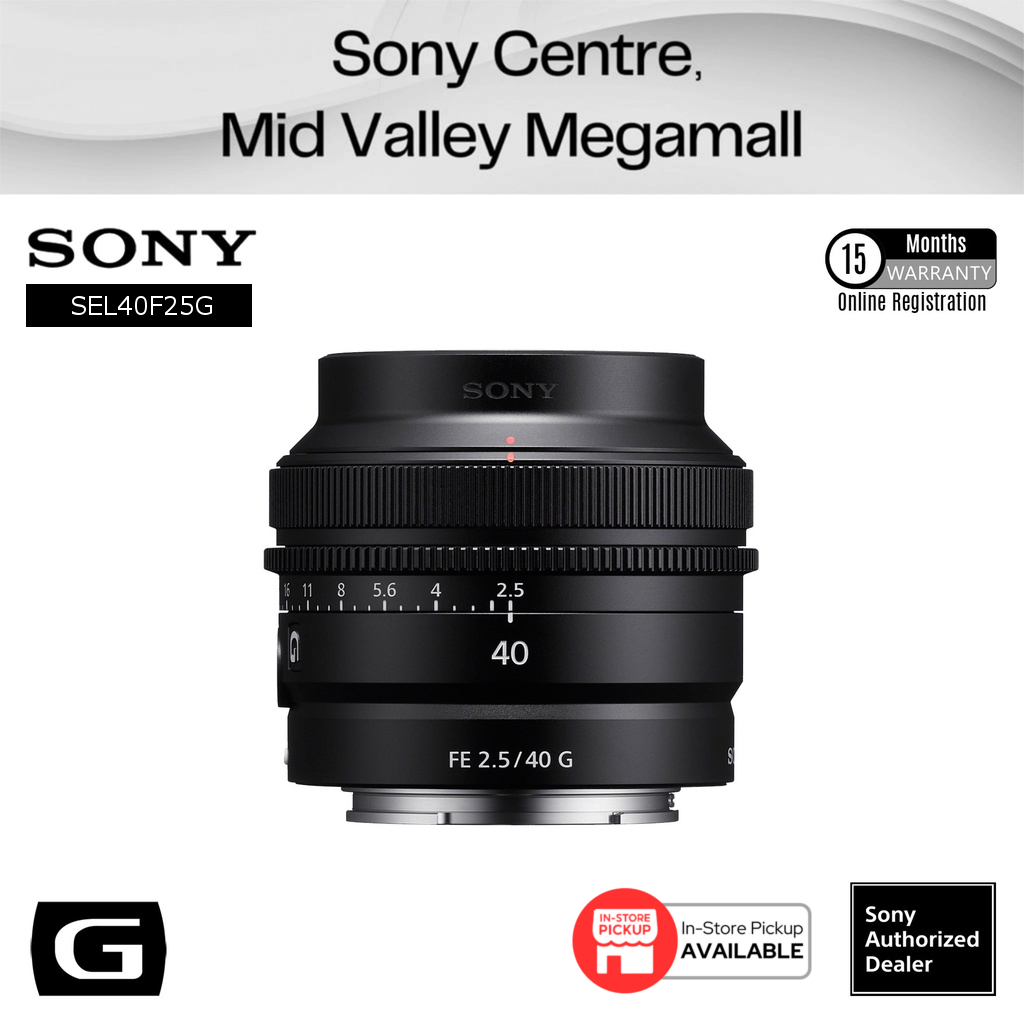
The FE 40mm F2.5 G feels more substantial than its size suggests. Sony uses metal for key external parts, including the barrel and aperture ring. The lens has a clean, flat profile that matches compact bodies such as the Alpha 7C series.
Its 49mm filter thread helps keep filters small and affordable. A slim circular polarizer or neutral-density filter does not add much bulk to the camera bag.
The lens includes several useful controls:
- A physical aperture ring
- A focus hold button
- An AF/MF switch
- A click switch for the aperture ring
The aperture ring gives direct control over exposure. This is useful for still photography because the photographer can change the aperture without using a camera dial. Video users can switch the ring to clickless operation for smoother exposure changes.
The lens has a dust- and moisture-resistant design, but that does not make it waterproof. Seals reduce the chance of dust or moisture entering during normal use. They do not remove the need for care in heavy rain, blowing sand, or wet environments.
Size and weight
At 173g, the lens adds very little weight to a full-frame camera. This matters because a small lens can change how often a camera gets carried. A compact camera with the 40mm attached is easier to keep ready for a walk, trip, or family event than a larger professional zoom.
The lens is also short enough to reduce the front-heavy feel that can occur with large full-frame lenses. That balance is one of its strongest practical features.

40mm Perspective and Everyday Use
The 40mm focal length offers a useful middle ground. It is wider than a 50mm lens but tighter than a 35mm lens.
That difference is small on paper, yet noticeable in use:
- Compared with 35mm, 40mm gives slightly more subject focus and less empty space.
- Compared with 50mm, 40mm is easier to use in small rooms.
- Compared with 24mm or 28mm, 40mm gives less dramatic perspective distortion.
- On an APS-C camera, the lens behaves more like a short telephoto lens for portraits and detail work.
For street photography in U.S. cities, 40mm can frame a person without forcing the photographer too close. It also works well for storefronts, signs, cars, interiors, and environmental portraits.
The lens is not wide enough for every landscape or architecture scene. In a small apartment or narrow room, a 24mm or 28mm lens may show more of the space. The 40mm focal length favors a focused view rather than a broad one.

Image Quality
The FE 40mm F2.5 G uses three aspherical elements and one ED glass element. These elements help Sony control distortion, color fringing, and off-axis aberrations across the frame.
Sharpness
The lens should provide strong detail for everyday photography, portraits, travel scenes, and product images. Its optical design is intended to deliver consistent performance in a very small body.
Sharpness can still vary by aperture, focus distance, and subject position. Wide-aperture images may show softer corners than the center. This is common with compact lenses and does not mean the lens is unsuitable for general use.
For the highest edge detail, stopping down to around f/4 or f/5.6 is often a sensible working choice. The exact result depends on the camera body, subject distance, focus accuracy, and processing software.
Bokeh
The seven-blade circular aperture helps produce rounded out-of-focus highlights when the lens is used near its maximum aperture. The f/2.5 aperture can separate a nearby subject from the background, especially at short focus distances.
However, it cannot create the same degree of blur as a 40mm or 50mm lens at f/1.4 or f/1.8. The smaller aperture is the cost of the lens’s compact design.
Background blur depends on more than aperture. It also changes with:
- Subject distance
- Background distance
- Focal length
- Sensor size
- Framing
For stronger blur, move closer to the subject and keep the background farther away. This works well for flowers, food, and detail portraits.
Distortion and vignetting
Compact mirrorless lenses often rely partly on software correction. JPEG files and many modern RAW converters may apply lens profiles for distortion, shading, and chromatic aberration.
This means the final image can look better than the uncorrected optical projection. Photographers who use specialist RAW software should check whether the correct lens profile is available.
Vignetting may be visible at f/2.5, especially against a bright, even background such as a white wall or sky. Some photographers like this effect for portraits and street work. Others may prefer to correct it in post-processing.
Flare and sun stars
The lens includes coatings designed to reduce reflections and flare. Even so, strong light near the frame can lower contrast or create ghosting. Using the supplied hood can help, although it cannot prevent every flare pattern.
The seven-blade aperture can also produce a recognizable sun-star effect when the lens is stopped down and a bright point source is placed carefully in the frame.

Autofocus and Video Performance
The Sony FE 40mm F2.5 G uses two XD Linear Motors. Sony designed these motors for fast, quiet, and precise focusing.
The system is well matched to modern Sony cameras with subject recognition and real-time tracking. Autofocus performance still depends on the camera body, firmware, lighting, subject movement, and selected focus mode.
The lens is suitable for:
- Street photography
- Candid family photos
- Travel
- Casual sports in good light
- Video interviews
- Walk-and-talk footage
- Product demonstrations
- Food and tabletop video
The internal focusing design helps keep the lens barrel from changing length during focus. This is useful for video because it reduces visible movement and allows the lens to stay compact.
The 40mm focal length can work well for video on a full-frame body. It gives a natural view without being as tight as a 50mm lens. On APS-C, however, the effective field of view is narrower and may feel restrictive indoors.
The lens does not include optical image stabilization. On a camera without in-body stabilization, handheld video may require a tripod, monopod, gimbal, or digital stabilization. Digital stabilization can crop the image, so users should account for that loss of field of view.
Close-Focus Performance
The lens focuses as close as 0.28m with autofocus and 0.25m with manual focus. Its maximum magnification reaches 0.18x in autofocus mode and 0.21x in manual focus mode.
This is not a macro lens. It will not fill the frame with a small insect or reproduce a coin at life size. Still, the close-focus ability is useful for everyday detail shots.
Good uses include:
- Plates of food
- Small products
- Flowers
- Craft projects
- Travel details
- Desk scenes
- Hands using tools
- Labels and signs
At close distances, the background can become pleasantly soft even though the lens is only f/2.5. The photographer can also create a stronger sense of depth by placing the subject close to the lens and the background farther away.
Manual focus may be useful for video or for the closest focusing distance. The lens’s focus response can be adjusted through a compatible Sony camera, depending on the camera model and firmware.
Sony FE 40mm F2.5 G vs. Other Sony Lenses
The best alternative depends on whether the buyer values compact size, low-light performance, a wider view, or zoom flexibility.
| Lens | Main advantage | Main trade-off |
|---|---|---|
| Sony FE 40mm F2.5 G | Small size, 40mm view, controls | Slower than f/1.8 and f/1.4 lenses |
| Sony FE 35mm F1.8 | Wider view and brighter aperture | Larger and heavier |
| Sony Sonnar T* FE 55mm F1.8 ZA | Strong subject separation and low-light ability | Narrower view and older design |
| Sony FE 24mm F2.8 G | Wider view in the same compact style | Less background compression and blur |
| Sony FE 50mm F2.5 G | More traditional standard perspective | Tighter field of view |
| Sony FE 28-60mm F4-5.6 | Flexible zoom range and low weight | Much slower aperture |
Choose the 40mm F2.5 G if size matters most
The 40mm lens makes sense when the goal is a compact prime that still has a premium control layout. It is particularly appealing for people who find 35mm too wide and 50mm too tight.
Choose the 35mm F1.8 if low light matters more
The FE 35mm F1.8 gathers more light and can produce shallower depth of field. It is a better fit for dim interiors, night scenes, and photographers who want more background blur.
The trade-off is a larger and heavier setup.
Choose the 24mm F2.8 G for interiors and wide scenes
The 24mm G lens is better for architecture, landscapes, travel interiors, and group photos in tight spaces. The 40mm lens gives a more focused and natural-looking frame but may not show enough of a room.
Choose the 50mm F2.5 G for a tighter standard view
The 50mm F2.5 G shares the compact design approach. It suits portraits, details, and subjects that benefit from a slightly narrower angle. The 40mm lens is more flexible when working close to people or in small spaces.
Strengths and Weaknesses
Strengths
- Very light at approximately 173g
- Compact 45mm length
- Strong metal construction
- Useful 40mm full-frame perspective
- Fast, quiet autofocus motors
- Physical aperture ring
- Clickless aperture option for video
- Focus hold button and AF/MF switch
- Good close-focus capability
- Small 49mm filter size
- Dust- and moisture-resistant design
- Works on full-frame and APS-C Sony E-mount cameras
Weaknesses
- f/2.5 is not especially bright for a prime lens
- No optical image stabilization
- Wide-aperture corner shading may be visible
- Not a macro lens
- The 40mm view may be too narrow for some interiors
- The 40mm view may be too wide for photographers who prefer classic 50mm framing
- Compact size may require corrections in software for the best final image
The main decision is simple: the lens trades light-gathering power for portability and handling. That trade is worthwhile for daily carry, but less attractive for night photography or strong background separation.

Who Should Buy the Sony FE 40mm F2.5 G?
The lens is a good match for:
- Sony full-frame owners who want a small everyday prime
- Street photographers who prefer a natural perspective
- Travel photographers trying to reduce bag weight
- Family photographers who want a simple walk-around lens
- Video creators who need a compact lens with an aperture ring
- APS-C Sony users seeking a short portrait or detail lens
- Photographers who prefer physical controls
It may not be the best choice for:
- Night photographers who need f/1.4 or f/1.8
- Portrait specialists who want strong background blur
- Architecture photographers who need a wide lens
- Macro photographers
- Handheld video users whose camera lacks in-body stabilization
- Buyers who prefer one lens to cover several focal lengths
The lens is most compelling when the camera is carried often. A slightly slower lens that stays on the camera can be more useful than a faster lens left at home because of its size.
Common Questions Before Buying
Is the Sony FE 40mm F2.5 G a full-frame lens?
Yes. It is designed for Sony full-frame E-mount cameras. It also works on Sony APS-C cameras, where it provides an angle of view similar to a 60mm lens.
Is the Sony 40mm F2.5 G weather sealed?
Sony describes the lens as having a dust- and moisture-resistant design. This is not the same as waterproofing. Avoid treating the lens as safe for heavy rain, submersion, or severe weather.
Does the lens have image stabilization?
No. The FE 40mm F2.5 G does not have optical SteadyShot stabilization. Stabilization may come from the camera body, a gimbal, a tripod, or software.
Is f/2.5 good enough for low light?
It can work well in moderate indoor light and at dusk, especially with a modern full-frame camera. It is not as capable in low light as an f/1.4 or f/1.8 lens. A faster alternative may be better for night streets, concerts, and dark interiors.
Can it be used for portraits?
Yes. The 40mm focal length works well for environmental portraits and half-body photos. For close headshots, a 50mm, 85mm, or longer lens may provide more comfortable working distance and less perspective exaggeration.
Is it good for video?
Yes, particularly when paired with a camera that has in-body stabilization. The quiet XD Linear Motors, aperture ring, compact design, and focus hold button are useful for video. Without body stabilization, handheld footage may need additional support.
Does it replace a 35mm lens?
Not fully. The 40mm lens is slightly tighter and gives less room around the subject. Many photographers will find the difference small, but 35mm is often more useful for groups, interiors, and documentary work.
Can it replace a 50mm lens?
That depends on framing preference. The 40mm lens is easier to use in tight spaces and for close-range street work. A 50mm lens gives a tighter, more traditional standard view and can feel better for portraits and isolated subjects.

Final Verdict
The Sony FE 40mm F2.5 G is a carefully balanced compact prime lens. It offers a practical full-frame focal length, strong build quality, fast autofocus, useful controls, and close focusing in a body that weighs only about 173g.
Its limitations are equally clear. The f/2.5 aperture cannot match a faster prime in low light or background blur, and the lens has no built-in optical stabilization. Those limits matter more for night work, portraits with heavy blur, and handheld video on unstabilized cameras.
For U.S. Sony Alpha photographers who want a small everyday lens for street photography, travel, family scenes, and casual video, the FE 40mm F2.5 G is a strong choice. Buy it for its compact design and balanced field of view—not because it is the fastest lens in the system.

